At 45, Caught Between Mammograms
BOSTON — I got a mammogram last week.
The tech person, a lovely Russian woman from Brooklyn, said she thought everything looked fine. Then, a few days later, a nurse called to say there appeared to be a tiny calcification in one breast. “Fairly common,” she said. “I wouldn’t worry too much.” She scheduled me for more imaging. This Thursday, at Mt. Auburn Hospital.
It was my first mammogram in about eight years, since the birth of my two children.
There is no breast cancer in my family history, so I was pretty lax about getting screened again. But my primary care doctor in Cambridge kept telling me to do it, citing the previous guidelines to get a mammogram annually after age 40. I am 45.
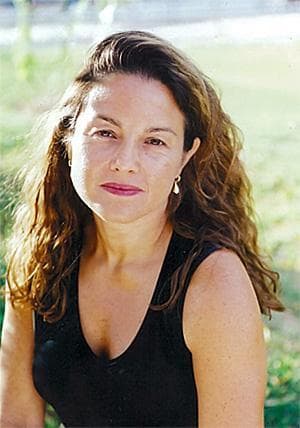
Rachel Zimmerman (Julienne Schaer)
But during the years I nursed my daughters, I kept delaying the screening. Finally, when it was clear that my breastfeeding days were over, I scheduled the test (which, for those of you who haven’t had it, is really annoying, and involves stretching and flattening your breasts over a hard surface and then squeezing them down so they sit like sandwich meat between bread.)
Last night, after reading Gina Kolata’s story in The New York Times about the new guidelines that urge women to wait until they’re 50 before getting routine mammograms, I feel like canceling my appointment.
But of course, there is the issue of the small, “fairly common,” calcification. While I am healthy, excercise regularly, don’t smoke and eat well, you never know, right?
A good friend, a 39-year-old vegetarian marathon runner, died suddenly a few years ago, due to a rare heart condition, leaving two young daughters. Another healthy friend, whose mother died of breast cancer, got a radical mastectomy and hysterectomy after learning she had the gene for breast cancer. How can I, a journalist, a mother, a curious human being, not find out what is there in my body, guidelines, or not?
Today, I kept thinking about how, despite our knowledge about science and probability, we expect medicine to be so clear, to give us straight answers and immutable guidelines. I read all the coverage on the debate, trying to better understand what to do. I talked to my mother, my husband and my women friends. They were also confused. But here I am, between two mammograms, wanting reassurance and clarity, but also understanding that it would probably be OK to wait.
Or would it?’
A post-script: I just got back from my follow-up mammogram. Everything is normal. The “calcification” they saw on the initial image turned out to be overlapping tissue. Still, the changing room was plastered with black and red signs announcing Mt. Auburn’s position on the new recommendations. The hospital, siding with the American Cancer Society, is sticking with the old guidelines — routine mammograms annually for women starting at age 40. As I left the imaging center, the technician who delivered the good news waved to me and said, “See you next year.”
Rachel Zimmerman curates WBUR’s CommonHealth blog. She worked as a staff reporter for The Wall Street Journal for 10 years, most recently covering health and medicine out of the paper’s Boston bureau.
- Beacon Hill »
- Listen: After Brown, Republican ‘Gains To Be Made’ In Many Districts
- Republicans Hope To Double Their Beacon Hill Presence
- Republicans Early Targets at Southie Breakfast
- Commentary »
- Littlefield: Finally, Soccer Has Major-League Problems
- Is Curling A Sport? (Who Cares?)
- Many Winter Olympians Already Have The Gold
- Crime & Justice »
- Ex-Harvard Student Indicted In Dorm Shooting Death
- Mass. Court Upholds State Gun-Lock Requirement
- Boeri: Bishop Story Has More Holes Than A Sieve
- Energy »
- Everett Settles In With Its Big, New Neighbor In The Harbor
- Salazar’s Cape Wind Decision Is Difficult, For A Consensus Builder
- Patrick Calls For Plymouth Nuclear Plant Investigation After Vermont Leak
- Environment »
- Fishermen Gather For Summit On Industry’s Fate
- Everett Settles In With Its Big, New Neighbor In The Harbor
- Scientists Say Potential For Red Tide Outbreak Is High
- Ethics »
- Review: Mass. House Spending On DiMasi Case ‘Fair’
- Galluccio Resigns From Senate After Being Jailed
- After Sentencing, Fate Of Galluccio’s Senate Seat Remains Unknown
- Religion »
- As Construction Alters Closed Church, Jamaica Plain Builds Its Community
- Listen: Talk Of Renewal, But Few Decisions In Pope’s Irish Clergy Summit
- Irish Catholics Call For Cardinal Law’s Resignation, Following Clergy Abuse Report
- Sprint To The Senate »
- How He Did It: Behind The Scott Brown Win
- Scott Brown, The New Hero Of The GOP
- Tea Party Credited With Giving Brown A Winning Boost
- H1N1 Swine Flu »
- FAQ: Swine Flu Vaccine Availability
- Mass. Lifts Swine Flu Vaccine Restrictions
- Study: Swine Flu Is Relatively Mild Virus After All
- Senate To Take Up Unemployment Insurance Extension
- Rain Damage, Detours Hinder Commutes In Northeast
- Stomach Virus Is Surging In Boston
- Patrick Declares State Of Emergency As Rain Storm Continues
- Heavy Rain Continues To Pour On Mass.
- Why We Gain Weight As We Age
- UAW Brokers First Union Contract Under Tribal Law
- Unemployment Rate Doubles For Older Women
- Rough Weather Hits Southern New England
- Coffee Party Founder Wants Common Grounds
- Stomach Virus Is Surging In Boston
- Unemployment Rate Doubles For Older Women
- The End Of 9-to-5: When Work Time Is Anytime
- The End Of 9-To-5: When Work Time Is Anytime
- UAW Brokers First Union Contract Under Tribal Law
- Rabbi Kushner: An 'Accommodation' With God
- How A Few Made Millions Betting Against The Market
- Heavy Rain Continues To Pour On Mass.
- Why Making Healthful Foods Cheaper Isn't Enough
- Why We Gain Weight As We Age
- Peter Gabriel: No Guitars, No Drums, All Covers
- Why We Gain Weight As We Age
- Jesus And The Hidden Contradictions Of The Gospels
- St. Patrick’s Roast As Comedy Club? ‘No, Nay, Never No More’
- Obama Proposes Dismantling No Child Left Behind
- Coffee Party Founder Wants Common Grounds
- Umm Kulthum: 'The Lady' Of Cairo
- The Outsiders Who Foresaw The Subprime Crisis
- Obama's Attorney General Under Attack
- Calif. Governor Candidates Clash At GOP Convention
-
Atrium School Founder's Lecture with acclaimed author, Tracy Winn
March 16, 2010
At Atrium School -
The Art of the Wellesley College Multifaith Center
March 16, 2010
At Houghton Chapel, Wellesley College -
Threepenny Review: 30th Anniversary Reading
March 16, 2010
At Boston University, School of Management -
Girl Scout Afternoons at the Andover Historical Society
March 17, 2010
At Andover Historical Society'


75-80% of all newly diagnosed breast cancers in the US are in women with no family history of breast cancer. The amount of radiation received with getting a mammogram is the same as being in a high altitude place such as Denver for a few months. Many breast cancers are detected in young women in their forties by mammogram. The more “fatty” your breasts are on mammogram, the easier it is to detect breast cancer. If your breasts are dense on mammogram, it may be wise to get yearly screening breast MRI (no radiation). Keep doing your self breast exams, and getting a clinical breast exam by your doctor once a year. This is how breast cancer is found – by these 3 things.
FYI – You described a friend who had a cancer gene . If she had one of the common cancer genes — BRCA1 or BRCA2, she almost certainly got bilateral subcutaneous mastectomies and oopherectomies, not a radical mastectomy and a hysterectomy.
Breast thermography is an FDA approved Adjunct diagnostic tool which can give a helpful and different perspective than a mammogram. It has a better record of accuracy, does not involve any physical contact with the breasts, has no radiation, and it can show changes in breast tissue long before a lump develops, so that alternative and preventive health measures may have a chance to work BEFORE you get to the stage of “something” appearing on a mammogram. It measures heat–so an increase in blood flow (which can signal a tumor in the making) in one area of the breast relative to other areas will show up. If “something” is inactive, it won’t show up on a thermogram. These are not very expensive, though insurance companies don’t cover it. (Similarly, many insurance companies refused for years to cover chiropractic treatments–which have kept me out of a wheelchair–until people “voted with their feet” in sufficient numbers to change many policies.) I recently had thermography done in Byfield MA; I wanted to be responsible but I really didn’t want more mammograms. I have also learned that the “very precise” (and VERY EXPENSIVE) digital imaging mammogram machines operate on a radiation wavelength that is particularly dangerous for sensitive breast tissue, making the effect of a mammogram potentially the radiation equivalent of several hundred chest X-rays.
I would say that if someone were thinking of canceling a follow-up screening to rule out a problem, that she would at least discuss this with her physician, rather than deciding to not get re-screened based on an article describing a new recommendation that has not been formally adopted.
I’m disappointed that Ms. Zimmerman would describe a mammogram as “really annoying,” which may discourage women from getting this important test. I’ve had several, and found the experience to be a very quick and involve only mild discomfort for a few seconds while the machine takes each set of pictures. In the scheme of life, enduring a few minutes of discomfort to avoid such a horrific and potentially deadly disease is well worth it.
Sweden is probably the worst country to follow- homogeneous, different living and eating issues. Watchful waiting is the mantra for most cancers in Sweden-see prostate cancer studies. Because we cannot determine aggressive nature of any cancer caution should be the watchword. Test early and often- it saved my life with prostate cancer and want it for my wife and daughter with breast cancer.
Thought commentary was unhelpful and possibly misleading. While uncomfortable, breast cancer undetected is more uncomfortable. Each woman needs to make sense of guidelines, but not mentioning the benefits of early detection — especially from a reporter — made me suspicious of her views. I’ll note her commentaries very cautiously in the future.