Support WBUR
Project Dropout: Revisited
In 2009, we at WBUR, in a joint initiative with WGBH, reported an extensive series on the Massachusetts high school dropout rate and how it's been stagnant for a decade. Back in the spring, during the "Project Dropout" series, we spoke to state officials, educators and students about this serious issue, as 10,000 students leave school each year in the state. In some urban areas, close to half of the 9th graders will not make it through the four years of high school.
BOSTON — In our "Project Dropout" series, one of the students we spoke to was 17-year-old Carlos Portillo, who was a sophomore at Chelsea High School in the spring and was ambivalent about staying in school.
"I kind of feel weird staying back with all the younger kids and I'll feel left out," said Portillo at the time. "And if I stay back again I'll be like 18; when I graduate I'll be like 21. [But] I want to help my mom with the rent and help my brothers getting clothes and stuff."
One of WBUR's lead series reporters and producers, Monica Brady-Myerov, followed up recently with Portillo.
"He did drop out of school soon after I met him," said Brady-Myerov, "and he was out for a good six months. And even though he wanted to earn money and find a job, he couldn't get one. So in the fall of this year he came back, and he was accepted at an interesting program called Youth Build in Somerville. It's a program that pays him a stipend to attend school and work in the community, and it's working out well for him."
Our other lead reporter and producer, Deborah Becker, offered some fresh perspective on the state's high school dropout rate, which, according to the Department of Education, was at 3.4 percent in the 2007-2008 school year. That figure, the most recent data point available, represents a slight improvement year-over-year.
"That means that the rate still has not gone below 3 percent, despite a lot of effort," said Becker. "It's been at this 3-percent level for more than a decade, and in urban areas the rate is much higher. In the 2007-2008 school year, for example, Lawrence lost 12.9 percent of its students, Fall River 12.5 percent and Boston 7.6 percent. The latest numbers also show that the achievement gap persists and there is a higher dropout rate among blacks and Latinos, with Hispanic males having the lowest graduation rate of any group of students."
In an attempt to reduce the rate, the state's dropout prevention commission has, after a year of research, recently released its report.
According to Becker, the report's goal is to cut the dropout rate in half over the next five years. To achieve such quick progress, one controversial proposal seeks to raise the mandatory school attendance age from 16 to 18. There's been only cautious movement on the proposal, however.
"We won't move forward on that until we are confident that we can put in place the service and supports and programs that need to be there in order to make it possible to get some reduction of the dropout rate through raising the age," said Education Secretary Paul Reville.
Another report recommendation stresses better identification of students-at-risk when they come in to the 9th grade, and that is happening in a few more schools, including Chelsea High.
One facet not addressed by the commission is money.
"There are no cost estimates," said Becker. "The report does say that alternative education programs in high schools will have to increase dramatically with enrollment expected to go anywhere from 5,000 to 12,000 students. And alternative education programs have been successful in retaining at-risk students but it leaves a big question about where the money is going to come from."
There have also been some success stories in the months since "Project Dropout" aired, including Boston's Re-Engagement Center.
"It's a basic idea: to go after the kids who've left the school system," said Brady-Myerov. "They have a list of thousands of students, but they only have three outreach workers. But thanks to a public-private partnership with the Boston Private Industry Council to help cover salary costs, they can call every kid who's disappeared from the system. And in just the four months they've been open, they've re-enrolled 300 students. That's a pretty good success rate.
"We don't know how long they'll stay in the system and what will happen to them, but at least, for the first time, there is a structured program reaching out to get them back in school."
Another success story conveyed in the series was the University Park Campus School in Worcester, where some of the most at-risk students defy the odds.
Becker recently checked in with Melanie Dominguez, a new alum of the school.
"She is thriving," said Becker. "She's on a full scholarship at Union College in upstate New York. In fact, in University Park's Class of 2009, 100 percent of the seniors went on to higher education and every single one of them has made it through the first semester of their freshman year of college."
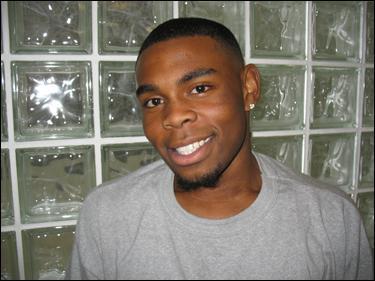
In one final check of a struggling student, Brady-Myerov caught up with Antonio Rosa, who said he had "mad regrets" about dropping out of high school four years ago.
"Well he just passed most of the G.E.D., and he's close to going to college," she said. "And the smile on this kid's face was amazing. He's 22-years-old, he's got the baseball cap just so, the big diamond-studded earrings, the low-slung pants, but he just looked like a kid in a candy store when he told me how excited he is about his future."
Brady-Myerov talked with Rosa at Roca, a program in Chelsea that helps students get back in school.
"I never thought I'd be looking at going to college," said Rosa. "It feels good 'cause it's a new step in my life, towards the positive side. I look back at all the negative things that have happened to me and it feels good to know that I'm about to get my G.E.D. and look towards college now."
As Antonio looks forward in Chelsea, the state legislature returns in January to an education reform bill on the docket, though dropout rates are not a primary concern.
"It is part of the bill, but it's in the background," said Brady-Myerov. "This bill really focuses on lifting the cap on charter schools. And advocates for dropout reforms are pushing that if there are new charter schools, some of them will be alternative schools that focus on the dropout problem. But it is holding back some of the more specific dropout reforms."
Added Becker, "Secretary Reville said this is a 'decades-old issue' and that concrete results from these programs probably won't happen for another few years at least."
For the full "Project Dropout" series, a joint endeavor by public broadcasters, please visit projectdropout.org.
This program aired on December 29, 2009.