Listen Live! Link to Schedule Link All Shows Link to Archives
  Home
Search


WBUR Newsroom
Election 2008
CommonHealth Blog
Radio Boston Blog
Boston Weather
Climate Connections
BBC World News
NPR Top Stories
NPR's Morning Edition
NPR Topics: Books
NPR Topics: Movies
Fresh Air
All Things Considered
Marketplace
Submit a News Tip


RSS Feeds
Podcasts


Police Probed in Drumgold Case
By Bianca Vazquez Toness

Listen to story (Real Audio)

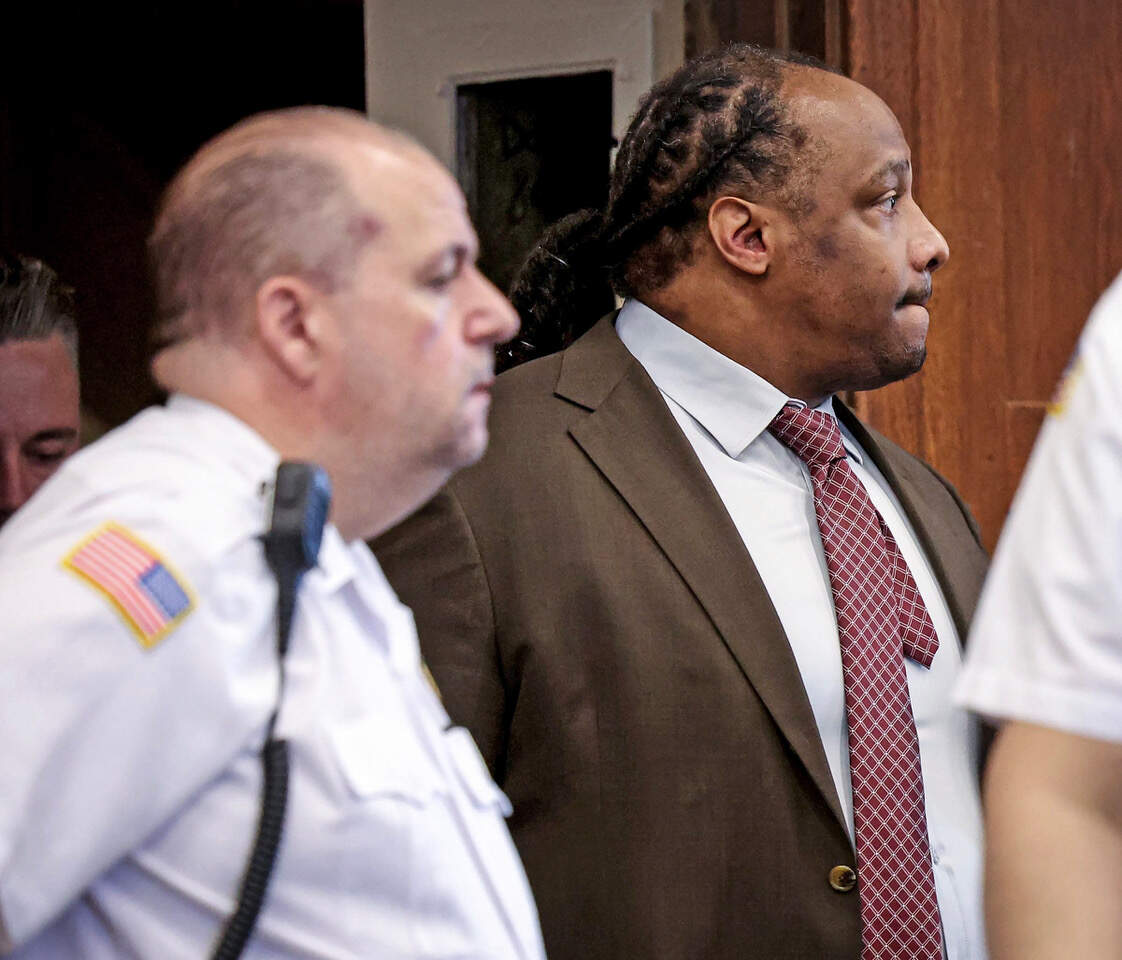
Shawn Drumgold, soon after he was released from prison in 2003. (Photo: "Daily Free Press" BU)
BOSTON, Mass. - March 03, 2008 - A lawsuit against Boston police officers begins this week in federal court.

The suit alleges that three former homicide investigators violated the civil rights of a man wrongfully convicted of one of Boston's most notorious murders.

WBUR's Bianca Vazquez Toness reports that the lawsuit may reveal how and why that happened.

TEXT OF STORY:

At a time when Boston Police are looking to build trust in high-crime neighborhoods, the department finds itself in the awkward position of explaining what happened nearly two decades ago, when it investigated the death of Darlene Tiffany Moore.

The 12-year old was sitting on a mail box one summer evening when stray bullets ended her life. According to news accounts, masked gang members were aiming at rivals but instead, they hit the 12-year-old girl.

That was a particularly violent summer and Moore was the youngest person at the time to die from gang violence. Residents' shock and anger headlined newspapers and dominated television broadcasts, such as this report from WGBH TV.

WGBH: Roxbury's children are scared and so are their parents. Today they went to city hall to ask for protection. I'm not only feeling trapped. I'm feeling frightened. What is going on this city is open warfare.

BIANCA VAZQUEZ TONESS: Some residents called for a curfew and for the National Guard to patrol the streets. The mayor and police promised a rapid investigation.

TOM NOLAN: You couldn't draw a picture of someone who was more innocent than Darlene Tiffany Moore.

BIANCA VAZQUEZ TONESS: Tom Nolan was a Boston police sergeant in the same district at that time. He's now a criminal justice professor at Boston University.

TOM NOLAN: The pressure that was brought to bear on law enforcement was at least partly to bring some closure to this as quickly as possible and allay any fears that children playing in the street innocently were in danger.

BIANCA VAZQUEZ TONESS: Two weeks later, the police arrested Shawn Drumgold, an admitted drug dealer.
And a sense of relief blanketed the city. The next year, a jury convicted Drumgold and he was sentenced to life in prison.

13 years later, former Boston Globe reporter Dick Lehr was working on another story, when a source gave him an unrelated tip; a tip about Shawn Drumgold's conviction.

DICK LEHR: She said I don't know, but the scuttlebutt was that that's a conviction that stinks.

BIANCA VAZQUEZ TONESS: There was no physical evidence in Drumgold's case; no fingerprints or DNA, just witnesses. So, Lehr started tracking down people who testified in Drumgold's trial.

DICK LEHR: Several witnesses recanted and described to me said that's not how it happened. They basically admitted to lying on the witness stand, having committed perjury, saying they felt pressured from the authorities.

BIANCA VAZQUEZ TONESS: Another key witness was suffering from a deadly brain cancer that could have affected her memory and perception, and that was never reported to the jury.

A judge eventually overturned the conviction, saying justice was not done. The district attorney did not retry Drumgold, and stopped short of saying he was innocent.

After more than 15 years behind bars, Drumgold was free, but no one investigated how or why he was convicted.

ROSEMARY SCAPICCHIO: Shawn certainly, and myself, are looking forward to being able to expose these officers for who they were and what they did.

BIANCA VAZQUEZ TONESS: Rosemary Scapicchio is representing Drumgold in his case against the city of Boston, its police department and three former Boston police officers.

The civil suit accuses the officers of pressuring a key witness to falsely testify and withholding evidence that would have cleared Drumgold.

ROSEMARY SCAPICCHIO: I'm confident that this isn't the only case that they were able to manipulate the facts in which they did. I'm confident that this wasn't a case in isolation.

BIANCA VAZQUEZ TONESS: But the city of Boston is vigorously defending the retired and deceased police officers who investigated Drumgold. City attorney, William Sinnott.

WILLIAM SINNOTT: The city firmly believes that the due process rights of this plaintiff were not violated by the police and that if any errors were committed at trial, it was not by any police officers.

BIANCA VAZQUEZ TONESS: Drumgold is seeking money to make up for the years he spent in prison. His success may affect what happens for at least two other men who are suing the Boston police department for wrongful convictions.

But investigative reporter Dick Lehr says Drumgold's legal drama should matter to the rest of us.

DICK LEHR: What's at stake for the public is faith in the system. We expect more if we're to buy into the system we have to believe that there's integrity and whatnot. And I don't think any fair-minded person can look at how Drumgold was initially investigated, arrested and then convicted, cannot come away very troubled .

BIANCA VAZQUEZ TONESS: And faith in the system is exactly what the Boston police department needs right now as it tries to make inroads in Roxbury, Dorchester, and Mattapan, where gun violence remains a big problem.

The police plan to start a voluntary warrantless search program in those neighborhoods, in spite of public outcry. Many residents complain they don't trust the police.

But former Boston police sergeant and criminal justice professor Tom Nolan says the integrity of the police department is not on trial here.

TOM NOLAN: I mean, keep in mind -- this case is almost 20 years old.

BIANCA VAZQUEZ TONESS: Nolan says police learned from Drumgold's case and others that they shouldn't rush to arrest and prosecute. Instead, they should methodically build a case with different types of evidence.

TOM NOLAN: If there were mistakes made it was the reliance of a lot of people on witnesses...and in hindsight that was probably unwise..

BIANCA VAZQUEZ TONESS: In the coming weeks, jurors will learn just how unwise police and prosecutors may have been when they investigated the murder of Darlene tiffany Moore. And they'll decide what -- if anything --they owe Shawn Drumgold for his 15 and half years in prison.

For WBUR, I'm Bianca Vazquez Toness.


   From The WBUR Newsroom

Olga Hartzavalos, in Lawrence, lost her clerical job in June and gets $172 a week in unemployment benefits. (Photo: Curt Nickisch)Comparing Jobless Benefits
BOSTON, Mass. (July 25, 2008) As jobless claims rise, people get more unemployment benefits in Massachusetts than in most other states. We compare what it's like for someone in Lawrence with their counterpart across the border in Salem, New Hampshire.
Volunteers hand out free raffle tickets at St. AnnFrom Pump to Pew
BOSTON, Mass. (July 25, 2008) A church in West Bridgewater is giving out free raffle tickets to parishioners. The prize: a 50-dollar gas card...and more people in the pews.
David Mischoulon is a psychiatrist at Massachusetts General Hospital. (Photo: MGH)Strain of Stressful Finances
BOSTON, Mass. (July 25, 2008) The faltering economy puts stress on individuals and families, and may lead to a rise in people with mental health issues. We talk with one doctor from Mass. General about the trend and what to do about it.
Cast and crew explore the set of "As You Like It" on Boston Common. (Photo: Andrea Shea)The Bard is Back in Boston
BOSTON, Mass. (July 25, 2008) The Bard is back: Shakespeare on the Common returns to the outdoor stage with a full schedule of free shows this summer.


spacer
NPR spacer BBC spacer PRI spacer CopyrightBoston UniversityFAQContact UsPrivacy StatementSite Map