Tech Turns Hospitals Into Concert Halls, Diseases Into Songs

Gil Alterovitz presents a graphical image of a network of genes. As part of his research, he then turns those networks into music.
BOSTON — Could music improve the practice of medicine?
In the operating room of just a few decades ago, technology wasn’t sophisticated enough to keep track of more than a few basic body functions — mainly blood pressure, breathing and heart rate.
Today, the situation is totally different.
A Healthy Cell…
An Unhealthy Cell…
…And The DJ Remix
Modern-day hospitals are filled with the beeping, buzzing and chirping of dozens of high-tech machines, which can be noisy and distracting. But a new sound technology by local researchers has the potential to turn operating rooms into concert halls and diseases into songs.
Heart monitors. Ventilators. Respirators. Defibrillators. Alarms. A 21st-century operating room can be chaos for the eyes and ears. And when too many machines compete to be seen and heard, doctors may miss something important. Or tune them out. Or, worse, turn them off.
In fact, a heart monitor that was off when it was supposed to be on is blamed for the recent death of a patient at Massachusetts General Hospital. Hospital officials say they aren’t sure why the monitor had been disabled. But in similar cases around the country, alarms were unplugged because doctors said they were too loud or annoying.
The Operating Room As Concert Hall
So imagine a better way. What if, instead of an operating room cluttered with electronic beeps and tones, it were just filled with music?
If the patient’s body functions were normal, the music would play along beautifully. But if the patient had a problem — perhaps a drop in heart rate or trouble breathing — the music would change by becoming dissonant and off-key.
That’s the technology that Gil Alterovitz, a researcher at Harvard and MIT, is working to create.
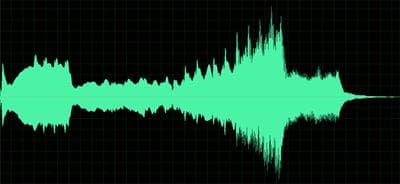
What the sound of a healthy cell looks like
“We felt that music, in some sense, can serve as a translator,” Alterovitz says, who is also affiliated with Children’s Hospital Boston. “There’s more and more information presented, so either we need a new super brain or we need a way to present it to the brain that we have in a way that it can handle it.”
His way is music, and his solution is to turn all those beeps and alarms into musical instruments.
“So you can turn your heart rate monitor into the violins, you can turn the blood pressure monitor into violas, and so forth,” explains Marco Ramoni, an associate professor at Harvard Medical School who does research with Alterovitz.
“The number of monitors in an operating room increases every year,” Ramoni adds, “so at some point the number of monitors we will have will create a terrible cacophony of signals.”
But if those signals become musical notes, a doctor would immediately know that harsh-sounding notes mean a patient may be in distress.
Using Music To Track Disease
Music could also be used to track disease.
Take cancer, for example. Scientists use advanced technology to collect an enormous amount of data on something as tiny as an individual cell. Conceivably, they could then follow the health of a cell by translating its genes into musical notes.
–Researcher Marco Ramoni
Dissonant notes might mean a tumor is getting worse, in which case a doctor might prescribe chemotherapy. Then, if the music is harmonious again after several rounds of treatment, that would be an indication that the chemo has been successful.
Alterovitz says this technology could also have other applications.
The U.S. Naval Research Laboratory, for example, has inquired whether sonar signals from its submarines, which aren’t audible to the human ear, could be turned into music, Alterovitz says. Or, he says, the hundreds of flights monitored by air traffic controllers could become music, too, and a bad note could mean that a plane is off-course.
But this technology doesn’t always have to be serious.
Alterovitz used disc jockey mixing software to make a remix of hospital sounds turned into dance music. If you listen closely, you can pick out someone’s heart thumping and someone else’s respirator whooshing.
Because sometimes scientists just want to have fun.
- Beacon-hill »
- Mass. Lawmakers Agree On Wind Energy Permits Bill
- Lawmakers Scramble To Finish Casino Bill
- Indie Auto Mechanics Fight For ‘Right To Repair’
- Commentary »
- Remembering Journalistic Icon Daniel Schorr
- Half-Hearted Hooligans Cheer On Fútbol At Fenway
- Lester Is Pitching To Join Boston’s Great Hurlers
- Crime-justice »
- Mass. Retirement Board To Appeal On DiMasi Pension
- Civil Rights Advocates Say FBI May Be Profiling
- Icy Sidewalks Ruling Could Be A Slippery Slope
- Election-2010 »
- Political Damage Done In Kerry Yacht Controversy, Analyst Says
- Vote For Good Lookin’: Candidates’ Appearances Affect Election Results
- Cahill Outlines Bill To Ban Credit Checks In Hiring
- Energy »
- Coalition Sues Feds For Approving Cape Wind
- Mass. Study: Wood Power Worse Polluter Than Coal
- Patrick Signs On To Wind Energy Consortium
- Environment »
- Swimmers Cautioned After Chatham Shark Sightings
- Groups Criticize State’s Bottled Water Spending
- Proposal To Ban Lobstering From Mass. To NC Killed
- Media »
- Mass. Newspaper Erects Commenter Paywall
- Remembrance: Longtime Boston TV Newsman John Henning Dies
- Ann Curry Apologizes For Confusing Wheaties
- Religion »
- Boston Advocates: New Vatican Rules On Punishing Clergy Abuse Fall Short
- Dioceses Oust Abusers They Had Pledged To Monitor
- Theology School For Religions To Form In Mass.
- Swine-flu »
- FAQ: Swine Flu Vaccine Availability
- Mass. Lifts Swine Flu Vaccine Restrictions
- Study: Swine Flu Is Relatively Mild Virus After All
- Friday’s Show
-
Week In Review: Casinos, Kerry’s Boat, War Funding
Is a gambling bill on the verge of passage? Did Sen. John Kerry try to dodge state taxes by docking his yacht in Rhode Island? Are the state's congressmen turning against the war in Afghanistan? Our panel discusses the news of the week. More...
- 65 Years After The USS Indianapolis
- In Newburyport, A Bee-Happy Boy
- Concerns For The Sea Mix With Music In ‘Ocean Voices’
- Looking Out: Pre-Teens Set Sail In Outward Bound
- Veterans Groups Struggle To Attract Young Soldiers
- Swimmers Cautioned After Chatham Shark Sightings
- Weekend ‘Tea Party’ Steeps Boston In Poetry
- Boston Fed: Cash Use Subsidizes Card Use
- Shark Map Update: Sightings Off Chatham
- Icy Sidewalks Ruling Could Be A Slippery Slope
- Diagnosing Alzheimer’s Earlier
- Plans For Kennedy Senate Institute Unveiled
- Your Olive Oil May Not Be The Virgin It Claims
- Looking Out: Pre-Teens Set Sail In Outward Bound
- Your Olive Oil May Not Be The Virgin It Claims
- (N)Ole! Spanish Region Says Adios To Bullfighting
- Diagnosing Alzheimer’s Earlier
- Veterans Groups Struggle To Attract Young Soldiers
- Weekend ‘Tea Party’ Steeps Boston In Poetry
- Boston Fed: Cash Use Subsidizes Card Use
- Concerns For The Sea Mix With Music In ‘Ocean Voices’
- Life Insurance Firms Profit From Death Benefits
- Study: Probation Ineffective, Wasting Money
- Looking Out: Pre-Teens Set Sail In Outward Bound
- Using An Alias At Starbucks
- Weekend ‘Tea Party’ Steeps Boston In Poetry
- Job Loss — And Zombies — Hit The Stage
- Ousted Evangelical Reflects On Faith, Future
- Veterans Groups Struggle To Attract Young Soldiers
- Dr. Atul Gawande: Make End Of Life More Humane
- Vote For Good Lookin’: Candidates’ Appearances Affect Election Results
- Icy Sidewalks Ruling Could Be A Slippery Slope
- Jay Roach, Steve Carell Pair Up For 'Schmucks'


Reading the postings of Tarbox, Erick, and JClev19, it makes it easier for me to understand why the mortality rate drops when doctors go on strike, as was the case in 1973 Los Angeles and Israel in 2000.
I say let the allopathic behemoth continue its inexorable descent into irrelevance and look for alternatives that focus on health rather than illness.
As someone who works in the medical device industry, all I can say is “good luck.” There are very specific and concise standards governing all aspects of medical devices (EU, AAMI, ISO, etc..), including warning tones, and anything smacking of originality inevitably gets quashed. Standards take a long time to change….
I don’t think I want to trust a doctor to know the difference between the sound of a violin and a viola. How about they stop complaining about annoying beeps and just do their jobs?
I’ve done a very similar for computer outputs. Most computer programs write extensive log files as they run, my log4jfugue project converts those log files into a music stream. Just as a doctor can hear a disonent note, a programmer can hear oddities in a the music stream created by log4jfugue. See http://www.log4jfugue.org/press.html for details.
Sacha,
I couldn’t help but notice that the notes used to represent the healthy cells sound remarkably like opening notes of the original Star Trek theme. As an MIT Alum I think I felt it at a cellular level. Is it true?
Regards,
Mark