One Family’s ‘Traumatic’ Struggle For Mental Health Care
Massachusetts has more children’s mental health providers than most other states, routinely screens most children for mental health issues, and has Rosie D., the 2006 lawsuit that mandates adequate mental health services for kids on public health insurance. But several challenges remain.
In the first report of our week-long series, “Are The Kids All Right?,” we visit a Sudbury family that has been grappling with a teen’s mental health problems for years.

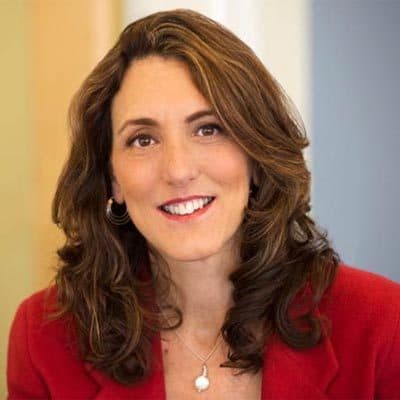
Will and Carol Cadogan, at their Sudbury home (Jesse Costa/WBUR)
SUDBURY, Mass. — The peaceful sound of wind chimes at the front door of the Cadogans’ well-appointed Sudbury home is deceiving. The family has been struggling to deal with the mental health needs of one of the children.
“It’s kinda like having a tornado in your house,” said Carol Cadogan, laughing.
She laughs often to try to deflect from the seriousness of her complicated story. She has boxes and file cabinets full of notes and records about the years of testing, medications, doctors and programs for now-17-year-old Will, the second of her five children.
Carol says she’s gotten a different diagnosis from almost every doctor they’ve seen over the years. She reads some of the litany of opinions:
“Generalized anxiety disorder with panic, major depressive disorder, ADHD combined type, oppositional defiant disorder — he’s not that. He’s a tough kid. It’s very difficult to pigeonhole him.”
But Will’s story started out rather simply when he was in preschool and began taking Ritalin for attention deficit hyperactivity disorder (ADHD).
“He couldn’t comply with the restrictions of school, not that he couldn’t, but he was having trouble,” Carol said. “Things like sitting still in circle time, he could be disruptive. Although it’s been around for a long time and it’s safe, they don’t eat. At one point they wouldn’t prescribe it because he wasn’t gaining weight. We had to stuff him with ice cream so he could get his Ritalin prescription. He was off and on and I tried ever drug available.”
And Will, a clean-cut, handsome young man, eagerly shares his experiences with the mental health system.
“The doctors were just prescribing me so much medicine I couldn’t even function, honestly,” he said. “That was just a terrible experience.”
“I was over-medicating him at times, with the best of intentions,” his mother said. “It’s all trial-and-error with these drugs and everyone reacts differently. But you have to find out, so the finding out process can be just awful, can be traumatic.”
Finding a doctor was also traumatic for them. Even though Massachusetts has more child psychiatrists than most other states, there are only 7,000 in the entire country. So Carol’s experience is described as common. She found that many doctors weren’t taking new patients, or had long waiting lists, or would only take cash — usually thousands of dollars.
Eventually, they found a doctor and medication that worked — for a while. Because with high school came drug use and everything fell apart.
“It was like watching someone fall off a cliff.”
“I started using drugs and hanging out with older kids.”
“I found little straws in his room and I was freaked out. I found a spoon with a burn mark underneath. He was running drugs on his cell phone, this kid who has no organizational abilities. He had his cell phone organized for the kid who liked marijuana, the kids who wanted Oxycontin. These were scary drugs. We’re not talking a little marijuana. I was afraid I was gonna find him in his room not breathing.”
“I had problems with addiction and (I’m) basically recovering from addiction.”
“I kept taking him to therapists. Everything was chaotic. I didn’t know what he was doing. I knew he wasn’t doing the right things and I couldn’t have any control.”
When Carol tried to gain control with more intensive treatment, she found out the hard way that psychiatric issues and substance abuse are usually treated separately. That’s even though about 85 percent of teens with substance abuse problems also have psychiatric issues. And many doctors will not prescribe psychiatric drugs to teen substance abusers because of uncertainty about how the drugs might interact.
So when Carol started researching residential treatment programs, she asked Will’s therapist about less expensive alternatives to some of the private therapeutic programs.
“His therapist said, ‘You can send him through the state,’ and I asked him, ‘Well, this is what’s available, do you know anything about it?’ This is the Harvard Ph.D. therapist I was paying thousands of dollars to see him twice a week. He said, ‘My colleague has a patient there and I’m sure it’s fine.’ Well, it wasn’t fine.”
That program turned out to be for juvenile criminal offenders.
“I think I was 15,” Will said. “When I got there I already knew I didn’t belong. Everyone else who was there was there cause it was a step-down program from being in jail, from juvenile lock-up. It’s strange when you’re a kid from the suburbs. They say, ‘I’m from Dartmouth Blue Meadows project.’ ‘Oh, I’m from Sudbury.’ I ended up getting kicked out. I was getting assaulted and I started fighting kids back.”
But Will and his mom agree that the worst experience for both of them has been in the hospital.
“The worst was when I was in youth psychiatrics,” Will said. “Once they restrain you in youth psychiatrics if you’re acting too violently, they take syringes full of Thorazine … so you’re on your stomach, they pull down your pants and they stick a needle in your muscle in your a– and they shoot the drug. It’s a sedative. It basically passes you out for a bit.”
Will was hospitalized four times before his senior year of high school.
“They would just leave kids lying in bed,” Will added. “That was the most terrible experience, seeing little kids scream while they put syringes up their a–. It’s disgusting. It’s horrible.”
Carol felt that the adults weren’t treated much better.
“Once when we were checking him in and we were very emotional, an administrator barged into the room yelling, ‘Where’s your credit card information?’ Have a little empathy, a little tact.
“These doctors are so willy-nilly to say, ‘Oh, just put him in the hospital.’ Well that didn’t help.”
But there have been some things that were effective for them. Carol says they had helpful doctors, and a six-week wilderness program made a big difference. But that program and five months at a therapeutic boarding school cost more than $50,000. Now Carol is again looking for another doctor and putting together a new patchwork of services for Will.

Will, then about 3, and Carol Cadogan at Goose Rocks Beach in Kennebunkport, Maine. (Courtesy)
So here they are, some 13 years after the first suggestion of a mental health problem, with neither a clear diagnosis nor a treatment plan as Will is about to become a legal adult.
“I’m always gonna worry about him,” Carol said. “You change your perspective. I want him to be happy, law-abiding and self-supporting. That’s all ”
Will, who is now home, hopes to graduate next year from an alternative public high school and go on to college. He sums up his experience in a cynical but positive way:
“There definitely are problems with the system. A lot of it, I would say, is human error. I know there’s a lot of stuff with doctors and insurance companies and sometimes it’s more about money than it is treatment. It seems sometimes there’s foul play. I think I did benefit overall from it.”
At this point, it’s difficult to know how much Will did benefit. There are few national — let alone statewide — statistics on children’s mental health. The estimate suggests 300,000 kids in Massachusetts have a diagnosable mental health problem. One recent study says the prevalence of severe emotional disorders in adolescents is significantly higher than common physical problems like asthma and diabetes.
But what we don’t know from the numbers are stories like the Cadogans’: How many families are not getting the appropriate treatment, or medication? How many families can’t find a doctor or make sense of often-conflicting diagnoses? These are questions we’ll explore throughout our series.
-
Alaraujo1
-
Joanne
-
Mberrymangordon
-
Sallap
-
http://www.facebook.com/profile.php?id=1309404281 Sarah Louise
-
Tracy
-
http://twitter.com/murmur55 murmur55
-
http://www.facebook.com/profile.php?id=1309404281 Sarah Louise
-
Claraisabelle
-
Claraisabelle
-
Claraisabelle
-
Claraisabelle
-
http://www.facebook.com/profile.php?id=1309404281 Sarah Louise
-
http://twitter.com/murmur55 murmur55
-
JDfoot
-
http://twitter.com/murmur55 murmur55
-
Ebanana55
-
JH2
-
Richard Morse
-
interested listener
-
helpless parents
-
Rodman012
-
http://www.facebook.com/profile.php?id=1309404281 Sarah Louise
-
C Parent35
-
Tracy
-
Seabreeze
-
Philip Hurzeler
-
Melissa Barrup
-
commenter88
-
Ca Livingston
-
Jack
-
Rose
-
snowbound
-
Claraisabelle
-
wilderness
-
snowbound
-
wow.
-
Guest
-
Paul
-
Guester3
-
http://www.facebook.com/profile.php?id=1309404281 Sarah Louise
-
Guester3
-
http://www.facebook.com/profile.php?id=1309404281 Sarah Louise
-
Doug
-
http://www.chrisranjana.com software company
-
Teresa Iannone
-
Maureen
-
Claraisabelle
-
Concerned
-
Been there, now out
-
Claraisabelle
-
Jlshea
-
guest
-
Suzanne
-
hope
-
Drashley
-
Suzi911
-
Jo
-
guest
-
radio listener
-
guest
-
Theresa Casey
-
Cindyloswald
-
Morgan