WBURIn Mass., Top Maternity Hospitals Ban Early Elective Deliveries

BOSTON — Many of us know a mom who chose to have her baby before its due date. There are lots of reasons why one might choose to do this: the health of the mom or the baby, her doctor’s schedule, the demands of her husband’s work, or even to hit a specific birthday. But if that perfect day falls before the 39th week of pregnancy, and there’s no medical reason for an early delivery, many hospitals in Massachusetts are saying no, you have to wait.
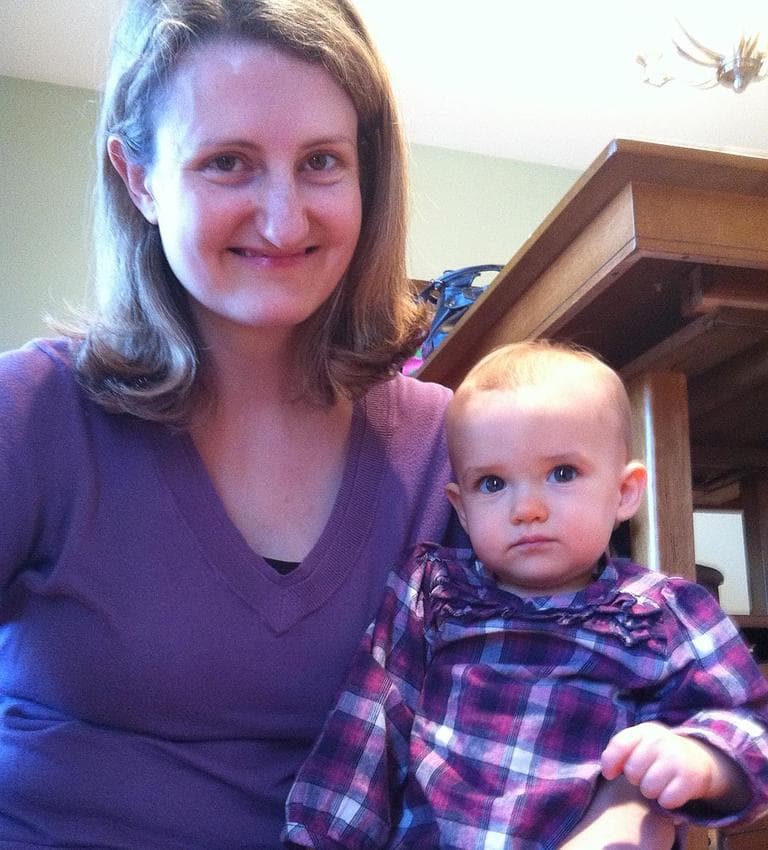
Jennifer Brickley, with her daughter Audrey, says too many women plan deliveries as they do hair or spa appointments. (Martha Bebinger/WBUR)

The number of early deliveries, from induced labor or C-sections, has been on the rise across the country for more than a decade now, including in Massachusetts. One reason is that we’ve come to expect that babies born “a little bit early” will be fine.

“Before the benefit of the neonatal intensive care unit, people were very conservative and would not induce or do repeat C-sections before 39 weeks,” says Dr. Glenn Markenson, the director of maternal and fetal medicine at Bay State Medical Center in Springfield. “But as they saw how well babies were doing with pediatric care, and they were getting pressured by patients because of social situations, there was a creep down from 39 weeks to 38 weeks, sometimes 37 weeks.”

With access to such excellent care, we overlook the facts — babies are in these expensive neonatal units because they’re having problems.

“Early-term infants have higher rates of respiratory distress. There are also issues with feeding,” says Dr. Lauren Smith, medical director at the Department of Public Health. “The most recent evidence shows that babies born before 39 weeks may also have developmental issues, so when you add up the increased risks and you weigh that against a situation when it’s purely elective, then you really can’t justify it.”

A growing number of hospitals in Massachusetts, and across the country, are saying no to elective inductions and C-sections before 39 weeks. The change is happening quietly and some new mothers don’t like it.

Lisa Coulouris sits on her hardwood kitchen floor with the Moms Club of Reading baby playgroup.

“The bottom line is women should have 99 percent of the say in what happens with their pregnancy and their bodies,” says Coulouris, who delivered twins eight months ago after complications that led to an emergency C-section. She does not like the idea of hospitals telling women they must carry to at least 39 weeks.


Doctors who are trying to end early elective deliveries say they don’t have a savings goal. Their focus right now is on reversing the trend.

“You’re already out of control of your body, so at least to know if you go to your doctor’s office and say, ‘Look, we’re at 37 weeks, and I feel like I’m ready,’ ” Coulouris says, imagining a case in which a mom would not want to wait. “To know that I would have that choice would just make me feel better. But to take it away from me just adds to the pressure of being pregnant.”

Across the room, Jennifer Brickley agrees that doctors need to take a mom’s emotional state into account, but she is bothered by the rise in what she calls “convenient deliveries.”

“In recent years it’s kind of gotten in line with the spa appointments or the hair appointments,” says Brickley, who supports timing a delivery based on medical evidence. “So I agree with what they are doing. Probably it’s a lot of costs involved that are driving this as well.”

Doctors who are trying to end early elective deliveries say they don’t have a savings goal. Their focus right now is on reversing the trend. Some hospitals have installed scheduling software that rejects deliveries before 39 weeks.

At Massachusetts General Hospital, Dr. Jeff Ecker, a high-risk obstetrician, is the gatekeeper. Each week Ecker reviews the schedule for early inductions and C-sections to see if they are all medically necessary. He says the decisions are easy when either the date is clearly a choice or the mother or baby are very sick.

“And in between are sometimes shades of gray –- how high is the blood pressure, how small is the baby?” he says.

Privately, some obstetricians worry about how hospitals that stop early elective deliveries will handle cases that aren’t clear-cut.

Ecker says he tries to make sure that physicians and patients weigh the risks of an early birth against the pregnancy complication they face. He says physicians at Mass. General, when presented with the evidence, have largely stopped requesting early elective deliveries.

“Our goals are to make it virtually a never event, so there will not be truly elective deliveries less than 39 weeks, and we’re pretty much there,” he says.

In health care, a “never event” is the equivalent of a medical mistake for which hospitals may not get paid. That’s not the case yet with early elective deliveries.

A ban on early deliveries will likely slow the rise in C-sections, says Gene DeClercq, a professor at the Boston University School of Public Health. DeClercq says stopping early elective deliveries is one of the few clear ways doctors can reduce the rate of C-sections, which vary a lot from one hospital to the next.

“People focused on tightening up around inductions prior to 39 weeks, both because it was clinically appropriate, because it was an easily identifiable target to use. It also had (the) advantage of being supported by (the) March of Dimes, which is a powerful and savvy advocacy group,” DeClercq says.

The March of Dimes, which launched a national campaign to end early elective deliveries this summer, is one of the sponsors of a new statewide collaborative that meets Monday afternoon. The group is trying to find out what hospitals in Massachusetts are doing on this issue and whether a statewide approach makes sense.

This story is part of a reporting partnership that includes WBUR, NPR and Kaiser Health News.

WBUR Topics · Boston · Health
Please follow our community rules when engaging in comment discussion on wbur.org.
  • Alicair

    I think women in the throes of pregnancy too easily forget that said pregnancy is not about the mother.  It’s about the baby they’ve chosen to bring into the world.  The mother’s “birth experience” shouldn’t be the priority, rather the health and well-being of the child.  If they are feeling pressure or are ‘scared’ of the timing or the situation, maybe they shouldn’t have gotten pregnant in the first place. 

    I wonder if the women who elect to deliver early simply to control the situation would take responsibility for those actions and NOT sue a hospital or a doctor when there are complications that could have been avoided by waiting for things to take their natural course.

    • http://twitter.com/kehutchinson Kate Hutchinson

      Pregnancy is not about the mother? Since when?

      Certainly the women in this article come across as self-centered and caring about scheduling births to fit their schedules only, but really, there is a lot to do with the mother in pregnancy. Pregnancy can create all kinds of health issues for the mother: preeclampsia, high blood pressure, gestational diabetes, sciatica, headaches, nausea, and plenty more, and the mother is a valued person, not any more or less important than the baby.

      It’s opinions like yours that threaten women’s health by reducing them to the role of the womb, and not recognizing that they are people, just like the babies they give birth to.

      • Jelun

        The discussion, Kate, is about medically unnecessary procedures. So, please, value each person’s opinion after you read the article thoroughly.

        • http://twitter.com/kehutchinson Kate Hutchinson

          My original comment was pointing out that during delivery, there is far more involved than just the baby–and it’s important to value the life and safety of the mother. Saying that delivery has nothing to do with the mother is downgrading the mother as a person. And that’s medically unnecessary too.

    • Jelun

      And pay the extra hospital costs when the baby turns out not to be as ready as Mom is.

  • DZF

    Having a planned delivery with a C-Section that is not medically required makes me so crazy. Carry the baby to term! Of course having a baby is a new and unknown experience, but you have to let yourself go and hope for the best. I am very happy with this decision.

  • Lawrence

    I wonder when humans will learn to let go of control and let nature takes its course. 

    These human beings can be so controlling, disruptive to the normal, natural laws of nature…with unforeseen consequences. 

  • Alison

    Choosing an early delivery, with no valid medical reason, is child abuse. The brain needs the whole third trimester to develop properly. As the mother of a preemie, born at 33 weeks due to pre-eclampsia, I can’t imagine that anyone would put their child’s normal development at risk for the sake of comfort. 

  • Angnic

    When you decide to get pregnant you make the decision to be, gasp, PREGNANT 40 weeks of caring for a fetus.. I am sorry you didn’t like it, or you were ready to be done- this whole thing truely disgusts me, thank goodness doctors are finally putting their foot down..

  • Lydia

    I hadn’t  planned on giving to the march of dimes this year, but after reading this column, I realize this organization is doing important work!

  • K.S.

    Am SO glad I read the comments on this article. I was beginning to think women were going crazy (i.e. Lisa Coulouris).  A planned c-section that is medically unnecessary is horrible, act of violence against humanity and nature.

  • I.M.D.

    It is unfair to say a mother who just had twins is going crazy, when it’s my understanding twins rarely go full term, and there’s no information either way as to whether she was aware of the study before she was interviewed.

  • Jessica

    Conveniently planning delivery is selfish. Baby comes first. Pregnancy is hard…especially at the end. Many women feel ready to go at 35 weeks. They’re uncomfortable. That doesn’t mean they should be able to deliver because of it. Doctors know what’s best for mom and baby and should use best practices when making that decision.

  • SaneMomFromReading

    Lisa Coulouris, you’re kidding right!?  You think you have the right to use the medical system in whatever way you see fit, whatever is convenient or beneficial to you!? I hope you don’t raise your child to be as self-centered as you are.  Women have NO right to request inductions and c-sections because  THEY feel ready.   And they have no right to have the very expensesive, subsequent medical care that likely arises from that, post c-section medical care, neonatal care, etc.

  • RobynT

    Frankly, I’m appalled – but I wonder why the physicians and hospitals allowed this practice to become commonplace?? Surely this says more about the clinicians’ arrogance than the pregnant women?  This reminds me of two lines in the original Jurassic Park movie – “your scientists were so preoccupied with whether or not they could, they didn’t stop to think if they should” , and “The lack of humility before nature that’s being displayed here, uh… staggers me”.  

  • Nic’sMom

    You may THINK you are ready to have your baby, but your baby may NOT be ready to come out.  Let your body & baby make the decision, not your calendar.  It’s not like you’re going to be pregnant forever…it’s only a small fraction of time in comparison to the time you’ve been on this earth.  If you think waiting for your baby to be born is inconvenient or bothersome, how about when he/she wakes up every 2-4 hours to be feed/changed, or the fact that you can’t go out with your girlfriends whenever you want now that you have a little person depending on you. 

  • Montessori doula

    If you can’t wait the extra 2-3 weeks to ensure your baby is healthy, DON’T GET PREGNANT! A step in the right direction but I’ll be happy when hospitals stop inducing or doing c-sections on *any* baby who is showing no signs of stress.

  • DrChasse

    I agree with many of the mamas here- as a physician myself, I know that the baby decides when it’s ready come out- it is the baby’s signals that initiate labor.  Moms who want early delivery because they feel that THEY’RE ready may be putting their child at risk.  You’ve been careful to take your prenatal and DHA, to not drink alcohol, and to care well for this child while they’re in your womb- why take such a risk now?!?  It’s only a week- and trust me, the crying, nursing, cuteness, and sleepless nights will come! :)

More stories in 'Health'
UNDERWRITING
Most Popular
Shop Now
Amazon.com
SUPPORT
This site is best viewed with: Firefox | Internet Explorer 9 | Chrome | Safari