Listen Live! Link to Schedule Link All Shows Link to Archives
  Home
Search


WBUR Newsroom
Election 2008
CommonHealth Blog
Radio Boston Blog
Boston Weather
Climate Connections
BBC World News
NPR Top Stories
NPR's Morning Edition
NPR Topics: Books
NPR Topics: Movies
Fresh Air
All Things Considered
Marketplace
Submit a News Tip


RSS Feeds
Podcasts


Public Schools, Private Money
By Fred Thys

Listen to story (Real Audio)

Lacrosse players kick up dust at King Philip Regional HS in Wrentham. (Photo: Fred Thys)
WRENTHAM, Mass. - April 30, 2008 - This Spring, budgets are so tight in cities and towns that some parents have decided to fund sports facilities and programs themselves.

We're not talking about people paying fees so their children can play sports: that's been going on for years.

As WBUR's Fred Thys reports, this is about private funds paying for an entire sports program or the field where it's played.

Audio for this story will be available on WBUR's web site later today.

TEXT OF STORY:

FRED THYS: The dust is swirling around the lacrosse players on the field at King Philip Regional High School, in Wrentham. Sure, the athletes, from King Philip and Wayland, are playing hard, but the field is generating so much dust because it's just worn out from lacrosse games, soccer games, football games, and band. Actually, the band has to practice in the parking lot.

The field sits in a brand-new athletic complex with stands, a track, and state-of-the-art lights that can be turned on with a phone call, all paid for by tax dollars. But the towns in the school district, Wrentham, Plainville and Norfolk, are not about to pay for a new field. The schools have more pressing needs. So a group of parents and former parents are proposing to raise a million dollars for a new artificial turf field. They hope to have it in place by September. The lacrosse parents watching the game think it's a great idea.

Sean Moran, for instance.

SEAN MORAN: If the money isn't available through public funds, private's the only way to go, and sports are important for the kids, so I'm all for it.

THYS: So is the team's coach, Dan Warren. He says playing on rainy days is even tougher.

DAN WARREN: There's no real consistency with the bounce of the ball when you're shooting, and you don't know where the holes are, where you're going to slip, where you're going to slide, where any water might be standing, so it's really tough to kind of figure out and gauge what type of play you're going to get on any given day.

THYS: Because the game field is so beat up, the lacrosse players practice on another field. Warren says that one's not so good either.

WARREN: Ah! Practicing on this field is an adventure. It started off as having a small amount of grass in the middle, and now it's kind of worn away to a lot of dirt, some rocks.

THYS: Rich Harwood had two sons play in the mud here. Now, he's the person leading the effort to raise the million dollars for the new field.

RICH HARWOOD: We thought about car washes, but a million dollars would be an awful lot of car washes.

THYS: So instead, they're selling naming rights: for the band's staging area, for the press box, for the field, even for the whole complex. Harwood adds donors can also get their name on a plaque, on a granite wall, or on a brick in a walkway.

HARWOOD: We're trying to be very fair by not going to the same wells over and over and over again, ??cause you just tax the community, and in these economic times, it's just very, very difficult for many people out there. We certainly understand that.

THYS: The times are so difficult that the head of the school committee, Clare Sullivan, welcomes the private money.

SULLIVAN: You know, when it comes to budget crunch time, and we're looking at losing teachers, there's no way we could put a new field in here.

THYS: If residents don't vote to increase property taxes this Spring, the high school would lose a science teacher, a social studies teacher, an English teacher, a math teacher, and a journalism teacher. There would be fewer science labs. The English classes would be bigger.

SULLIVAN: The more students you have in an English class, the less chance they have to write. I've been on the committee for a long time. I'm really sad to see us heading in that direction, yet I understand the fiscal realities of the towns, as well.

THYS: 50 miles north of Wrentham up Route 495, in the towns of Groton and Dunstable, parents are planning to pay for a new high school football program, and not just the fees so their children can play. They're putting up the money for the whole program: $40,000 dollars by this fall. The school committee has already okayed the idea.

One of its members, Paul Funch, is in a school gym in Groton, where people are picking up their numbers for a road race. Funch is one of the organizers of the event, which helps to pay for the schools' track program, and he supports the idea of private funding for football.

FUNCH: I think it's a good idea, because the town doesn't have the money to pay for the football team, so it's the only way we could possibly have thought about it, but at the same time, we're struggling to keep our academic programs going. I worry that with a limited amount of money, if it goes into sports rather than into academics, that's not a good precedent to set.

THYS: Donors have promised to fund football for three years. So Funch is worried that after three years, the towns will have to pick up the funding, and won't be able to. With their school population going down, every year, Groton and Dunstable are getting less money from the state.

FUNCH: We have a great group of little guys here just itching to go. They're ready to tear down the starting line.

THYS: Outside, the one-year-olds are the first age category to start the Groton Road Race. Despite the drizzle, a huge crowd has come out. People are split on the issue of private funding for high school football. This is Deb Busser, from Dunstable.

DEB BUSSER: Naah, I'm not crazy about it.
THYS: Why not?
BUSSER: I just think it's going to be tossed to the school district, and we're having such issues with overrides, I'm not sure the timing is right.

CHARLES LIPMAN: I think it's good that they're funding it that way.

THYS: That's Charles Lipman, from Groton.

LIPMAN: I think because of the situation that the school system's in where they didn't have any hirings last year for teachers, I think you always have to put the education first.

THYS: If voters don't approve a tax increase this Spring, Groton and Dunstable could lose fine arts, PE, and special ed teachers. On the other hand, if donors come up with the money by July 1st, this fall, there will be football.

For WBUR, I'm Fred Thys.


   From The WBUR Newsroom

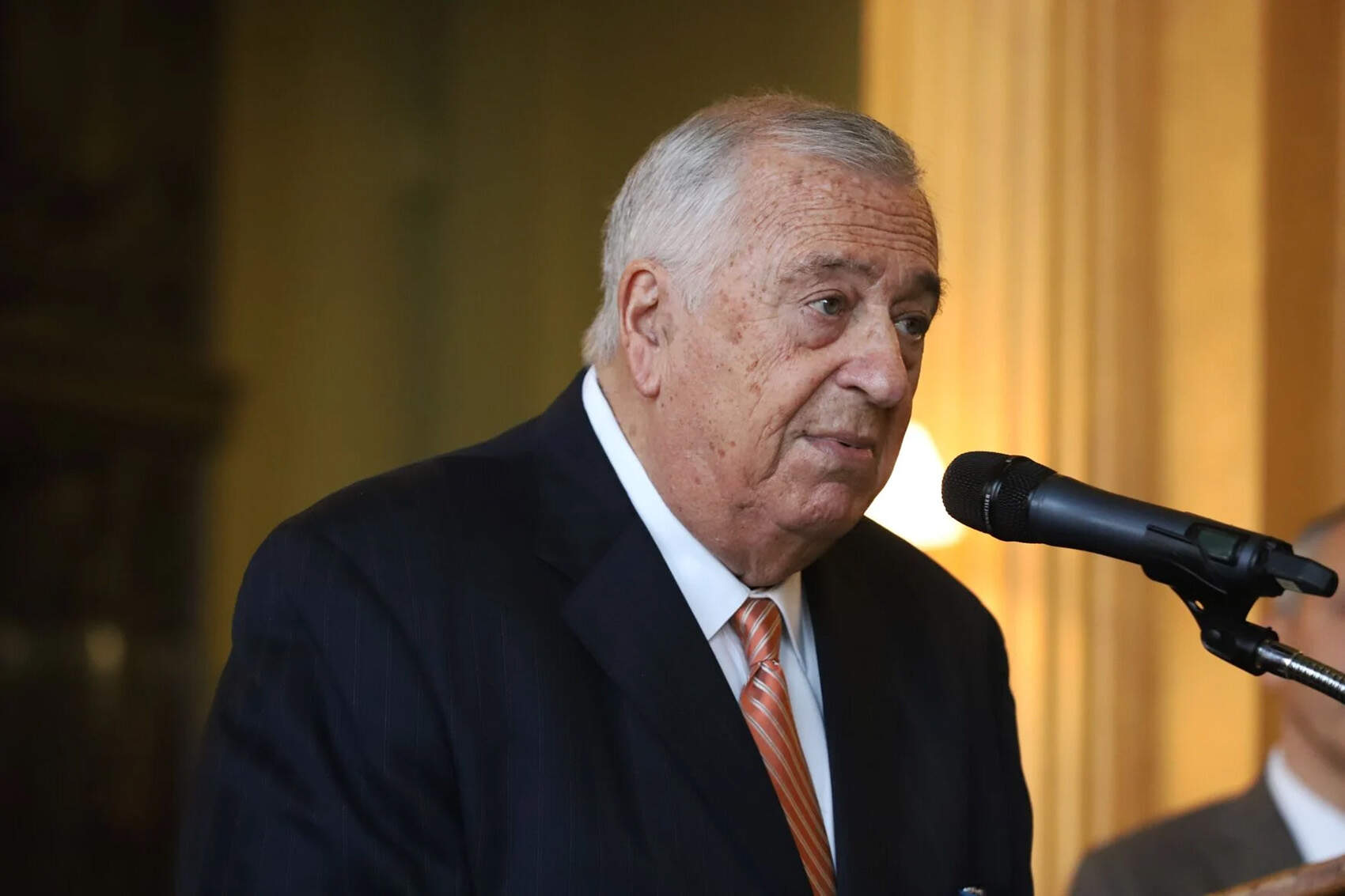
MA House Speaker Sal DiMasi (AP Photo)Speaker DiMasi Speaks Out
BOSTON, Mass. (May 13, 2008) After keeping quiet about recent ethics allegations and speculation about successors, House Speaker Sal DiMasi is now sanswering the critics.
Claudia Sierra is fighting foreclosure on her East Boston condo. (Photo: Bianca Vazquez Toness)Trying to Avoid Foreclosure
BOSTON, Mass. (May 13, 2008) Amid record foreclosure rates, many homeowners are doing everything possible to negotiate with their lenders. But some are finding it's an insurmountable challenge to keep their homes.
Loan Forgiveness a Success
BOSTON (May 12, 2008) A loan forgiveness program has attracted 47 doctors and nurse practitioners in its first year.
Profiles in Courage Awards
BOSTON (May 12, 2008) The Secretaries of State from Ohio and California are the Kennedy Library's Profile in Courage Award winners.


spacer
NPR spacer BBC spacer PRI spacer CopyrightBoston UniversityFAQContact UsPrivacy StatementSite Map