Support WBUR
Barney Frank, now in hospice care, has an urgent message for Democrats hoping to bounce back from Trump
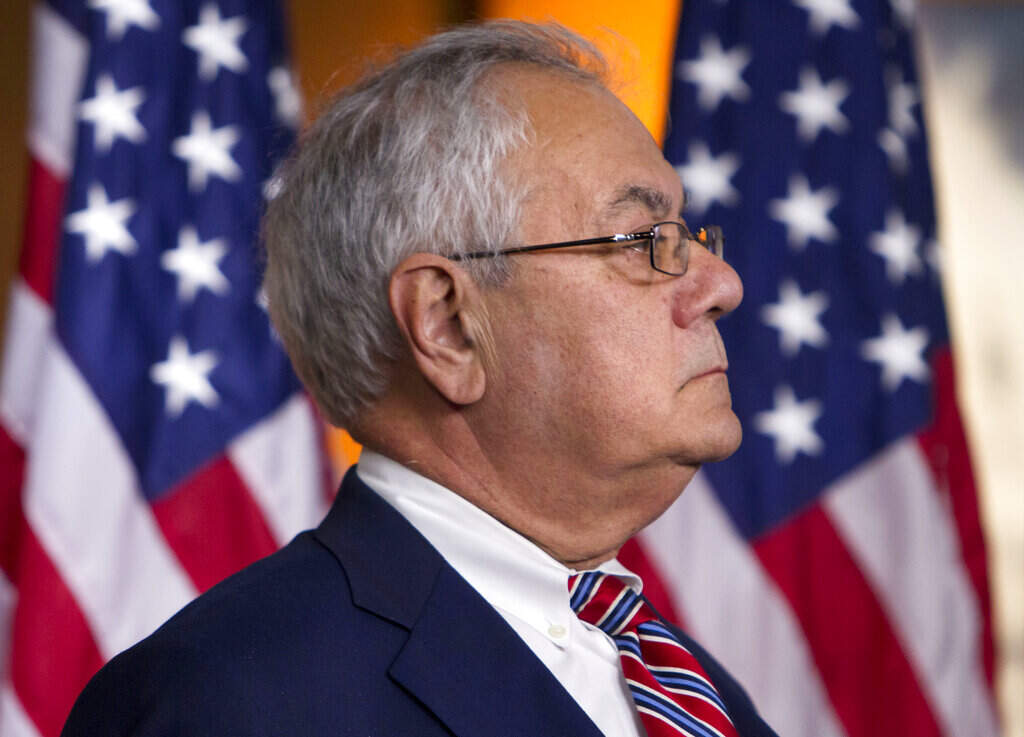
Former U.S. Rep. Barney Frank may be writing his last chapter, but he still has a lot to say.
The long-serving Democratic congressman from Newton represented Massachusetts' 4th Congressional District for over 30 years. He was a champion of liberal causes and co-authored the Dodd-Frank Act, which overhauled banking regulations following the 2007-2008 financial crisis.
He's now in hospice care at his home in Ogunquit, Maine, where he lives with his husband, Jim Ready. And he's not shying away from controversy in his own party.
He says Democrats have a chance to defeat President Donald Trump's brand of right-wing populism, but only if the party embraces core economic issues instead of polarizing culture fights.
Frank spoke to WBUR's senior political reporter Anthony Brooks about his long political career and about his forthcoming book, "The Hard Path to Unity: Why We Must Reform the Left to Rescue Democracy," which will be published in September.
The interview has been edited for length and clarity.
Brooks: I wanted to start by asking you how you're feeling.
Frank: "Better than I expected to. You have just seen one of the reasons with Jim lifting me out of the chair. He's been just terrific. I'm usually not in pain. My father died in 1960 at the age of 53 from heart disease; I had my first heart attack in 1990, and frankly, I didn't think I'd get this far. My heart is just wearing out, but I'm generally comfortable."
Brooks: Let me start with a very general question. You've been talking to CNN, Politico and other journalists, including me. What is it you want to say about this moment?
Frank: "That it is essential for the values that have driven me into politics to defeat right-wing populism, and that the major obstacle to doing that is the insistence by part of the left wing of pushing everybody to adopt politically unacceptable views. I'm not telling people I don't want them to advocate for those things — I filed a bill to legalize marijuana in 1972 and I didn't think it was going to go anywhere. My problem is that instead of treating some of these reforms as issues which are currently unpopular — for which you have to build support — they instantly make them litmus tests for everybody and therefore make it harder for us to win."
Brooks: What specific examples of litmus tests are you talking about?
Frank: "Open borders is one. Defunding the police would be another, along with insistence on political correctness and transgender participation in girls' sports. And environmental issues like the Green New Deal — they just go too far."
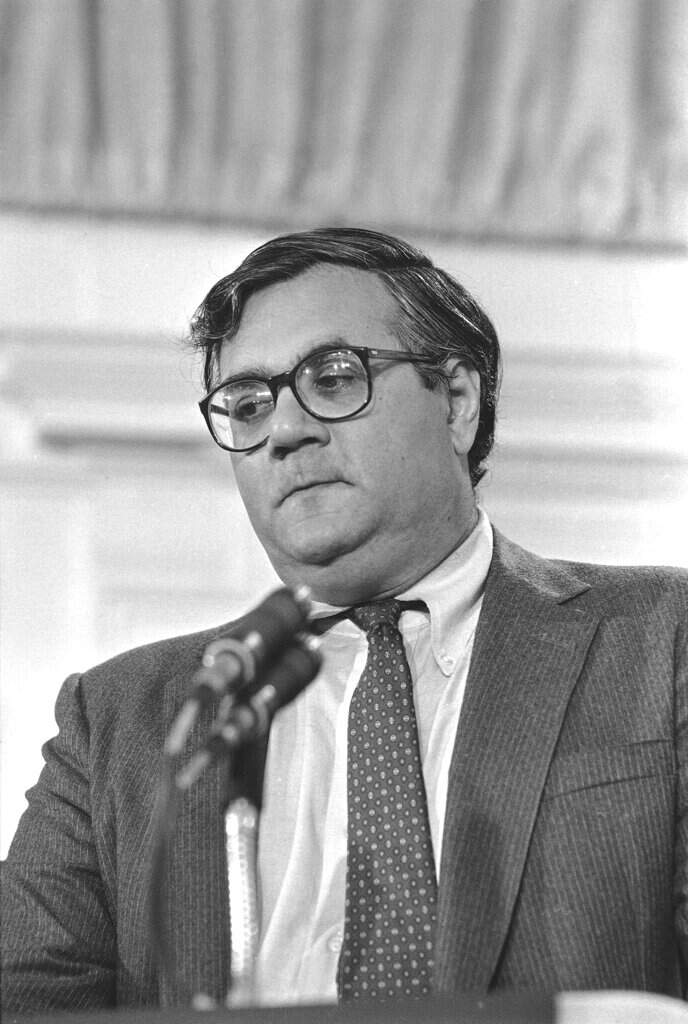
Brooks: Your book is entitled "The Hard Path to Unity: Why We Must Reform the Left to Rescue Democracy." What other ways does the left have to reform itself?
Frank: "Beginning in the '80s there's a sharp divergence between economic growth and the extent to which that's shared. After the financial crisis, there's anger about inequality and I was one of those trying to get Democrats to move on this. And finally, after the emergence of Bernie Sanders and Donald Trump and people like like Marine Le Pen [in France], there was movement on the economic issue. At that point I had hoped, 'OK, now we're all for fighting inequality and we'll diminish the anger.' But the problem was that those on the left, who had been right on the economic issue, decided that they could do even more changes. They said, 'Good, let's do the economics, but let's get rid of all these cultural and social evils.' And they went way too far. Like a lot of ideologues, they convinced themselves that the public agreed with them far more than it did."
Brooks: I want to ask you about the last 10 years, which have been dominated by Donald Trump. Is the dream of furthering liberal democracy gone for good, or do you think it will come back?
Frank: "It's not gone for good but there's been a lot of harm done. That's why I have a sense of urgency and why I'm taking advantage of this situation to talk about it. If liberal Democrats, not just here in America but elsewhere, do not repudiate the extremism that drives away a lot of voters, we're going to have this kind of [right-wing] populism for the long-term. And as to Trump, I have developed my theory about him: It's not just that he's bad on all these values, but he is an idiot savant. He has just one talent: an ability to exploit anger that got him into power. But having gotten into power, he's got nothing left, and that's why now he's just floundering."
Brooks: You've said that you think he's "imploding."
Frank: "Yes. I can't think of an issue on which he's popular. The Iran war, the fight with the Pope, the economy, even immigration, where the left was dead wrong in its excessive openness, he's managed to make himself more unpopular. His anger, his narcissism, all of the negative parts of his personality have asserted themselves, and he really doesn't have much of a positive vision of things to offset that."
Brooks: You've had a long career in politics: You worked for Boston Mayor Kevin White; then as a state legislator followed by more than three decades in Congress. Looking back over your career, what are you most proud of?
Frank: "The fact that I have learned from my interaction, particularly with the media, to be smart enough not to answer that question."
Brooks: OK, point taken. Let me try a related question: You were the first member of Congress to come out voluntarily as gay and the first member of Congress to enter into a same-sex marriage. And you were a champion of gay rights. So around that issue, what's your message, particularly to young people, about the importance of that part of your legacy?
Frank: "I would hope it would give people some confidence in the broader political system. One of the problems is the alienation of younger people who believe that the system is rigged against them. If I had time to write another book, it was going to be about how we've made more progress fighting discrimination against gay, lesbian and bisexual people than on any other issue. When I got to Congress in 1980, there were no laws anywhere in America that protected gay people, and a couple of laws that specifically prohibited us from doing things. By 2014, they were all gone. It's an example of how democracy works. And so my argument is that we have made enormous progress by using conventional political methods. And it didn't just work for us as a sexual minority; it will work for other issues as well."
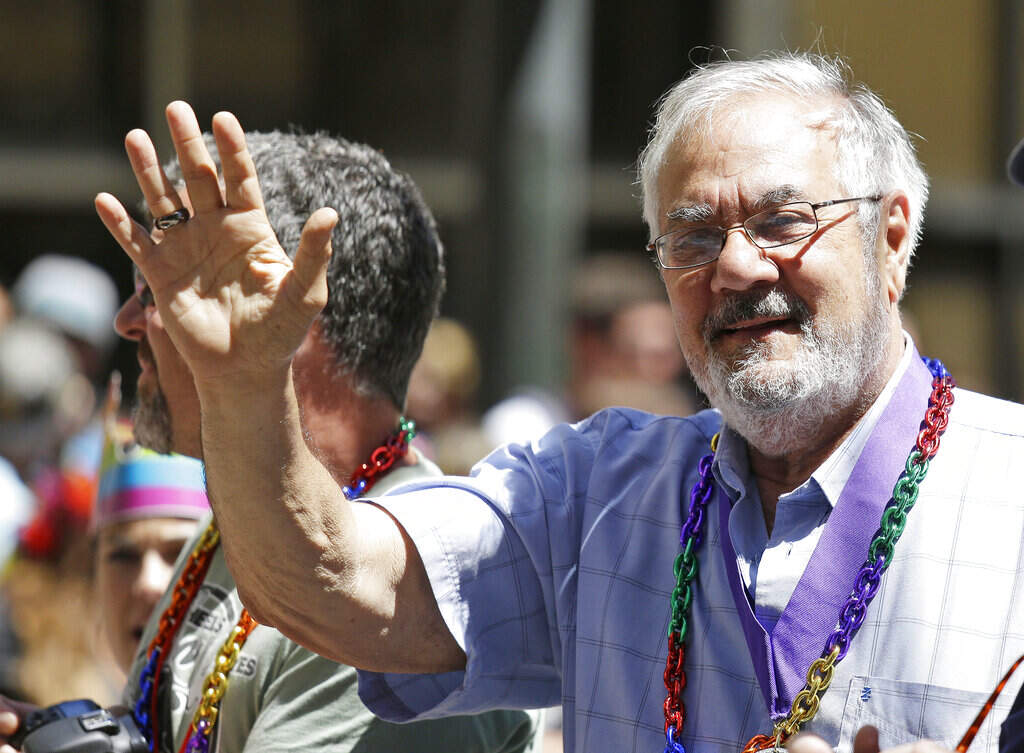
Brooks: Do you think your fellow liberal Democrats should be optimistic about the future?
Frank: "They should be contingently optimistic. That's why I wrote the book. If I didn't think there was a strong possibility of winning, I wouldn't have forced myself to write it. So, yeah — I think we should be optimistic that there is a way out and it is doable."
This segment aired on May 14, 2026.