Support WBUR
What we know about the Epstein files
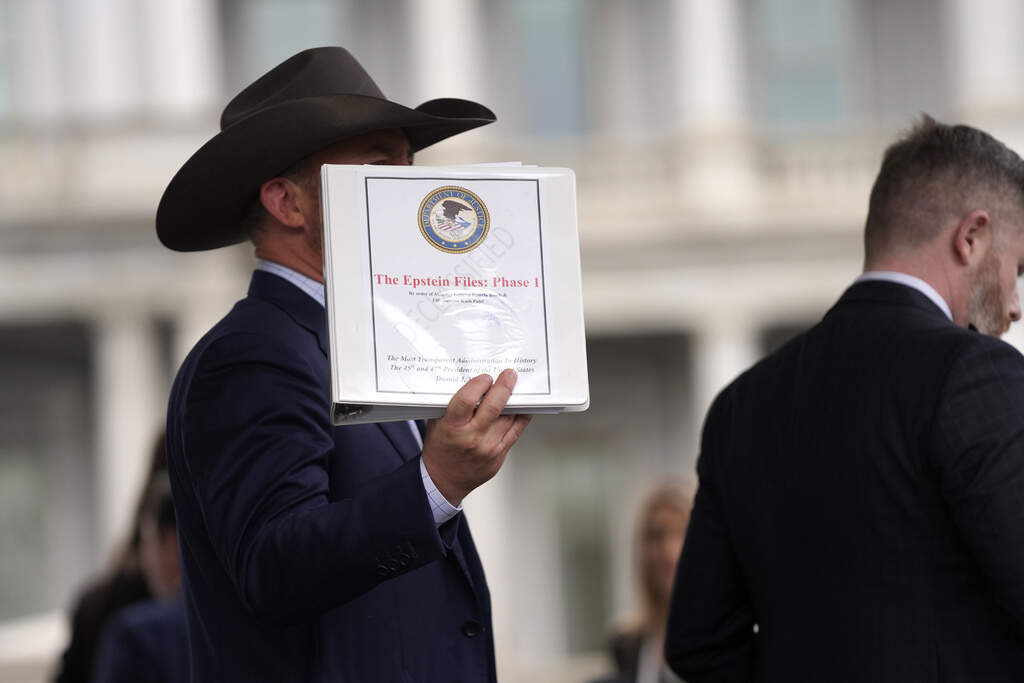
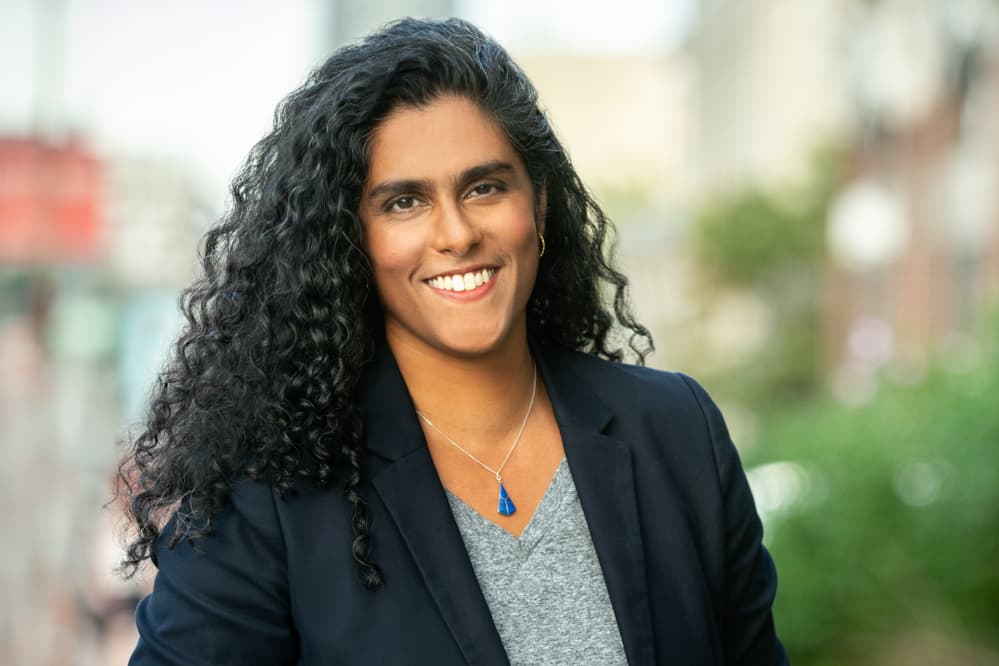
Miami Herald reporter Julie K. Brown knows more about the Jeffrey Epstein case than just about anyone. What does she think might be in the files the Trump administration hasn't released?
Guest
Julie K. Brown, Author of “Perversion of Justice: The Jeffrey Epstein Story.” Reporter for the Miami Herald who exposed Jeffrey Epstein’s treatment of young women and girls.
Transcript
Part I
MEGHNA CHAKRABARTI: The regularly scheduled House August recess was coming up anyway. But Republican representatives still had important business they were set to vote on this week before heading back to their districts for the summer. Measures like proposals to roll back some Biden era regulations, another bill targeting unauthorized immigrants, and yet another bill that would further relax some environmental regulations.
Yet all of that — in fact, the entire business of the United States House of Representatives — is grinding to a halt over one man.
HOUSE SPEAKER MIKE JOHNSON [Tape]: We have a moral responsibility to expose the evil of Epstein and everybody that was involved in that. Absolutely. And we're resolved to do it.
CHAKRABARTI: That was House Speaker Mike Johnson yesterday announcing that by the end of day today, Wednesday, the House will be adjourned until September. No more votes on anything — especially not on a procedural vote that would force the Department of Justice to release its files related to convicted sex trafficker Jeffrey Epstein.
JOHNSON: We also have an equal moral responsibility to protect the innocent. And that is a fine needle to thread. And we could all give ourselves easy political cover and come out and do something in a haphazard fashion, but I would not be able to sleep at night because I know our legal responsibility. I understand what the legal standard is. But more than that, the moral standard, okay? So we're gonna do this and we're gonna do it expeditiously.
CHAKRABARTI: And in this case, "expeditiously" means "not until September." Or perhaps not at all.
Now, the vote in question is in regard to bills filed by Kentucky Republican, Thomas Massey, and California Democrat Ro Khanna. The measures would force the Department of Justice to make all of its files on the Epstein case public and searchable within 30 days of a House vote.
Now, bear with me for a little bit of Congressional insider baseball because it's kind of important to understand how we got here.
Because, in fact, the House Rules Committee has already voted on the matter. This is a very powerful committee. It's the one that decides which legislation reaches the House floor. And on Monday, July 14, the Rules committee voted six to five against advancing the Epstein bills. Republican Ralph Norman of South Carolina was the sole Republican who voted to actually advance the bills. All other Republicans voted against them. And that vote though brought a flood of angry calls to congressional offices from constituents demanding the release of the Epstein files.
Well, later on, Democrats threatened to force yet another vote on the Epstein files, and Republicans abruptly recessed a Rules committee meeting just this past Monday. And then, in order to shut down the Rules committee, House Speaker Johnson decided to shut down the House entirely.
So that's where we are. The United States House of Representatives is going home early to avoid a vote about a convicted sex offender.
Now, we got here in part because of President Donald Trump himself. In 2002, Trump called Epstein "a terrific guy" in a New York Magazine article and identified that he'd known the financier for some 15 years. They later had a falling out over a real estate deal in Florida.
Trump later on repeatedly called to release the Epstein files during his presidential campaign. Last year, then-candidate Trump appeared on the Lex Fridman podcast saying if elected, he would release the files.
PRESIDENT DONALD TRUMP: Yeah, I'd be inclined to do the Epstein. I'd have no problem with it.
CHAKRABARTI: But more recently, the president's zeal has cooled.
TRUMP: He's dead for a long time. He was never a big factor in terms of life. I don't understand what the interest or what the fascination is. I really don't.
CHAKRABARTI: But back in February of this year, on Fox News, Donald Trump's Attorney General Pam Bondi had promised to produce an alleged client list of people who used Epstein's sex trafficking network.
FOX NEWS HOST: The DOJ may be releasing the list of Jeffrey Epstein's clients? Will that really happen?
PAM BONDI: It's sitting on my desk right now to review. That's been a directive by President Trump.
CHAKRABARTI: But now Pam Bondi is saying, no, no, no, no, no. It wasn't a client list, it was something else.
BONDI: I was asked a question about the client list, and my response was, "It's sitting on my desk to be reviewed," meaning the file along with the JFK, MLK files as well. That's what I meant by that.
"I was asked a question about the client list, and my response was, 'It's sitting on my desk to be reviewed,' meaning the file along with the JFK, MLK files as well. That's what I meant by that."
CHAKRABARTI: Okay, so this is really interesting because when Attorney General Bondi mentions the JFK and MLK files, she has a point. The Trump administration has in fact made good on those promises. They've released tranches of files on the assassination of President John F. Kennedy. And just this week — and over the objections of the King family — the administration released the FBI files on Dr. Martin Luther King, Jr.
So the administration can release tens of thousands of documents when it wants to. It's just that they don't want to in the case of Jeffrey Epstein.
Or, as House Speaker Johnson put it:
JOHNSON: We're done being lectured on transparency by the same party that orchestrated one of the most shameless, dangerous political coverups in the history of this country or any government on the face of planet Earth.
CHAKRABARTI: Well, that brings us back to why the Trump administration and the GOP-led House is going to rather strenuous lengths to avoid doing exactly that in the Epstein case, releasing those files.
Now, the political infighting between GOP leadership and President Trump's base is, of course, getting ample attention in the media. But honestly, even more important is what we know about the case itself — what might be in the DOJ's files and what it tells us about the absence of justice for vulnerable people in the face of powerful men.
And to help us answer those questions we could think of no one better than Julie K. Brown. Her original reporting for the Miami Herald is what exposed the sweetheart deal that Epstein received in the state of Florida back in 2008. And that reporting is what helped launch the federal investigation that exposed the breadth of Jeffrey Epstein's activities.
She's continued to report on the Epstein case tirelessly. And she's documented her work in the book, Perversion of Justice: The Jeffrey Epstein story. And she joins us now from Miami.
Julie K. Brown, welcome to On Point.
JULIE K. BROWN: Thank you.
CHAKRABARTI: So, I know that you're not a political reporter. I'm not gonna spend a ton of time on the politics over this. But I just — you know, from your view, knowing as much as you know about this case, just sort of like your response to what's been happening in Washington this week.
BROWN: Well, what I can talk about a little bit is how the victims are handling all this attention right now. Every time this story gets a blip on the news — and especially the amount of coverage that's happening right now — it affects the victims deeply. They often feel re-traumatized because from the get-go, this case was always covered up and downplayed. And in their mind, justice was never served.
"It affects the victims deeply. [B]ecause from the get-go, this case was always covered up and downplayed. And in their mind, justice was never served."
So the fact that now they wanna talk with one of their predators — which that's exactly what Ghislaine Maxwell is, she was one of their predators — is disturbing, I think, to a lot to them. And to a lot of other people who know the role that she played in Epstein's sex trafficking organization.
CHAKRABARTI: So, it's a retraumatization. And I'm really glad you brought up that point, because what I didn't mention in that intro is what you said just now about Ghislaine Maxwell. That the Department of Justice wants to re-interview her in some capacity? Can you tell me more about that?
BROWN: Well, it's hard to know. They made the announcement yesterday that they're going to go talk to her. Now, obviously her goal, she was convicted in 2022 of sex trafficking charges. And she's going to probably spend 20 years in prison unless she gets some kind of a deal.
So the concern is that the Justice Department might cut some kind of a deal in order for her to provide them with information. So this could very well be another sweetheart deal, similar to the one that Jeffrey Epstein got in 2008.
CHAKRABARTI: And so then that would just, in fact, in the minds of the victims, just prolong the coverup, is what you're saying?
BROWN: Yeah, it's prolonging the coverup. And not only that, but it doesn't really get to the heart of what the problem is here and how this man was able to abuse so many girls and women over two decades. I mean, how does that happen? You know, that that's what should be under investigation here. They should find out who was helping him because Jeffrey Epstein didn't do this by himself.
CHAKRABARTI: So tell me more about that, Julie. I mean, from your years of reporting, I mean, what have you found about the people who may be associated with helping Epstein evade the law for so long?
BROWN: Well, he had a lot of assistants help him with his scheduling of these girls coming in and out of his various mansions around the country and also in Paris. He, you know, had a rotating group of people — butlers, like I said, assistants, secretaries. And he also had pilots. He had private planes where he was flying some of these women around the globe. So he had those kind of people.
He also had recruiters in certain areas of the country. He had a business that he used, I guess, as some kind of — he called it various names. He had a whole line of businesses and some of them were really fronts for his sex trafficking. And he had people who worked for those businesses in New York and Palm Beach.
So there's the people that helped him in that respect. And then, of course, there are men who engaged in the trafficking themselves by allowing Epstein to send young women and girls to them for, you know, the line would be, "Send somebody over to give me a massage," but these weren't really massages.
So he had a group of powerful men that did indeed, you know, were involved in trafficking some of these girls and women.
CHAKRABARTI: Yeah. Okay. So Julie, let's just quickly dispose of something. Is there a client list or not as far as you know?
BROWN: I don't think there was a client list, but I think he had files. I think he had files on, you know, even as a businessman, he would've had files on these people that he did business with. And that's what this really was mostly was also about, was about money. These girls and women were pawns that he used to ingratiate himself. And get business from some of the most powerful people in the world and that that's what he was in part doing.
"I don't think there was a client list, but ... as a businessman, he would've had files on these people that he did business with."
Part II
CHAKRABARTI: Julie, you know, in terms of understanding the depth of the fervor over the DOJ's Epstein files, now I would appreciate if you could take us back in time to the beginning of your involvement in this case, and your uncovering of the deals that Epstein got back in Florida.
How were you first tipped off to that there was something going on with this guy named Jeffrey Epstein?
BROWN: Well, let me start by saying this story had gotten a lot of play before I entered the picture. When he had a plea deal in 2008, there was a lot of coverage of it. And later on, it became known that he got some kind of a sweetheart deal, and that was reported upon.
CHAKRABARTI: Mm-hmm.
BROWN: But in 2016, when President Trump was running for president, there was a lawsuit, a civil lawsuit that was filed on behalf of a woman who claimed that she had been raped by Mr. Trump at the time. And Jeffrey Epstein was part of sort of a sex trafficking or a party that they had had. And she claimed that she had been raped. And I saw a column that had been written questioning why the media wasn't looking into this lawsuit. It really hadn't been written about very much.
And there were problems with the lawsuit. But I nevertheless thought, the Jeffrey Epstein's deal that had been made and had been written about, didn't answer a lot of questions. How does a man that committed that kind of a crime essentially get away with it? So, in my mind, I thought, let's just start looking at it and see if maybe with the passage of time — this was 2016 — I thought with the passage of time, maybe there's more here to uncover.
And so I just started requesting all the files and I kind of looked at it like a cold case detective takes out an unsolved murder or some other mystery. And I thought if you take it apart from the very beginning and look at it from a different point of view, sometimes you see things, number one, that others haven't seen. And number two, sometimes people that wouldn't have spoken out before are now maybe perhaps willing to talk.
CHAKRABARTI: Yeah.
BROWN: And what I discovered was that some of these women now were in their late twenties, early thirties. And also around that time was when Trump got elected president and nominated, ironically, Alex Acosta, to be his labor secretary. And I knew when that happened that Acosta was the prosecutor who signed off on Epstein's sweetheart deal. So everything kind of came into place to take a new look at this.
CHAKRABARTI: Okay. So hang on here for a second because you just laid out a lot of important names and points. And first of all, I'm grateful that you mentioned that Epstein's story prior to 2016 had been reported on by other outlets. That's absolutely true.
But then when you came along, as you said, the thing that you were able to do is victims actually spoke with you. And so here's one of them. This is Michelle Licata. She's one of Jeffrey Epstein's victims. And she detailed her experience to you and then later on in a video put together by the Miami Herald. And this video is from December of 2019.
MICHELLE LICATA: A friend told me, "Do you wanna make some extra money for the holidays?" I said, "Yeah, of course. I've got seven brothers and sisters." She said, "Okay, well you can make some really good money. You have to just massage old guys. But if you tell anybody, I will beat your (EXPLETIVE.)"
I remember there was a staircase and it was kind of like a spiral almost. He just laid down in his towel on his stomach. When he flipped over, that's when he said, "Okay, you can go ahead and take off your shirt and pants, but you can stay in your underwear."
"He just laid down in his towel on his stomach. When he flipped over, that's when he said, 'Okay, you can go ahead and take off your shirt and pants.'"
As we're going back into town, I was just looking out the window, crying. I was just thinking to myself, "Nobody is going to want to be with me again for the rest of my life."
CHAKRABARTI: Now Julie, is what Michelle told you, did you later on find that that was fairly typical of how girls were ensnared by Epstein?
BROWN: Yeah. The girls in Palm Beach — now, he was doing this in other places because he had homes in New York, New Mexico, Paris, and on an island off the coast of St. Thomas. So he was doing it in different ways in different places. But the piece that I looked into was the high school girls that were being recruited from a high school in Palm Beach.
CHAKRABARTI: Tell me more.
BROWN: So he, you know, we believe that actually it was Ghislaine Maxwell who started this whole pyramid scheme, so to speak.
In other words, she would go to spas and gyms in and around Palm Beach. She would actually have Epstein's butler and drivers take her around. She would go to these places and she would find attractive young girls and she would tell them, "Look, you could make a lot more money if you come work for this wealthy man in Palm Beach who wants massages."
And, you know, she was able to also get into a group of younger girls who came from troubled families and needed money. She had an eye for being able to spot those kind of girls. And so, of course, they would go not knowing, because they didn't say, "Here, we're gonna pay you to allow somebody to touch you inappropriately or to have sex with you." They used the ruse that, "All you have to do is give this old guy a massage."
So once they got in there, he would — it was like a game to him almost. He would appear wrapped just in a towel in a dark room off his bedroom. There would be a table that was put out, a massage table, and he would just talk to them and groom them into, "I'm just gonna ask you to strip down to your underwear. That's all."
And, you know, it's just the girl and him in a room. And the girl realizes, "What did I get myself into?" You know, they're just put into this situation that they feel scared all of a sudden. And they're thinking, "What happened here?"
So he then would pay them, depending on how far they would let him go, he would pay them some money. And even if it seemed like they didn't want him to touch him at all, there were some that said, "You can't do this. I'm not gonna do this." He said, "Okay, that's fine. You don't have to do anything, but I'll pay you the same amount of money if you find me other girls." So he essentially was turning these girls into his own recruiters.
They would go back to the the high school in Palm Beach — Royal Palm Beach High School, I think it was called — and the girls would then know that they would get like, I don't know, $100 for every girl that they brought. So the girls would do the same thing. They would go to their friends or acquaintances and they would say, "Hey, you could earn $100 if you just go give this man a massage." Which of course, they weren't massages. They were an opportunity for him to molest them.
So that's really how the whole thing started. Before you knew it, there were probably hundreds of girls that were going in and out of his mansion in Palm Beach.
"There were probably hundreds of girls that were going in and out of his mansion in Palm Beach."
CHAKRABARTI: Mm. Now, let me play another bit of tape here again. Because to your point about really the people we should be thinking about are the victims. This is the voice of Virginia Giuffre.
I mean, she was, for people who've been following the case in your reporting, they know that she was one of the most maybe brave and vocal of the women who were abused by Epstein. And here she is. Again, this is in a documentary produced by the Miami Herald explaining how Epstein coerced her and other girls.
VIRGINIA GIUFFRE: To me, still to this day, it is my biggest shame that I carry around that I will never get rid of. Ghislaine brought me in. I brought other girls in. Those girls brought other girls in.
Jeffrey constantly had young teenagers coming through his door for one purpose and one purpose alone. I'm really, really sad that I brought other girls my age and even younger into a world that they should have never been introduced to.
"I'm really, really sad that I brought other girls my age and even younger into a world that they should have never been introduced to."
CHAKRABARTI: Mm. And by the way, Virginia died by suicide in just April of just this year. Julie, I didn't know if you wanted to talk about that because it's just more inescapable evidence of the long-term horrible impact this has had on Epstein's victims.
BROWN: Well, Virginia had a very hard life. She had been abused from the time she was really, you know, like seven or eight years old. And she ended up on the streets homeless as a young girl, 13, 14 years old, on the streets of Miami.
She was recruited by a pimp, essentially, who then sent her around and prostituted her at a very, very young age. He was eventually — the authorities eventually caught up with him and she got away from him and went back home to live with her family again, trying to make amends with her father and mother. And actually it was her father that got her a job at Mar-a-Lago, Trump's country club in Palm Beach.
Her father worked there as a maintenance man. And she got a job in the resort at Mar-a-Lago. It was like a summer job. She was 16 years old and she was studying to be a masseuse. That's what she wanted to do. And in walks Ghislaine Maxwell into, you know, the spa and starts talking to Virginia about the fact that she wanted to become a masseuse. And sort of scoped her out and realized she would be a good candidate. She was 16, blonde hair, blue-eyed. Epstein had this type. And that was his type: someone who was very slight and petite and blonde hair and blue-eyed.
And so she said the same line, "I have a very wealthy man who you could work for and make a lot of money. You could be like his traveling masseuse. You'll see the world and then you can become — he'll help you become a licensed masseuse." And that's how she got involved with Epstein.
And at that point, since she had lived through so much, this was, in her mind, she had no other options in life, she felt. That this was all she was good for, you know, this was her thinking. "This is all I'm good for, so I might as well take advantage of it and make some money."
CHAKRABARTI: Yeah.
BROWN: And so that's how she got into that. And she was, you know, she was a character. She just had a great personality, you know. I'm sure that's what Epstein liked about her, too. Because she was very — she was a firecracker. She was a very interesting young woman.
CHAKRABARTI: So, Julie, if I may, I actually had forgotten — and I thank you for mentioning this again — that Virginia was working at Mar-a-Lago when she was first approached by Ghislaine Maxwell. Mar-a-Lago, of course, being Donald Trump's resort in Florida. Did you — is there any evidence that other girls were recruited out of Mar-a-Lago by Maxwell?
BROWN: I've never heard of anybody else being recruited.
CHAKRABARTI: Okay.
BROWN: But it is kind of — in hindsight now we're looking at what's happening right now. It is kind of ironic that, you know, the woman that really was the most vocal in trying to get justice for other victims was a woman who was recruited at Donald Trump's country club.
There was another woman who had been brought to the country club to meet Donald Trump so there were — as a minor.
CHAKRABARTI: Wait, can you tell — can you tell me more about that?
BROWN: Like I said, there was another woman that was brought — Epstein was a member of the club at one point, so he brought at least one other woman who has said that she met Donald Trump at Mar-a-Lago. She was introduced to him by Jeffrey Epstein. But other than those two incidents, I'm not aware of any others.
"At least one other woman ... has said that she met Donald Trump at Mar-a-Lago. She was introduced to him by Jeffrey Epstein."
But remember, these are very powerful people. Trump being one of the, if not the most powerful person right now in the country. And you know, from what I hear from the lawyers who represent some of these victims and — survivors is what they call them, not really victims, survivors. They don't wanna go public with any of this stuff.
So even if there were others recruited out of Mar-a-Lago or who had met Trump under those circumstances, it's very unlikely that any of them are gonna go public at this point. Because for one thing, they see what happened to Virginia. I mean, she was tortured by some of the people she had accused of wrongdoing. So we might never know how many women were tied to meeting Epstein or meeting Trump.
CHAKRABARTI: Is it possible that — I mean, this is speculation, so you can tell me that you can't answer — but is it possible that further information about those meetings could be in the DOJ's files in association with the federal investigation?
BROWN: Yes. One would hope that the FBI and the DOJ did their due diligence in 2019 when they reopened the case. Or actually it was 2018 that they, at the end of 2018, after my series ran in the Herald, they reopened the case. And one would think that they would've looked at that. Looked at the various — I know they were trying to get as many victims as they could to cooperate, because they only had, I think, two at the time that they arrested Epstein.
So they were advertising and providing an 800 number so that other victims could come forward. And then, of course, he died. So, you know, that I think scared a lot of victims, too, into going public.
Part III
CHAKRABARTI: We're talking about how the current controversy over the Justice Department's reluctance to release the Epstein files is simply the culmination of decades of the criminal justice system bending over backwards to protect Jeffrey Epstein instead of the survivors of his crimes.
And Julie, I wanna just sort of quickly go over what happened back in what, 2005, 2006. And correct me if I get any of this wrong. But if I remember properly, in Florida, police and prosecutors actually had a lot of evidence to charge Epstein with — this is back in 2005, right — with very serious offenses, including four counts of unlawful sexual activity with a minor.
But instead of pursuing those more serious charges, Palm Beach County's State Attorney actually gave the grand jury a whole bunch of charges that they could choose to apply to Epstein, which just seems unusual. And even that step brought some real unhappiness with the Palm Beach Police Chief Michael Reiter who at that time accused prosecutors of giving Jeffrey Epstein special treatment.
And then where your reporting picks up, it picks up with the sweetheart deal that Epstein was ultimately offered by Alex Acosta. Can you tell us what that deal was?
BROWN: Well, what happened was the Palm Beach State Attorney Barry Krischer initially decided he really didn't wanna charge Epstein at all after the police handed him this case — thick files, they did interviews with the girls. They had, you know, at least a half dozen victims at that point. And he didn't wanna charge him at all. And there was immense pressure at the time for him to do something.
So he took the unusual step of calling a grand jury, which is usually only called for homicide cases, but this was obviously not that. And he only presented a fraction of the evidence that the Palm Beach police — he kept canceling the grand jury. Some of the women were in college by this time, couldn't show up on the date.
So it was almost a manipulation of the grand jury system in that he made sure that there weren't availability for some of the witnesses. So the evidence that was presented to the grand jury was a very small amount that the Palm Beach Police and the detective in charge of the case had collected.
So he got — essentially, Epstein got indicted on a very minor charge of solicitation of a minor. And at that point, the chief took it to the Justice Department, to the FBI and said, you know, "You've gotta look at this. This is a bigger case. Our state attorney didn't do due diligence." And so that's when the case was taken up by the FBI our of the West Palm Beach office, which is in the southern district of Florida. And Alex Acosta was the U.S. Attorney for the Southern District of Florida.
"'You've gotta look at this. This is a bigger case. Our state attorney didn't do due diligence.'"
CHAKRABARTI: Right. So this is 2007, right? And this is where your reporting kicks off?
BROWN: Yeah, that's right.
CHAKRABARTI: What, over a breakfast meeting? As you report on in that first story?
BROWN: Yeah --
CHAKRABARTI: Yeah, go ahead.
BROWN: Well, Epstein immediately hired, you know, a dream team of attorneys. One of those lawyers was a guy named Jay Lefkowitz, who he knew from in his earlier days of his career working for a very powerful law firm, Kirkland and Ellis. And Kirkland and Ellis was one of the law firms that — some of the lawyers who worked there, it gave them the leverage to meet other powerful people. And a lot of Supreme Court justices had served or had worked for that law firm. And Acosta wanted to be a Supreme Court Justice.
So Epstein hires Jay Lefkowitz from Kirkland and Ellis, and they meet at a breakfast meeting in Palm Beach to try to figure out how to resolve this case. And essentially what happened was there was — and this was new information that I had reported because we were able to get a lot of emails that went back and forth between the prosecutors in the Justice Department and Jay Lefkowitz.
And then ultimately Epstein hired other lawyers from Kirkland and Ellis, including Kenneth Starr. And these emails really formed sort of the basis for my story because they showed how Epstein was able to manipulate the Justice Department in order to limit the scope of his crimes.
In other words, this was just a minor crime. There were very few victims and so you could see this in the emails that they were exchanging back and forth, you could see the manipulation so very clearly on what they were doing and how they had also dazzled some of these line prosecutors who also had ambition. Not only Acosta, but there were several others who went on to very lucrative law careers after the Epstein case.
"Epstein was able to manipulate the Justice Department in order to limit the scope of his crimes."
CHAKRABARTI: Yeah, so Julie, let me just jump in here. Because, you know, there has been focus on the past in terms of the deal that Epstein struck regarding his own plea agreement — spending 13 months in a county jail in Florida under very, very lenient circumstances.
But what I think is most important to resurrect from your reporting is that there were a lot of unusual things associated with that deal that didn't have to do with Epstein directly, right? That there was wording in the deal — I'm looking at your first story here about what took place in 2007 that said wording that granted immunity to "any potential co-conspirators who were also involved in Epstein's crime."
So not only did that Florida deal shut down the FBI's further investigation into what Epstein had done, but it did this weird thing about like, preemptively granting immunity to people?
BROWN: Right. Yeah. Those people, they were women who were his assistants who helped arrange the schedule.
CHAKRABARTI: Oh, I see. Okay.
BROWN: And we know who they are, but it says named and unnamed co-conspirators. So some were named. But then there was always a discussion: What does the unnamed mean? It could be anybody. I mean, something like that has never been done before, as I understand it. It's just not done.
"It says 'named and unnamed co-conspirators.' ... What does the unnamed mean? It could be anybody."
So it's a very unusual codicil, so to speak, to this non-prosecution agreement. Which, by the way, they also sealed. So nobody knew this until over a year later. And by that time, he was out of jail. You know, he had already served his time.
So it was, it was a series of things like that that I sort of outlined in my story that made this a very questionable — if not somewhat illegal — agreement. Because under the Crime Victim's Rights Act at the time, any kind of a plea agreement or court proceeding that would happen under the law, they were supposed to let the victims know. And they did run into trouble because they didn't — they kept it secret from the public and the victims.
CHAKRABARTI: Do you think that that sort of strange approach was carried on even through the grand jury's investigation in New York? Because — again, correct me if I'm wrong — but the focus was on Epstein and then later Maxwell. But it seemed to me that there was enough evidence even at that time for the grand jury to have to ask for like, an even broader set of charges or investigations? You tell me.
BROWN: No, I just know because there were certain people that you would interview, formally interview, if you're going to take that case and make it a broader case. And they didn't do that. I mean, even watching Maxwell's trial, I was pretty stunned at how they had limited the scope of the evidence that they had even against her.
So it seems to me — and I don't really know for sure — but based on the reporting I've done with other people involved in the case, like victims' attorneys, they didn't go beyond initially it was just Epstein and they wanted to just get him. Then when he died, then it was all about getting Maxwell. And I think that they thought, "Well, we'll just get her, because she was really the mastermind. And if we get her, then we're done. We don't need to go there with all these billionaires and other people that he was involved in."
That would be a huge undertaking. And the Justice Department would face the kind of legal firepower from these billionaires that I don't think they wanted to confront. So I do think that they limited the investigation. There's not a lot in there about them doing much beyond what we already know.
But they did do a search warrant of his Manhattan home. They did find unusual things in his safe. He did keep files because he was a businessman and he had files. So one has to ask what did they have and did they — I don't think they did — but did they at make any effort at all to piece together the larger sex trafficking operation that he was running?
CHAKRABARTI: Hmm. You've said in other interviews that Jeffrey Epstein had the Justice Department essentially wrapped around his finger from the start. We've talked a little bit about how that, about why you say that. But it feels like, it sounds like even posthumously, he still has the Justice Department wrapped around his finger.
Because what was it, just a little earlier when some materials were released by the DOJ, including jailhouse tape from New York, from the day that Jeffrey Epstein took his life. There's missing tape, missing time in that tape. I mean, what do you make of all that?
BROWN: Well, first of all, I'm not convinced he took his own life. I'm probably in the minority of reporters, but I also know more about the case than most other people. I'm not saying he did or he didn't. I don't think that they investigated it in the right way. I think that there are too many things that went wrong that day that don't make any sense. The fact that --
CHAKRABARTI: Too many things, like what?
BROWN: Well, the cameras weren't working. The guards fell asleep. They falsified their reports. He was supposedly on suicide watch, but they took out the guy that was his cellmate in the hours before this happened.
So he should have gotten another cellmate. He shouldn't have been alone. He had been in suicide watch because they thought he tried to commit suicide weeks before that, those documents no longer exist. You can't get them. There were no cameras or video of that. You know, he was able to get mattresses even though he was on suicide watch. They allowed him mattresses in his cell. They allowed him an extra blanket in his cell. I mean, it was just, there's just too many things.
"I'm not convinced he took his own life ... [T]he cameras weren't working. The guards fell asleep. He was supposedly on suicide watch ... Those documents no longer exist. You can't get them."
Plus, the forensic pathologist hired by Mark Epstein, his brother, said right away that he didn't think that this was a suicide. And he still doesn't believe it's a suicide. He's a very renowned forensic pathologist, and he was at the autopsy. So I'm not convinced that he committed suicide. But, you know, that said, I do think that he, as you mentioned, he still haunts us to this day in a way. And, you know, the men that were involved, I'm sure are putting a lot of pressure on the Trump administration not to release these files.
CHAKRABARTI: And to come back to where you began this conversation, Julie, as all this goes on, the survivors of Epstein's crimes, they have to still live through this unending lack of resolution, lack of justice. I mean, even in an era where greater attention than ever is being paid to victims of sex crimes, the fact that this has been going on so long for these, you know, now women, it's gotta be extraordinarily painful. And I feel like it just shows that some people are just, indeed, they place themselves — not the survivors, but Epstein — beyond the reach of the law. I mean, I don't know how else — what other conclusion we can come to.
BROWN: Well, the other point is that the Trump orbit, the Trump supporters or influencers, people in that camp have been using this case for political reasons. And that's a travesty in and of itself. You are trying to get somebody elected or trying to elevate your own stature by spouting these conspiracies and demanding the release of the files. And I'm sure some people are doing that because they do want justice, but not everyone.
I mean, I still am mystified why Pam Bondi, the Attorney General, had to go on Fox News and say, "Oh, it's all on my desk. We're gonna release it. No problem." I mean, there were countless other people in the Trump administration that did that, too. Why do you have to do that? Why don't you just look at the files? You don't have to go on TV and stir the pot.
They could have just looked at files and they could have just done a thorough examination without making this a political tool. And that's what they did. They turned it into a political tool and it shouldn't be. This is a crime. This is a crime that that harmed children. And ruined lives. Ruined lives, so it should be treated seriously like a crime, not as a political tool.
CHAKRABARTI: Yeah. Which makes me also wonder that there are other avenues of investigation that should be taken up if they haven't already. And I mean, you've talked about this before, following the money, like maybe a pressure should be put on the Department of Treasury to help, or the FBI to help follow the money to see if people can be discovered that way.
But Julie K. Brown, investigative reporter with the Miami Herald, thank you so much for your reporting, and thank you for joining us today.
BROWN: Thank you.
The first draft of this transcript was created by Descript, an AI transcription tool. An On Point producer then thoroughly reviewed, corrected, and reformatted the transcript before publication. The use of this AI tool creates the capacity to provide these transcripts.
This program aired on July 23, 2025.