Support WBUR
Trump and trickle-down corruption
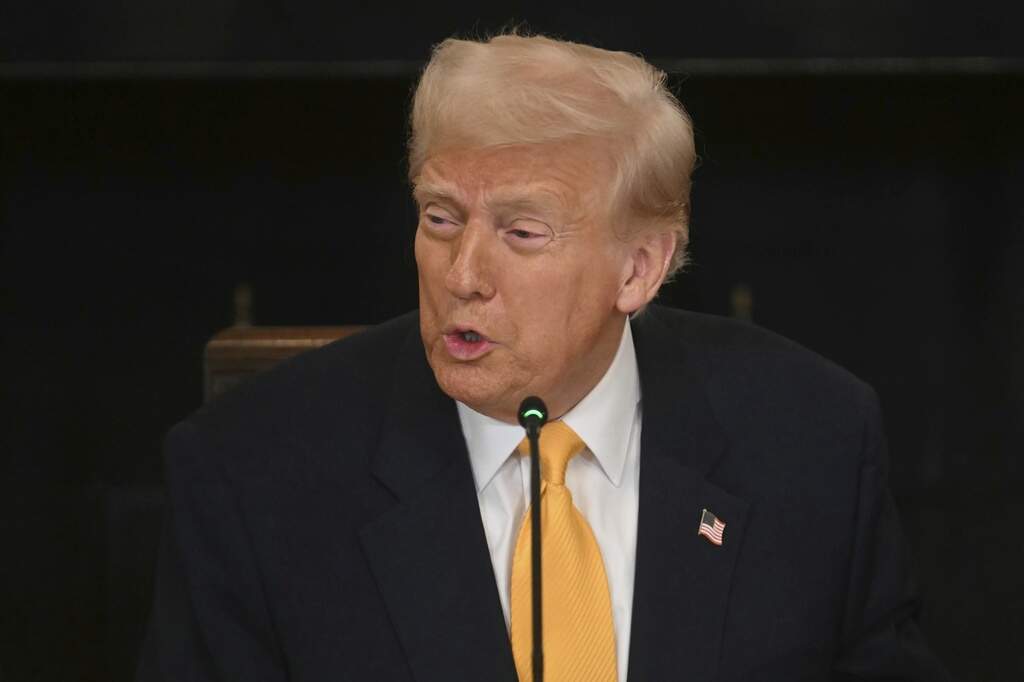
A $400 million jet from Qatar. His own crypto coin. Is President Donald Trump normalizing corruption?
Guests
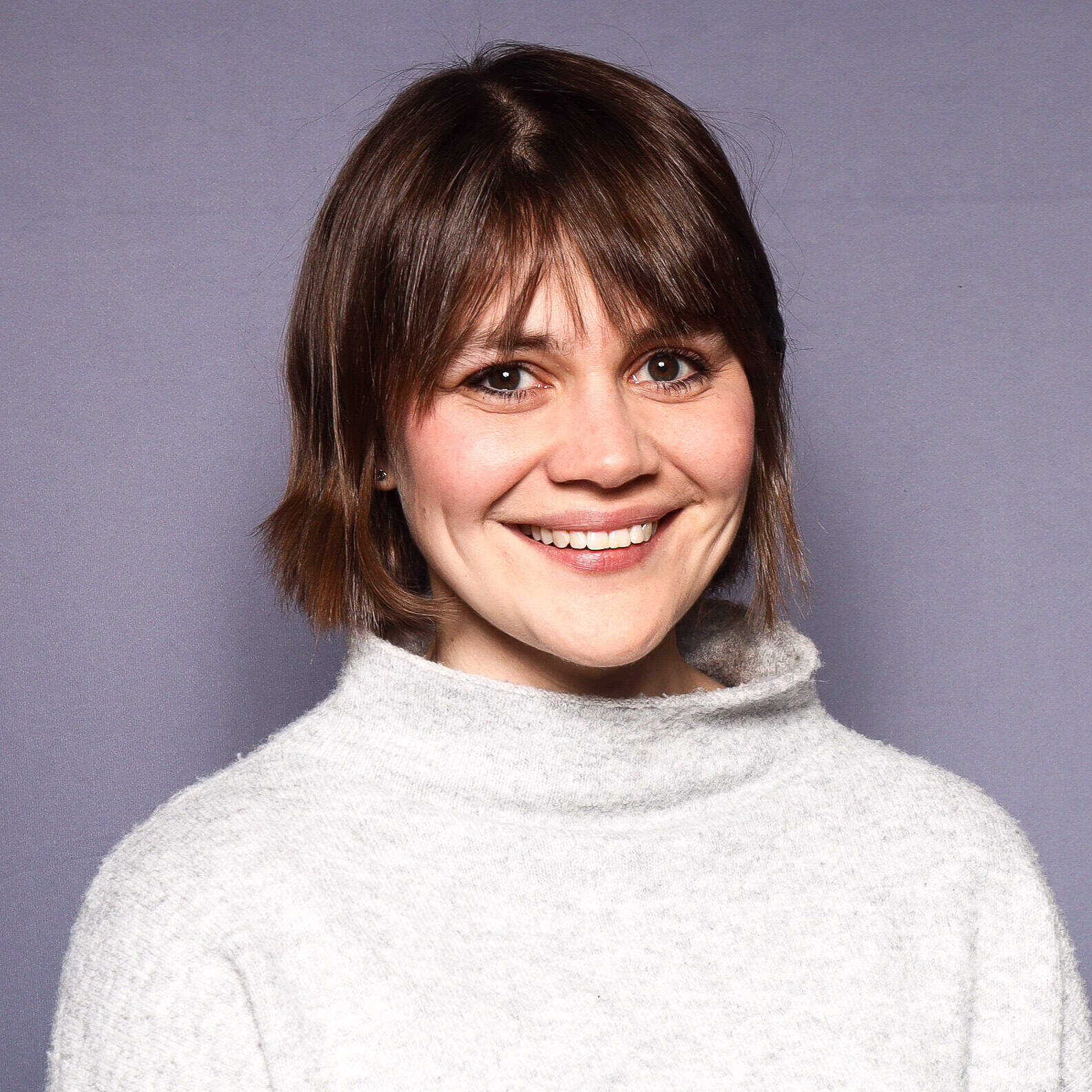
Daron Acemoglu, institute professor of economics at the Massachusetts Institute of Technology, or MIT. Winner of the 2024 Nobel prize in economics, alongside two other researchers, for their studies of how institutions are formed and affect prosperity.
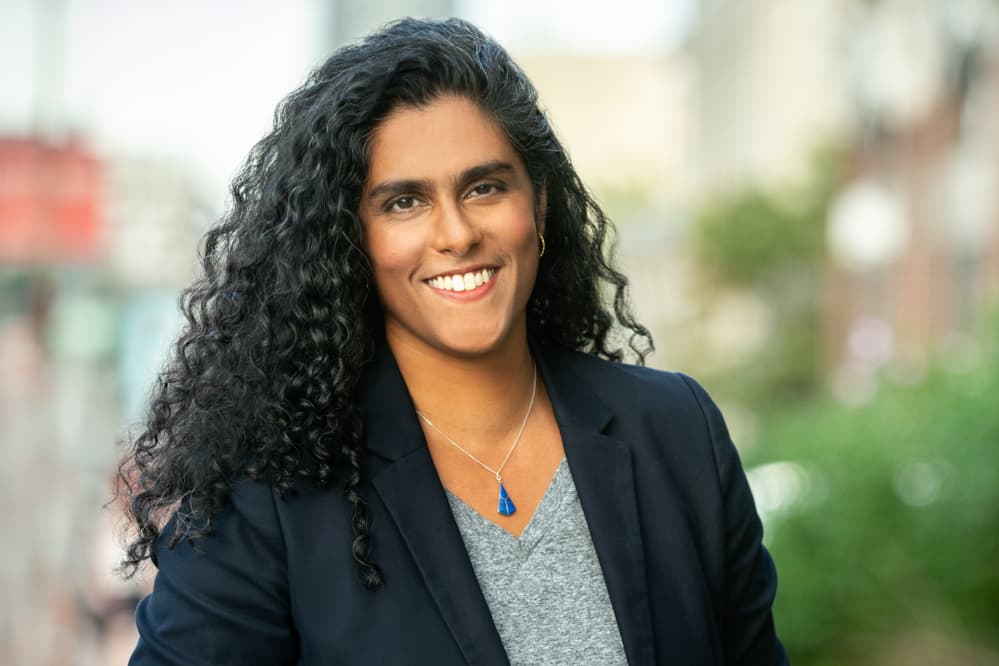
Saumitra Jha, associate professor of political economy at the Stanford Graduate School of Business.
Also Featured
Carlos Herrera, Nicaraguan journalist and founder of the news organization Divergentes.
Transcript
Part I
DONALD TRUMP: So I think it's a great gesture from Qatar. I appreciate it very much. I would never be one to turn down that kind of an offer. I could be a stupid person, say, no, we don't want a free, very expensive airplane.
CHAKRABARTI: Earlier this month, ABC News reported the Trump administration was preparing to accept a Boeing jumbo jet from the Royal family of Qatar. The luxury plane worth some $400 million would replace Air Force One. Trump posted on social media, it was "a gift, free of charge." He also called it "a very public and transparent transaction."
ABC News reporter Rachel Scott pressed Trump on the jet during a press conference last week.
RACHEL SCOTT: Mr. President, what do you say to people who view that luxury jet as a personal gift to you? Why not leave it behind –
TRUMP: You’re ABC fake news, right?
SCOTT: Why not –
TRUMP: Because only ABC, well, a few of you would. Lemme tell you. You should be embarrassed asking that question. They're giving us a free jet. I could say, “No, no, no. Don't give it to us, I want to pay you a billion or $400 million,” or whatever it is. Or I could say, “Thank you very much.”
CHAKRABARTI: This week, CNN reported that the Trump administration first approached Qatar about acquiring the plane, not the other way around. So the plot thickens.
Meanwhile, tomorrow night, the top 220 investors in President Trump's cryptocurrency memecoin will sit down to an exclusive dinner with the president. The memecoin launched in January just after Trump's inauguration. 80% of it is controlled by the Trump organization and affiliated entities. And the exclusive dinner will be at Trump's golf club in Virginia.
White House Press Secretary Karoline Leavitt was asked earlier this month why Trump is attending the dinner with the coin's top investors.
KAROLINE LEAVITT: The president is abiding by all conflict-of-interest laws. The president has been incredibly transparent with his own personal financial obligation throughout the years. The president is a successful businessman. And I think, frankly, it's one of the many reasons that people reelected him back to this office.
CHAKRABARTI: One reporter pushed back on Leavitt saying some do see this as an opportunity to influence the president. For example, a logistics company called Freight Technologies said it would buy $20 million of Trump's memecoin in order to advocate for its position on trade between the U.S. and Mexico. Leavitt responded.
LEAVITT: I can assure you, the President acts with only the interests of the American public in mind, putting our country first and doing what's best for our country. Full stop.
CHAKRABARTI: Ultimately, the logistics company was not invited to tomorrow's dinner because it did not buy enough Trump memecoin.
Now, it's not hard to imagine that, not so long ago, overt presidential quid pro quo like this would have been the stuff of endless headlines, congressional investigations, even calls for resignation. It was customary in the past for a U.S. president, even a presidential candidate, to try to avoid the appearance of corruption, let alone outright corruption or conflict of interest. Recall that people like Mitt Romney had to put his millions into a blind trust when running for president. Jimmy Carter did something similar with his peanut farm.
Trump, however, isn't doing anything blindly. He's putting the overlap of his personal business interest and presidential power in full view. In other countries when this happens, we call it corruption. Is he normalizing corruption in the United States?
Trump's behavior in this administration is in line with his first administration, but voters, particularly his voters, didn't see those conflicts of interest as an issue. They put him back into office, so there's already some normalization there. But at what point do we, the American people, become so inured to it that the acceptance of corruption starts to trickle down and erode our belief in or expectation of integrity at every level of government, from president to the proverbial dog catcher?
It's a question that I'm going to turn now to Daron Acemoglu. He's the Institute Professor of Economics at the Massachusetts Institute of Technology, MIT. In 2024, he and other researchers also won the Nobel Prize in economics for their studies of how institutions are formed and affect prosperity.
Professor Acemoglu, welcome to On Point.
DARON ACEMOGLU: Hi, Meghna. Great to be here with you.
CHAKRABARTI: So first of all, the word corruption I will acknowledge has been thrown around so much. And in fact, the Trump administration uses the word corruption a lot when talking about its people they don't like.
I think we should come up with a, or I'm going to ask you about your actual definition of political corruption so that we're operating from a common basis of knowledge. What would you define it as?
ACEMOGLU: I think it's commonly defined as abuse of public office for personal gain, and I think most of the time people have in mind personal financial gain, but it could be other forms of gain as well. But when in daily usage it could also mean other sorts of abuses, perhaps ideological abuses, and I think that's part of the meaning that Trump and his supporters sometimes use the word.
CHAKRABARTI: So in this case, in analyzing President Trump's behavior, we should focus on the financial personal gain, you'd say.
ACEMOGLU: Absolutely. Financial, personal gain. But I think Trump as a whole is more than financial misdeeds. He is in power in part to amplify his own prestige, his own power to influence things. So I think there is a sense of corruption when he's using the office in order to glorify himself as well.
CHAKRABARTI: I see. Okay.
So with that in mind, I guess you already answered the next question, which is do you believe that Donald Trump has behaved in a corrupt manner as president?
ACEMOGLU: I think a lot of corrupt behaviors in the United States are defined by norms. Donald Trump since his first presidency, or perhaps even sooner than that, started bending and breaking norms, especially about his own and his family's business dealings, but also about the way in which he goes in situations of conflict of interest that became blatant.
So institutions crucially depend on the trust that people place in them. Corruption is the tip of the spear, because once you start suspecting that people in high office are using their position for corrupt ends, it tarnishes the entire set of institutions. And I think that's the situation we're in, and we're getting deeper and deeper.
CHAKRABARTI: Yes. So then in that case, you see him as in this, especially in the second presidency, as beginning to normalize an acceptance of corruption in the United States?
ACEMOGLU: Absolutely. And I think, again, it started in his first presidency, although his powers were more restricted, both because of the mandate that he and his supporters thought they had and the people who were surrounding him.
And because civil society was much more robust in mounting resistance against Trump in his first term. So I think those shackles have essentially been undone. So he's acting in more capricious ways in every domain, and especially when it comes to him and his family benefiting from his public office. I think we are seeing the outcomes of that quite clearly.
CHAKRABARTI: Okay. And to your point, maybe some of the forms of corruption that we saw in the first administration, in fact, the one that led to his first impeachment, right, was the deal he tried to strike with President Zelenskyy in Ukraine to investigate the Bidens in exchange --
ACEMOGLU: Exactly. And that's a gray area. But I had something like that. And that one, especially in mind, when I said it's not just personal, financial gain, but other sort of gains. So in that problem, the issue was that he was trying to pressure an very important U.S. ally for potential political gain.
CHAKRABARTI: We're gonna talk about norms and institutions in just a second professor, but — I can't believe I have to ask a Nobel Prize winner this — but this, but people are interpreting the Qatari jet in so many different ways. That from what we know thus far, just the existence of a foreign nation, the leaders of a foreign nation giving a jet, whether or not the Trump administration asked for it, to the president of the United States, is that corruption?
ACEMOGLU: Let me ask you the question. If it wasn't a foreign government, but a company or a wealthy individual giving you a house or a jet while you are in office, and you can make important decisions about their businesses, wouldn't that have a whiff of corruption?
Now when it's a foreign power, I think it's much worse. The United States actually has typically set much more strict guidelines on foreign powers being able to influence lawmakers for good reason.
CHAKRABARTI: It's just that the Trump administration insists — just to at least give voice to their retort to this — that it's not corruption, it's for the United States, it's for the good of the country, et cetera, et cetera.
ACEMOGLU: Yeah, I think there's a gray area there, so depends on, at the end of the day, who owns the plane and who has the use rights for the plane. Obviously, I think the subtext here is that even if they go for an arrangement in which at the end the plane is not owned by Donald Trump and his family, he's going to benefit from it for the next three and a half years.
But I guess that would at least be paying lip service to some of the laws, that at least it's not a personal gift.
CHAKRABARTI: Yeah. Okay. So I want to spend a good deal of the rest of the show talking about the destruction of norms in this country. But as we approach our first break, professor, you said very accurately that institutions rely on trust specifically in order to operate fully in a democracy. And corruption is the tip of the spear in eroding that trust. The actual word, right? Corrupt, to corrode or corrupt something.
But maybe do we have this a little bit backwards already? That perhaps Americans are accepting Trump's overt corruption, because we are already lacking in trust in our institutions?
ACEMOGLU: 100%, but it's not backwards. I think it's part of a cycle. We have to understand that two things at the same time. One is that Donald Trump's election in 2016 and even more in 2024 are symptoms of a large number of Americans' disillusionment with our politics, disillusionment with our economy, and disillusionment with our media — that they think they do not have enough voice.
And you can see those numbers in Pew Charitable Trusts or Gallup polls. People's trust in Congress, in media, in experts are at an all-time low. Remarkably low. But the fact that Trump is a symptom doesn't mean that he's also having a huge accelerating effect on the decline in that trust decline of the quality of those institutions.
In fact, he has already brought, in my opinion, U.S. institutions to the brink of complete irreversible change. Which would be very costly for American democracy and American economy.
Part II
CHAKRABARTI: Joining us now is Saumitra Jha. He's Associate Professor of Political Economy at the Stanford Graduate School of Business.
Professor Jha, welcome to On Point.
SAUMITRA JHA: Thank you so much for having me.
CHAKRABARTI: So I wanted to frame this conversation as the possibility of trickle-down economics because my chief interest is how does this impact the entire nation?
And this comes from a personal experience that I had several years ago in India, where we were just going through a local airport and because the security guard recognized me and my parents as, quote unquote, "non-resident Indians," he pulled aside my father's bag. Didn't even try to look at it, didn't open it, didn't even claim that there was any kind of security concern over my father's bag. He just asked for money. He said, "Gimme $50 U.S. dollars, and I'll give you the bag."
It was so overt. And I just thought, this is part of daily life. So can corruption like that be one of the end results when there's overt corruption at the national level? Professor?
JHA: Firstly, I'm sorry that happened to you.
CHAKRABARTI: It's okay. It seems like it happens to Indians every single day. So --
JHA: Often, it's much less overt. However, I think the euphemism is often used, is, [TRANSLATION] could you please give me some money for sweets for the kids? So it's a socially acceptable way of sharing the wealth.
I do think if you look at Indian headlines, oftentimes in the news there'll be exposure of what you might call retail corruption, various policemen, unfortunately, or police people being implicated in bribery.
I think what's different with that is it's a regular Tuesday when that news breaks. Whereas when you see corruption at the very top, that can have a very different impact. The way we think about it is that people, apex politicians are often the most vocal people in our society.
So in an environment where we're trying to make our daily decisions based on what we think others are doing, there's an idea economists have about strategic complementarities, and the corruption involves that kind of activity. If I believe that others are gonna act in a corrupt way, I myself might act more corruptly.
Everybody's doing it, so to speak. So if you see people at the very top engaging in what might be perceived as corrupt activity, and you know that everyone else is seeing them too, this can really actually change the way we coordinate. And the levels of corruption in society more generally.
CHAKRABARTI: This seems to be vitally important to understand. You're talking like, almost like about a corruption virus that can spread through the body politic of a whole country.
JHA: I think that yes, that's the scary part. And I think that's the reason why we really should be trying to hold our leaders to a very higher standard because they are so vocal.
They're also role models. I we believe that these are people who should be governing our countries, we see them, as examples to emulate, and we know that others see them too. These things can be internalized as well. So I think, even if people might say, this is a regular business deal.
I think at the very top we need to be extra careful, because it can really change the way we think about it as individuals in our daily lives as well.
CHAKRABARTI: Professor Acemoglu, can you pick up on this thought, and I would love you to relate it directly to your research on emocratic institutions and prosperity.
Because if, as Professor Jha is saying, one of the key things that corruption can do is just change individual decision making. Certainly, that impact is amplified when it comes to the normal functioning of key institutions.
ACEMOGLU: Absolutely, 100%. Look, let's take a step back. The U.S. economy depends on innovation.
If you look at the U.S. success over the last five decades, six decades, it's been driven by new sectors, new technologies, from aerospace to pharmaceuticals, especially digital innovation. Now AI, but also innovation in financial services. Innovation in manufacturing, innovation is forward-looking.
You make a big investment in R&D. Putting a lot of effort, because you think that you're gonna succeed in coming up with a new technology or a new product or a new service. And oftentimes the really valuable one comes from small companies, people in their garages or when they're trying to just make it big in a particular market.
Why are they doing it? Because they trust that if they are successful, they can implement that technology, scale up their business, compete against incumbents, expand their market share, go global. All of these depend on institutions. If some companies are favored because of corruption or because institutions including the judiciary have become ineffective or corrupted, then incumbents are going to be able to block the new technologies.
Or the procurements from the government are gonna go not to the best company, but to people who are connected to the president or to other decision makers. All of these would have an amazing chilling effect on innovation. So we would be essentially killing our real comparative advantage.
CHAKRABARTI: So this is basically diminishing our prospects for the future beyond the actual just dollar cost of the corruption.
ACEMOGLU: It would. Dollar cost of corruption is small. It's really the future. And the problem is, when you are thinking of innovative activities, it takes time. You won't see these effects in one or two years.
It will take five years, 10 years, perhaps even longer, because innovation is very forward looking. And the way in which people start changing their behavior in the most dynamic sectors of the economy wouldn't be instantaneous. It would take a while.
CHAKRABARTI: Is there any way, professor, to convert that future cost of lost innovation, for example, into a dollar figure?
ACEMOGLU: That would be hard. Because we would need to know exactly how corruption is affecting current activities and future activities, it would be very specific to the U.S. Others have done studies looking at the relationship between corruption and GDP per capita. And it's a very strong relationship.
But of course, there are issues of what's causing what, and there are lots of other factors that are institutional, that are distinct from corruption, that are bundled in there. So you would have to sort through those things, but we would be, if indeed trust in institutions in the innovative sector is damaged.
We're thinking not millions, not billions, trillions of dollars of damages.
CHAKRABARTI: I'm seeing here that at least one measure as you were saying, professor, I'm seeing one from the United Nations and the World Economic Forum, that they estimate that the global cost of corruption, and this is actual dollars in loss to corruption.
Is perhaps 5% of the entire world's GDP. That's quite a number in of itself, professor.
ACEMOGLU: But that is an underestimate because it doesn't take into account what corruption is doing to investment and innovation. Indeed, what corruption is doing to, in keeping some of the countries in Latin America or in South Asia, really below their potential.
CHAKRABARTI: Professor Jha, please jump in here. Go ahead and feel free to talk to each other because this is absolutely fascinating to me. Professor Jha, go ahead.
JHA: There's some of what, sometimes a debate in economics as about whether corruption actually might be a good thing. Greasing the wheels of the economy, allowing an auction to take place for allocations and so that the persons willing to pay the most will get the resource.
But I think that the challenge is the systemic challenge. It might work to overcome certain bottlenecks that exists, but it can create this culture as Daron was saying, which can be very promiscuous in its effects more generally, particularly on people's faith in each other, on their willingness to invest and their faith in democracy itself.
We're seeing, in our research, we found that just being exposed to corruption scandals at the very top has made people become less supportive of democracy and more supportive of authoritarianism. And you can think, see why. If it's the case that you don't think democracy's delivering, maybe you need, maybe people believe you need a strong person to take over and clean the shop.
The fact that people on both sides of the aisle in many countries talk about draining the swamp. I think this is a phrase used a lot, is means that I think people really believe there's more corruption in our government than there actually is. In the U.S., 73% according to Gallup, believe that corruption is pervasive in the government which is actually above the world average.
CHAKRABARTI: It's above the world average. This explains a lot of why some, many people say that they don't bother voting, for example, they've just retreated from the democratic process entirely because they don't see the point in it, because quote-unquote, everything's corrupt anyway. Which then is a feedback loop, which allows, what, authoritarianism to sink in even further. Professor Jha?
JHA: Yes. We've been finding that both in cross country, just, studies looking at people, survey just before and after the corruption scandals, but also in randomized control trials where people are exposed to evidence of top people exchanging stacks of cash. And we found that unlike simple information about policy underperformance, which actually can make people rally and turn out to vote.
Seeing the apex corruption can really undermine people's willingness to vote and even support democratic institutions and even their trust in one another. As you were talking about with the trickle down, it really seems to make people, it's affecting the social fabric in important ways.
CHAKRABARTI: Oh, Professor Acemoglu, let me turn back to you because this is now expanding. I had first just thought of it in terms of purely economic terms, but now we're talking about the cost of corruption to democracy. And as you've also put it, to the very future of a nation's prosperity, it seems to be a much, potentially much larger impact than I had originally thought.
ACEMOGLU: Absolutely, yes. And exactly like Saumitra said, this normalizing effect really changes politics. What happens is that after a while, if you think that all high-level officials are going to engage in corruption and also couple that with the argument that Saumitra was mentioning. Which I am very dubious of, which is that sometimes corruption is good for greasing the wheel. There is very little evidence for that. Then what happens is that incumbent corruption is not punished at the polls, because voters think anybody is gonna be corrupt anyway.
And the government is doing some stuff, is building some roads. What if they're taking 20% of the cream on top? That's okay. So that completely dulls the power of the democratic process. The democratic process, by and large, votes with the following principle. If somebody in office is underperforming, is not doing what they promised, you vote them out.
If that stops, the whole democratic process is in danger, and that can stop because people stop turning out and just the partisan rule, or because people become so disillusioned that they say everybody's corrupt. Why should I kick out this particular corrupt politician? Then you are really in trouble.
CHAKRABARTI: How does a nation function when that happens?
ACEMOGLU: It doesn't, we're seeing so many strong leaders doing that. Look at Putin in Russia, Erdogan in Turkey, Viktor Orban in Hungary, Duterte in the Philippines. All of these leaders have played out of the same book, they have learned how to play the system first by controlling the media, second, polarizing the environment, and third, normalizing their corruption, which again, goes both in the direction of financial gains and also engaging in corrupt practices in order to boost their power.
CHAKRABARTI: Professor Jha, I'm thinking of the almost 80 million voters who voted for President Trump for the second administration. And is there any argument to make that an expansion of the acceptance of corruption will ultimately have a direct impact on their lives? Because clearly at this point in time, they don't see that as a possibility.
JHA: I think part of it is what Daron was saying, that corruption is often used, not just in democracies, but often in authoritarian regimes as a way to denigrate the other side and thus to centralize power. And if you can say the system is broken, I need to fix it.
Sometimes we're looking for a hero or heroic figure who can do that. And in some countries, there are very honest leaders who actually could be a big threat to democracy, precisely because they're so honest that people believe that they shouldn't have the checks and balances.
And I think in the United States, we have a slightly different problem, but it is one where, I think, as soon as you begin having this endless feedback loop of everyone accusing each other of corruption, it does lead to an undermining of support for the checks and balances of democracy.
And this can mean that maybe my guy has more power today, but maybe someone else will have more power tomorrow. And it does mean that democracy as a whole might suffer because we're gonna be much more at the behest of the whims of individuals rather than of our system.
CHAKRABARTI: In a few minutes we're gonna get an example from Nicaragua on how top to bottom corruption really does actually change a person's daily existence in a country. But Professor Acemoglu, let me turn back to you again on this question of at one point in time it was norms in American institutions that were the bulwark against pervasive corruption.
Those norms have been broken. And I think we can argue even that the Republican Party as a whole has accepted a completely new way of thinking about self-dealing. Perhaps even the Democrats have too, I don't know, but it's just moreover in the Republican party. Can institutions that have been compromised like that push back?
How do you change in the other direction?
ACEMOGLU: They can, institutions change all the time. They are in flux, especially in a world subject to many other disruptions. But it is difficult. And my work and Saumitra work together with my student, Eduardo Rivera shows one aspect of that, which is that once voters become convinced that democracy is corrupt or is unable to control corruption, their support for democracy declines. They say, oh, perhaps we should support authoritarian leaders, or we shouldn't be so tied to a democratic system. Or they don't vote, they don't turn out to vote, just Eduardo Rivera and Saumitra's work shows.
So democracy itself is weakened, and if your hope, my hope is that it's gonna be the democratic system that ultimately controls corruption and reinstates the norms of honest politics, that becomes harder.
CHAKRABARTI: I mentioned, we have to take a quick break here, but I mentioned being maybe not so sure about Democratic big deeds and the party corruption, but I know that you've said that while Hunter Biden was really happy to leverage his president's name for his own personal gain, do you see that as equally unvirtuous as what the Trump administration?
ACEMOGLU: There are degrees.
I think if you implicitly or explicitly say to foreign companies, I am linked to the president, I'm the president's son or nephew, and I'll give you special access even if you don't actually get that access. I think that's a corrupt act. But that's very different from actually getting into questionable dealings with gulf countries or other big powers.
CHAKRABARTI: Professor Acemoglu, what do you think about that?
ACEMOGLU: Oh, absolutely correct. It's very debilitating. It makes people powerless and helpless, and it's not unique to Nicaragua. There are so many other countries that work in exactly the same way. There is very interesting research by an economist Raul Sanchez de la Sierra, who went and documented how, for example, the police force in the Democratic Republic of the Congo is organized such that they maximize corruption.
And it's shared up from the policemen on the beat to all the way to police commissioners. And it's just an amazingly elaborate system. And why does it exist? Because there's no check on it. The institutions don't try to restrict corruption. The judiciary system, judicial system doesn't work, and because the country is not sufficiently democratic, people don't go to the polls and say, we're going to kick out the corrupt people.
And they think the alternative is corruption as well. That's the danger for the United States. If we let our existing institutions, which weren't perfect and there were quite legitimate concerns that people voiced about where the United States was in terms of inequality, in terms of opportunity, in terms of voice.
But if we make them worse, and if we also completely destroy trust in institutions and democracy, it's very difficult to rebuild.
CHAKRABARTI: But this is where we're also seeing overt changes that are being driven by this, let's call it a corrupt mindset. Because not only do we have the self-dealing, as we talked about earlier, but the institutions that we're talking about themselves are being changed as we speak.
The New York Times just reported, or actually others as well this month, that the FBI, the Trump FBI is disbanding a squad that handles investigations into members of Congress, handles investigations into fraud, federal information.
ACEMOGLU: I think that's very, very important. Because it would be a mistake to think that the only thing driving the current administration is corruption.
I don't think that's the case. I think there is a bigger institutional agenda here, which you can think of it as an attempt to build an executive presidency, a presidency which is much more powerful, much less constrained by both the legislature and the judiciary, and many of Donald Trump's appointments of loyalists to the Department of Justice, to SEC, to the Office of Management and Budget, to FBI, are to be viewed in this light.
That he's trying to make these agencies, which had some degree of independence, as well as the judiciary, much more subservient to the executive branch. And of course, once he does, that's also going to boost his own power as the president and his own immunity against any kind of charges, including those of corruption. But this institutional transformation, or at least the attempt is a very important one. And I don't think we should ignore it.
CHAKRABARTI: But there's a whole worldview here.
Professor Jha, just I'll turn to you in just a second, but just to add sort of fuel to this. Not only that he's seeking to disband the FBI's sort of investigation unit on public corruption domestically, but back in February, the president signed an executive order pausing enforcement of the Foreign Corrupt Practices Act.
But that would, that's just to remind folks, that's to limit corporate corruption in foreign countries, because the president said he thinks by limiting the Act, it would mean a lot more business for America. He sees as allowing foreign, corporate corruption as positive.
But Professor Jha, go ahead.
JHA: Yeah, so I was about to raise the same thing. The Foreign Corrupt Practices Act was already somewhat weaker than the UK's anti-bribery statutes and those in the European Union. So already it was the case that in facilitating payments like speed money was deemed more acceptable under U.S. law.
But the fact that we've put that on pause is I think not a terribly good sign, but I think it's also good to remember that we've been here before as a country. In the 19th century we had the spoils, a very strong spoils type of patronage system emanating from the presidency and allegations of corruption.
But this also led to a lot of internal conflict as well, as particularly before and after the Civil War, during reconstruction. So it took a really long time to put in these checks and balances and change the norms. Such that we've had much cleaner government in much of the 20th century, in 21st century.
So going in the other direction. It's not something we can't come back from, but it took a really long time.
CHAKRABARTI: I'm glad you made this point because being utterly focused on what's happening now as being new is not helpful. And in fact, what you just said reminded me that we did a show about just exactly what you said, not that long ago.
That it was the corruption of federal services. That it's one of the things that led to the establishment of the civil service in the United States, in order to ideally stave off a lot of the pay for play that was happening in the time period you're talking about.
And of course, it's the civil service that's in the crosshairs of the Trump administration as well. But we just have about two minutes left, professors, and this has been a very both depressing, but also strengthening conversation, at the same time, right?
Because once we know what we're dealing with, we can figure out, so how to do this, how to prevent trickle-down corruption changing our entire view of how America's supposed to function.
And that'll be my last question to both of you. And Professor Jha, you first.
JHA: I think, we really, how you began is really important that we can't normalize this at the top. If we think that it's okay for our leaders to engage in these types of transactions, it can have an effect, even if it might be, seam by them to be innocuous.
The perception of apex corruption can have its own effect. So I think just, I think we need to remind our leaders that they need to be even cleaner than anyone else. To some extent. Even though that's really hard to do.
CHAKRABARTI: Professor Acemoglu. I'll just add a little bit to that because it seems like some in the Democratic Party are at least trying to start to push back, saying they're gonna hold up judicial nominees, et cetera, et cetera.
Is that enough?
ACEMOGLU: No, I don't think that's enough. I think we need to make this much more central and there are levers we can use. First of all, the United States still has a fairly independent and non-corrupt judiciary, and I think judiciary is the most important institution when it comes to dealing with some of these issues.
Second, some of my recent research shows that if you actually can communicate with voters in a nonpartisan, credible manner. For example, in Turkey's last major presidential election, when we provided information to voters about what has happened to free media and the role of free media and corruption, they actually respond to that.
People are not completely irrational, partisanship really colors their views, but they are open to new information if they think it's true and it's not trying to manipulate them.
CHAKRABARTI: Who provided that information and how?
ACEMOGLU: We provided that information working with independent canvassers going door to door.
So that was part of a very large organization in the third largest city of Turkey. But the important thing is that it really has to come across not as manipulation. I think the problem that polarization has created in the United States is that if it comes from Democratic politicians, the Republican base doesn't trust it.
So I think that's what we need to break.
The first draft of this transcript was created by Descript, an AI transcription tool. An On Point producer then thoroughly reviewed, corrected, and reformatted the transcript before publication. The use of this AI tool creates the capacity to provide these transcripts.
This program aired on May 21, 2025.