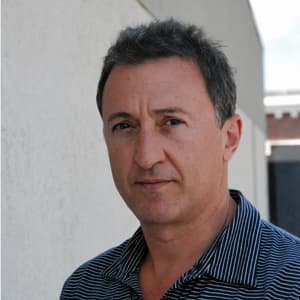
Stefano Kotsonis
Former Staff
Stefano Kotsonis began his career in broadcasting in 1987 as a founding member of the nationally syndicated PBS current affairs program, “The Kwitny Report," which was awarded the George Polk Award for television investigative journalism.
In 1989, Stef moved to Athens, Greece, where he worked as a freelance reporter and producer for major television, radio and print outlets such as CNN, BBC, CBC, The European and USA Today.
After a year covering the Gulf War and the Kurdish refugee crisis for CNN, he was named Amman bureau chief and correspondent. From there, he covered most of the top stories of the 1990s, including the wars of [former] Yugoslavia, the Somali civil war and the humanitarian response, the Middle East peace process. His reporting sent him to the corners of the Caucasus, Middle East, Europe, and East and South Africa.
Click here for a link to Stef's CNN clip reel.
He returned to the United States in 1996, first reporting and producing for Reuters TV, later producing and writing for television documentaries for The History Channel, Discovery Health and PBS, such as “Islam: Empire of Faith," a three-hour documentary about the rise of the early Islamic empires which aired on PBS.
Stef made the switch to public radio in the summer of 2001, and has worked on several WBUR-produced programs, including Here & Now and now On Point.
Stef speaks many languages, most of them really badly: English, Greek, French, Turkish, Arabic. If phrases like “good morning,” “thank you” and “who stole my pen?” can be considered fluency, he can pretend to have some command of Serbo-Croatian, Somali, Swahili, Kurdish, Persian and Armenian. As for his family life, there's one great vernacular expression in Greek to describe him: "Χαζο-μπαμπάς." Feel free to look it up.
Recently published
How fire survivors responded to Switzerland ski resort tragedy
All 40 victims of the devastating New Year's Eve fire at a ski resort in the Crans-Montana region of Switzerland were identified over the weekend.

The antitrust case that could change how we use the internet
This past week, a federal judge issued a ruling that could shake up how we use the internet. U.S. District Judge Amit Mehta ruled that Google has illegally used its...

'A most tolerant little town': The forgotten story of desegregation in Clinton, Tennessee
Rebroadcast: In 1956, a federal judge ordered the town of Clinton, Tennessee to desegregate its high school. The unrest that followed tore the town apart.
From the archive and in the news: How to cut through the 'noise' that hinders human judgment
Nobel prize-winning economist and psychologist Daniel Kahneman has died at the age of 90. In June 2021, we spoke with Kahneman, and his co-author Olivier Sibony, about their book, ‘Noise:...

'Battle for your brain': What the rise of brain-computer interface technology means for you
Rebroadcast: The future is closer than it appears. Sensors that can read your brain waves – and sell your data – are hitting the market, and experts say it’s time...
Support WBUR

Rebroadcast: Woniya Thibeault survived extreme cold and isolation to become a winner
A conversation with Woniya Thibeault, winner of the wilderness survival show "Alone." She wants to show people how to deepen their connection to nature — not just to survive, but...

The largely unknown man behind the U.S. judiciary’s shift to the right
Leonard Leo has been described as a puppet master – pulling strings between rich and powerful conservatives to turn the American judiciary to the right. Who is Leonard Leo and...
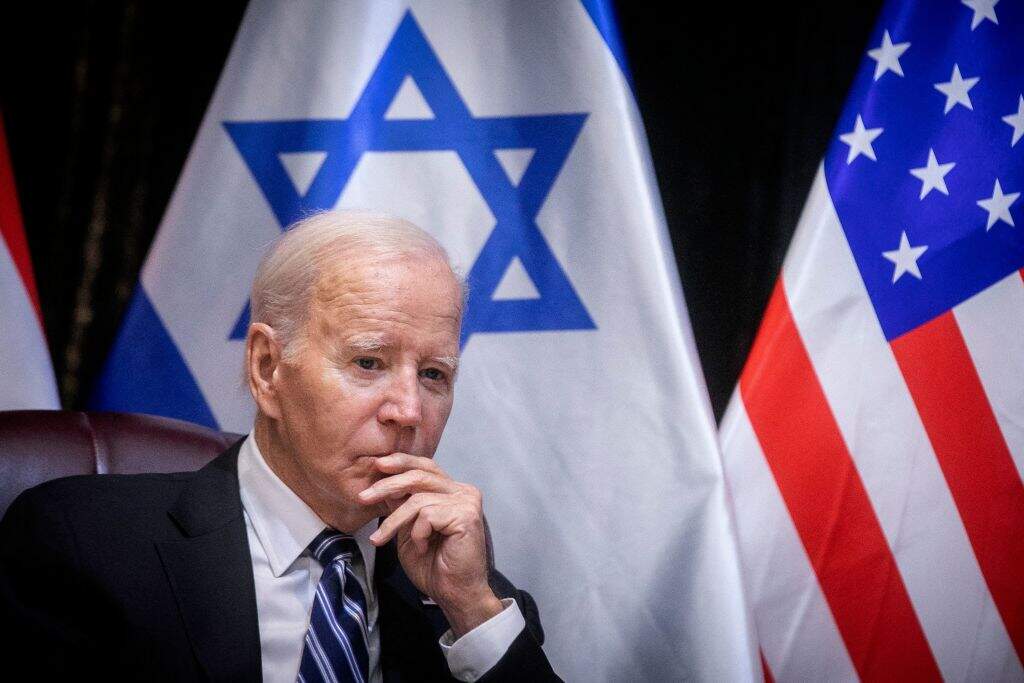
The Biden approach to Israel
Some voters want President Biden to condemn Israel's bombing of Gaza. Biden believes his public embrace helps him influence Israel -- but that may be changing.
How foreign authoritarian rule reaches into the U.S.
The U.S. government says authoritarian regimes are threatening, coercing and even attempting to kidnap and murder citizens living in the U.S. It's called transnational repression, and the FBI says it's...

How to teach media literacy to children
School systems around the country are grappling with ways to teach students media literacy. California has just passed a law to do that, and experts say they’re doing it right.