Support WBUR
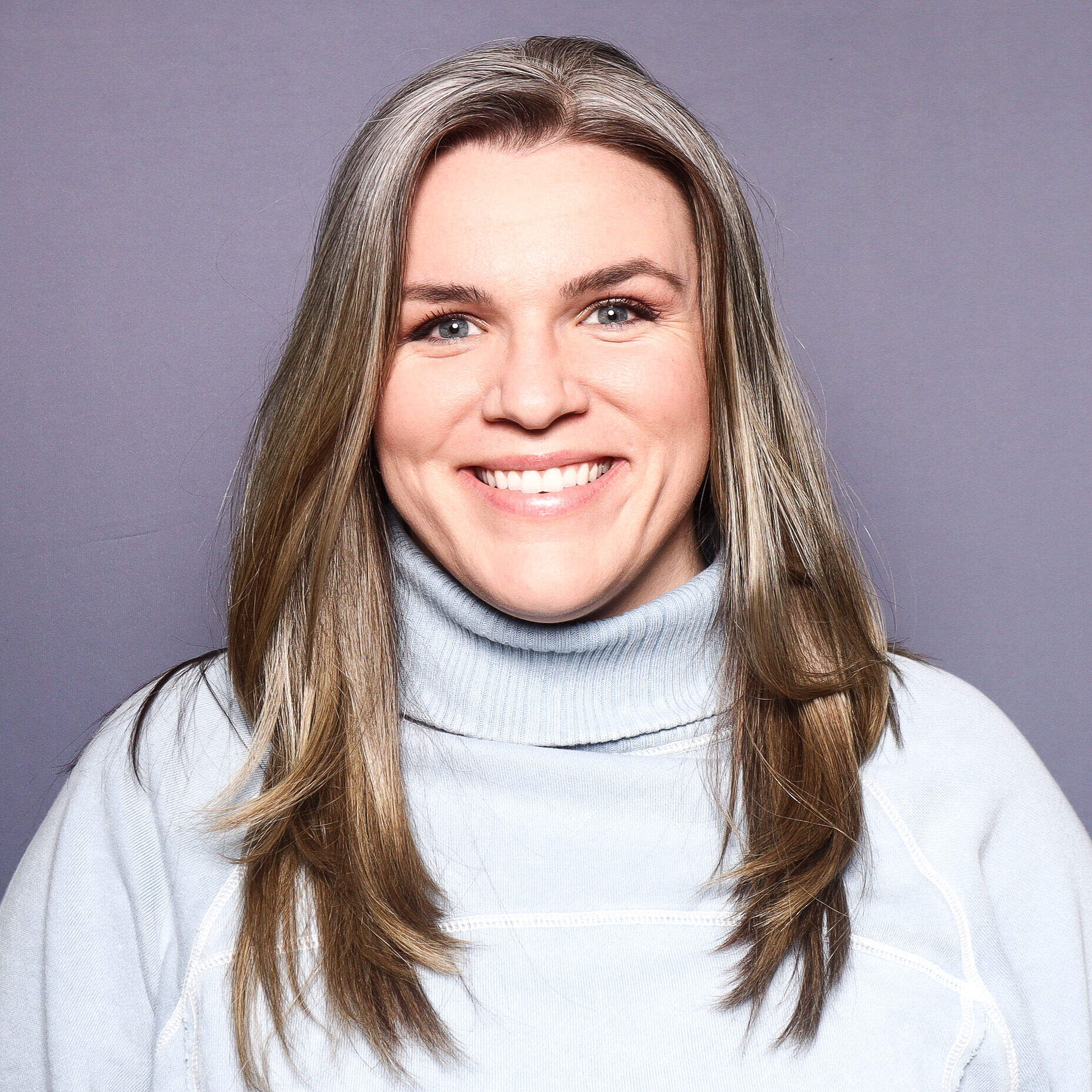
Get to know Indira Lakshmanan, new co-host of 'Here & Now' from WBUR and NPR
She's a familiar voice in your headphones already. Indira Lakshmanan, who joined the Here & Now team at our Boston headquarters in December 2025, is a self-proclaimed "lifelong newshound." She shares how her early love of storytelling propelled her career covering the top national and international news of the day.
The following conversation has been edited for length and clarity.
Why Here & Now… in your here and now?
I can't think of a better job in public media. At WBUR, we're so lucky to produce one of NPR's three flagship, weekday magazine shows that airs on more than 500 public radio stations across America. As the midday show, Here & Now has a bit more leeway to go deep on topics. That's harder to do on "drive time" shows like Morning Edition and All Things Considered. At Here & Now, we cover the news, of course, but we also have time for features that listeners won't hear elsewhere.
I'd guest-hosted Here & Now before, so I knew that the team that makes this show is top-notch, and that WBUR and NPR are trusted sources of news and culture. It's also a bit of a homecoming to a place where I partly grew up. My dad and stepmother were professors at Boston University, I was a summer lifeguard and sailing teacher at Crystal Lake in Newton and I went to college across the river at Harvard. I worked for years at The Boston Globe as a reporter here and around the world, and later, as a columnist in Washington D.C. I've been lucky to live in many places, but Boston is a very special one.
You've said you want your journalism to both inform and inspire. Say more about that.
The ABCs of journalism are about being the eyes and ears for our audience. Providing accurate, impartial and trustworthy news. Asking tough questions and holding power to account. That's our first goal.
But I think part of our job is also to inspire and entertain, because life is more than news and the headlines. It's about sharing discoveries and telling stories that connect us as humans. It's about how we take care of ourselves and our loved ones. It's the books we read, the movies we watch, the games we play and the cultural touchpoints that challenge our assumptions, make us think and give us hope.
What’s your personal definition of public media?
Public media is free and available to everyone. We're a public service that will never have a paywall – and that matters. Our work is made possible by listeners and donors who trust and believe in our work. They support us so that our service remains strong and free to all, even those who can't afford to pay for news.
Public radio is available across 99 percent of the United States. Even in news deserts, places where local newspapers don't exist anymore. You can basically close your eyes and put a pin drop somewhere, and almost certainly, that community will have access to public radio as a lifeline to essential news and culture. That's why the rescission of federal funding last year was so dangerous and devastating. There are certain places – particularly some Native communities and remote rural areas – where stations depended on federal funding for 85% to 90% of their budgets. Federal cuts threaten that connection between the public and trustworthy, fact-based news and information.
You once hosted your own TV talk show — as a middle schooler! Tell us about your first gigs as a reporter.
Ha, yes! I've always loved talking to people and telling stories. I wrote short stories, poems and what we kids considered "news" for an elementary school magazine. In middle school, we made a TV talk show with the audiovisual club. In high school, I wrote and edited for my school newspaper and did features for the community newspaper on everything from a beloved used bookstore to the punk rock scene. In college, it was the weekly newspaper and magazines. I think reporting and writing are great skills for any young person, because communication matters in every career – and in life, for that matter.
In your previous role, you launched a new section for U.S. News & World Report. What skills from that launch have prepared you for your role as co-host?
It was super fun to reimagine an ideas and opinions platform for U.S. News & World Report. It brought out the entrepreneurial spirit in me! I was given the latitude to rethink what we wanted our pages to look like, who we wanted to write and the range of topics we would cover – and we had a scrappy, good-humored team who made it succeed.
The best journalism requires creativity – finding new questions to ask, new threads to follow and new discoveries for audiences. I think that's what public radio strives to do every day.
You've hit the campaign trail with four presidential candidates. That's got to be a tough job.
Yes, I got on and off quite a few buses and planes with Hillary Clinton, Barack Obama, John McCain, Mitt Romney and their entourages. Campaign reporting is a high-octane world with its own rules and rituals. But it was just as interesting to travel solo and go beyond the horserace, talking to American voters about what mattered to them.
Even more grueling than covering a campaign, though, is covering the State Department. I traveled with Hillary Clinton for four years when she was Secretary of State, and then with John Kerry when he was Secretary. NPR's Michele Kelemen has done that job for so many years and does it very well. It involves constant travel, knowing the stakes in every region, cultivating sources in every embassy and turning on a dime from the Middle East and Latin America to Europe, Asia and Africa. I've gotten to report from more than 80 countries, which was an incredible experience. But with two very young kids, it was a balancing act that I couldn't have done without my husband giving up a lot of his photojournalism work to be home when I wasn't.
80 countries — that's impressive. How might listeners benefit from your global perspective?
I come from an international background, which has always informed how I see the world. My parents were geographers who came to the United States as graduate students from different continents and brought with them different life experiences. We often traveled, and I grew up hearing about their work in far-flung places.
My first job after graduating was on NPR's international desk, and I went overseas for NPR as a stringer in Chile. A few years later, The Boston Globe gave me the opportunity to be a foreign correspondent in Bosnia, Asia and Latin America – and to bring those stories to readers back home.
This is a nation of immigrants. Every one of us, unless we're Native American, traces our families to somewhere else. The word "melting pot" may sound outdated, but we are a very mixed salad, for sure, and sharing voices from around the world opens up windows for audiences at home.
You count news literacy among your passions. How has it shaped your work?
I'm on The News Literacy Project's National Journalism Advisory Council — along with many dedicated journalists and NPR's Peter Sagal, the host of Wait, Wait Don’t Tell Me! It's an important nonprofit founded by a friend, Pulitzer Prize-winning reporter Alan C. Miller. The organization's mission is to teach young people skills to identify what's trustworthy news and what's fake or biased, and the resources are free to schools and students.
This work is so important since the advent of social media, and with the rise of artificial intelligence. We not only have misinformation and disinformation, but also AI "slop" coming into our feeds. It's hard for most people to tell the difference between what's reported by a legitimate, vetted news organization and what's completely false.
Many listeners spend lunchtime with you and your co-hosts, Robin Young and Scott Tong. What's your go-to lunch (packed or ordered)?
There's never time to eat lunch on show days, so I have a big breakfast and keep fruit and an endless supply of interesting tea bags at my desk. I'm mostly powered by tea! I'm also in love with the Life Alive cafe downstairs from our studios. It's dangerous! I'll be spending too much of my money on their food.
What's in your listening queue?
I confess I listen to NPR pretty much 24/7. I've always got the WBUR livestream in my ears when I'm riding the bus and the T. In my spare time, I love listening to podcasts that challenge and expand my thinking, like Shankar Vedantam's Hidden Brain and Adam Grant's ReThinking.
What's lifting your spirit right now?
The excitement of doing this new job. Meeting new people, and embracing a new challenge. That's joyful and fun! And, of course, reconnecting with old friends in Boston and rediscovering new food, culture and experiences around town. And no matter how crazy the world gets, my incredible sons and husband make me laugh and appreciate life every day.