Support WBUR
Quahog numbers are declining. The race is on to figure out why
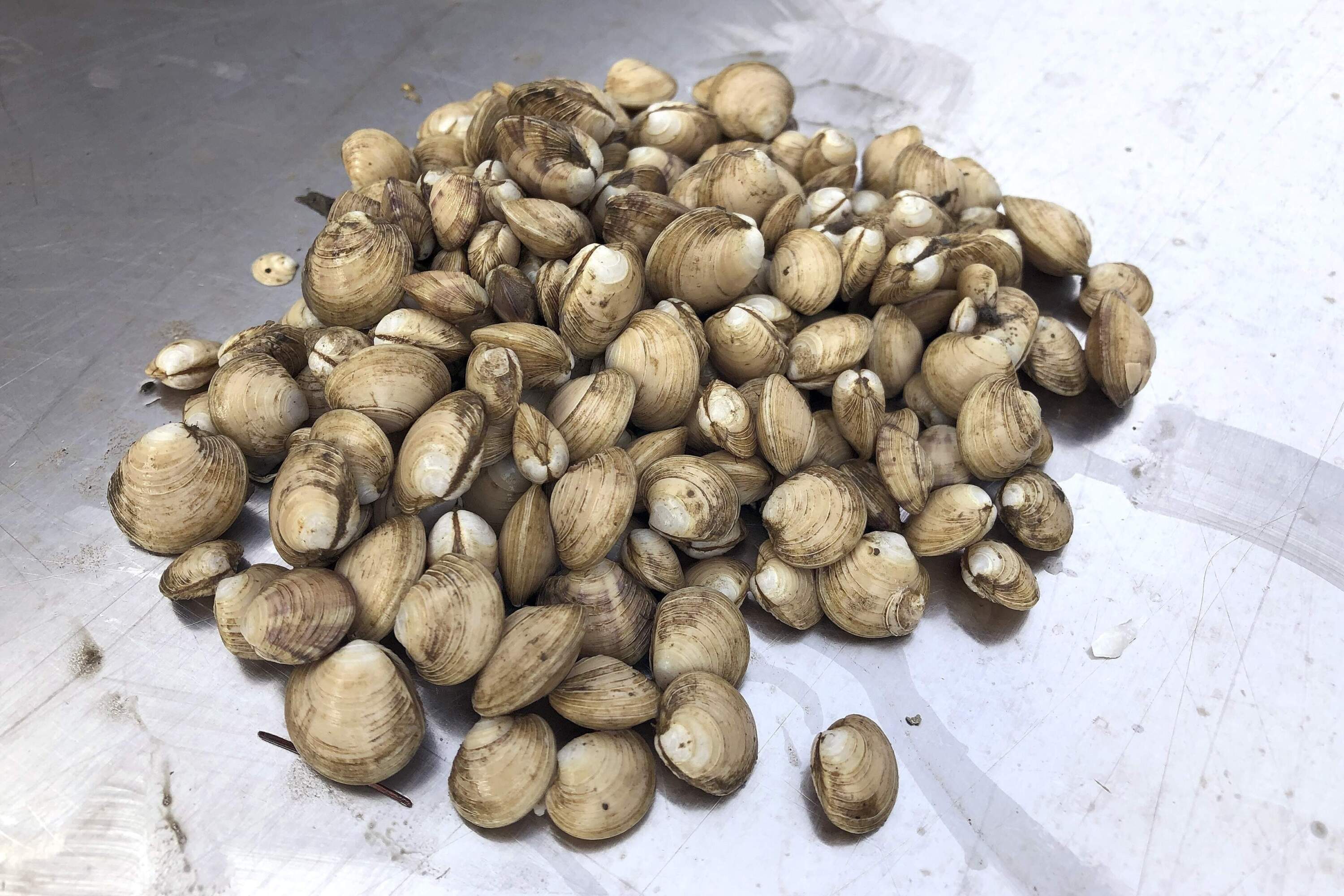
Scientists, lawmakers, and those who make their living from Rhode Island’s Narragansett Bay are teaming up to hunt for the reason why quahogs appear to be on the decline.
Quahogs have a long history in the state. The shells of the large, hard-shelled clam were used by the Indigenous Narragansett people to make wampum. The clam itself is a staple of chowders and in 1987, the Rhode Island Legislature designated the quahog the official state shell.
On Tuesday, a special Rhode Island legislative commission held a hearing to study the reduced catch. The commission is looking at a range of possible factors that may be contributing to a loss of the signature shellfish, from oxygen deficiency to changing aquatic life and climate change.
Quahogs — also known as little necks, cherry stones or chowder clams — are filter feeders, drawing nutrients out of water columns. They don’t move much other than the first 2 to 3 weeks of their lives when they are larvae, according to Conor McManus of the Rhode Island Department of Environmental Management.
Quahogs will traditionally start spawning in mid-June in coves along Narragansett Bay and progress through the season. A second large spawning can occur in July.
There was a peak in the harvest of quahogs in the 1950s before the dredging of the clams was banned. There was a second peak in the 1980s, reflecting an improvement in water quality in the upper bay.
“Since then, we’ve seen a dramatic decline,” McManus said.
There’s also been a decline in the number of people trying to harvest quahogs. McManus said more than 1,000 people used to harvest quahogs decades ago, but that number is down to 150 to 200 people today.
McManus said the hunt for an answer to the quahog decline is complex. As an example, he pointed to events that might cause a drop in oxygen in the water, called hypoxia.
Typically, hypoxia events are seen as a negative for organisms, but there is also a competing theory that such episodes could help quahogs because it might force away potential predators.
“Over the course of a quahog’s life there is a lot of uncertainty,” McManus said.
Jim Boyd, a shellfisherman, said that less than half the number of quahogs are being harvested from Narragansett Bay compared to a decade ago and he and others who rely on quahogs need answers.
To the industry, it’s pretty clear that while there may be many factors for the drop, the primary driver is the reduction in nutrients needed for quahogs to thrive, he said.
“We really need the department and the universities to focus on this question for us because this industry is taking a significant hit over the last decade and our concern is that this is going to continue in the coming years,” Boyd said. “We’re seeing this slow, methodical decline in the abundance of quahogs throughout the bay.”
Other states along the Atlantic coast have also experienced declines in quahogs as well as also oysters, bay scallops and soft-shell clams, according to McManus.
Quahogs feed on plankton. That makes them key to the environment because plankton feeds on nitrates, which water treatment plants can’t filter out, making quahogs a natural source for filtering impurities out of the water.
The commission is charged with reporting back to lawmakers by May 31, 2024.