Support WBUR
Gray whale hunted to extinction in the Atlantic spotted swimming off Nantucket
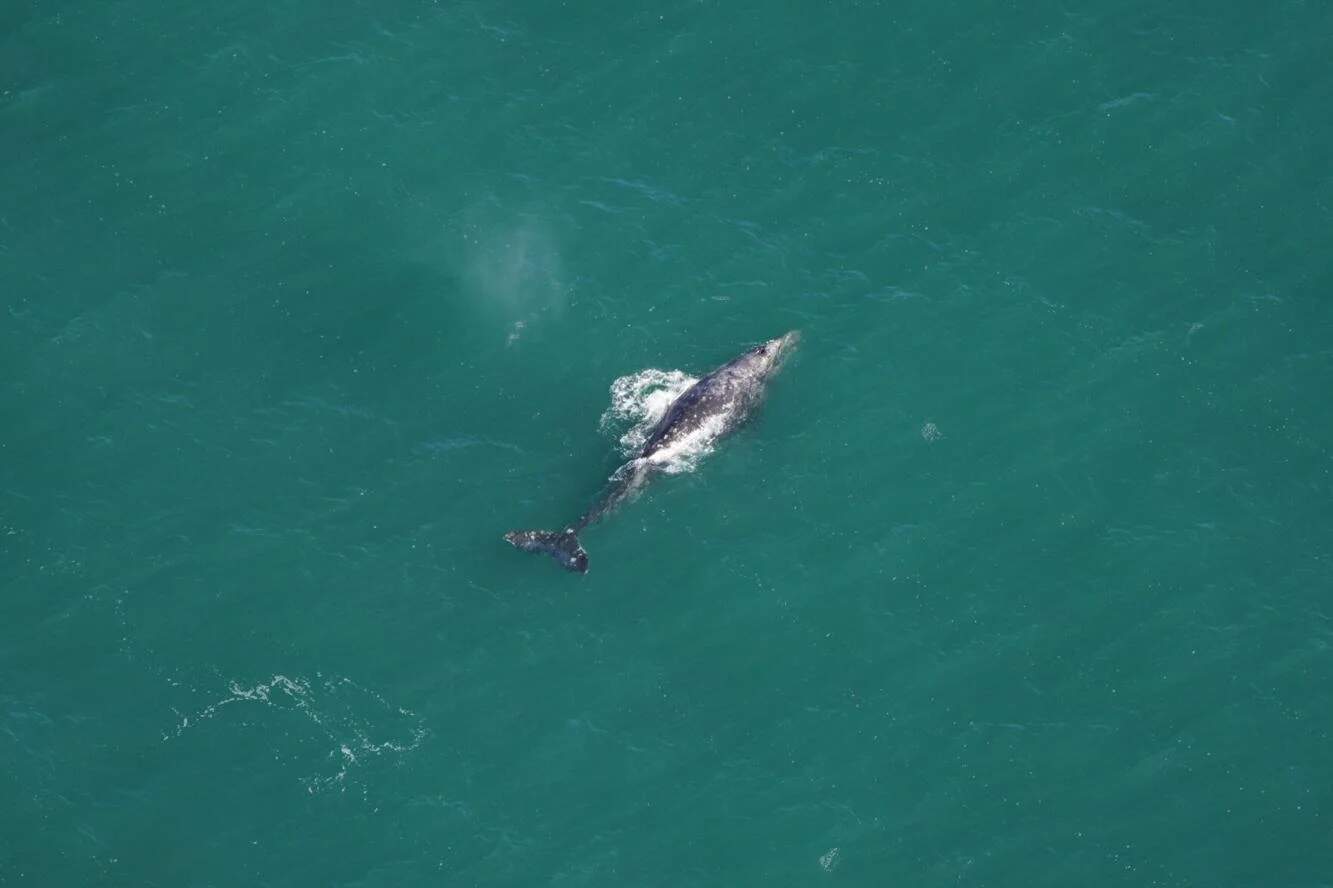
The researchers couldn't believe what they were looking at.
It wasn't unusual to see a whale feeding in the chilly waters about 30 miles south of Nantucket, but the whale that the New England Aquarium aerial survey team came across during a flight last Friday had them stunned.
"I didn't want to say out loud what it was, because it seemed crazy,” Orla O’Brien, an associate research scientist at the Anderson Cabot Center for Ocean Life at the New England Aquarium, said. The survey team stayed in the area for 45 minutes and got photos of this "unusual whale." O'Brien showed the pictures to research technician Kate Laemmle while the whale dove to feed.
"My brain was trying to process what I was seeing, because this animal was something that should not really exist in these waters," Laemmle said.
The photos confirmed their suspicions: they were looking at a gray whale — a species that was hunted out of existence in the Atlantic Ocean by the 1700s. Laemmle said it had the researchers laughing about "how wild and exciting this was—to see an animal that disappeared from the Atlantic hundreds of years ago!"
Gray whales don't have a dorsal fin, but instead have a dorsal hump followed by a series of pronounced ridges. Along with their mottled grey and white skin, that means the whales "are easily distinguished from other whale species," the New England Aquarium said. Gray whales live mostly along the Pacific coast, the Marine Mammal Center said, spending summers north of Alaska in the Bering and Chukchi Seas and migrating south to southern California and Mexico for the winters.
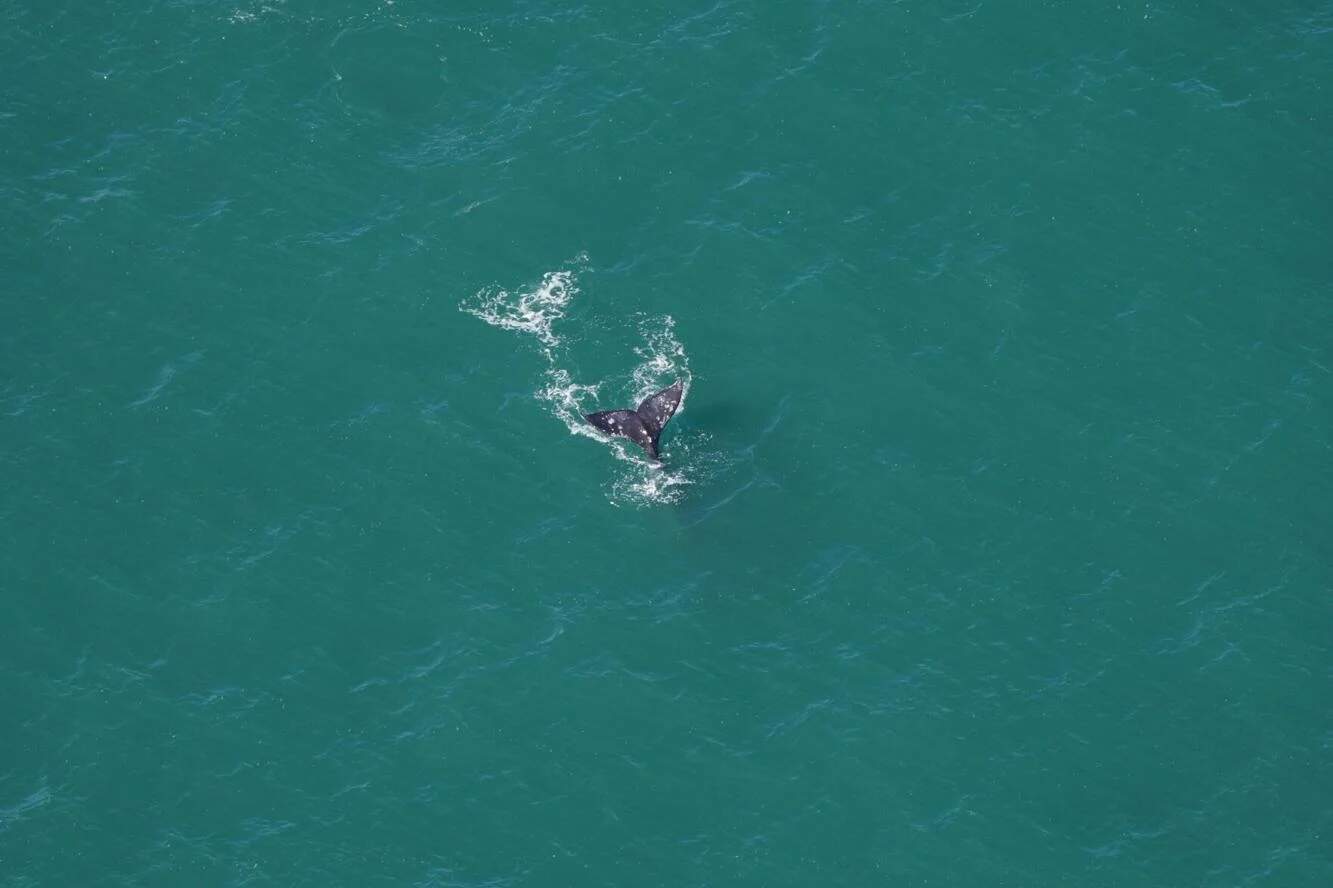
The last 15 years have brought five sightings of gray whales in Atlantic and Mediterranean waters, including one off of Florida in December. The aquarium said its scientists believe the gray whale seen off Nantucket on Friday is the same whale sighted in Florida late last year. The aquarium said the return of the gray whale is likely attributable to the fact that the Northwest Passage has been ice-free in recent summers, leaving open a route between the Pacific and Atlantic that the whales would not have been able to travel in recent centuries.
"While we expect to see humpback, right, and fin whales, the ocean is a dynamic ecosystem, and you never know what you’ll find," O’Brien said. "These sightings of gray whales in the Atlantic serve as a reminder of how quickly marine species respond to climate change, given the chance."
Places like Nantucket and New Bedford thrived as whaling ports in the 18th and 19th centuries, but the expeditions that helped fuel the Industrial Revolution severely depleted whale populations. Now some of those same ports, especially New Bedford and Salem, are key players in the country's push for cleaner energy through the offshore wind industry.