Support WBUR
GE Vernova thinks 'manufacturing error' to blame for broken Vineyard Wind blade
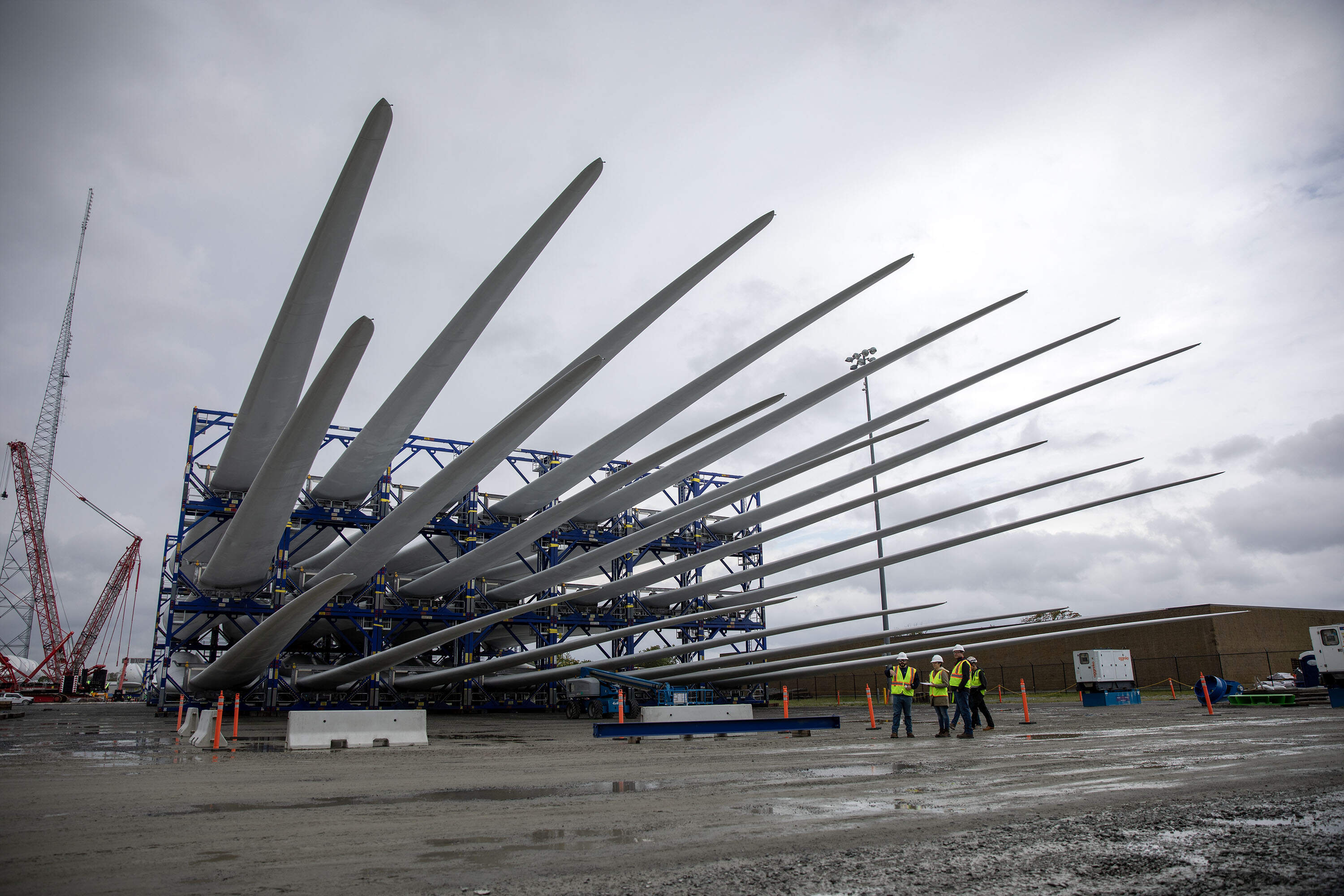
The manufacturer of an offshore wind blade that broke last week and sent several tons of fiberglass and foam debris into the ocean says that it now believes a manufacturing error is to blame.
During an earnings call Wednesday morning, GE Vernova CEO Scott Strazik said the company identified a "material deviation" at the factory in Canada where Vineyard Wind's blades were made. "This is a manufacturing error," he added, "that through the inspection or quality assurance process we should have identified."
A spokesperson for GE Vernova did not immediately respond to questions about the matter, but did write in a statement that the company’s preliminary analysis indicates the root cause of the problem was “insufficient bonding.”
“There is no indication of an engineering design flaw in the blade or information connecting this blade event to the blade event we experienced at an offshore wind project in the UK, which was caused by an installation error out at sea,” the spokesperson added.
Earlier this year, a similar GE blade on an offshore wind project known as Dogger Bank crumbled into the ocean.
GE Vernova’s spokesperson emphasized that this information is the result of a preliminary review and that the investigation into what happened on July 13 is ongoing. It's not clear if GE Vernova is conducting the investigating or if it's hiring an independent consultant.
During the earnings call, the company’s CEO pledged to reinspect the 150 offshore wind blades made so far in the Canadian factory. Vineyard Wind had 10 operational turbines, each with three blades, and it remains unclear how many of those would require re-inspection.
While Vineyard Wind, as the project’s developer, has been the public face of this ongoing mess, a new filing with the federal Securities and Exchange Commission suggests GE Vernova is feeling the heat, too. In addition to manufacturing the blades, GE Vernova is the contractor installing the actual turbines.
"Under our contractual arrangement with the developer of Vineyard Wind, we may receive claims for damages, including liquidated damages for delayed completion, and other incremental or remedial costs. These amounts could be significant and adversely affect our cash collection timelines and contract profitability," the filing states.
It continues: "We are currently unable to reasonably estimate what impact the event, any potential claims, or the related [Bureau of Safety and Environmental Enforcement] order would have on our financial position, results of operations and cash flows."
Vineyard Wind’s operational turbines and all construction activity have been paused since the blade broke on July 13. The company cannot start back up until it gets the green light from the federal Bureau of Safety and Environmental Enforcement, an agency within the Interior Department that is conducting an independent analysis into what happened.
Vineyard Wind is the country’s first large-scale offshore wind farm. It’s located about 15 miles from Nantucket, and when fully constructed will create enough clean electricity to power 400,000 homes in the state.