Support WBUR
Review
At the Huntington, playwright Nassim Soleimanpour fosters connection
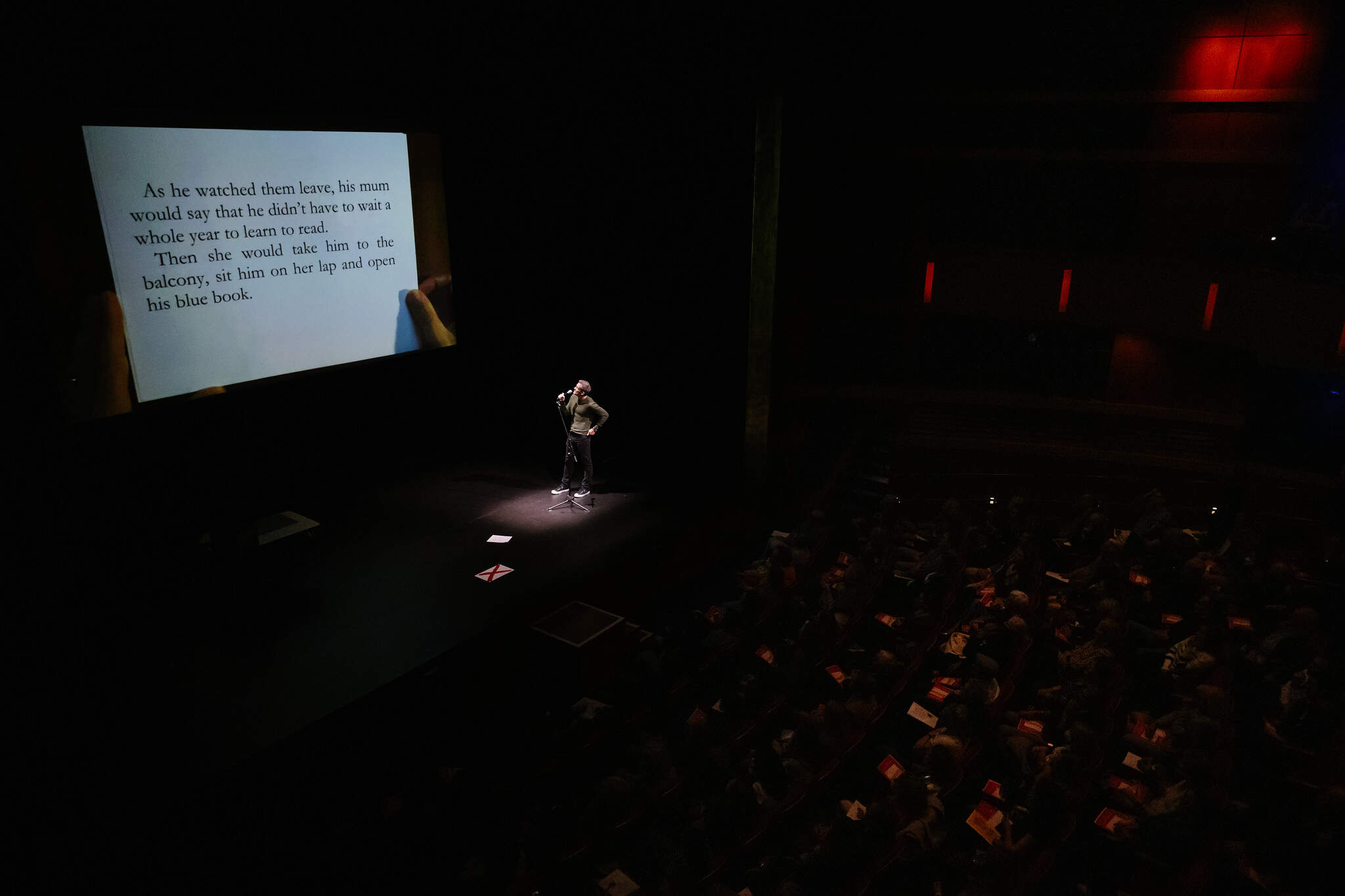
Writer Nassim Soleimanpour’s play “Nassim” (showing through Oct. 27 at The Huntington’s Calderwood theater) offers an exercise in anticipation that swells with emotion and harnesses the power of language to foster connection. Each night, Soleimanpour invites a different VIP guest onstage who reads the script — without rehearsal — for the audience.
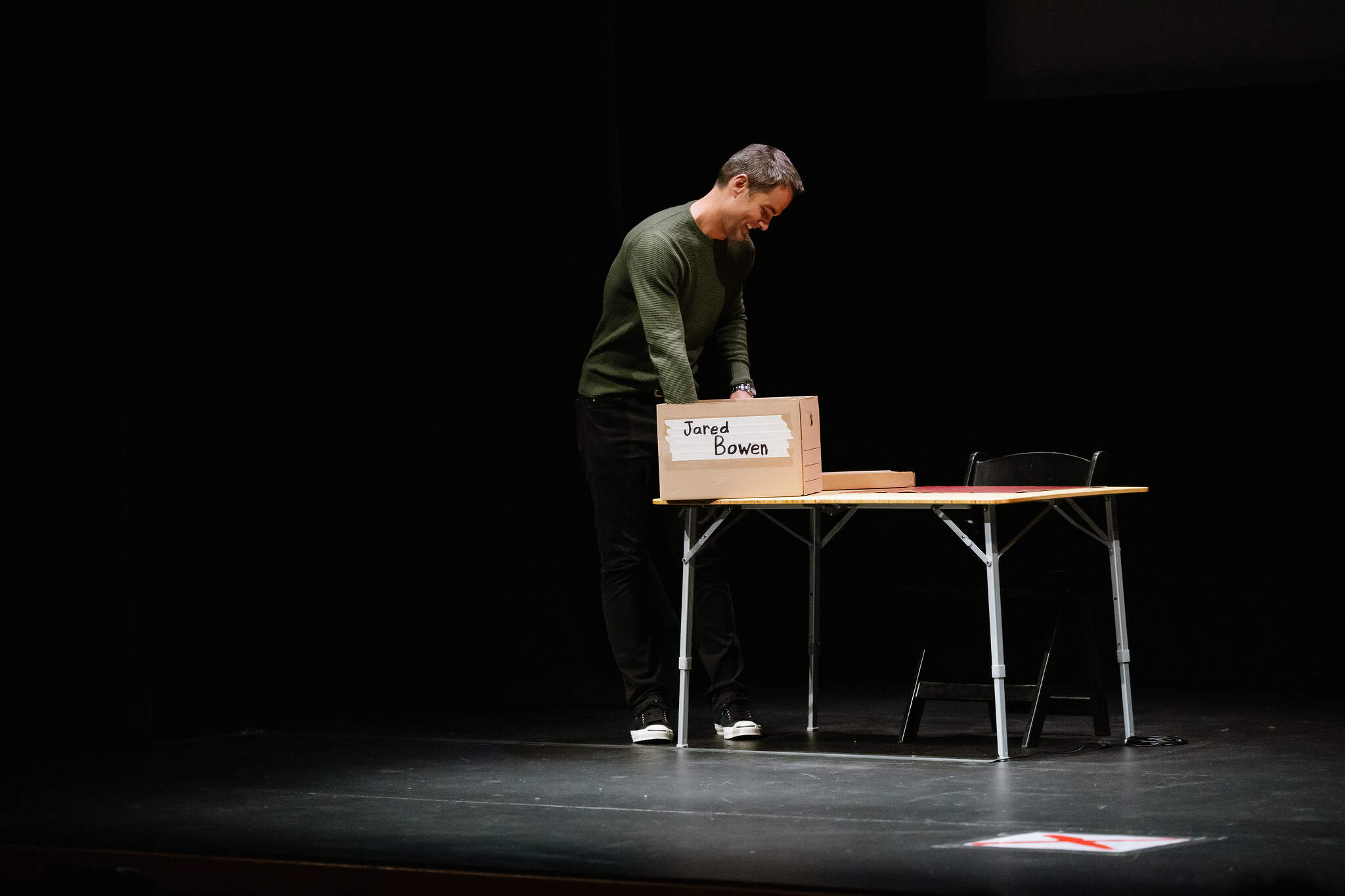
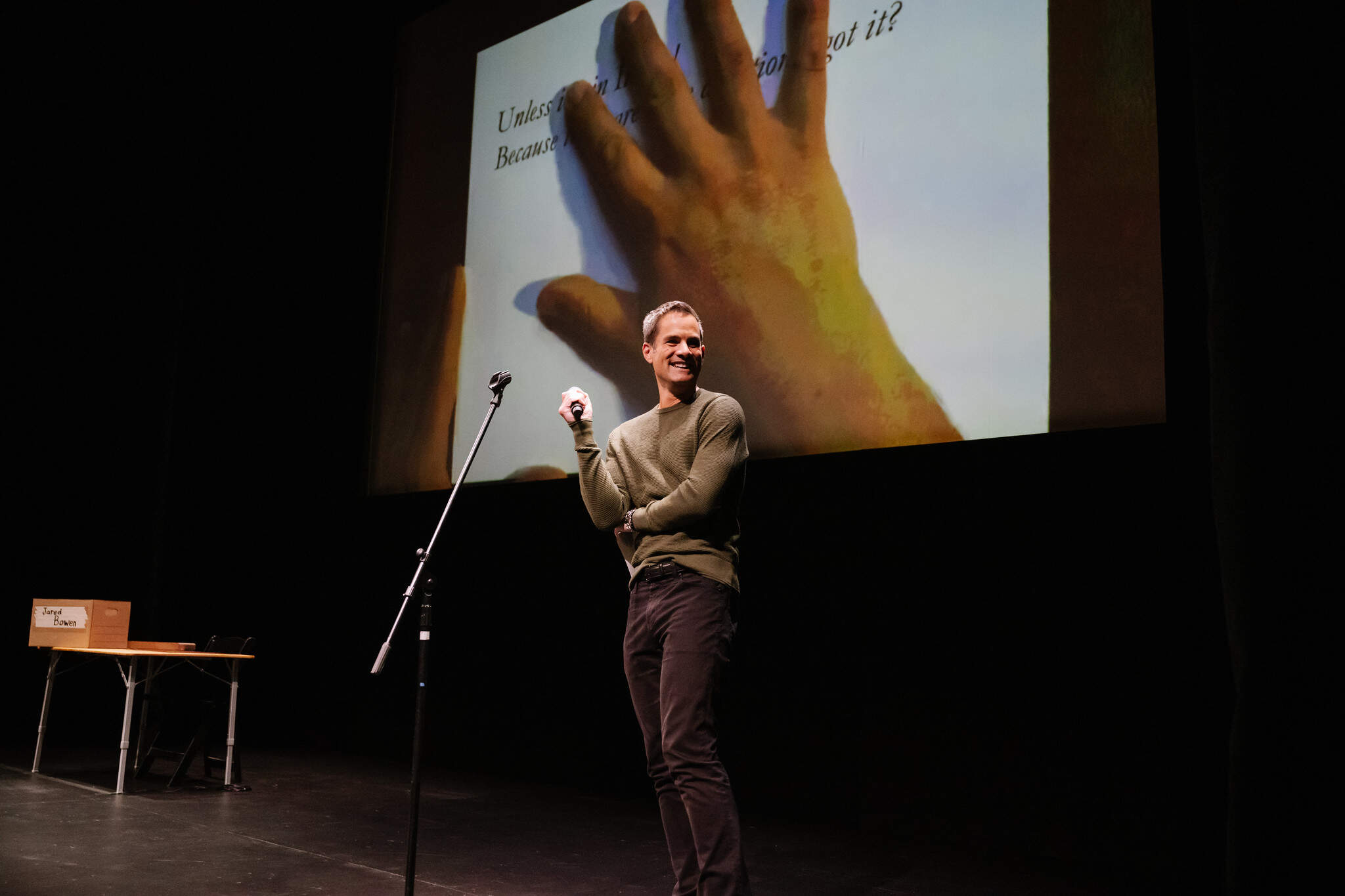
The night I attended the show, Jared Bowen, host of GBH’s “The Culture Show,” was the VIP. Bowen grabbed the script from a box on a table with his name on it and read the pages, which were projected on a screen above. The playwright, backstage at first, turned the pages so the audience could follow along.
The pages contained prompts (such as bringing gifts to the stage) and questions (many of which the audience shouted answers to) that helped the audience get to know Bowen and Soleimanpour better. Soleimanpour, who for most of the show remained silent, also taught the audience some Farsi, his native language, using the framework of a children’s book.
At first, it was difficult to know how the story would unfold and how, if at all, the audience would participate. The show’s experimental nature could be tedious if Soleimanpour wasn’t as funny or endearing or if Bowen was less affecting. It’s the not knowing that made me want to stick with it.
This kind of experimentation is Soleimanpour’s sweet spot. The Iranian playwright has written several works, including “White Rabbit Red Rabbit” (staged at ArtsEmerson in 2021), “Blank” and “Blind Hamlet,” among others. All his shows are cold reads but with the same core concept, Soleimanpour shared in an interview in the show’s program with Kevin Becerra, the Huntington’s associate director of artistic programming and activation.
Soleimanpour also noted that “Nassim” is a creative machine fueled by curiosity. But it’s also fueled by the conversations that occur with each guest, informed by their experiences, ethnicity and belief systems. Luckily, Bowen was a natural onstage. He might not be a working actor, but he isn’t afraid of asking and answering questions on camera, which makes the show — even with its mystery — easy to watch. But whoever ends up onstage has the opportunity to steer the show in some personal way if they so choose.
Partway through “Nassim,” which is directed by Omar Elerian, Soleimanpour said, “A writer’s heart will always beat in its mother’s tongue.”
It’s this admission that struck a chord with me. The complexity of language, the art of expression, and the inability to convey nuanced meaning when trying to speak another language are just some of the themes this work subtly but effectively expresses. Before the show ends, three volunteers have learned enough to piece together a short story in Farsi.
During the show, Soleimanpour taught the audience several words in Farsi as he snacked on a Kind bar that he received from an audience member. But the phrase “once upon a time” and the words “foreigner” and “mom” (mumun) are what I still (and likely will always) remember.
What will also stay with me is the camaraderie that existed while audience members laughed, shouted and cheered for Bowen as he joined Soleimanpour onstage.
The Huntington Theatre’s production of “Nassim” shows through Oct. 27 at the Calderwood Pavilion.