Support WBUR
Moonlight may hamper views of the Orionid meteor shower, debris of Halley's comet
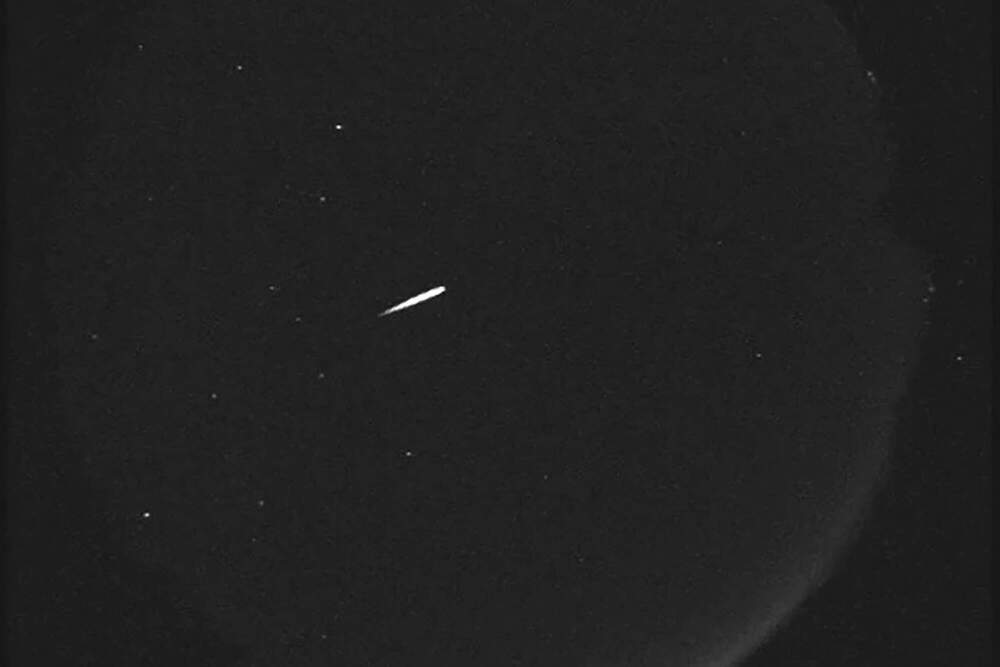
The Orionids — one of two annual meteor showers from Halley's comet — peak early Monday. A bright waning supermoon may make them difficult to spot.
The Orionid meteor shower can be unpredictable. It shines like a fireworks display in some years, but is fairly slow in other years.
This highly variable shower may result in anywhere from 20 to 60 visible meteors per hour under ideal viewing conditions, said NASA's Bill Cooke.
This year’s peak activity happens on a night when a waning supermoon is 83% full. The third of four supermoons this year, it was 222,055 miles away Wednesday night, making it seem even bigger and brighter than in August and September. It will reach its full lunar phase Thursday, ahead of the shower.
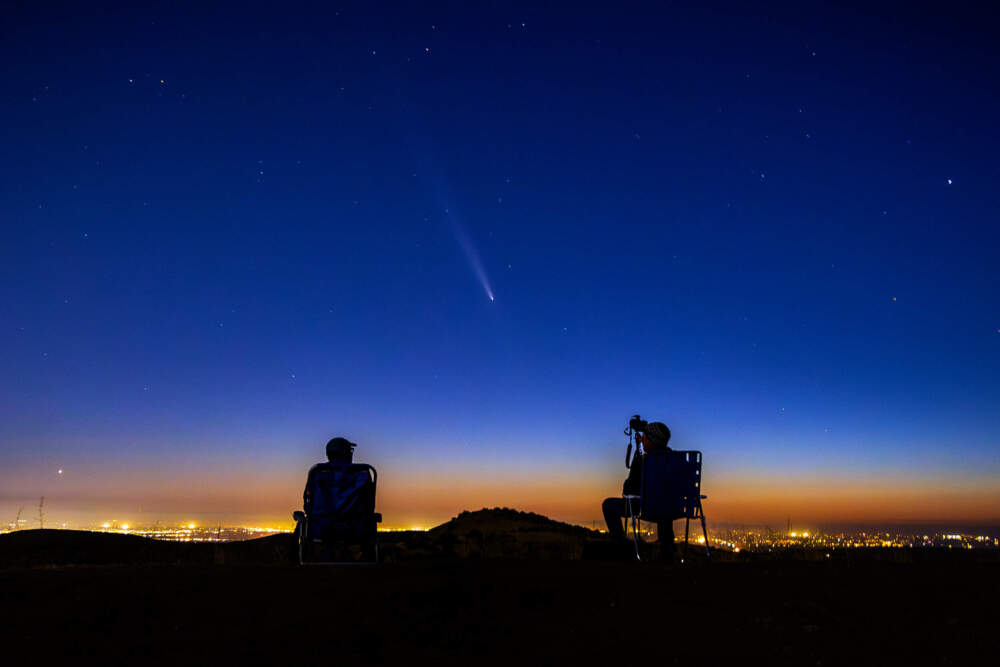
In a twist of cosmic fate, a comet is in the neighborhood. Discovered last year, comet Tsuchinshan-Atlas is now prominent in the Northern Hemisphere after wowing stargazers in the Southern Hemisphere. It should be visible through the end of October, clear skies permitting.
The moonlight will wash out some of the comet’s tail, but it’s still worth a look after sunset, said Cooke.
Here’s what to know about the Orionids and other meteor showers.
What is a meteor shower?
Multiple meteor showers occur annually and you don’t need special equipment to see them.
Most meteor showers originate from the debris of comets. The source of the Orionids is Halley’s comet.
When rocks from space enter Earth’s atmosphere, the resistance from the air makes them very hot. This causes the air to glow around them and briefly leaves a fiery tail behind them — the end of a “shooting star.”
The glowing pockets of air around fast-moving space rocks, ranging from the size of a dust particle to a boulder, may be visible in the night sky.
“Halley’s comet does not leave the same numbers of particles behind each year,” making it hard to predict what kind of show viewers will see, said Cooke.
How to view a meteor shower
Meteor showers are usually most visible between midnight and predawn hours. The shower lasts through November 22.
It’s easier to see shooting stars under dark skies, away from city lights. Meteor showers also appear brightest on cloudless nights when the moon wanes smallest.
And your eyes will better adapted to seeing meteors if you aren’t checking your phone. “It ruins your night vision,” said Cooke.
When is the next meteor shower?
The meteor society keeps an updated list of upcoming large meteor showers, including the peak viewing days and moonlight conditions.
The next big one is the Southern Taurid meteor shower, which peaks in early November.
___
With additional reporting from Marcia Dunn and Adithi Ramakrishnan of The Associated Press.