Support WBUR
Pay your fare: MBTA dispatches engagement team to encourage riders to pay up
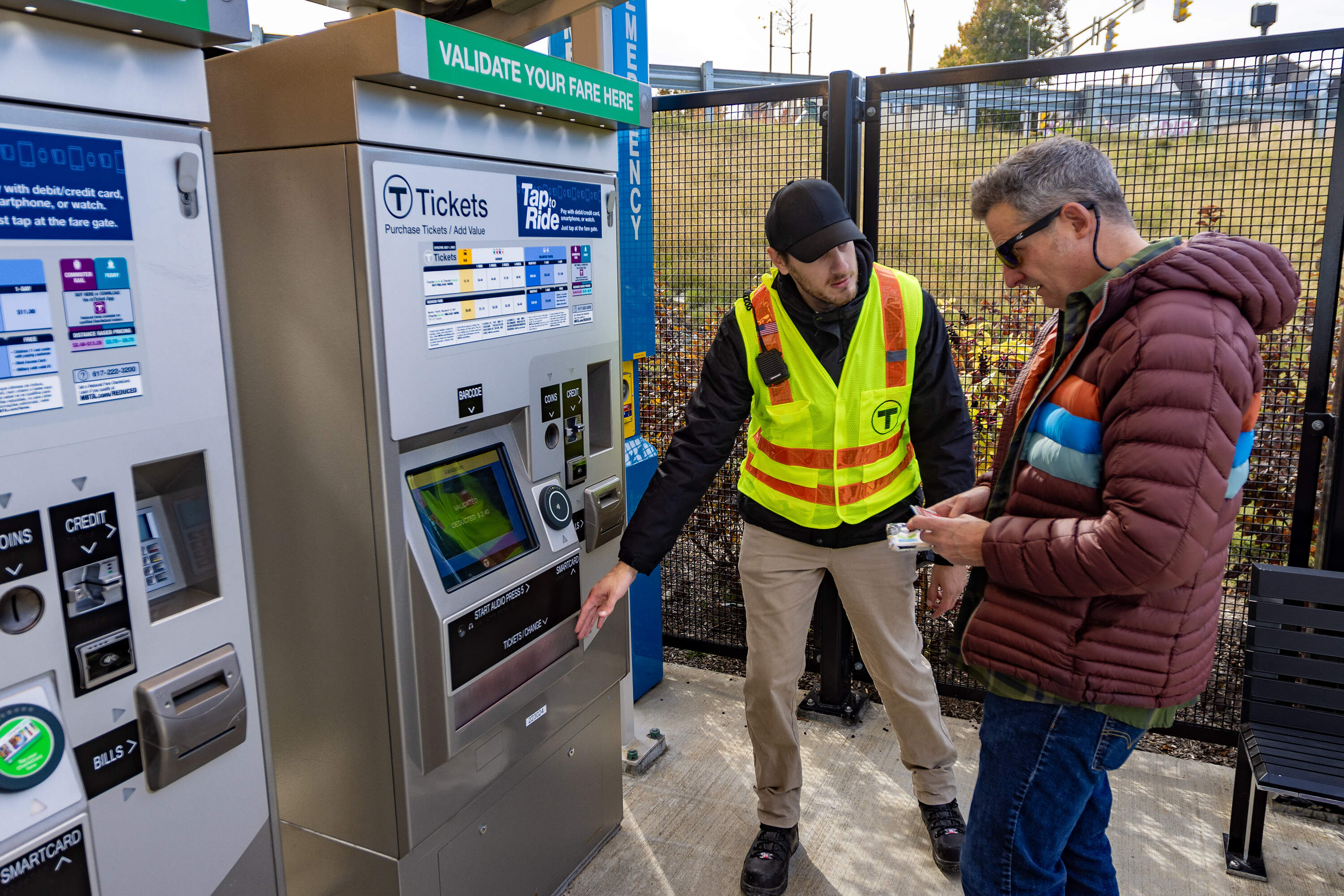
Stationed by the ticketing kiosks at the MBTA's Ball Square station in Medford on a recent afternoon, two members of the T's new "fare engagement" team were ready intercept riders.
Massimo Ricci greeted an approaching rider, and showed him how to tap his CharlieCard to make sure he paid.
“Thank you, sir,” he said, handing him a receipt. “If anybody asks you to show that, you'll be all set.”
Ricci is part of a new crew of MBTA workers who can be found at stations along the Green Line Extension. They’re part of the transit system's recently established Fare Engagement Department.
Simply put: The T really wants more people to pay their fares when they ride.
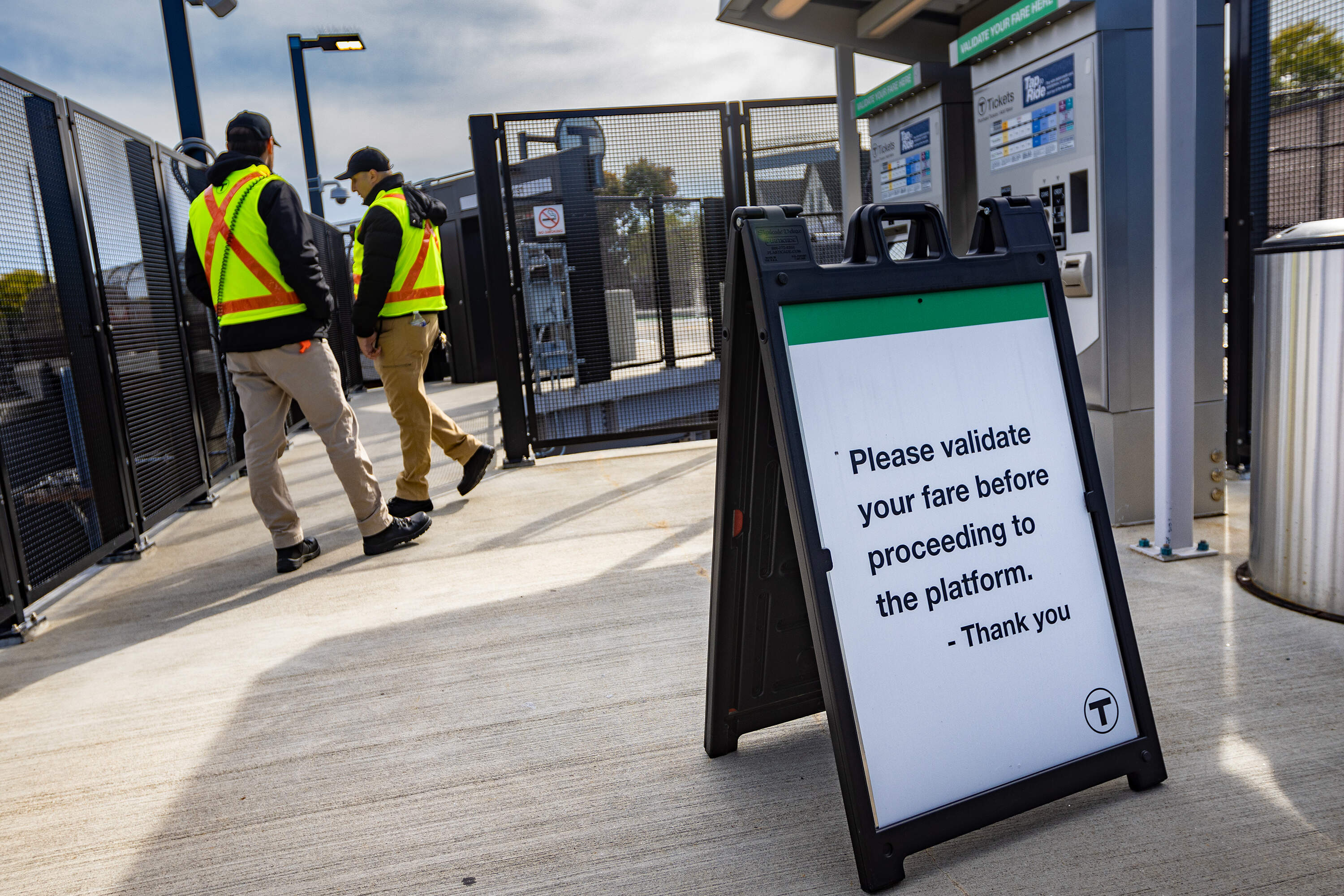
Call it a soft start. For now, the T says the goal is to help riders navigate the transit system. But it's also a introduction to the idea someone will soon be checking that riders have paid their fare, said the T’s chief of policy and strategic planning, Lynsey Heffernan.
“At some point in time, those individuals will also start to check payment,” she said.
The new team is part of the T’s strategy to maximize fare collection on the Green Line and ultimately on buses, too. Heffernan said the T needs riders to “make sure they know how to pay and also understand why it's important for the MBTA.”
The T counts on fares to support its operating budget. Several years ago, 31% of the system's operating funds came from rider fares. This year, fares will only contribute 15%, partly due to the drop in ridership since the pandemic.
For an agency facing an estimated $700 million budget deficit next year, collecting every dollar is essential.
The problem of people riding for free is not new. And it's not unique to the MBTA; transit authorities across the country are grappling with how to curb fare evasion. New York’s Metropolitan Transit Authority estimates it lost $644 million in uncollected fares on its subway, bus and railroad modes in 2022.
The T says it doesn’t have post-pandemic fare evasion data, but the authority estimates it lost about $6 million a year to free rides on its subway and bus lines before the pandemic and between $10 and $20 million a year on the commuter rail.
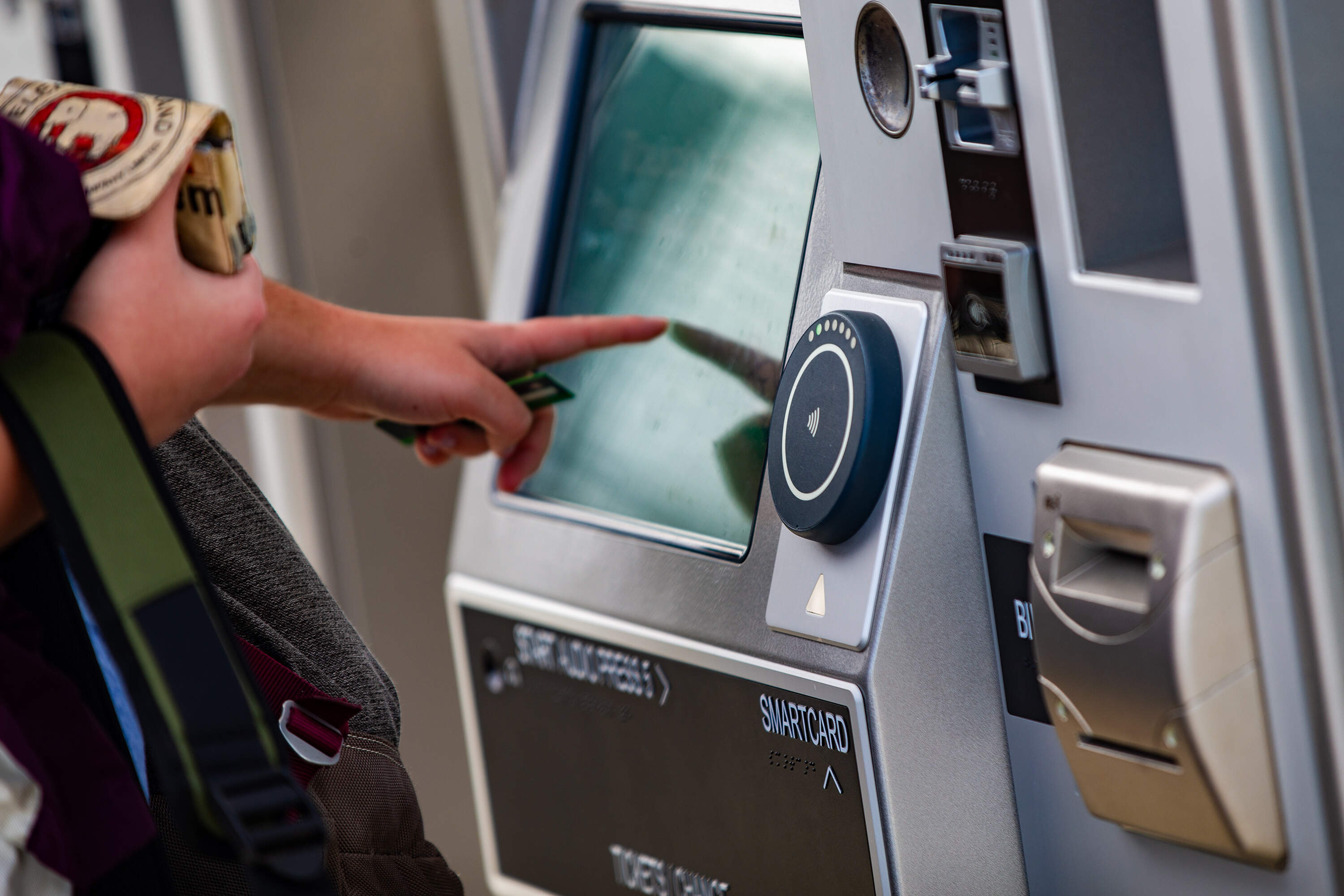
Stations that don’t have fare gates, like street-level Green Line stops, are particularly vulnerable to fare evasion. Allston resident and Green Line rider Fita Refinalia said she sometimes sees people avoid paying when they hop on to ride just a stop or two.
“Maybe they feel like to pay the same amount for the long distance and short distance, it's not really justified to pay,” she said.
For Green Line conductors, trying to police fare-paying is an added burden — and the new contactless payment system T rolled out this summer hasn’t helped.
The technology makes all-door boarding possible, and should improve efficiency, but makes it tougher to ensure riders actually tap to pay. In fact, the T estimated it would lose at least $25 million dollars more per year unless it could put a team on the ground to make sure people are paying.
In public comments last month, MBTA General Manager Phil Eng said he is “not giving up” on collecting fares. “That's an important area and I'm pleased to say that the fare engagement staff that we have hired are making a difference.”
Eng said fare collection has improved by 35% on the Green Line Extension in the few weeks since dispatching the new team. “And that's not even enforcement, that's just education of talking about the contactless payment, and just talking about the importance of payment,” he said.
T officials expect that by the spring, those representatives will spot check that riders paid their fare, much like what happens in some European systems.
“As the technology continues to develop, they'll be in a place where they'll have some handheld devices and can make sure that riders have paid,” Heffernan said.
Riders who don’t pay could get citations ranging from $50 to $100.
This segment aired on November 12, 2024.