Support WBUR
A writer explores Korean American identity in one-woman show
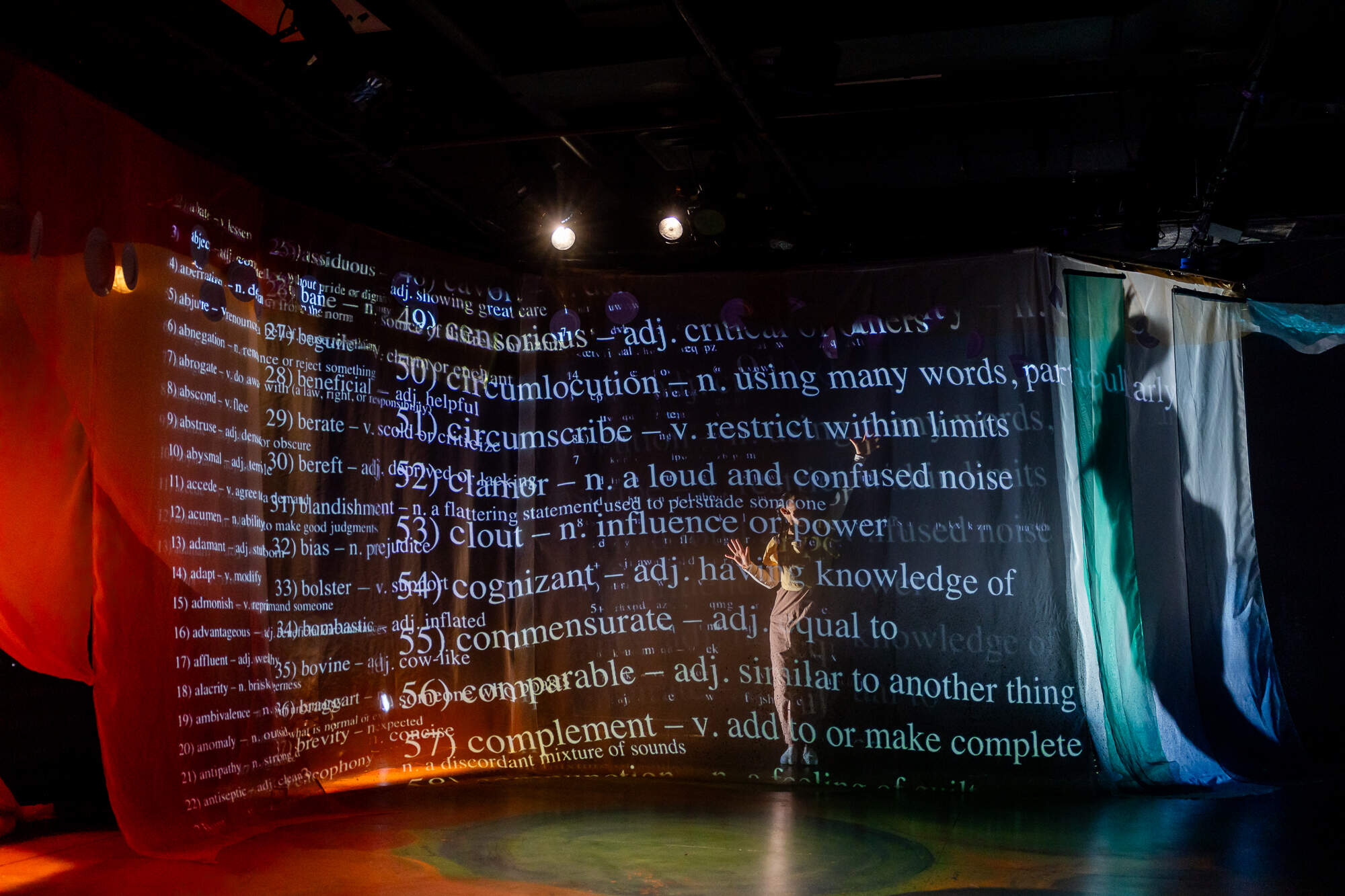
Zoë Kim has long understood that food plays an important role in Korean culture. Her autobiographical, one-woman show “Did You Eat? (밥 먹었니?)” explores the way that nourishment serves as a love language and connects us with the ones we care about most. Kim portrays a range of six characters, her family members, in order to take audiences on an expedition through time and tell a tale about identity, belonging, healing and how to care for the inner child within.
“The narrative comes from my memories,” said Kim. “I think memory is such a complicated thing. It can be subjective, and it can be objective. It can tell the truth, and it can tell lies. I think that writing ‘Did You Eat? (밥 먹었니?)’ was a journey to come home to the memories that I thought I had to bury and to acknowledge them fully, face to face. [It was] to go back in time to tell my child self that she actually has a witness to all the things she went through and that I believe her.”
The production debuts at Boston Center for the Arts (through Nov. 30), co-produced by CHUANG Stage, Boston’s Asian American theater company, and the New York-based group that Kim founded, Seoulful Productions. “Did You Eat? (밥 먹었니?)” first made waves at the 2023 Edinburgh Festival Fringe, though Kim developed much of the work afterward to make it more personal. Now, her newest version of the show will see its world premiere in Boston. I spoke with Kim about where her inspiration came from, what it’s like to carry a show by herself, and why the city’s Asian American community is important to her.
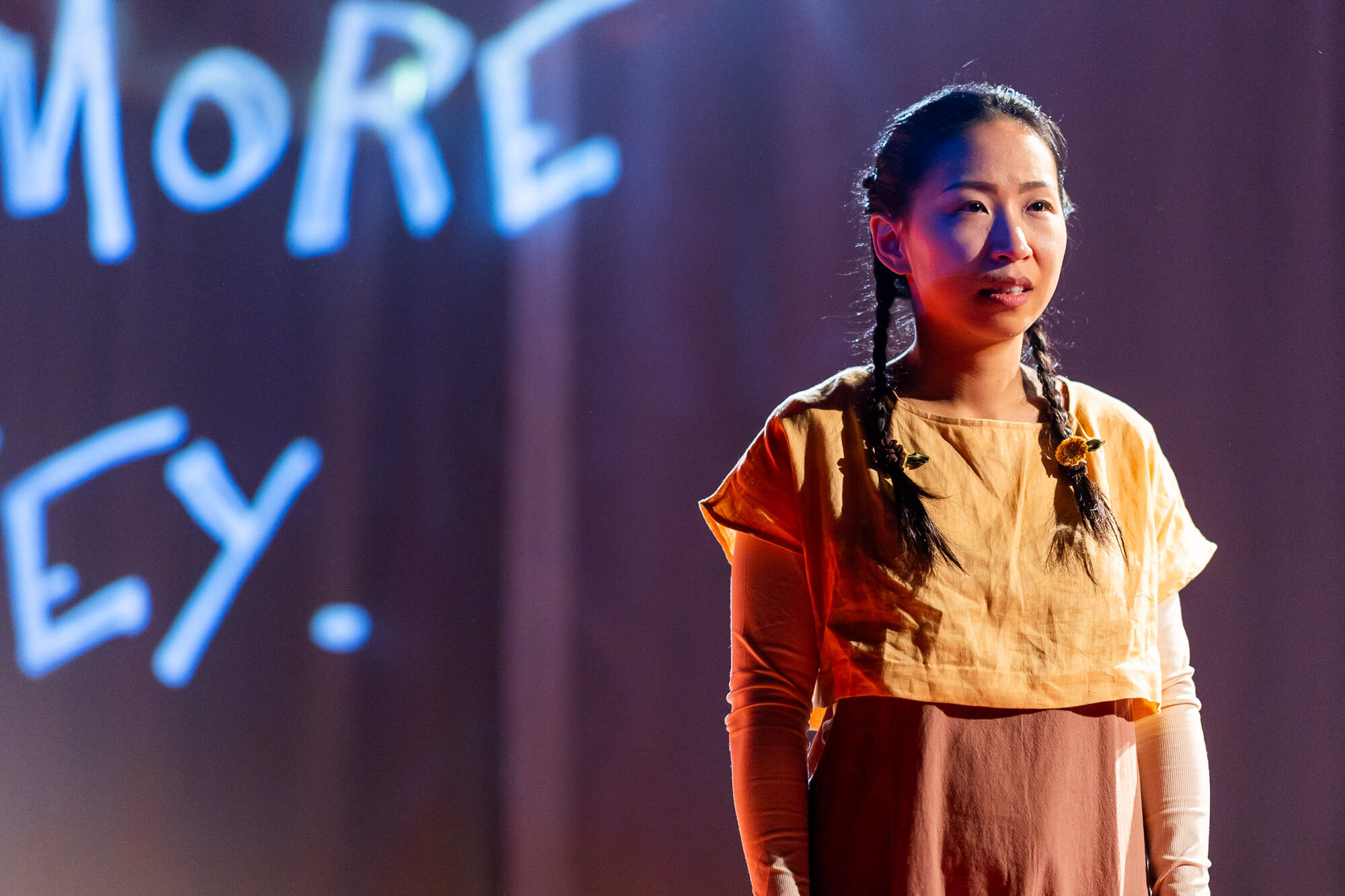
Shira Laucharoen: What’s the story of “Did You Eat? (밥 먹었니?)” about, and what are the most important themes that you will explore in the show?
Zoë Kim: “Did You Eat? (밥 먹었니?)” is about love, how we learn to love, how we love each other, and how we love ourselves. It’s also about my life, my family, my lived experiences as a Korean American woman, and my evolution until now. I would say the story that will be told is my life’s journey from birth to now, through the eyes of a narrator, who is my adult self, speaking to my child self. I’m giving her a heads-up about what’s to come in this life and that I have her back in this journey. I think the biggest themes the show grapples with are love languages and the inner child.
I’m curious about the love languages that are used to communicate emotion in the play. Based on the title, it sounds like food could be one of them.
Food is such an important part of Korean culture, as it is in many cultures and communities. In my family, asking “Did You Eat? (밥 먹었니?)” can mean a lot of different things. It could mean “how are you?” and it could mean “I love you,” “I miss you” or “I’m worried about you.” … Sharing a meal together, cooking for someone — food is such a huge component of how we express our affection to one another.
This production is an autobiographical solo show. Where did your inspiration come from, and what was your writing process like?
I had no intention of making an autobiographical work. To give broad context, during COVID-19, the surge of anti-Asian hate made me do a deeper dive on what stories are being told, what stories have been told, and what are going to be told. I was meditating on that and on what I wanted to write about. I was thinking about how I wanted to make art that spoke to hate speech and the overall impact of language in our lives. We really struggle to connect with one another’s humanity sometimes. I knew that I wanted to make something about love, that could give space to reflect on different ways people can love each other, encouraging more love in this time of hate. I wanted to be seen unapologetically as my Asian self in this world. I wanted to revolt in my own way, through art.
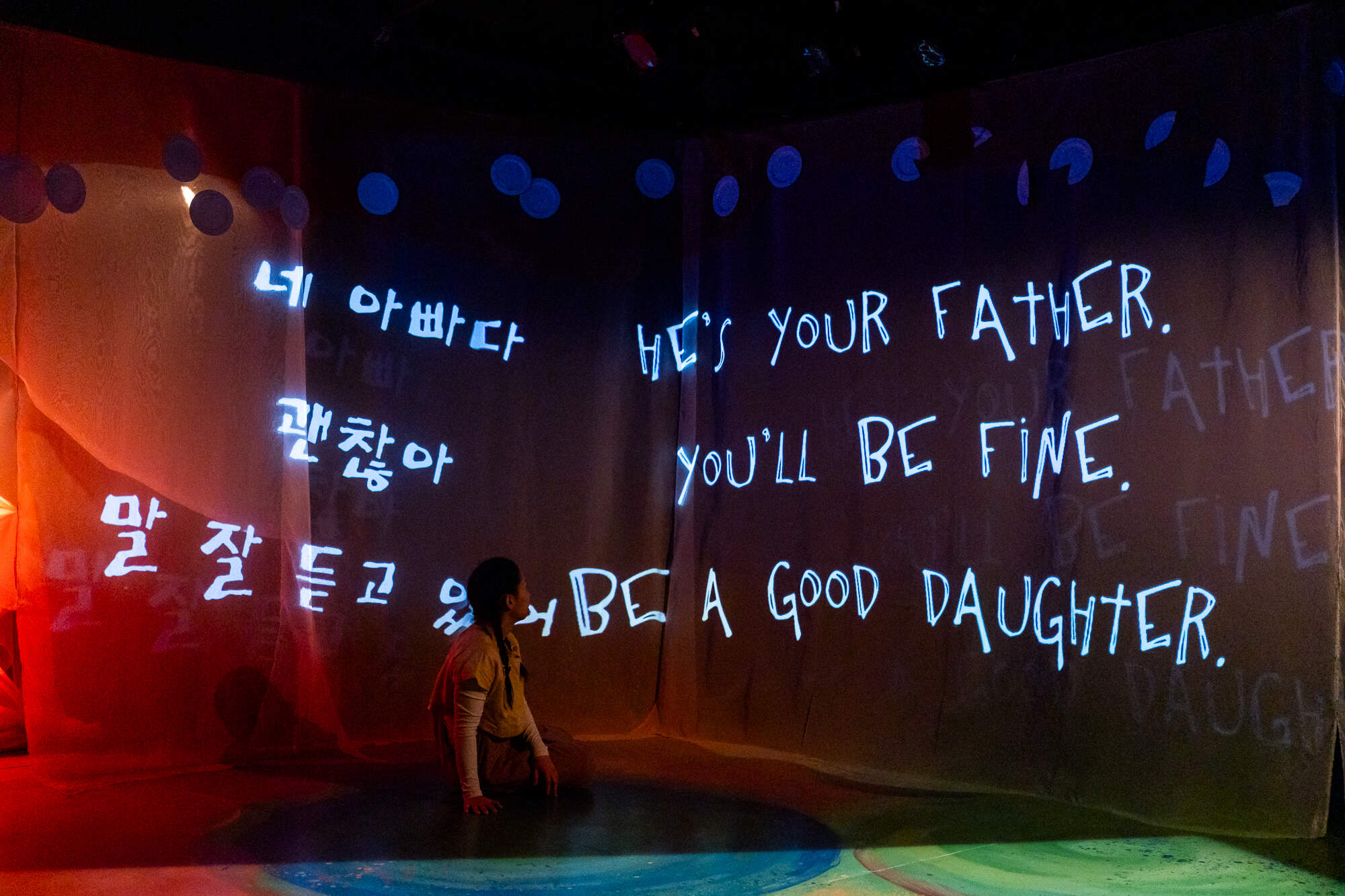
You shapeshift into different characters during the play. What kind of work did you do to begin embodying those roles?
[Director] Chris Yejin, [choreographer] Christopher Shin and I spent a lot of time thinking about the physical vocabulary of each character that I portray in the show. What is their weight in the space? How do they move through the world? … The choreography almost feels like its own character. My director is very interested in the body doing something different than what’s being said, to create a sense of life not always making sense. There’s definitely a dichotomy that exists in the characterizations.
What do you think it will be like to carry this performance entirely by yourself?
It definitely feels like one of the most terrifying and bravest things I’ve ever had to do.
CHUANG Stage strives to tell radical pan-Asian stories. Why do you believe in the importance of sharing the tales of Asian Americans, and what do you hope this production will do for the Asian American community in Boston?
I think that storytelling is a deeply human desire. It’s our legacy, it’s our immortality, it’s the connective tissue with one another. It allows people to see other people as people. I really hope that the Asian American community in Boston feels seen, represented, held, celebrated, uplifted, loved, believed and honored.
Finally, what does your Korean American identity mean to you?
My identity is a journey that will continue to be something in process. I struggled with feeling that I didn’t fit into either side (Korean or American) when I was younger. I’m just now coming into an era where I fully embrace and celebrate the complexity and multidimensionality of holding space for both cultures within myself. I think it means that I can be a lot of things at the same time.