Support WBUR
Local Indigenous communities are reclaiming their food sovereignty
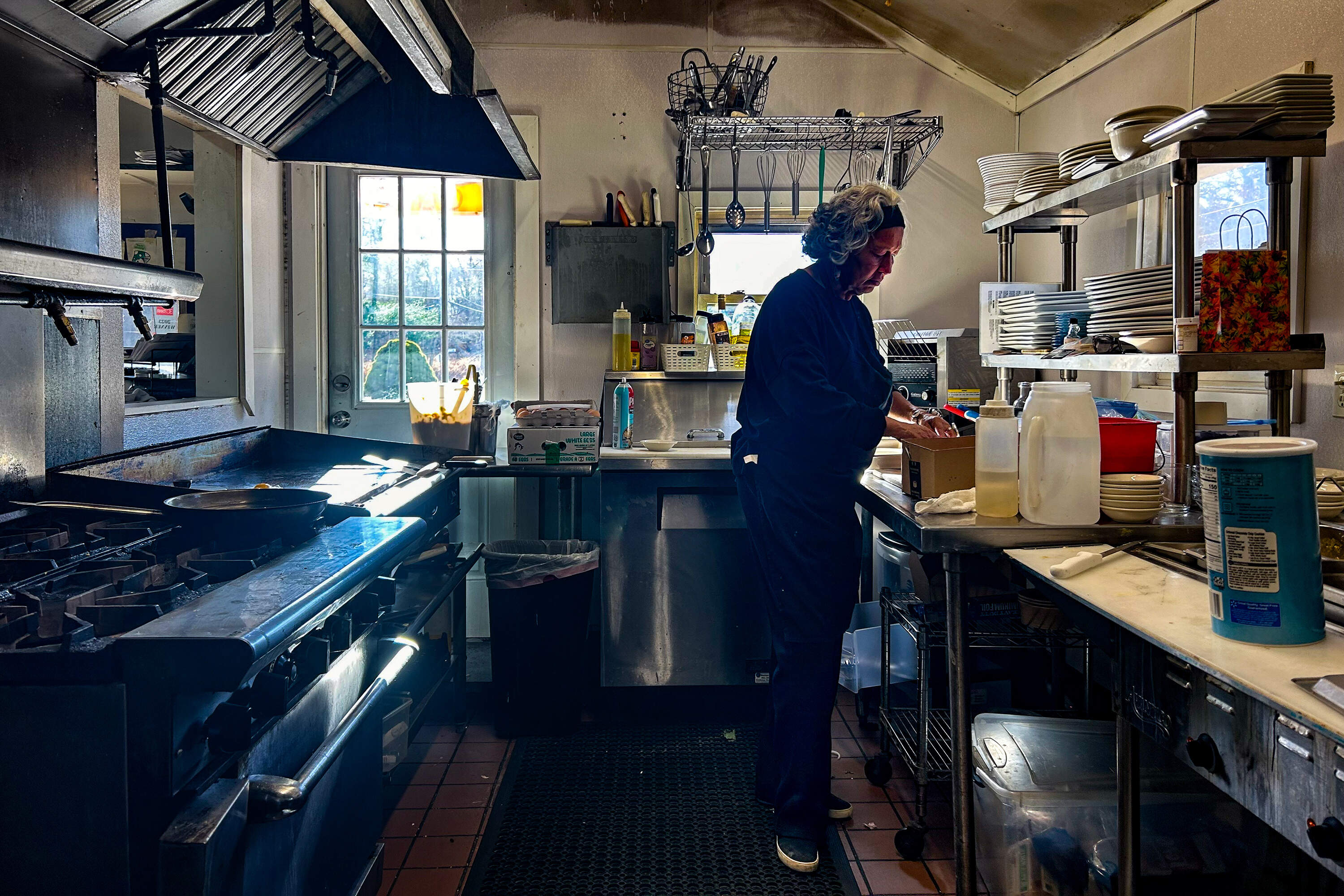
It’s around lunchtime on a sunny November day and chef Sherry Pocknett is at her flat-top grill making breakfast. She cracks two eggs alongside two scoops of her Johnny Cake recipe, a griddled corn pancake. As she cooks, she talks about her parents.
“My mom and dad are both Wampanoag Indian,” said Pocknett. “They both taught us, they wanted us to know our lifeways, how we survive, how to survive. So, I'm so fortunate to grow up back then and [be] able to teach my children, my grandchildren now.”
Pocknett is doing just that at her restaurant Sly Fox Den Too in Rhode Island. It’s a love letter to her tribe and her family. Sly Fox is her dad, and a beloved former chief of the Mashpee Wampanoag. The menu is full of memories, foods she grew up eating — from her grandmother’s blueberry buckle to baked and smoked fish.
"...without food, without the stories, there wouldn't be language."
Sherry Pocknett
“People are like, ‘Who eats fish in the morning?’ Well, we ate fish in the morning,” she said. “My mom would make fish for us the night before for dinner. We would have mackerel, for instance, and she would butterfly the mackerel open, put it in the oven, salt, pepper, garlic on it, maybe some butter or some olive oil. And she would always make leftover, enough for the next day.”
Pocknett is the first Indigenous woman to win a James Beard Award. She’s also part of a community of Native Americans in the region working to reconnect with their foodways and culture.
“Our food is our stories,” Pocknett said. “It's our sovereignty. And without food, without the stories, there wouldn't be language.”
A mutualistic relationship with the land
Today, there are two federally recognized tribes in the commonwealth: the Wampanoag of Gay Head (Aquinnah) and the Mashpee Wampanoag. The state recognizes two others: the Hassanamisco band of the Nipmuc and the Herring Pond Wampanoag Tribe. More than four centuries ago, these and other nations lived side by side in the region, surrounded by abundance in food and culture.
Alyssa Harris is a member of the Mashpee Wampanoag Tribe and works to tell the story of her people at the Plimouth Patuxet Museums. On a brisk November day, she’s near a fire at the museum’s house site, a recreation of a Wampanoag summer village.
“I just want to show people that people were thriving here for so long to the point where they have a mutualistic relationship with the environment, rather than like a detrimental relationship,” said Harris.
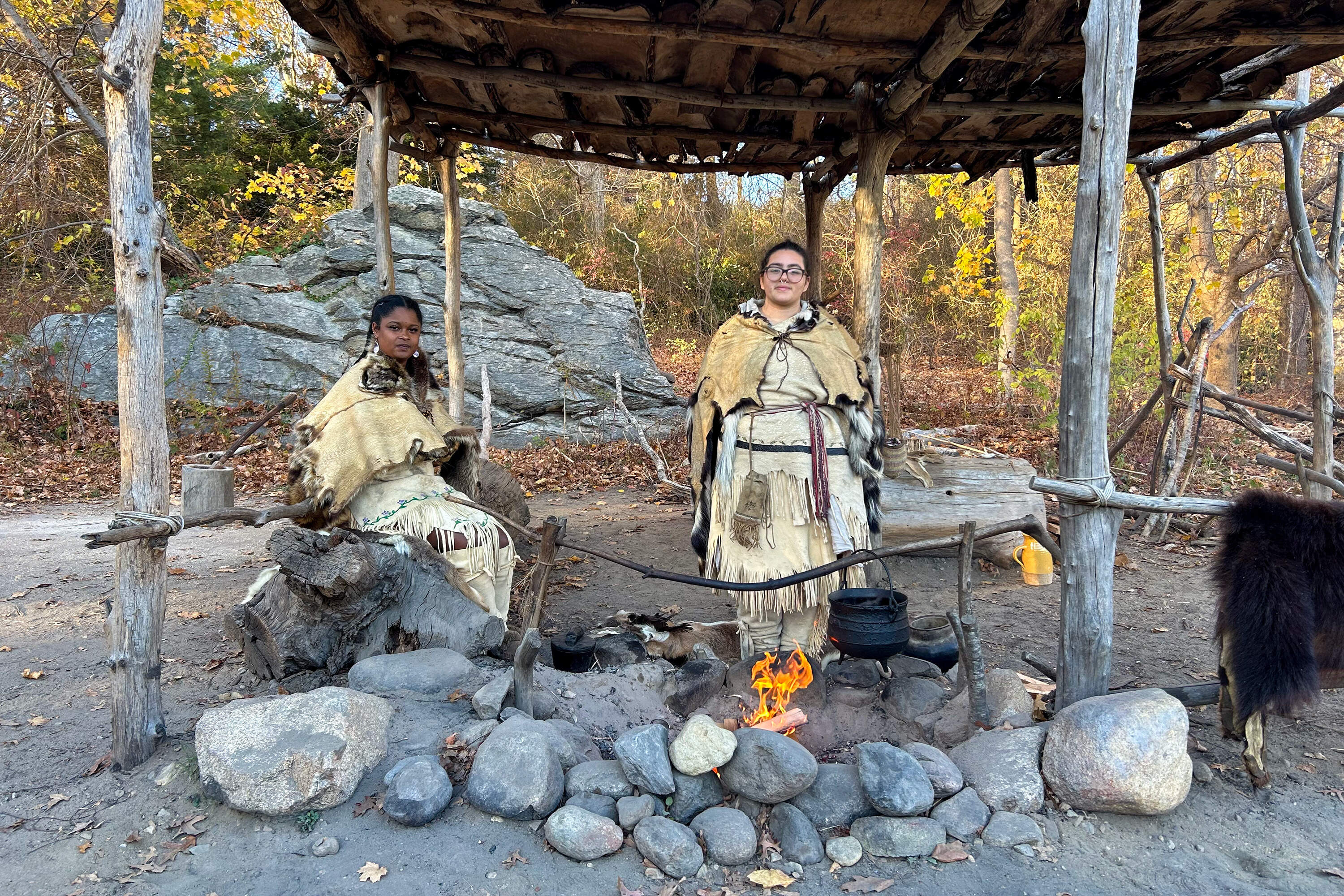
Wampanoag families lived seasonally, moving closer to water in the summer to fish, and moving inland in the winter to focus on hunting. They were growing crops and had an abundance of foragable food around them. All that changed when contact with outsiders began.
Europeans landed on New England shores as early as the 14th century. But it wasn’t until the 16th century when the real change began. Infectious diseases, land encroachment and King Philip’s war in 1675 dramatically reduced the number of Indigenous people in the region.
Before contact with European settlers, the Plimouth Patuxet Museums estimates there were as many as 40,000 Wampanoag living in 67 villages across New England. As of last year, according to tribal numbers, there were around 3,200 enrolled Mashpee members and 1,364 enrolled members of the Wampanoag Tribe of Gay Head in Aquinnah.
Brad Lopes is a member of the Aquinnah Wampanoag nation. He’s also the Native American Teacher Retention Program Manager in the Mashpee Wampanoag Education Department and the Education and Outreach Coordinator for the Aquinnah Cultural Center. He said by the 1670s, mounting pressure on Indigenous social systems, including established foodways, was taking a toll.
“One's own food sovereignty, one's own access to hunting grounds, one’s own access to healthy farming grounds, and really a lot of the access to waterways are radically limited to the point where this system that has maintained us for 12,000 years, many of our communities are unable to maintain that system [by] no fault of their own,” said Lopes.
Food as community
For native communities, food is the center of life. Tribal members spent generations passing down how and where to find food. The best place to pick blueberries, how to prepare for the annual herring run and get the best catch. Where to find the flower or plant that would help your headache or menstrual cramps. With the loss of land and language through intentional colonization, where and how to find the foods that had previously sustained them and kept them healthy became limited.
One of the ways to build native food sovereignty for many communities is seed stewardship. This means growing seeds of traditional crops and teaching others about their history.
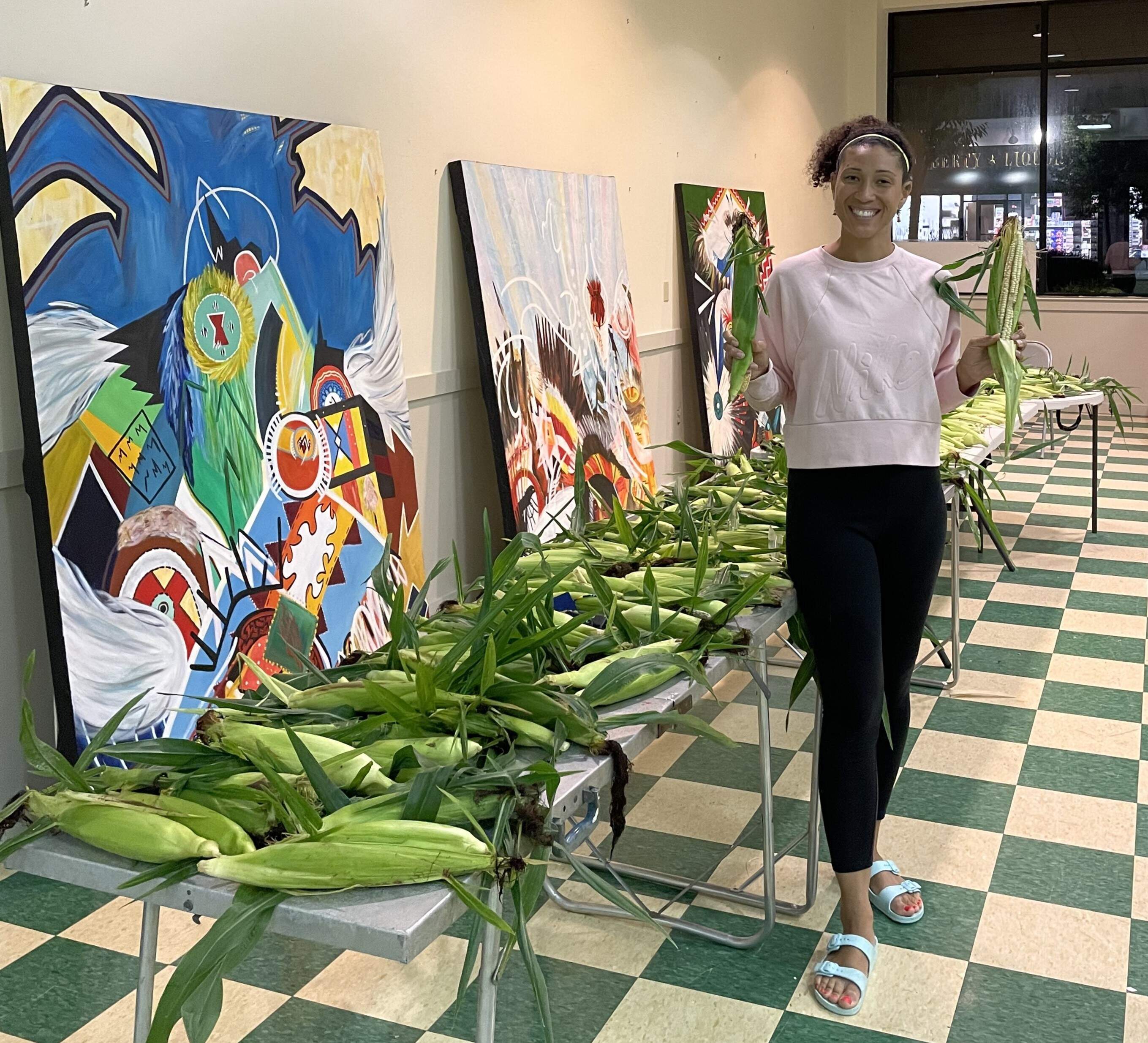
“King Philip corn or Wampanoag corn found me,” said Danielle Hill Greendeer, a member of the Mashpee Wampanoag and food sovereignty program manager for United South and Eastern Tribes, Inc., or U-SET.
She’s a seed steward for King Philip corn, an eight row flint corn used primarily for flour. Unlike sweet corn, the ears are a deep burgundy or brown.
“This particular color is unique to us and to the Wampanoag people,” said Greendeer.
The corn was grown almost exclusively by the Wampanoag. It’s named after chief Metacomet, called King Philip by the English. When tribes across the region revolted against colonists in what became King Philip’s War, the corn variety was one of the crops intentionally destroyed.
“When the English were burning all the cornfields during the King Philip war, apparently the English kept some of these seeds,” Greendeer said.
It’s unclear whether the seeds were saved during the war, or gifted from the Wampanoag to colonists and saved — no written records exist as to why the Wampanoag stopped growing their own crop after the war. Generations later, the seeds landed with a company called Truelove Seeds. They asked Greendeer if she wanted to steward her people’s corn. She says the role is like being a protector.
“It’s about just being intentional on where we're trying to plant these seeds and who's trying to plant them, just keeping the seeds’ best interest,” said Greendeer.
"It's about community, about creating new stories, new songs, new ceremonies to go along with the growing of this corn."
Danielle Hill Greendeer
Greendeer has planted two harvests of the corn and both were contaminated by cross-pollination from nearby crops. She hopes next year she’ll get a pure crop and be able to distribute it in her community. For now, she’s been learning all she can about the corn: how to prepare it, how to cook it, how long it keeps. This is so she can pass along this knowledge when the ears are ready.
Greendeer thinks this corn has lessons to teach.
“I feel like, in terms of our tribe's history and like where we are right now, it wants us to go back and revive this part of ourselves,” she said. "Like it's about being fertile. It's about being abundant. It's about community, about creating new stories, new songs, new ceremonies to go along with the growing of this corn.”
Seed stewardship is part of a larger movement called rematriation, meaning “returning the sacred to the mother.” It’s an Indigenous concept led by Indigenous women as an intentional process of decolonization.
“Rematriation is really a collective effort…trying to reclaim and restore our way of working the land and…reclaiming our Indigenous foodways and our tribal food economies,” said Kristen Wyman, a member of the Hassanamisco band of the Nipmuc.
Wyman is also a member of the Eastern Woodlands Rematriation collective, which represents the Wabanaki community, including the nations of Penobscot, Passamaquoddy, Mi'kmaq, Abenaki, Wampanoag (Mashpee and Gay Head in Aquinnah) and the Hassanamisco band of the Nipmuc. She says her group’s goal is to support food sovereignty projects across the state so Indigenous people don’t have to choose between making rent and keeping their traditions.
"Food is not available if it's not cared for."
Kristen Wyman
“The system that we live in today, this kind of cash economy really forces a lot of our folks to abandon in many ways, or they just don't have space or time to maintain these cultural practices,” said Wyman.
One of those traditions is knowledge of ancestral foods. To help with that, Wyman says the group is gathering and documenting family recipes and teaching tribal members how to cook them. The collective is also supporting work at Pequoig Farm, a 181-acre farm under Nipmuc stewardship that cultivates traditional native crops and creates a place for traditional foraging, hunting, fishing and ceremonial practices.
Wyman says she’s also personally working on building a food forest on a piece of land that belonged to her ancestors. The plan is to grow traditional flint corn seeds, beans, squash and other root vegetables to share with her community throughout winter.
“Food is not available if it's not cared for,” said Wyman. “And what I'm talking about is food that is medicine, food that has our culture and our stories and our dreams and our hopes and even all of our pain wrapped up in it and food that is shared. That's what food is to us.”
Restoring balance
Part of building food sovereignty is building community with food. That’s what Juli Vanderhoop is doing. She’s a tribal elder in the Wampanoag Tribe of Gay Head (Aquinnah) and owns Orange Peel Bakery on land her family has owned in Aquinnah for generations. She grew up on tribal land on the island, where her family owns a restaurant. She remembers a moment there when she was a kid.
“People would come in and they would say… ‘where are all the Indians?’” said Vanderhoop. “And that was always a question that just pierced probably everybody up there. I know it pierced me. I was like, ‘Why doesn't that person recognize where they are, who we are?’”
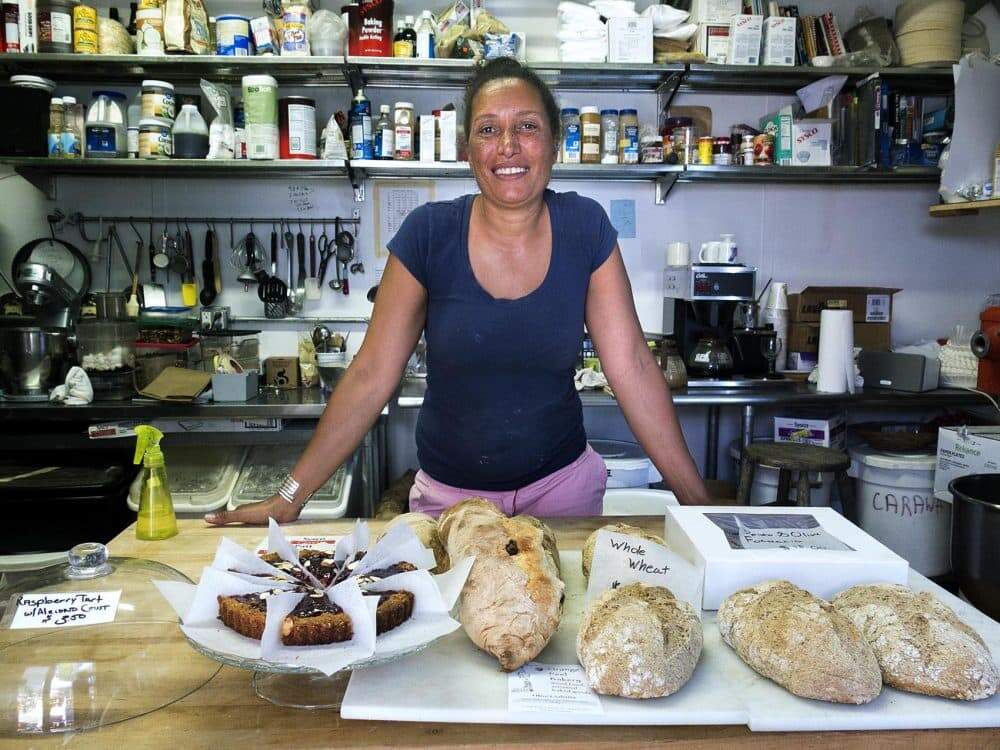
Vanderhoop left Aquinnah when she was an adult but returned more than two decades ago to the land her ancestors lived and owned for thousands of years. Vanderhoop runs Orange Peel out of a small shed on her property. Every day, regardless of the season, she bakes and stocks her shelves. She sells honey from bees on her land, and bakes with native ingredients when she’s able to, like nettle, beach plums, pears and apples.
Neighbors swing by and pay with the honor system. Vanderhoop also hosts events on her property, ways to bring together her community. She says cooking here has healed her, and she wants the community to know that she’s still here, her people are still here, they have always been here and they will continue to be.
“We had the balance taken away,” said Vanderhoop. “And I think that we're bringing it back through the foods that we eat or plant, through regaining that and hopefully through sharing that so that other people can understand that we're going to have a better day if only we can come together in community.”