Support WBUR
Field Guide to Boston
The art of tree grafting: Inside the surgery set to save a Cambridge apple tree
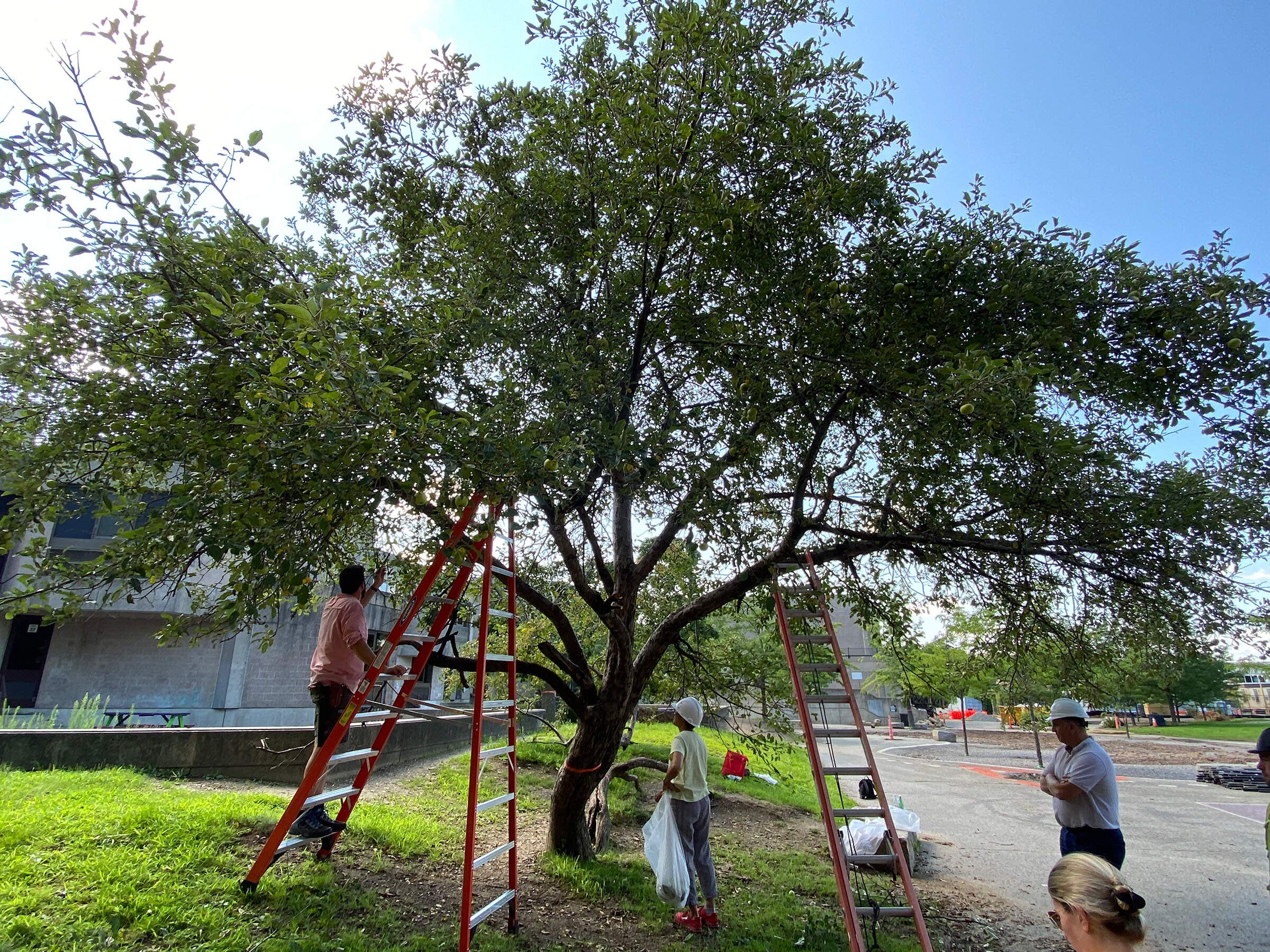
Twelve-year-old Milo Weinberg remembers the apple tree at Cambridge’s Tobin Montessori School like an old friend.
He played around its trunk for years. He learned to ride his bike around it. And when the pandemic pushed socializing outside, he had a birthday party under its shade.
“I would just like, relax on it, and just, like, think,” he said.
Weinberg is one of hundreds of children who played by the tree in the school yard near Fresh Pond over the decades. So three years ago when the city needed to tear down the campus to build a new school, a special plan to preserve the tree sprouted — combining science, art and community.
The city had solicited proposals for a public art project for the new Tobin Montessori & Vassal Lane Upper Schools complex in 2020.
The winner was a plan by Yugon Kim and Tomomi Itakura, partners of architectural design firm TSKP x ikd, centered on the apple tree.
“It's a kind of restoration project in some ways – an apple tree that the children used to climb – but in many ways, it's a celebration of community. And that, I remember, was for all of us, lost during COVID,” said Kim.
His plan was to take cuttings from the original apple tree before it was cut down, propagate them off site and distribute the saplings to Cambridge residents to grow.
Then, project leaders will take cuttings from residents’ trees and attach them to a new apple tree in the school yard two years from now, in 2026. They’ll combine the new with the old through a process called grafting – a method of propagation that joins pieces from different plants to grow together as one plant.
The multi-step Community Grafting Project means that part of the beloved apple tree will live on not only in the school yard, but also in the yards of Cambridge residents who will nurture the saplings.
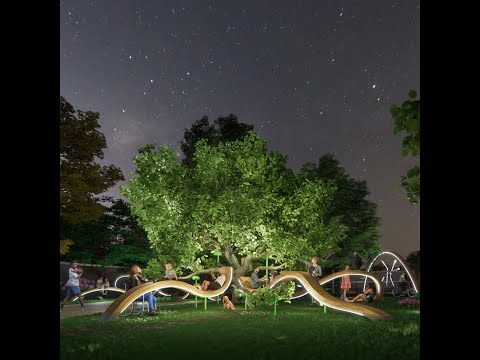
As a Cambridge resident, Kim wanted to find a way to honor his community.
“My goal is that people come here, [and] they see different aspects of it and think of it as their own.”
Currently, the cuttings are being propagated off site with help from Sean Halloran, formerly a horticulturalist with Harvard University’s Arnold Arboretum, and Jerry Mendenhall, a plant propagator at Mount Auburn Cemetery.
Halloran remembers when he was brought on board to lead the propagation for the project. It was only a few days later that Kim called him that it was time to cut the branches off the original tree for propagation.
“He called me and said, ‘You know, they’re coming in, they’re going to cut down the apple tree,’ and so I dropped everything and drove from JP to Cambridge,” said Halloran.
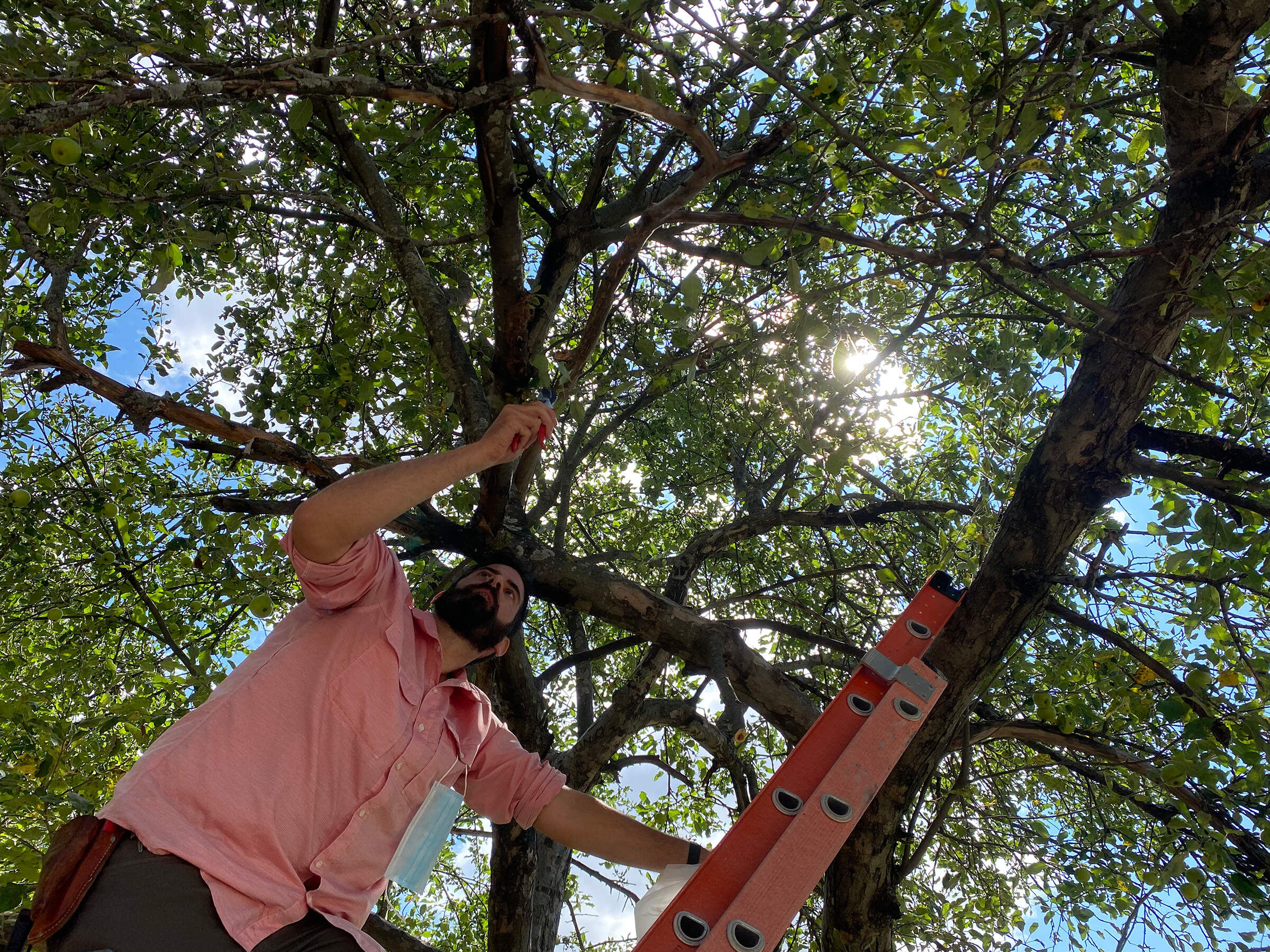
He had to store some of the saplings in his own fridge to keep them alive until a better storage solution could be found.
“It was very stressful just knowing they were sitting there, they’re just sitting in the fridge just waiting,” he remembered.
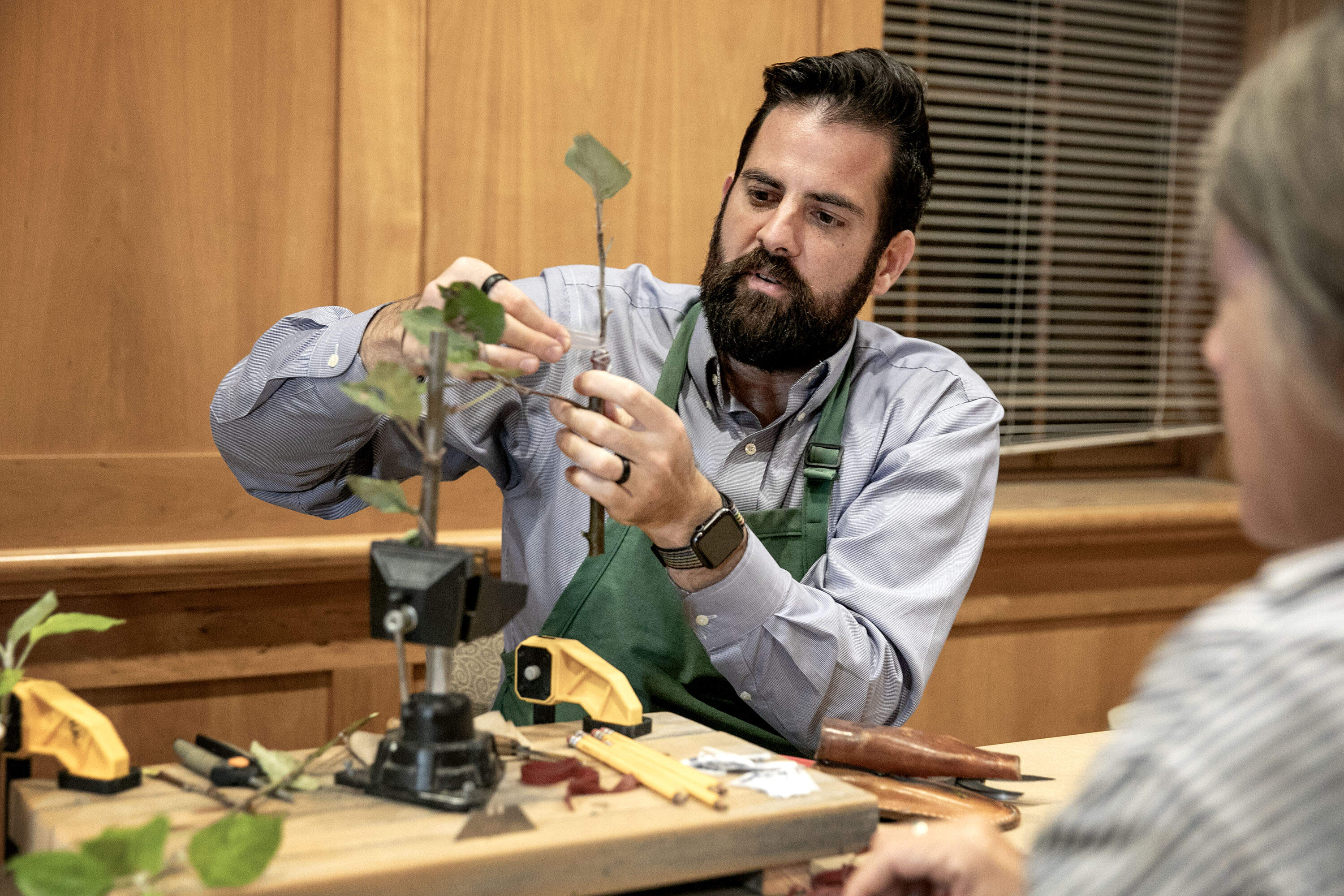
But the cuttings have been successful so far, and will root until the spring. It’s a long process and a huge undertaking that requires a lot of patience.
And because it’s years in the making, the city says it wants to keep the community engaged along the way. To help do that, an exhibit documenting the project is now open at Cambridge’s City Hall Annex, known as Gallery 344.
There, the project is explained step by step through colorful murals. At the center of the exhibit is a 3D model of the new tree and the wood sculptures, all made from Lego bricks.
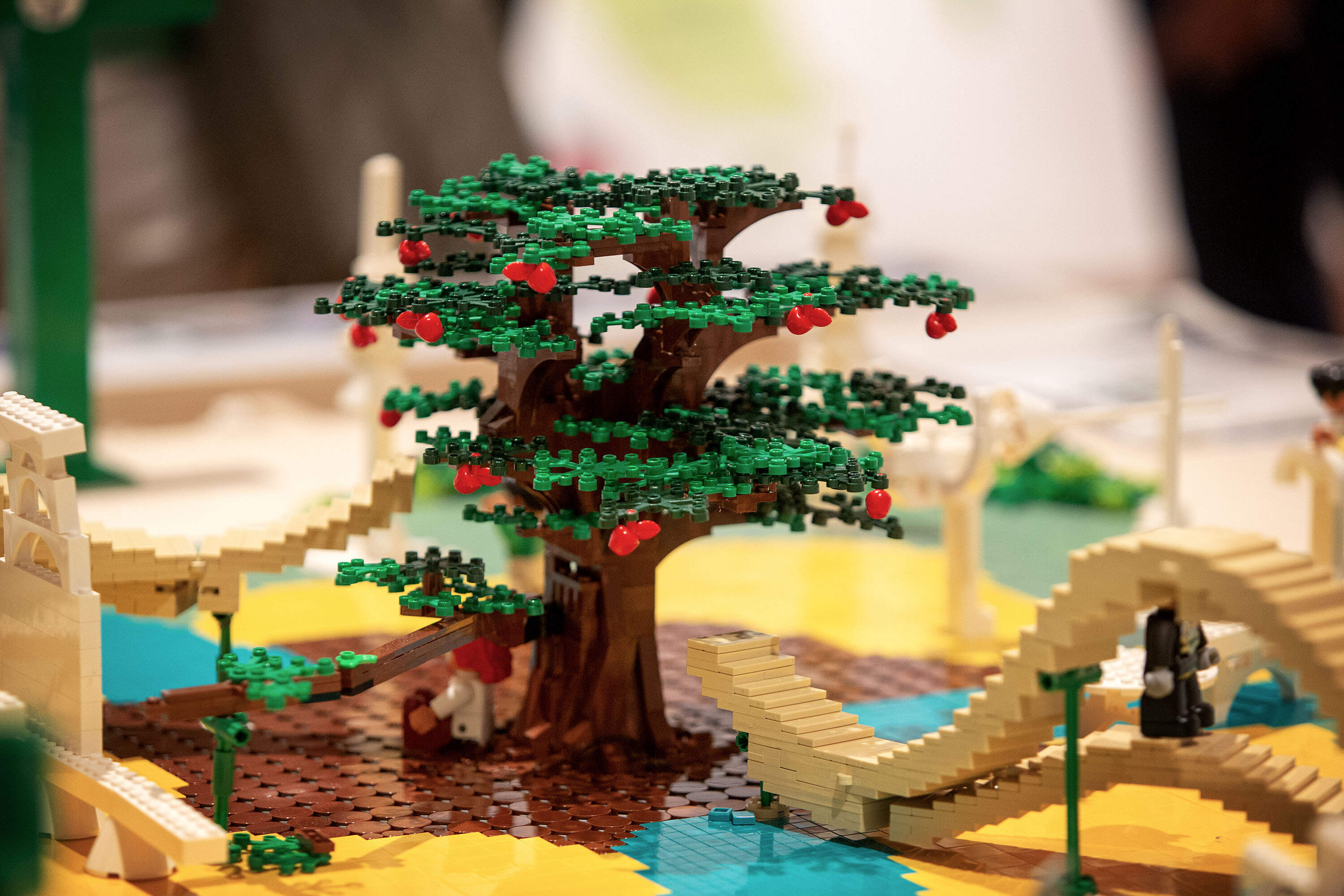
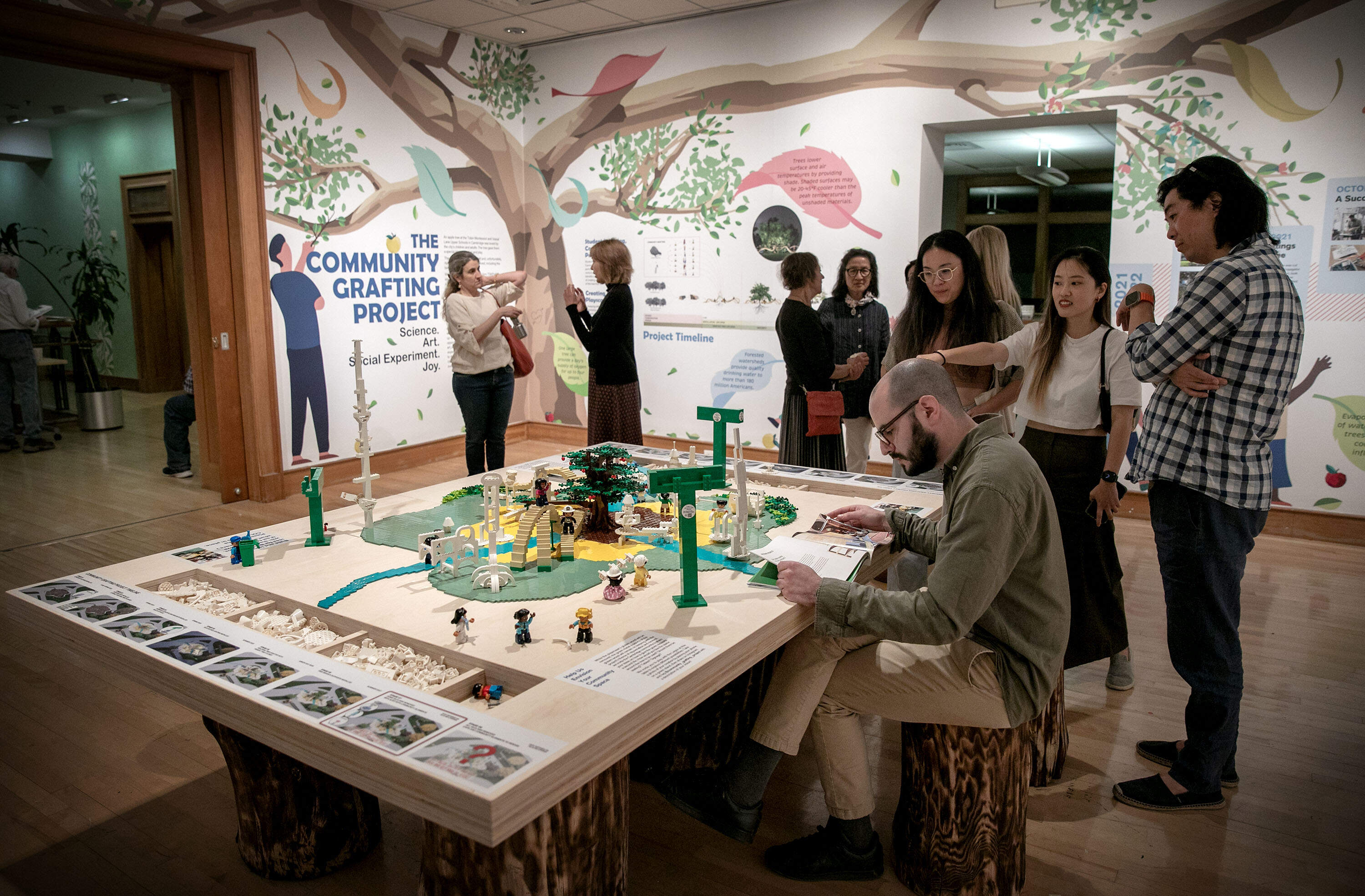
An overarching theme of the project is conservation. When the new apple tree is planted at the school complex in the fall, pieces of sculpted wood will be installed around the tree.
There will be six varieties used: Black Birch, Pin Oak, Quaking Aspen, Tamarack, Eastern White Pine and Red Pine. All are native to New England and all currently have potential to be used as building materials.
The plan is to study the wood throughout the years and test how it is holding up to the elements. In a sense, the site will become a living lab to help future builders and current farmers as climate change could impact the supply of current wood species used in building.
“All these species right now do not have a market share in the timber industry,” Kim said, noting you couldn’t find those type of woods at a place like Home Depot. “[But] they're viable species to be used … we're going to monitor it from a structural standpoint and durability standpoint. And then eventually have some of these wood species certified.”
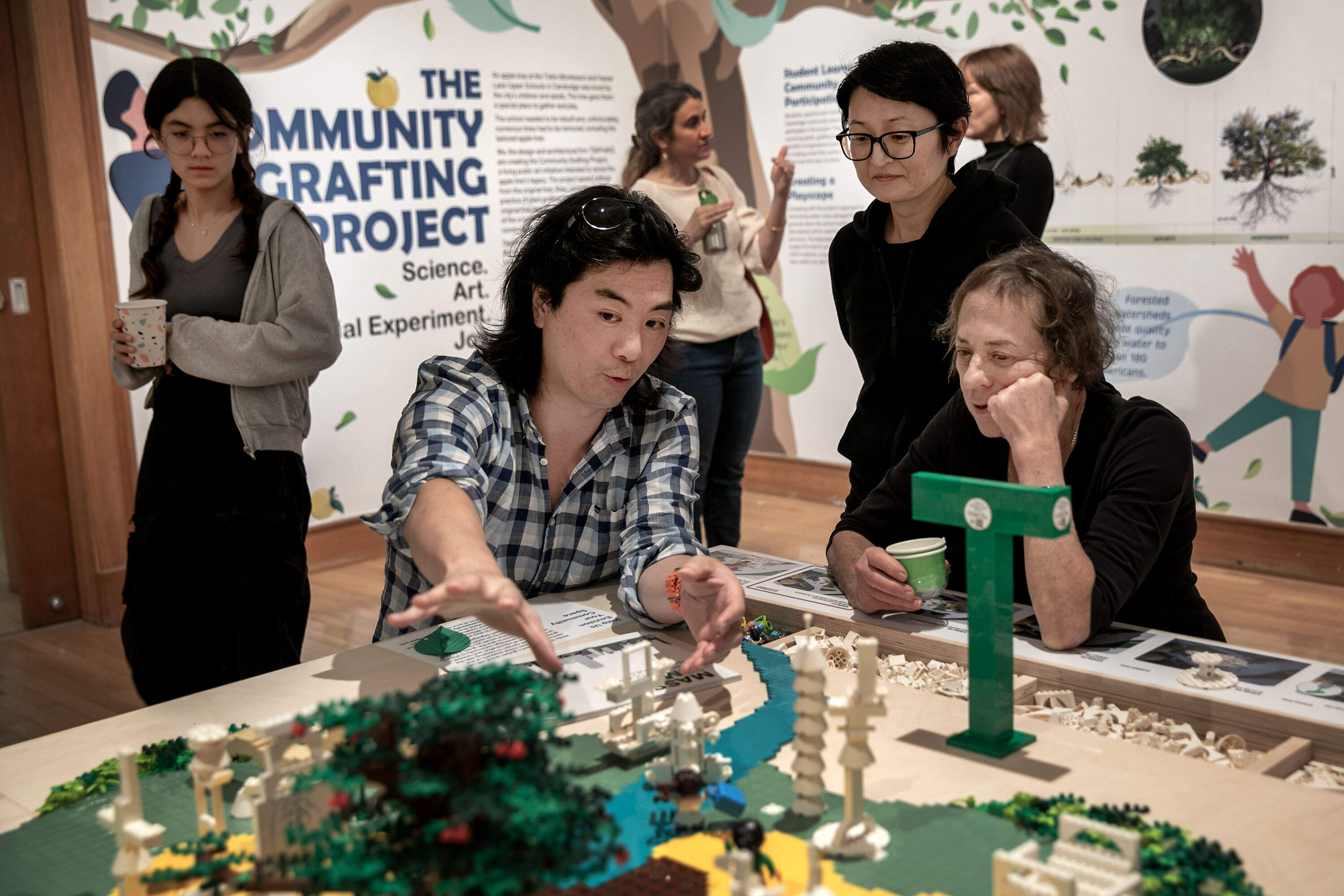
Kim says he wants the process and the final project to be interactive for the community.
Hilary Zelson, public art administrator with the Cambridge Arts Council, agrees and says that’s part of what makes the concept special.
“There are students who are going to start at the building in a preschool program and might get to witness a public art piece grow and change while they're in the building,” said Zelson. “So it's really an active learning piece and that was all inspired by the original tree, but has grown to become so much more than that.”
She says the tree has become a “vessel” for the whole school development project.
“It's not really just about the tree, but about the change over time,” Zelson said.
Correction: An earlier version of this post omitted one of the partners of the TSKP x ikd firm. We regret the error.
This article was originally published on December 09, 2024.