Support WBUR
They Might Be Giants’ John Linnell on the band’s Mass. origins and longevity
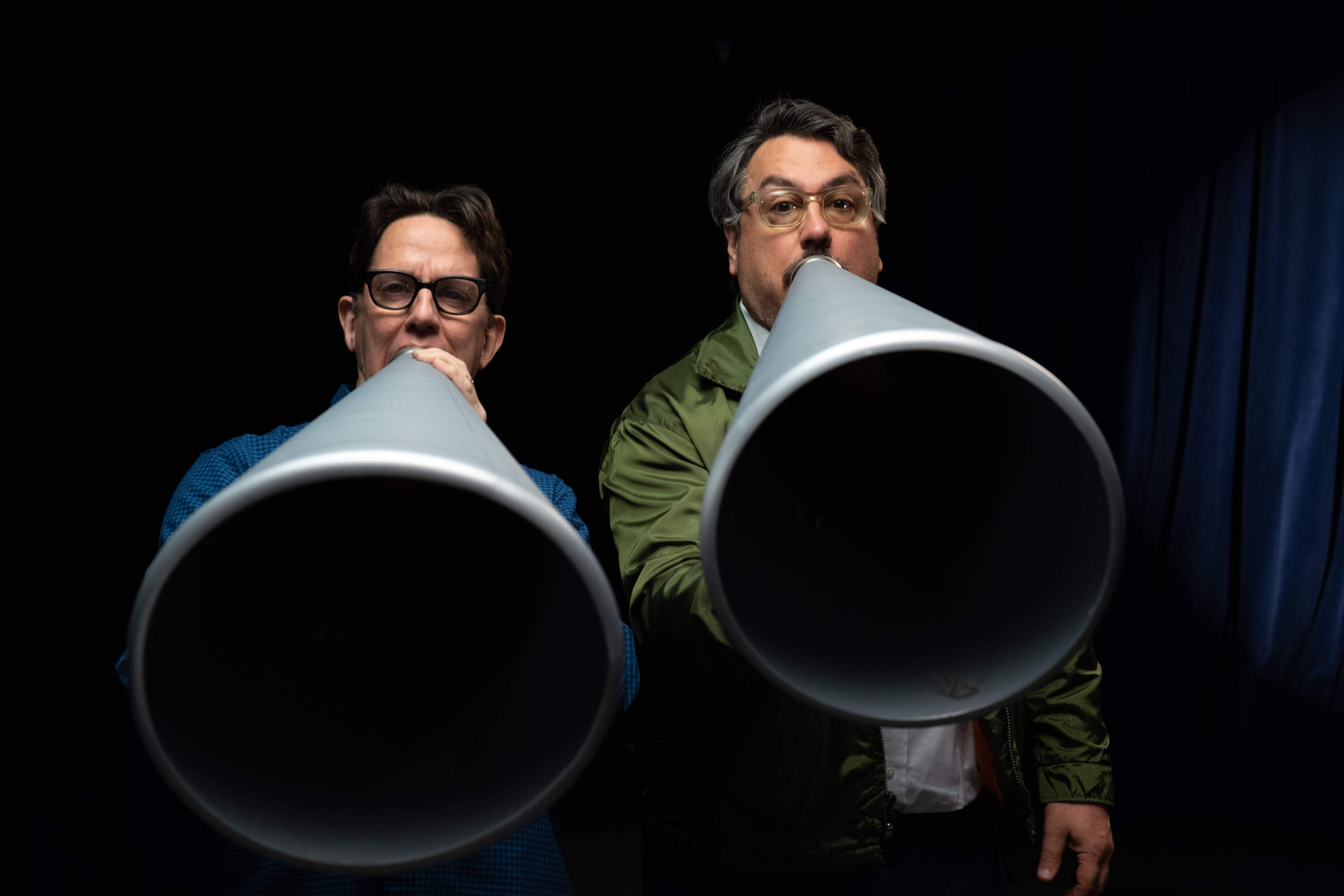
Most elementary school friendships fade over time, from growing in different directions to moving away. Others evolve into massively successful alt-rock bands.
John Linnell and John Flansburgh met in grade school in Lincoln, Massachusetts and formed They Might Be Giants in Brooklyn in 1982. Over the past 42 years, they have released 23 studio albums, won a Grammy and written “Hot Dog!” for Disney Jr.’s “Mickey Mouse Clubhouse.”
And they have never compromised their absurd, experimental sound. The band will return to Boston to play the Orpheum Theatre on Dec. 14 and Dec. 15 as part of their THE BIG SHOW Tour. (The first night is already sold out.)
I hopped on a Zoom call with Linnell to discuss the early days with Flansburgh, the band’s children’s music and the resurgence of physical forms of music.
This interview has been edited and condensed for clarity.
__
Maddie Browning: Tell me about the first time you met John Flansburgh.
John Linnell: We were in school together in Lincoln, Massachusetts, and I remember the first time he made an impression on me, because he had obviously gotten interested in me. I was in the grade above him in elementary school, and he wanted to show me his plays that he'd written, and that's really my first memory of him.
Your music tells playful, whimsical and often bizarre stories. What is your writing process like?
John and I both really try hard to make it interesting and original each time, out of the box. And it obviously gets harder and harder every year, because we're competing with ourselves. We're trying to outdo stuff we've done in the past … It really is about trying to give ourselves that feeling that we're doing something that's original and worthwhile each time.
What inspired “Doctor Worm” off your 1998 record “Severe Tire Damage”?
I think that some of the songs we've done in the past have sort of an echo of something that already exists in the culture … There was a KISS song that the chorus was, “They call me Dr. Love.” And I don't remember if that was what was in my mind, but I think that's probably as good of a guess as I can come up with. “They call me Dr. Love,” and then I just substituted “worm” for some reason. That's about it.
I mean you don't even know why you're making choices sometimes … A lot of people who do creative work would agree with that, that the best way to work for us is to be intuitive and not interrogated too closely during the process. But then you try and make sense out of your seemingly random idea that you've had and try and make it into something. And that's how we probably work a lot of the time anyway.
What were some of the artists that you were listening to a lot when you first started?
John and I grew up under the shadow of The Beatles. When we were little kids, that was kind of the most exciting and overwhelming, interesting and pervasive thing was the British invasion. And then certainly a lot of other popular music stuff that was on the radio. I think by the ‘70s, when we were teenagers, we started getting interested in all kinds of what then was termed underground rock. So a lot of things that were more obscure.
You have around 700,000 monthly listeners on Spotify for just your kid’s music. Why did you decide to break into that space in 2002?
It wasn't much of a decision. We didn't think it was a real career move. At the time, we just were doing a lot of projects, and I think Rounder Records made the suggestion. They said, “We'll give you a budget, do a kids’ record, and we'll put it out.” And we were like, “Sure, whatever.” We were not really thinking too hard about it. It just seemed like, “Oh, that'll be fun.” And then it kind of took off. And then we spent … probably more than 10 years doing kids’ records and then playing shows for kids, but we've settled back since then into our regular music for adults. I think that's kind of our official brand.
Were there any specific differences that you saw from shifting from adult to children's music?
I think we were very deliberately trying to keep it interesting in the same way, and not just sell the kids short. I think with the first kids’ record that we made, we wanted it to be as good as the stuff we were trying to do for adults. There was a sense that a lot of stuff that's for kids is following a playbook that's about trying to be educational and trying to be safe. And we thought, “Well, we don't need to do that. We can just do whatever.” In some ways, we were not really thinking too hard even about who it was for or how it was going to get marketed. I think that's why it was successful, because it was obviously a more free-form project that was for entertaining kids … and respecting kids in the same way that we do with our adult audience.
Is there one specific children’s song that stands out to you as really meaningful?
Well, no actually. I would say they're all different … It's kind of an eclectic collection of songs. We were working in all sorts of different styles. And we thought like we could do psychedelic music for kids, for example, or funky music for kids. And that is kind of a privilege to maybe think we were introducing kids to whole genres of music.
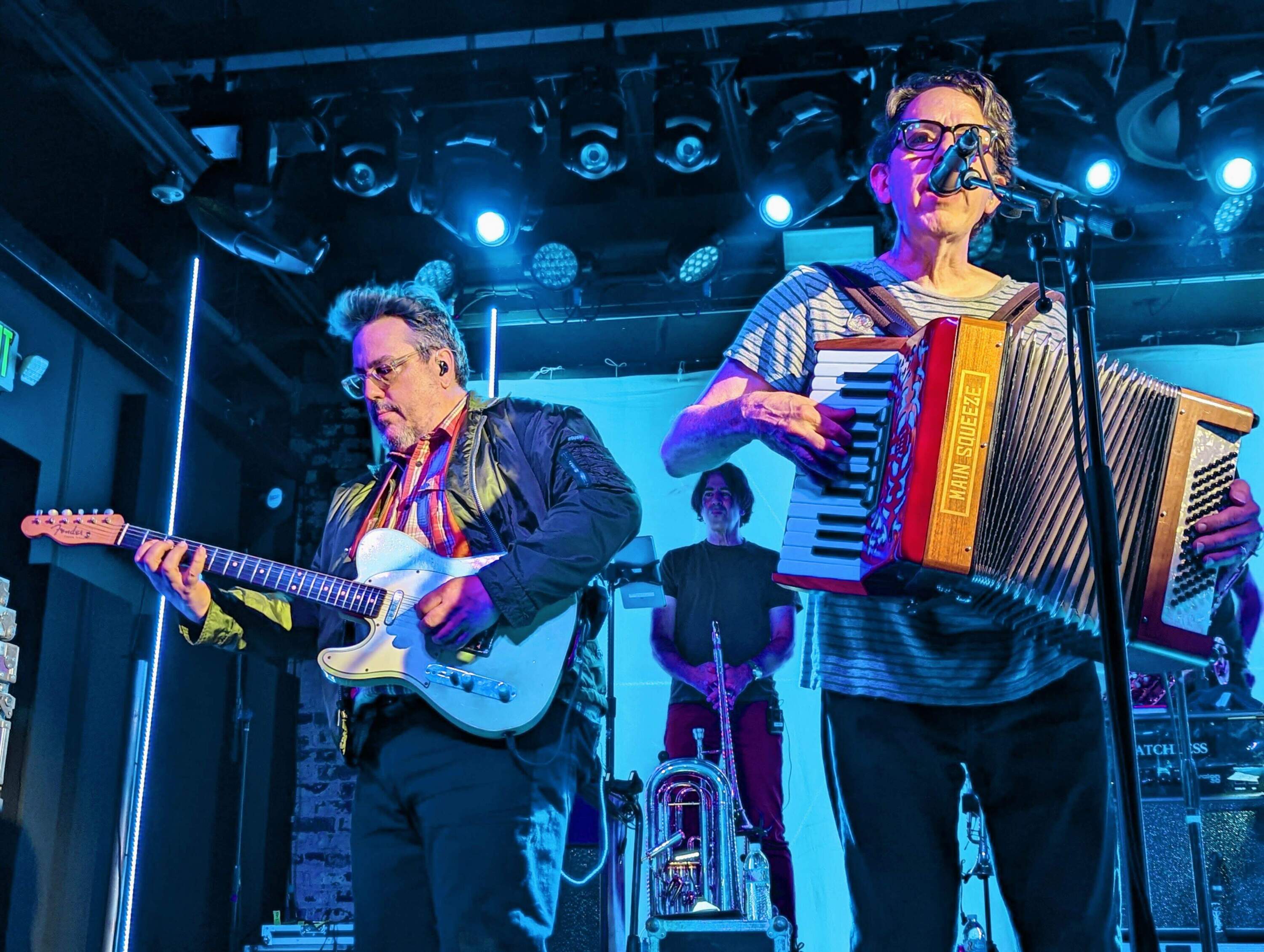
You released the live album “Beast of Horns” in October but only through your online store. In an era of streaming, why did you make this decision?
We're doing lots of vinyl nowadays. Obviously there's a huge market for vinyl, and people are attracted to having a thing they can hold. Somebody told me that CDs are coming back. I don't know if you are tuned into that, but that's very weird to me. I'm confused because it didn't seem like they ever went away, but then I'm not paying close enough attention maybe, and not realizing how much time has elapsed since CDs were a thing. We're trying to make objects people can have in their hands, because that's what we grew up with. And we just like that idea, I guess.
There are a lot of Gen Z kids that are getting into vinyl. They'll even have Walkmans that they carry.
I think CDs might be the easiest transition for us now, because they're cheap to make and they're easy to carry around. It's weird, but it's kind of hilarious that's now becoming a thing.
Do you listen to streaming more or physical records?
Flansburgh is very much into vinyl at home. He has his record player out and running all the time. I would say, I probably stream. I don't know why. I'm lazy.
Coming around to your shows at the Orpheum Theatre, what does it feel like returning to Massachusetts to play?
Great. One of the first concerts I ever saw was at the Orpheum when I was 13, so that was more than half a century ago … I've been there a bunch of times playing and seeing stuff since then. But, yeah, it's great. It's really nice to come back to Boston. We're really looking forward to it.
What show was that?
Well, I hate to say it, but it was Frank Zappa and the Mothers of Invention, which again, I was a teenager, and I thought they were cool then, and I stopped thinking they were cool a couple years after that. But, you know, kids are explorers, right?
“Istanbul (Not Constantinople)” is your most popular song. Do you think it should be or is there another song you think deserves more attention?
I think that songs are like your children, and you have to love them all. But there's been a weird new phenomenon, which is that amongst very young people, there's a lot of interest in this song that was a really dark horse, “Stuff Is Way.” It was never intended to be a single. It's just a very deep album cut from probably a number of years ago … There's some young person who made an anime video for it, which references some cultural things that I don't even really know about. And it just went viral for some reason. And now, if you go on TikTok, there are something like 14,000 dance videos to this song, which is not even really a dance track, and it is one of our most popular songs on Spotify … And this is just like a really oddball track, not a pop song, not anything we were ever thinking of promoting, but now we're being forced to learn it. So we're going to be playing in the live show, because we have to, apparently.
What advice would you give to emerging artists?
I'm a bad person to give advice, because the music scene is so different now from when we started, but … I would say you got to enjoy what you're doing. That’s the most fundamental thing that we stood by. John and I both played in other bands where we were trying to figure out what would be popular a little bit. I think if you heard those projects, you'd be surprised to hear that because they probably don't sound like [us], but I played in a new wave band, and we were really trying to be successful … John and I just started out with this notion: We're going to do what we would like, and if we were an audience member, what we would want to hear, and not try and figure out what it is the rest of the world wants to hear. And that has served us … You're much better off working in obscurity and liking what you do than being famous doing something you hate.
What’s next?
We've got an album in the can, and we're just finishing sequencing it, and we don't have a title for it yet, but we have all the songs. We're just rearranging the tracks into what we think is a good order, and that will be out at the beginning of next year.