Support WBUR
Boston's Morning Newsletter
Massachusetts casts its Electoral College votes Tuesday. Here's how the process works
Editor's Note: This is an excerpt from WBUR's daily morning newsletter, WBUR Today. If you like what you read and want it in your inbox, sign up here.
It’s Electoral College day. Before we get to the news, here’s what to know about “the actual election” happening on Beacon Hill.
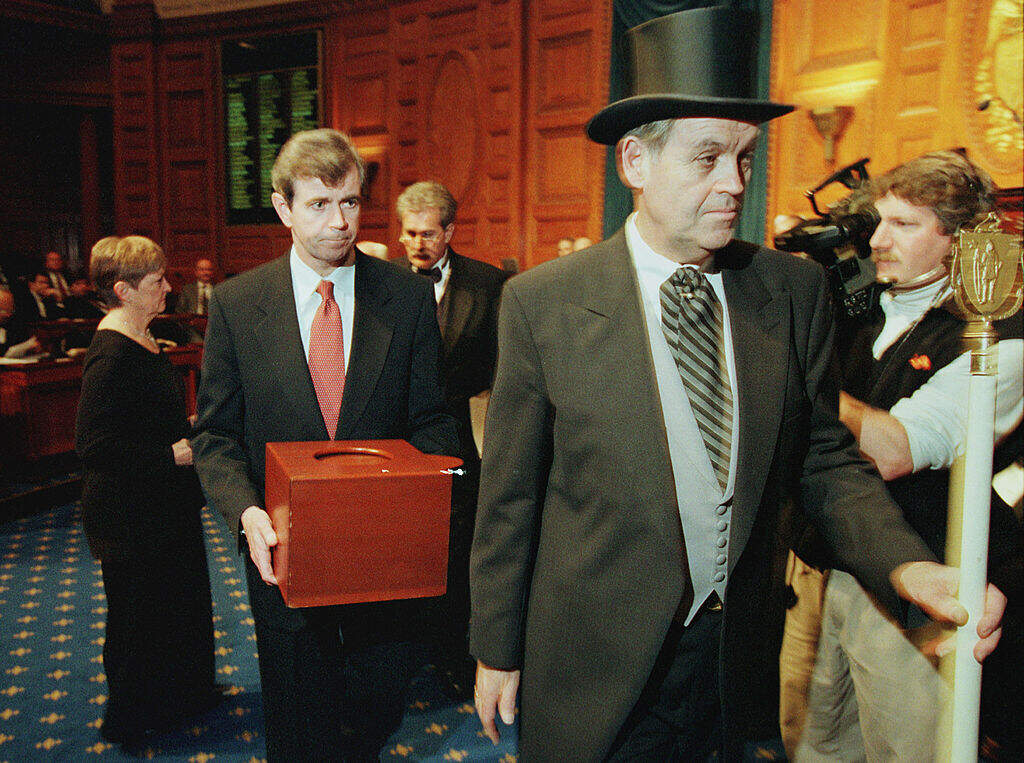
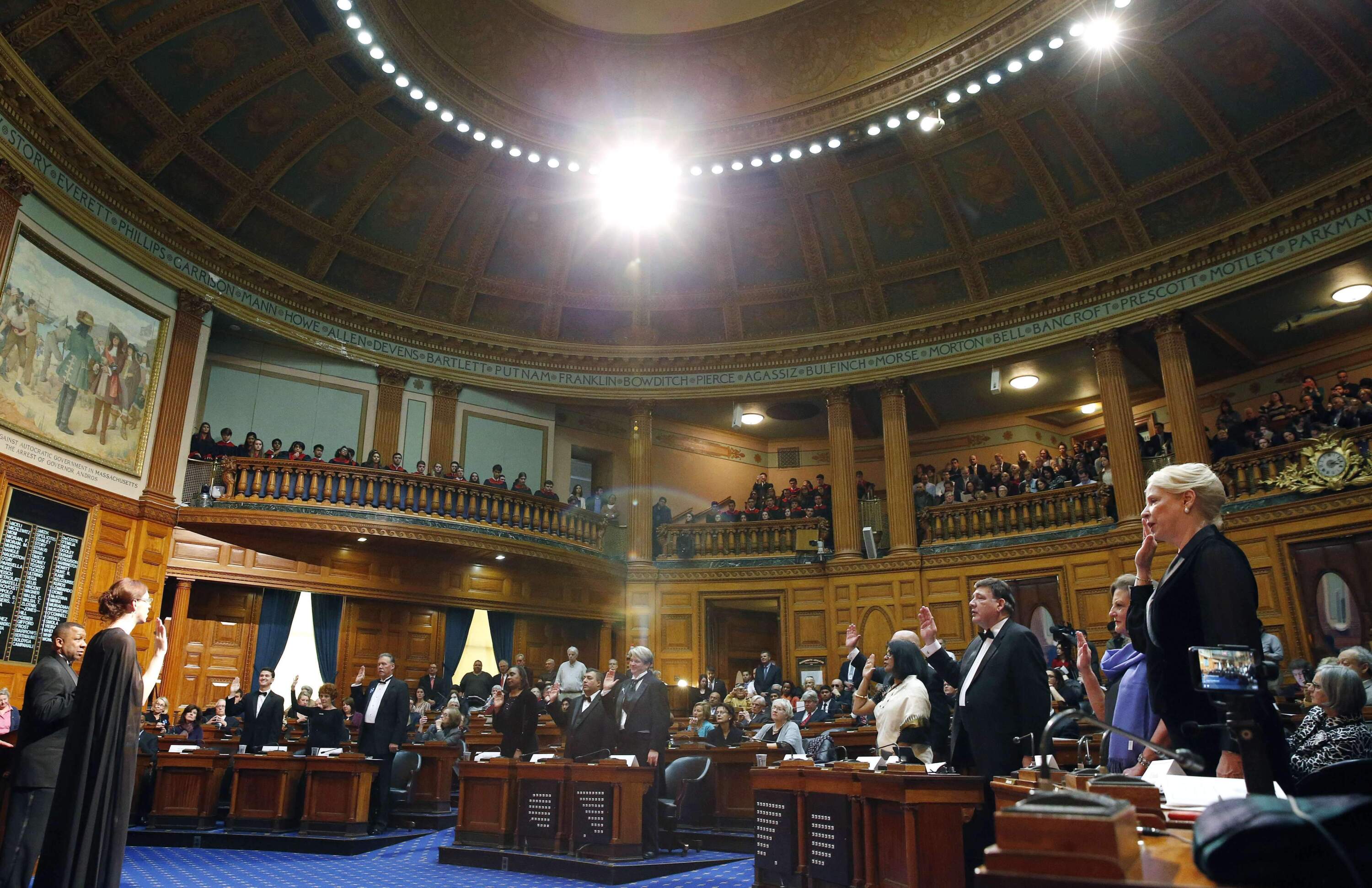
Six weeks later: Electoral College members across the country will meet today to officially certify their states’ presidential results. In Massachusetts, 11 electors will cast votes for Vice President Kamala Harris, who lost to President-elect Donald Trump by an electoral score of 226-312. Secretary of State Bill Galvin says it’s a formality, but a critical one, “especially in light of the events of four years ago.” “This is the actual election,” Galvin told WBUR’s Dan Guzman. “In the end, the president and the vice president are elected by the electors.”
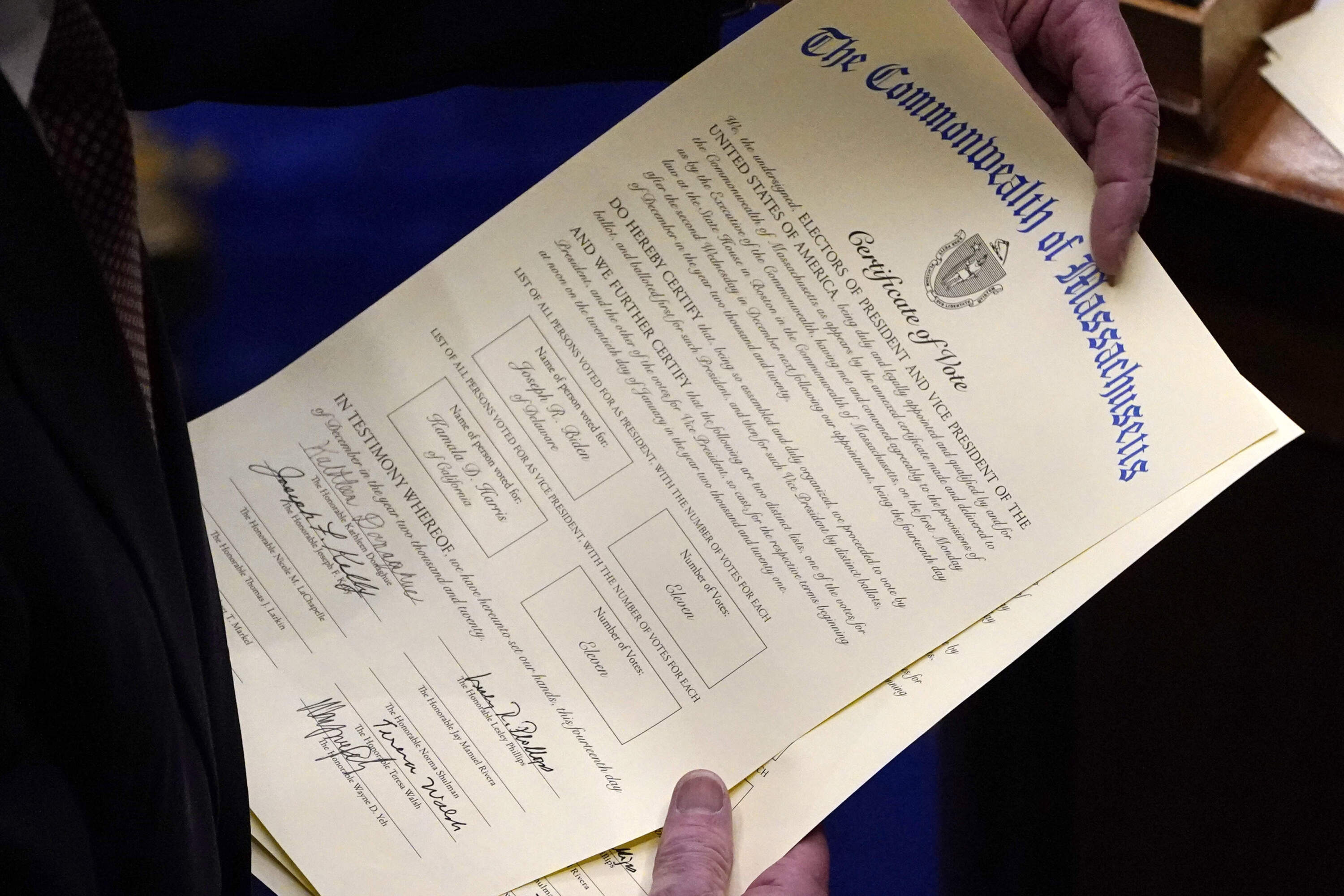
- How it works: When you cast your ballot in last month’s election, you weren’t actually voting for Harris or Trump — but rather which slate of electors chosen by the Democratic or Republican Party get to vote. Unlike some states, Massachusetts doesn’t have any penalties for “faithless electors.” However, all 11 are picked and screened by party leaders, and their ballots are pre-printed with the nominees to whom they are pledged. “I think we can be sure they’ll do what they were assigned by the voters to do,” Galvin said. (You can read the names of this year’s electors here, in fancy cursive.)
- What to expect today: Galvin will preside over the meeting at 3 p.m. at the State House. After some procedural housekeeping, it’s time to vote. Some electors might make a short speech with their vote. After the votes are counted, the documents are “signed and sealed and then immediately sent off to Washington,” Galvin said. All in all, it takes about an hour — and is livestreamed here.)
- What’s different: Following Trump’s attempt to overturn the results of the 2020 election, Congress passed a law to clear up the certification process. That included some technical changes for states. “There’s a higher degree of scrutiny and security on the actual documents that will be sent,” Galvin said.
- Fun fact: It pays to be a Massachusetts elector, but not that much. An old state law says each elector gets $3 for their day’s work, plus $1 for every five miles they traveled from their home.
- Zoom out: Eight electors who face criminal charges for taking part in Trump’s scheme to reverse his 2020 loss are casting votes this year in Michigan and Nevada. NPR reports it’s a reminder of how much leeway state political parties have in choosing electors.
About those drones: Two Massachusetts men charged with trespassing after flying drones near Logan Airport over the weekend pleaded not guilty yesterday. As WBUR’s Sydney Ko reports, a judge in Dorchester District Court released Robert Duffy and Jeremy Folcik while they await trial in February — and ordered them to stay away from Long Island and not operate drones in the meantime.
- What were they doing? The arrests come amid an ongoing mystery around drone sightings in New Jersey, as well as sightings in other states, including Massachusetts. However, attorney Michael Martin, who represents Duffy, says the explanation behind their drone is more straightforward. Martin said the men work on restoring abandoned buildings. He said the only images on their drones — which the men turned over to law enforcement — are of old buildings. “It’s nothing that has security,” Martin said. “It’s nothing of value. Nothing was broken. These are just guys that videotape old buildings because it’s their jam.”
In sports: The University of Vermont men’s soccer team won the national championship last night, with a late comeback capped by a dramatic, sudden death overtime goal to beat Marshall University. The win is the first-ever college national championship for the Catamounts — who were unseeded coming into the tournament — in any team sport.
- Watch: Make sure to have your headphones in for the frenzied call of the game-willing goal and celebration. Absolute scenes!
Eyes on 2025: Somerville could have a contested mayoral race on its hands next year. At-large City Councilor Jake Wilson announced yesterday he will run for mayor, setting up a potential contest against two-term incumbent Mayor Katjana Ballantyne, a fellow Democrat (who hasn’t yet announced her reelection plans). Cambridge Day has more here on Wilson’s pitch and background.
P.S.— New Hampshire’s Storrs Hill Ski Area is offering free skiing all season this winter, thanks to a gift from a local philanthropic foundation. And while it “isn’t Loon Mountain,” as Marty Walsh would say, Storrs Hills does have snowmaking, a terrain park, glades and some large jumps. And, again, it's free. Details here.