Support WBUR
With 'Boys Talking,' Will Dailey fosters old-fashioned human connection
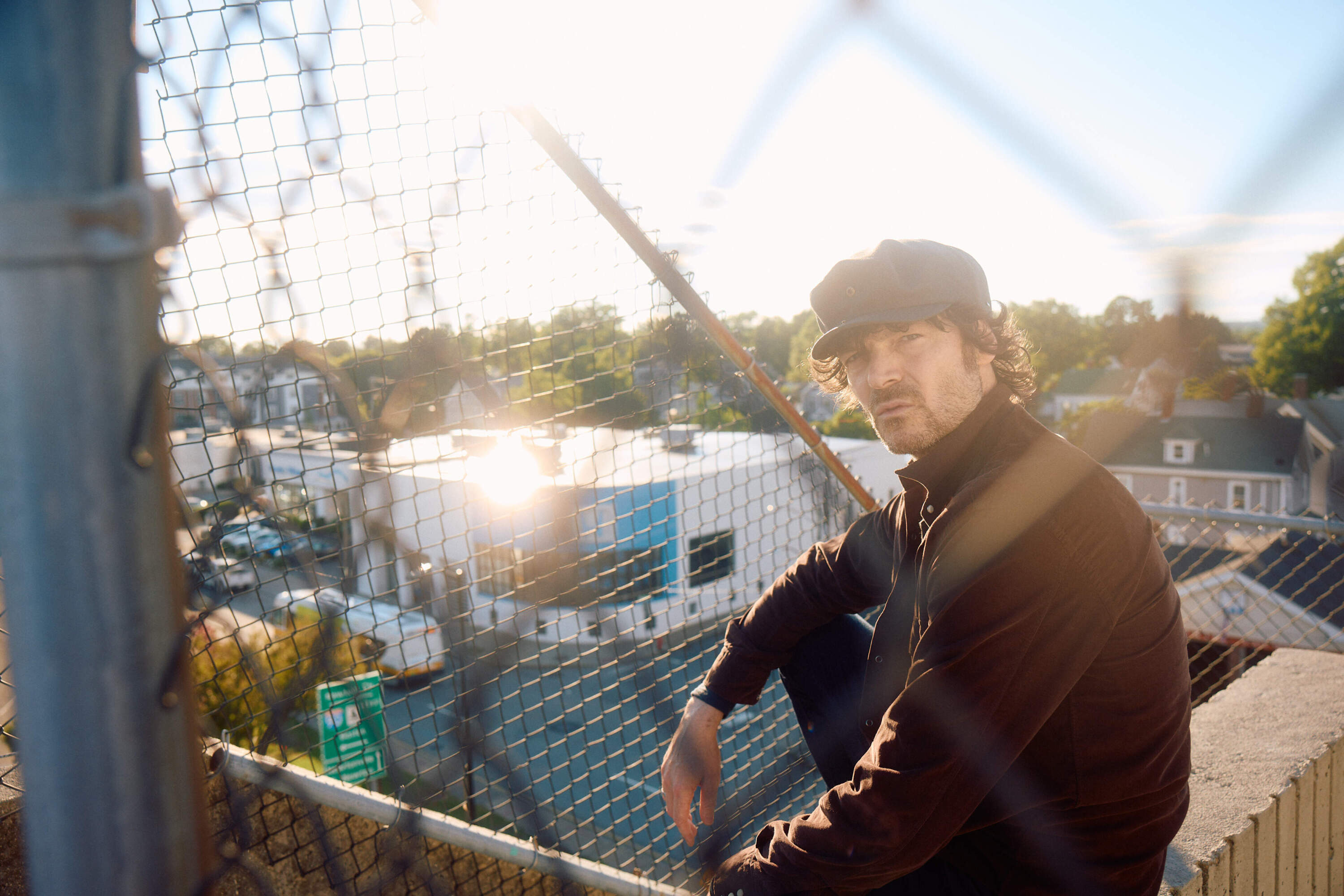
For the last 20 years, Will Dailey has crafted music that’s reminiscent of an outstretched hand. His earnest blend of indie rock and honeyed Americana reaches past the speakers, sometimes offering assistance and comfort, other times seeking solid ground to steady himself. That knack for evoking a palpable bond is part of the reason Dailey has remained one of the most prominent singer-songwriters in New England.
But with his new album “Boys Talking,” the Boston artist decided it wasn’t enough to reach out to his audience once more — he realized he had to protect that relationship, too. Reflecting on a weakened link between artists and listeners in the streaming age, Dailey didn’t want to reduce “Boys Talking” to a series of shallow encounters, as listeners’ thumbs tapped the “next song” button every 30 seconds.
So he decided not to release it — in the modern sense, at least. The album isn’t available on streaming services, nor does it have an official release date. “My release date is when it connects with you,” Dailey explains.
For some folks, that was earlier this year, as Dailey sold CD and vinyl copies in “stealth mode” on tour across the Northeast, Canada and France. For other fans, the release date will be this coming Friday and Saturday (Dec. 27 and 28) at The Burren, where Dailey and his band will publicly perform the record for the first time.
“I want the people who do participate [by listening] to feel a higher value for their time and their connection to music,” Dailey explains. “The only mistake I can make is letting something called a ‘stream count’ make me deviate from that calling.”
Don’t confuse Dailey’s decision as a boycott of streaming services or a “middle finger” to the payment rates of giants like Spotify. (The album’s lead single, the Juliana Hatfield-assisted ballad “Make Another Me,” has been on Spotify since September.) Instead, “Boys Talking” is a break from these avenues of music consumption, which Dailey likens to resource libraries rather than places for sustained human connection. And as a meditation on mourning in response to the death of two close friends — one to cancer, one to suicide. Connection is at the core of Dailey’s work now more than ever.
As he cut a musical pathway through his grief, threading tenderness through the 10 tracks comprising “Boys Talking,” Dailey opted to work with his bandmates in person, as opposed to passing files back and forth electronically between collaborators. “I have to be in a room with other human beings, and they have to react to the song in the morning, and we have it done by night,” Dailey recalls.
“It became a humanistic project,” he adds, one he couldn’t bear to see crushed under the veritable avalanche of new music added to streaming services every day. It’s happened before; Dailey says his album “Golden Walker” “died there on the vine” when it debuted in 2018, even though he and his team had organized a marketing push around its release date. “I was like, ‘seems like dropping it into the abyss was the wrong idea.’”
Instead, “Boys Talking” extends the offline ethos of Dailey’s $10 song project, an experiment the singer-songwriter launched last year on tour. Guests at Dailey’s performances across the country had the opportunity to pay $10 and hear an unreleased seven-minute song — called “Cover of Clouds” — on a portable CD player.

“Every night I'm experiencing people's reaction to a piece of music they're only going to hear once in their life, and it was f---ing profound,” Dailey recalls. “People who are sitting at the merch table, two hours north of Detroit, [who have] never heard me before, weeping.”
The fulfillment of seeing listeners be fully present with the music, he says, “rewired” his brain and set the stage for his approach to “Boys Talking.” Looking ahead to The Burren performances, Dailey is excited to dig into songs like “How To Cry” in front of an audience, fostering the boldest connection of all: vulnerability in real time.
“The joy I get from music is not in any of the measurements,” he concludes. “The feeling of walking into a studio with amazing people; the feeling of a new song arriving in my brain; the feeling of being on stage, the audience singing along, playing on stage with my heroes — those are the only things that stay with me.”