Support WBUR
Perkins School for the Blind opens online academy to share expertise with educators
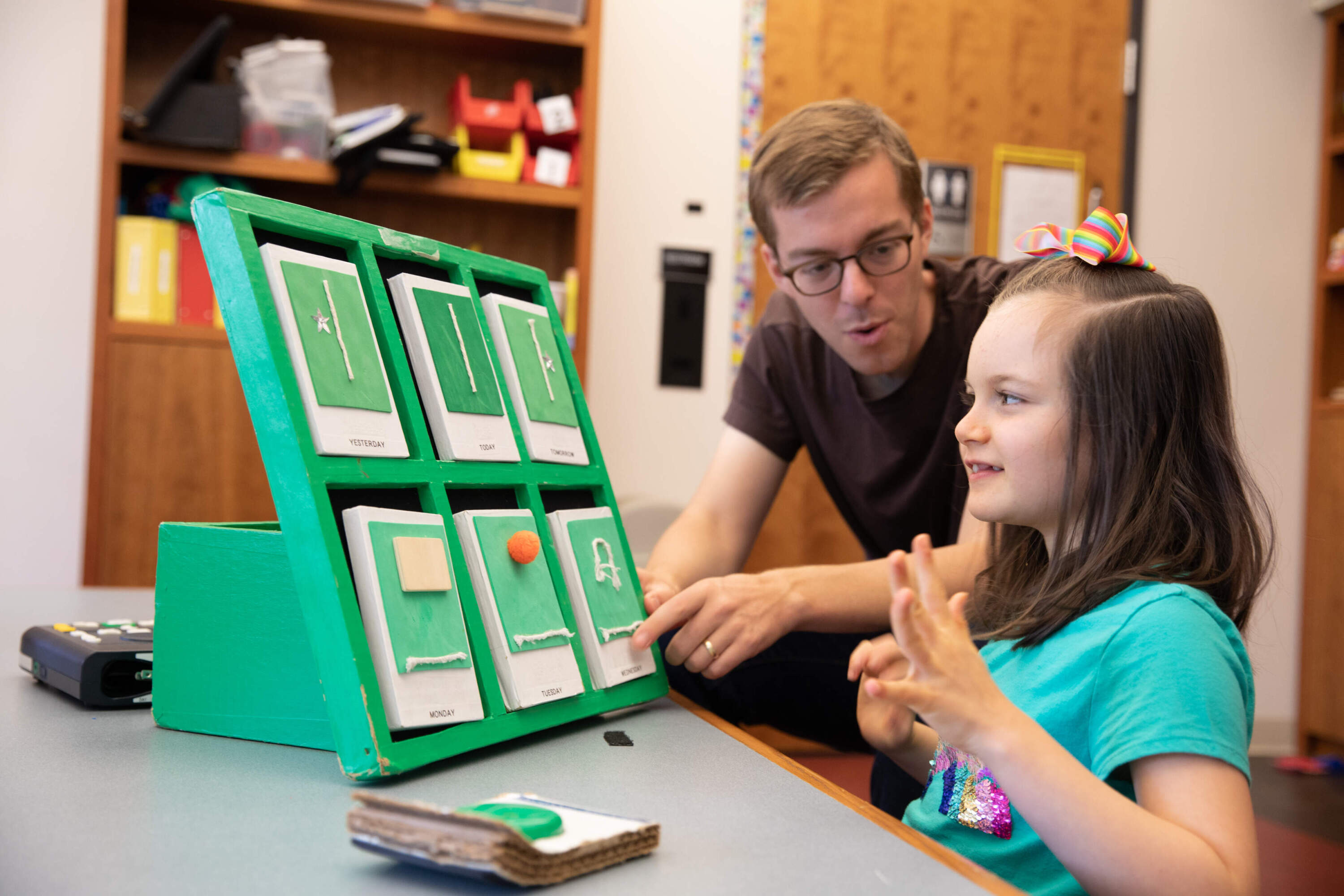
Perkins School for the Blind is launching a virtual academy to share, with educators located anywhere, techniques for teaching students with rare disabilities.
Perkins Academy will kick off this January with an online curriculum focused on the assessment, intervention and instruction of students who are blind or low vision. But leaders at Perkins said those courses are just a starting point.
Leaders of the school plan to broaden the academy's scope to include strategies for working with kids with all sorts of disabilities, according to Perkins CEO Dave Power. He said he envisions a sort of "Khan Academy” for special education, where teachers can access a library of practical, bite-sized lessons.
“Educators often don’t have the know-how they need to work with kids with multiple complex disabilities," Power said in an interview. "Teachers have incredibly diverse and varied caseloads that present unique challenges. We see a chance to reach kids that no one is reaching.”
The school's efforts to share its strategies beyond the walls of Perkins' Watertown campus reflects a hope to reach students with disabilities increasingly placed in general education classrooms.
For much of the 20th century, students with disabilities were regularly excluded from public education. Only one in five of these students attended public school in 1970, according to data from the U.S. Government Accountability Office.
Under a federal law passed in 1975 and later renamed the Individuals with Disabilities Education Act, students are entitled to receive a free and appropriate public education in the least restrictive environment. Today, the vast majority of students with disabilities no longer attend specialized schools like Perkins. Instead, they enroll in public schools.
Blind and low vision students who attend public school typically receive support from teachers specifically trained to work with children who have vision impairment. These educators ensure lesson materials are in accessible formats, conduct vision assessments and teach skills like reading braille. However, a national shortage of these educators means some kids go without their assistance.
Roughly 25 districts across Massachusetts, New Hampshire and Rhode Island are on a waitlist for specialized staff support from The Carroll Center for the Blind in Newton, according to Nancy Sharon, the organization's director of education and community services.
She said the nonprofit works with approximately 300 blind and low vision students in Massachusetts. The list of kids waiting for services is likely longer, she added, since the agency is one of several that connects teachers of the visually impaired with school districts.
Students often suffer when they confront a learning environment that wasn't designed for them, said Natalie Shaheen, assistant professor of blind education at Illinois State University.
“K-12 education is built on this assumption that everybody is sighted and the way learning happens is visual,” Shaheen said. "When a blind kid comes along, that's out the window.”
Beyond the physical environment and the lesson materials, technology in public schools can create learning barriers for students, she added. That's been a particular issue since the usage of tech surged in the pandemic. Even something as simple as raising one's hand to participate in class can be inaccessible.
“If you're a blind student, you're not seeing anybody else's hands,” Shaheen said. “Were you the first one? Were you the last one? Did the teacher not call on you because there were so many other people to choose from?”
K-12 education is built on this assumption that everybody is sighted and the way learning happens is visual. When a blind kid comes along, that's out the window.
Natalie Shaheen
Opened in 1829 as the first school for the blind in the United States, Perkins offers day and residential learning programs and partners with more than 100 school districts across New England to offer services to kids ages 3 to 22.
The school also functions like a test kitchen for disability innovation. Over the years, staff members have developed educational tools, including a first-of-its-kind assessment for Cerebral/Cortical Visual Impairment (CVI), a neurological condition that is the leading cause of childhood blindness and low vision.
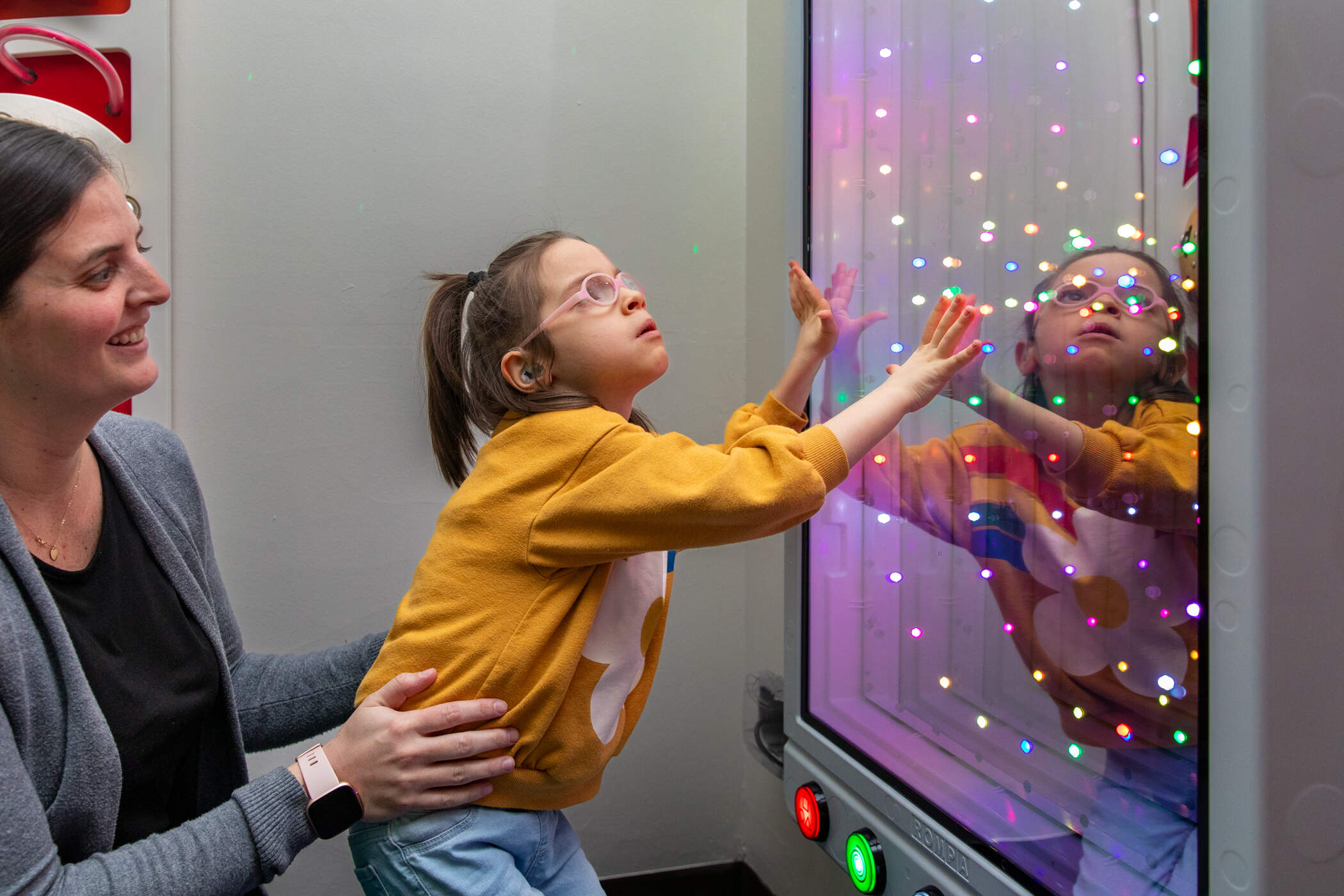
The disability is underdiagnosed and often misunderstood, according to research conducted by the Perkins School for the Blind. That's, in part, because it presents differently than other forms of blindness and low vision.
Power recalled hearing about one instance in which a child was asked to identify a single Cheerio pictured in a book. The child repeatedly smacked the table where the book lay and an adult in the classroom wondered if he should be told to stop.
“This child's form of CVI is such that he can't see objects at rest,” Power said. “So to be able to see the Cheerio, he needs to make [the book] vibrate or move.”
CVI will be the focus of the first Perkins Academy certificate program, which begins on Jan. 15. Anyone can enroll, including parents who want more information about how to support their child. The program consists of four courses, costing $500 each.
Power said the academy will add other courses on topics like Braille and math education for students who are blind or low vision.
In-depth coursework about visual impairment may be new for some educators, said Arielle Silverman, director of research at the American Foundation for the Blind. These disabilities are complex and rare, and as a result, often aren't taught in education programs.
"Unless someone specializes in it, they probably don't get very much, if any, of that training," Silverman said. Her advice to educators is to keep an open mind, follow individualized accommodations and listen to what the student says they prefer.
"Because everybody's different."