Support WBUR
Trump's pause on offshore wind leasing may have limited impact in New England

A national moratorium on offshore wind leasing and permitting may have only limited effects in Massachusetts and other New England states, according to several wind industry observers.
Their comments came after Trump signed an executive order halting federal approvals for wind energy projects on Monday, his first official day in office.
“We’re obviously not happy to see the Trump administration issuing an order on day one that targets offshore wind,” said Kate Sinding Daly, senior vice president for law and policy at the Conservation Law Foundation. “But the practical import of this executive order on wind energy is not very significant — at least as relates to New England.”
Trump’s order directs the federal government to stop leasing new areas of the outer continental shelf for electricity production, and it effectively hits the pause button on all projects still in the development pipeline. But it stops short of immediately bringing to a standstill the dozen or so projects that are fully permitted in waters up and down the East Coast.
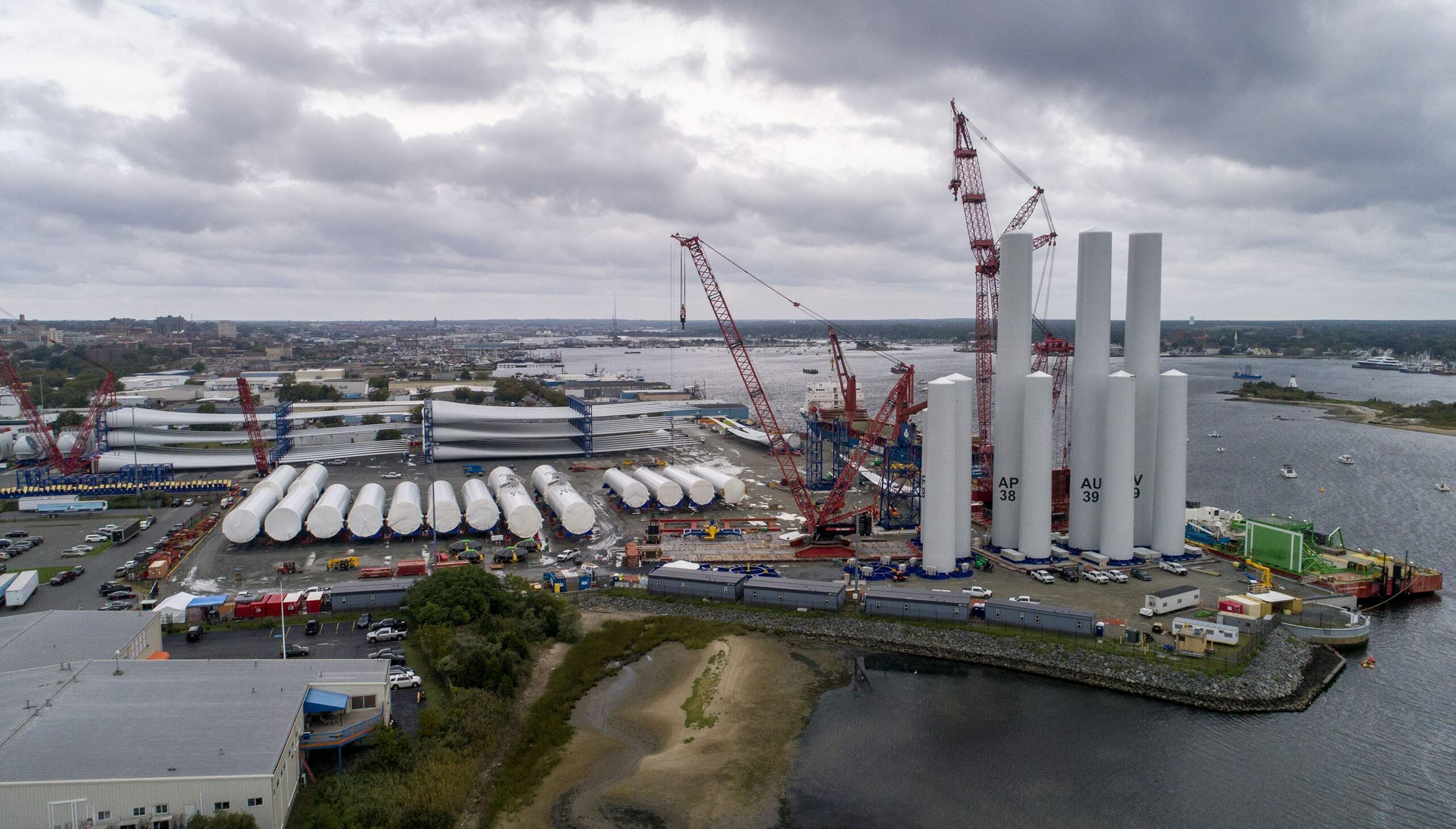
Many of those projects are under construction or already operational. They include Vineyard Wind and New England Wind, which will provide power to Massachusetts, as well as several projects providing power to other Northeast states.
“In New England, we’ve got about 6.5 gigawatts of offshore wind energy that is already leased and already permitted, and which would be unaffected by anything in this order — at least for now,” Sinding Daly said.
That amount of energy would be enough to power roughly 3.25 million homes.
The projects could face challenges in the future, however. Trump’s order instructs federal officials to review the “ecological, economic, and environmental necessity of terminating or amending any existing wind energy leases.” That could pave the way for officials to reassess or revoke leases that have already been granted, industry experts warned.
Sinding Daly said any attempt to dissolve federal contracts or rescind federal permits would almost certainly be met with legal challenges.
Some New England projects will be left in limbo, at the very least, by the executive order. They include a handful that still require some federal approvals — like Beacon Wind and Vineyard Wind 2 near Massachusetts. The developers will have to await a federal review of the industry, and the projects could face an uncertain future.
The order also prevents developers who obtained leases in the Gulf of Maine from beginning the permitting process for their projects — though industry observers noted any projects in that region are likely years away from reaching this stage. They will rely on floating turbines, which aren’t yet commercially available. Developers with leases in the Gulf of Mexico and on the West Coast are in a similar position.
While many local and national environmental activists slammed Trump’s order, some in the region celebrated the news.
“It’s been a long time since fishermen have had hope for a future,” said Jerry Leeman, founder and CEO of the New England Fishermen's Stewardship Association, a nonprofit led by commercial fishermen that opposes offshore wind development. “After four years of rushing leases and approvals to wind industry insiders, President Trump’s new directive will bring fairness and order to offshore wind development.”
Monday’s executive order on wind energy came amid a flurry of other energy and environmental-related orders, including the declaration of an “energy emergency” and a promise to once again withdraw the U.S. from the 2015 Paris Agreement.
The order could have an overall chilling effect on the nation's wind industry by hampering development and investment.
Jason Grumet, CEO of the American Clean Power Association, one of the largest renewable energy industry associations in the country, said his organization opposes broad measures to hinder wind development. He described wind power as "essential" to meeting the country's growing energy needs and keeping electricity prices at bay.
In a statement, Grumet highlighted what he sees as a contradiction between Trump’s stated goals of energy dominance and independence, and his hostile approach to wind energy.
“While on one hand the Administration seeks to reduce bureaucracy and unleash energy production, on the other it increases bureaucratic barriers, undermining domestic energy development and harming American businesses and workers,” Grumet said.
Trump's pause on new wind leases and permits “is a speed bump, for sure,” said Kris Ohleth, director of the Special Initiative on Offshore Wind, an independent think tank that supports the industry. But, she added, there are tougher measures the president could have taken, such as freezing all construction or rescinding the clean energy tax credits wind farm developers rely on.
“We have been bracing for the end of permitting and leasing, and [this order] was basically what the sector expected to see,” she said.

Further action to stop wind energy may still be coming. New Jersey Congressman Jeff Van Drew said last week he’s been working to “lay the groundwork,” for permanent measures against offshore wind, which he expected to be finalized within the first few months of the Trump administration.
Gov. Maura Healey, a strong supporter of offshore wind, said on Tuesday she's "very concerned" about actions the Trump administration is taking now — and may take in the future — to hobble the industry.
Offshore wind "is really important for jobs, it's really important for our economy, it's really important for meeting our climate goals, and it's important for establishing regional independence when it comes to energy," she noted.
Healey said her administration is watching the president's actions closely, "and, you know, we just got to keep moving forward."
Offshore wind has had ups and downs over the last few years, but time — and climate realities — may be on its side, said Sinding Daly of the Conservation Law Foundation. She said wind remains one of the only feasible, large-scale renewable energy options for the Northeast, and it offers strong economic development opportunities.
“I continue to think there's an inevitability to offshore wind continuing to displace fossil fuels in this region,” she said. “That isn't going to be terminated by actions from this administration.”
Editor's Note: This post has been updated to add comments from Gov. Maura Healey.
Correction: An earlier version of this story stated that SouthCoast Wind would not be affected by the executive order. Its status is unclear. We regret the error.
This article was originally published on January 22, 2025.