Support WBUR
School leaders reassure families as fears spread over feds' immigration crackdown
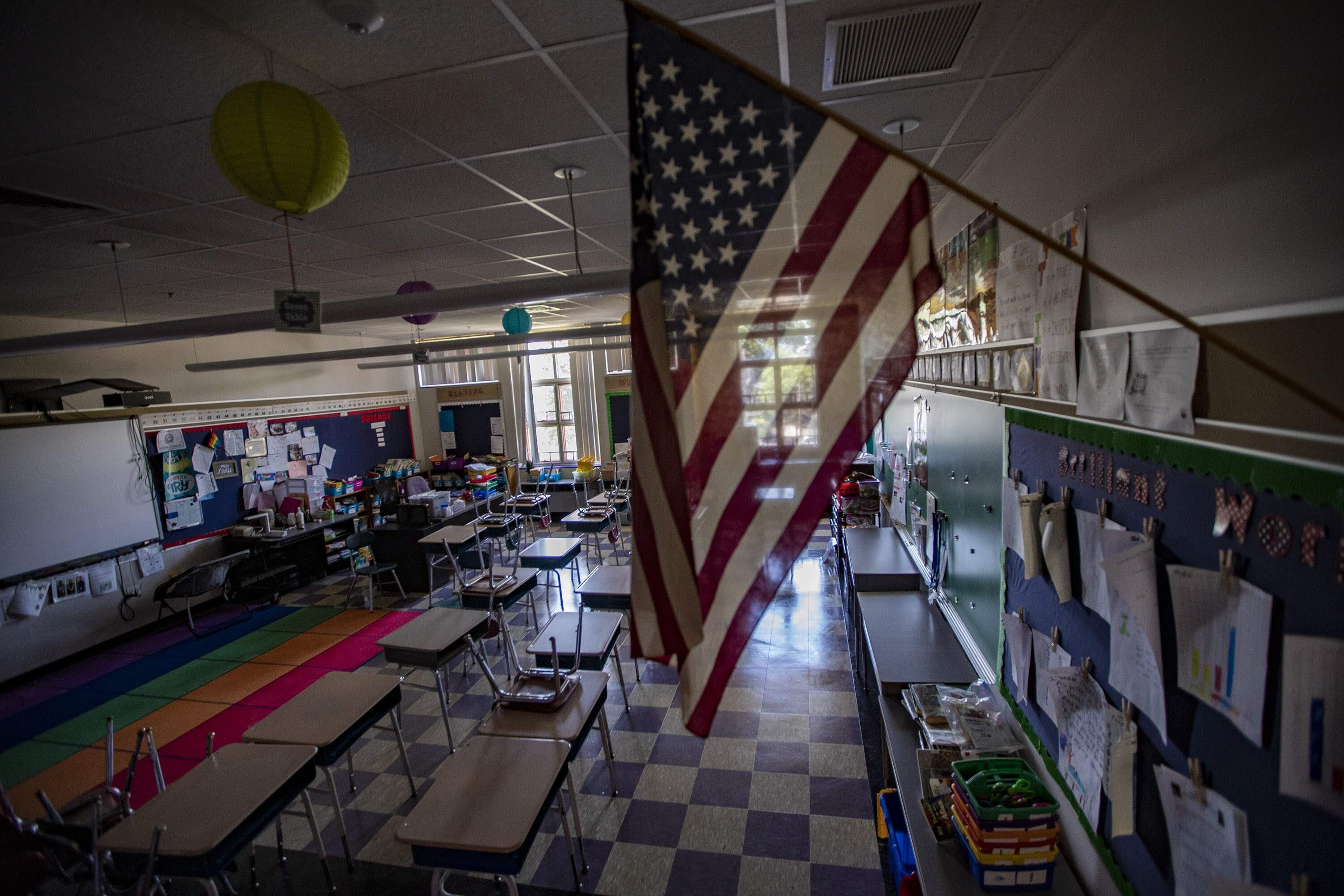
Superintendents across the state moved quickly to reiterate safety protocols to staffers and reassure families anxious about President Trump's crackdown on illegal immigration that their districts will protect the rights of all students.
Fears that federal agents may target students spiked last week among pupils, parents and educators after Trump rescinded a policy that kept schools and other “sensitive” locations off limits from immigration raids and arrests.
From Boston to Worcester, Brockton to Newton, many districts sent a flurry of notices to their communities. The hurried dispatches and their tone reflected the challenges school leaders now face to adapt to sudden shifts in federal policy.
“We acknowledge that our students may be withdrawing emotionally and physically from our schools out of fear,” Framingham Superintendent Bob Tremblay wrote in a message to families.
He added that superintendents are receiving guidance from the Massachusetts Department of Elementary and Secondary Education and other local groups, to ensure they can protect students within the confines of the law.
“We acknowledge that our students may be withdrawing emotionally and physically from our schools out of fear.”
Framingham Superintendent Bob Tremblay
While the language varied from district to district, the messaging was universal: school leaders will staunchly defend their core responsibility to educate children and will stand by a child’s legal right to attend school — no matter their immigration status.
They also reaffirmed that schools do not ask for students' statuses or share their records with federal agents without a court order.
“We can assure you that our mission remains the same: to provide a safe and welcoming learning environment for ALL of our students,” Everett Superintendent William Hart wrote in an email to families. “We are, as ever, a community defined by belonging and inclusivity.”
Many districts throughout Massachusetts have seen a sharp increase in new students who recently arrived to the U.S. According to research from the Annenberg Institute, high schools in the state report the number of immigrant newcomers has nearly tripled since 2008.
Leaders of the Boston Teachers Union and the American Federation of Teachers Massachusetts in a statement Friday condemned Trump’s agenda and pledge to carry out mass deportations.
“These threats take an emotional, psychological, and physical toll on our children and their families,” the statement said. "If continued, they will have a chilling effect on our schools and communities.”
On Friday, state Attorney General Andrea Campbell circulated updated guidance for K-12 districts on how to respond to ICE agents. The memo instructed district leaders to refer immigration officials to the central office and provided guardrails to protect student information from outside parties.
As of last week, there were zero confirmed reports of immigration enforcement activity at schools around the U.S., according to the National Association of School Psychologists.
In Somerville, principals participated in training on safeguarding students' legal rights, according to a letter Superintendent Rubén Carmona sent families. Somerville is a so-called sanctuary city and therefore limits cooperation with federal immigration enforcement.
Several districts encouraged parents to update their kids' emergency contacts and check that the list of people authorized to pick up their children is up to date.
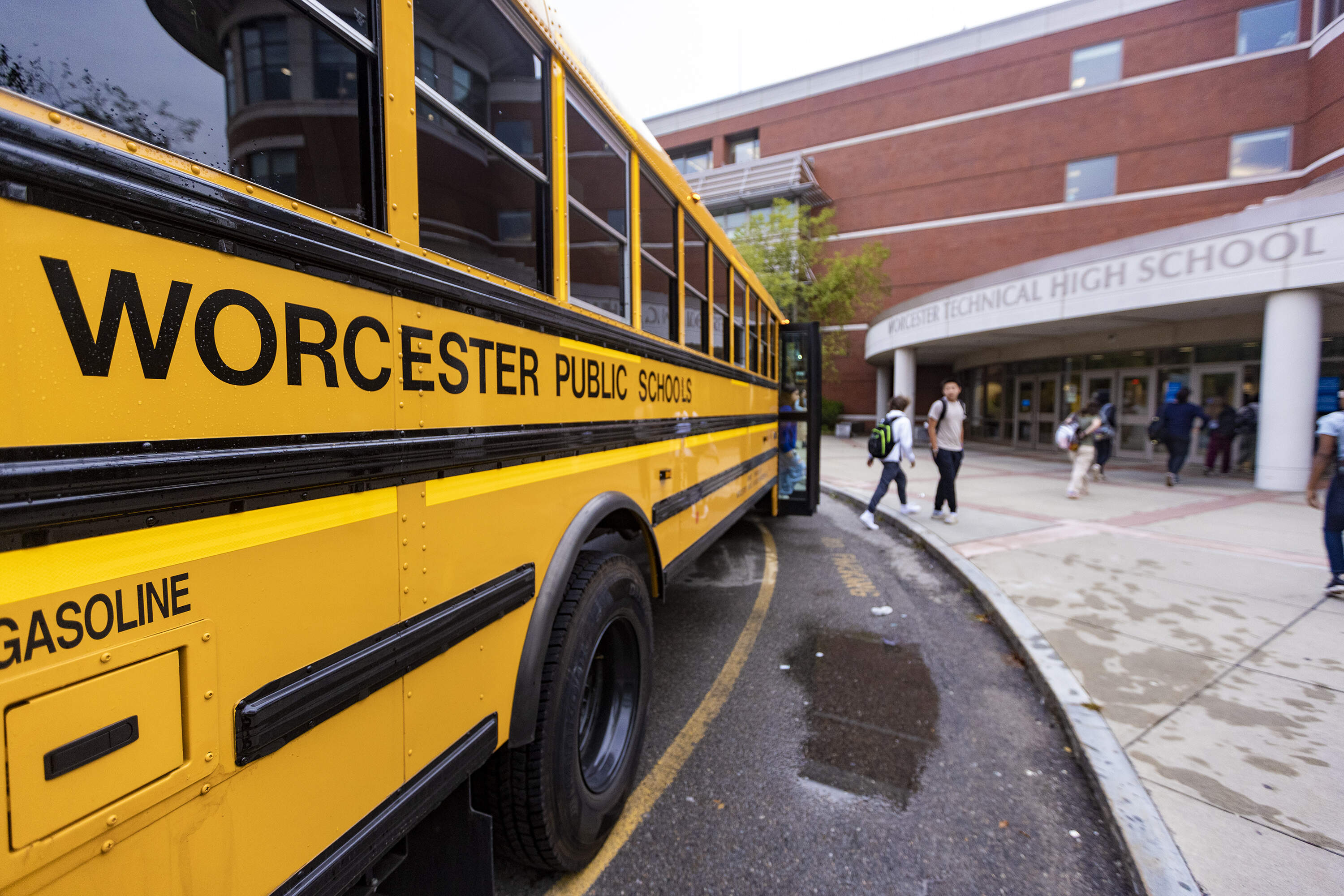
Worcester Public Schools, the state’s second-largest district, serves a diverse student body; roughly a third of its pupils are English learners. Superintendent Rachel Monárrez assured families the district does not assist ICE and students are released only to those authorized by parents in writing.
In a separate staff memo sent last week, the district’s transportation director ordered bus drivers to avoid dropping students off at any stop where they spot an ICE agent. Monárrez later sent a letter to families to emphasize that immigration officials had not been spotted in schools or at bus stops, but officials were resharing protocols in case any “future interactions with federal immigration authorities" arise.
It’s important for districts to act now to train staff on clear protocols, said Diana Santiago, legal director at Massachusetts Advocates for Children.
"These situations can be really stressful and people need to know exactly what to do,” she said.
During the first Trump administration, some parents were afraid to send their kids to school, worried they'd be targeted by ICE agents, Santiago said. The latest policy changes have once again shaken families’ sense of security, she added.
“I am concerned that children are going to be losing out on their education because of the difficult choices that families are being forced to make,” she said. “The attention that this is taking away from learning … that's a terrible thing.”
"I try to make them not feel scared. I try to tell them, oh don't worry … we will do what we have to do to be together here."
Doris Reina-Landaverde
For Doris Reina-Landaverde, a parent in a small Middlesex County town, this moment feels familiar. She immigrated from El Salvador in 2000 and has temporary protected status (TPS) which allows her to live and work legally in the U.S. She said she experienced the fear of deportation before, during Trump's first term, when the Department of Homeland Security ended TPS for El Salvadorians.
Still, Reina-Landaverde has no plans to keep her children home from school. With TPS, she said, she feels safe letting the bus pick them up and drop them off outside her front door.
“I try to make them not feel scared,” she said. “I try to tell them, oh don't worry … we will do what we have to do to be together here.”