Support WBUR
Review
'I'm Still Here' is an understated look at a family living under Brazilian dictatorship
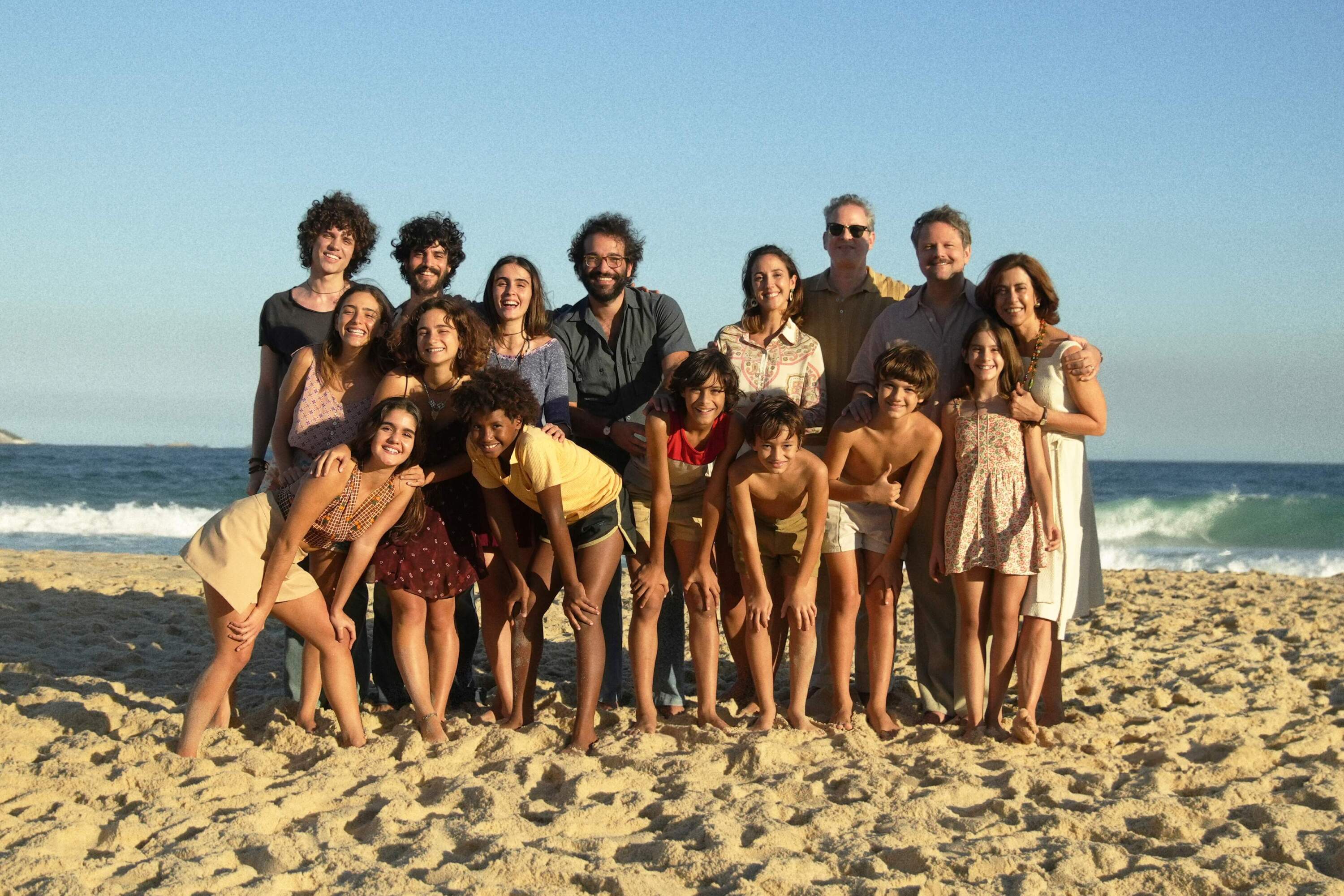
Director Walter Salles’ “I’m Still Here” takes place, for the most part, in early 1970s Rio de Janeiro when Brazil was under the boots of a military dictatorship. What’s shocking is how normal it all seems. The first thing we see is well-off, middle-aged mom Eunice Paiva (Fernanda Torres) relaxing on a beautiful beach, her idyll briefly interrupted by an army helicopter whirring overhead. Where’s it headed? We’ll never know. There are still good times to be had in the sun and sand with her husband Rubens (Selton Mello) and their sprawling family of five children.
The autocratic regime is more like a mild annoyance for the high-spirited, tight-knit Paiva family. Daughter Veroca gets stopped and harassed by some army thugs on her way home from getting high and going to see Michelangelo Antonioni’s film “Blow-Up” with friends, but they’re all used to it by now. Life goes on. The nearly plotless first 30 minutes or so of “I’m Still Here” are the movie’s most effective, hanging out with this groovy family trying to make the best of things while lord-knows-what is going on with the government. Then one night there’s a knock at the door.
This Oscar season’s Cinderella story, “I’m Still Here” bagged surprise nods for Best Picture and Best Actress, alongside an expected nomination for Best International Feature. It’s awfully rare for a foreign language film to get tapped in the top categories, and industry insiders who make careers out of prognosticating these things were blindsided by the news, which is always amusing. Perhaps most surprising is that such an understated movie would be embraced by a voting body that typically favors bombast and ostentatious epics. “I’m Still Here” is a calming, almost placid picture, which is not always to its benefit.
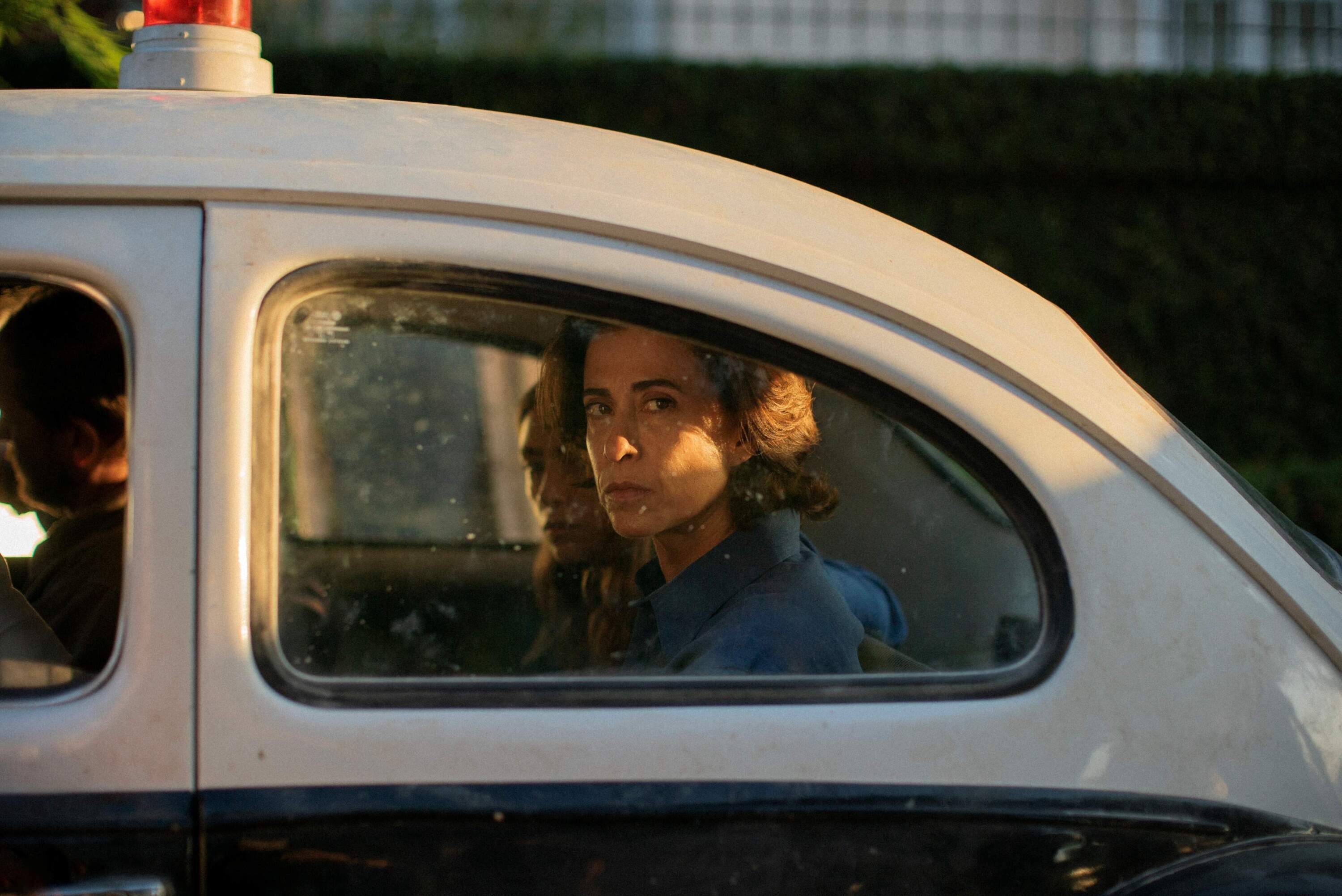
Eunice’s husband was a congressman many years ago. One night he’s brought in for questioning. Not only is he never returned, but the government claims he was never arrested in the first place. Of course, they say the same about Eunice, who after asking too many questions spent days being held in a dark cell without charges, before being released without apology or explanation. The regime insists none of this ever happened, and “I’m Still Here” follows our feisty heroine’s decades-long fight for accountability, battling a Kafkaesque bureaucracy to get them to admit something, anything. Through it all, she’s still got five kids to raise and somebody’s got to cook dinner and take out the garbage. Life goes on.
Having grown up watching urgent, white-knuckle political potboilers like Costa-Gavras’ 1982 “Missing,” which seemed to be on HBO every 10 minutes when I was a kid, the subdued heart rate of “I’m Still Here” threw me when I first saw the movie at last fall’s New York Film Festival. The 68-year-old Salles is of a specific arthouse temperament, the kind of soothing, senior-skewing international pictures that local film friends and I used to call “West Newton movies.” You know the type: pretty scenery, soft string music and a tinkly piano. A lot of time they’re about an old person and a little kid, like Salles’ 1998 Oscar nominee “Central Station.”
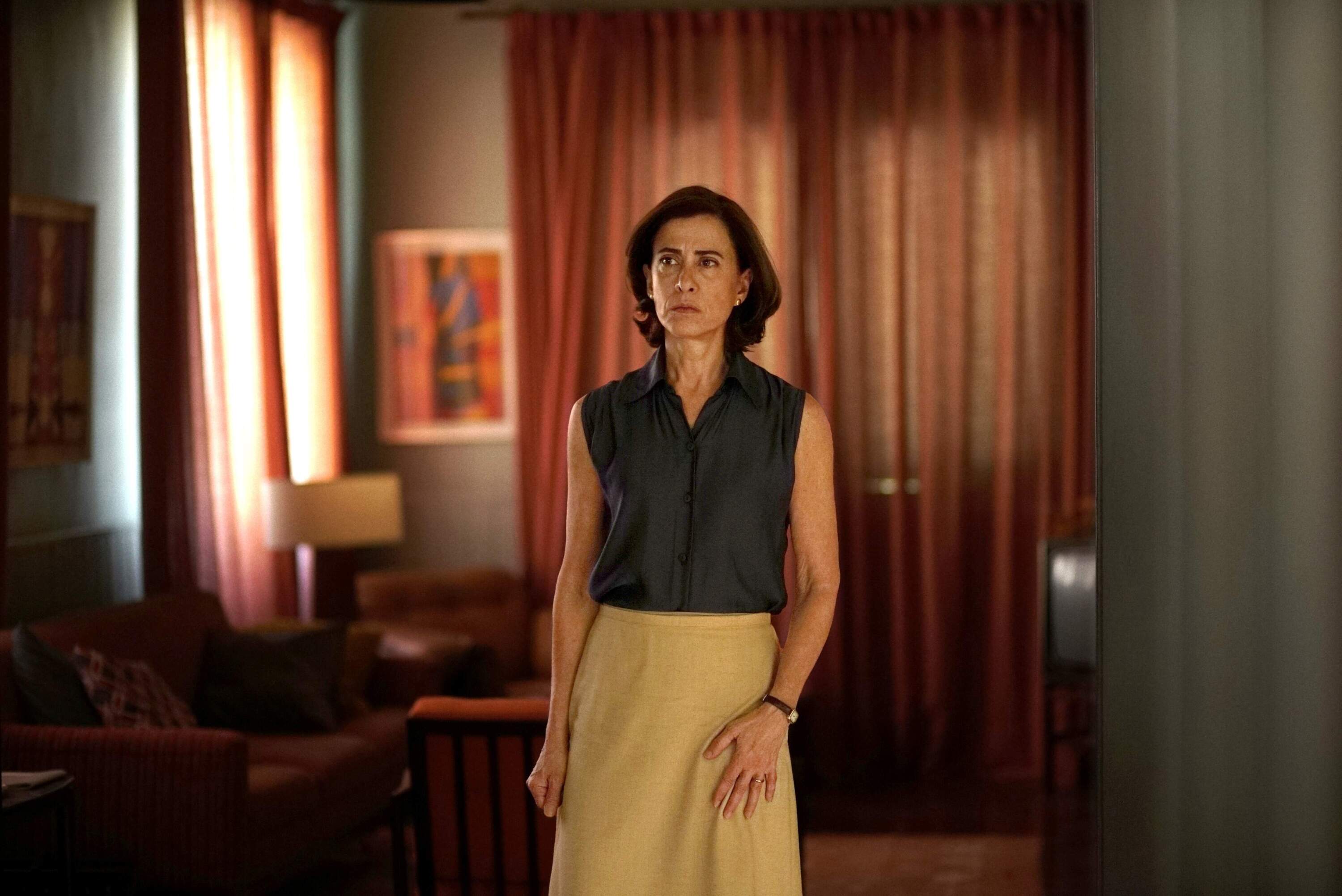
He had a huge hit with 2004’s “The Motorcycle Diaries,” which somehow avoided politics while being about the young Che Guevara. In 2012, Salles directed a bafflingly inert adaptation of Jack Kerouac’s “On the Road,” and I still think there should be some sort of tribunal investigating how he made such a boring movie out of that book. “I’m Still Here” isn’t as tedious as those two pictures, mostly thanks to Torres’ stellar performance as Eunice, seething with quiet dignity and purpose. She’s mad as hell, but she’s also pragmatic enough to know that blowing her stack or falling apart won’t be any help to her kids.
She shields them from what’s really going on and turns her attention to practical matters. (“We don’t talk about it here,” one sister explains to another.) It’s only in brief interludes — like at a restaurant where Eunice watches families dining together the way hers never will again — that Torres allows us to glimpse the full scale of the character’s heartbreak. The rest of the time there’s too much work to do. Life goes on.
And it keeps going. About two-thirds of the way through, “I’m Still Here” jumps ahead to 1996, followed by an epilogue that takes place in 2014. In the final sequence, Eunice is played by the great actress Fernanda Montenegro, Torres’ real-life mother. (In a neat full-circle bit of Oscar trivia, Montenegro’s work in Salles’ “Central Station” earned her the distinction of being the first Brazilian to receive an Academy Award nomination for Best Actress. Torres is the second.)
The steady, level-headed gaze of “I’m Still Here” is a valid approach, though never as dramatically satisfying as you might want it to be. Given the stakes and the circumstances, I couldn't help but find myself wishing for a little more in the way of emotional fireworks and explosions. Then again, I first saw the film back in October, back before the majority of Americans voted for a regime promising a lot of the same things the Paivas endured.
I watched it for a second time in the brief window between Trump’s illegal order to freeze federal funding for congressionally approved government grant programs and the next day’s confusing memo rescinding that order. What hit home this time was how well the film reflects the human capacity to prioritize and cook dinner and take out the garbage while in the midst of a constitutional crisis. After all, life goes on. Until it doesn’t.
“I’m Still Here” is now in theaters.