Support WBUR
How rolling back EPA regulations could impact New England air and water
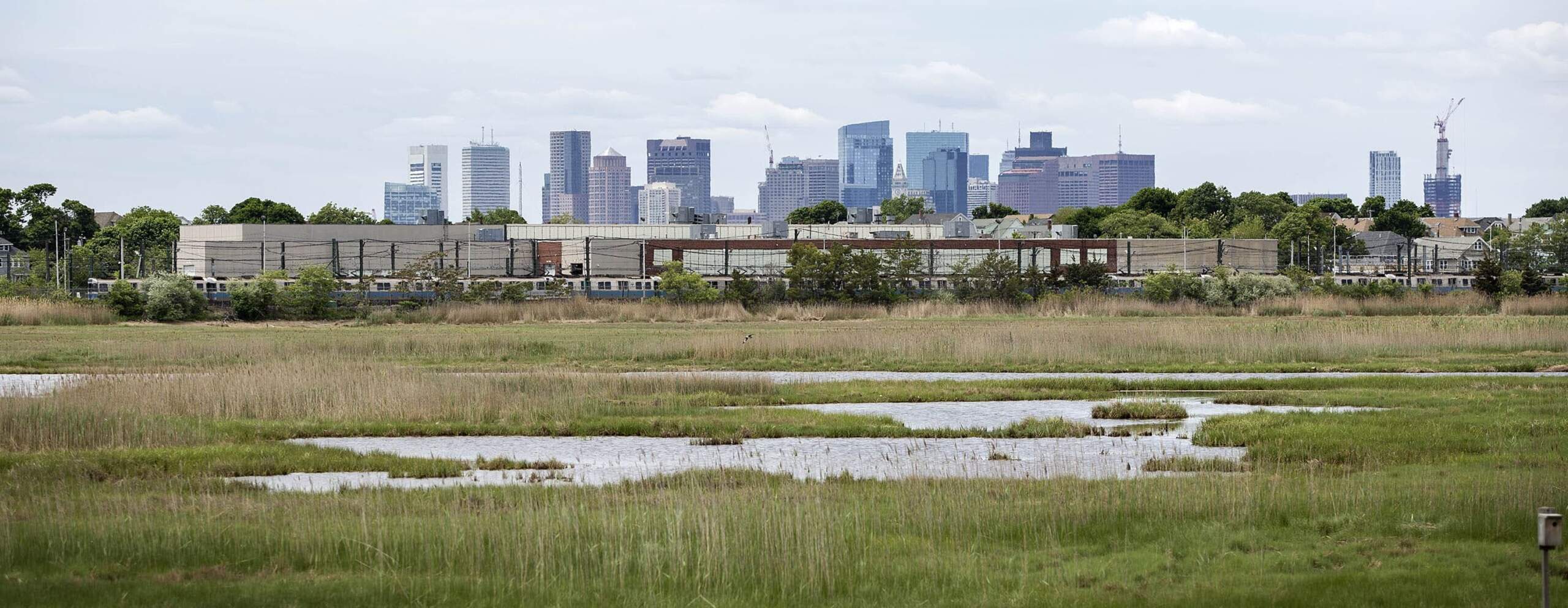
Researchers and advocates in New England say the federal government's plans to reconsider environmental rules could have long-lasting effects on public health, air pollution and ecosystems in Massachusetts and across the region.
The Environmental Protection Agency this week announced a long list of regulations it expects to review including those that limit factory pollution, vehicle emissions and wastewater from coal-fired power plants.
“Pollution has been reduced, and the environment has been improved by these major pieces of legislation that they're attacking,” said Chris Neill, an ecologist with the Woodwell Climate Research Center in Falmouth.
Before the 1990s, New England experienced air pollution attributed in large part to drifting emissions from Midwestern factories and power plants, causing a phenomenon known as acid rain. It stunted the growth of forests, polluted waterways and harmed wildlife. But landmark regulations like the Clean Air Act and subsequent amendments to it, Neill said, led to a dramatic decline in acid rain and other pollution, improving ecosystems and human health.
Coastal communities on Cape Cod have benefitted from diminished nitrogen pollution associated with the decline in acid rain. Waterways got cleaner, and local economies saw a boost from recreation, fishing and tourism, Neill said.
There’s still some nitrogen pollution, but he said environmental regulations tamped down the worst of it. This meant cities and towns could focus on managing the remaining, lower pollution levels through strategies such as sewer filters.
“It's been the stability of having those things in place that allows the long-term planning,” Neill said. “But imagine a world in which all of that pressure is now taken off because those major pieces of legislation are now being completely revisited.”

Many of the federal regulations targeted for review curb climate pollution. Dorothy McGlincy, president of the Massachusetts Association of Conservation Commissions, said in a statement that any rollback of protections was “short-sighted and counterproductive."
“Even if the EPA takes steps to erase climate protections, they cannot erase the impacts of climate change,” she said.
In his announcement, EPA Administrator Lee Zeldin called it the “most consequential day of deregulation in U.S. history.” He said the plans would advance President Trump's goals of expanding fossil fuel industries, lowering the cost of living for Americans and giving power back to states.
The agency didn’t provide exact details on whether policies will be weakened or completely cut. But despite the uncertainty, president of the Conservation Law Foundation, Brad Campbell, said the Trump administration is headed toward “lawlessness.”
“The Trump administration is prepared not just to revise rules and policies within our environmental laws, but to simply ignore and defy Congress,” he said.
Dismantling regulations will likely require a lengthy review process and public comment period. It could take several years and is expected to face legal challenges from groups like the Conservation Law Foundation.
Campbell said it will likely take years to fully address the environmental damage that could be caused by this administration.
“It's almost inevitable that New England communities will be facing dirtier air and dirtier water,” he said.
Campbell sees this moment as an opportunity for state leaders to speed up efforts toward climate goals, like supporting the transition to renewable energy.
A spokesperson for the state's Office of Energy and Environmental Affairs said Massachusetts has set an example for how strong environmental regulations can support the economy.
"Climate change costs us when entire industries are destabilized and disaster recovery is increasingly unaffordable. We will continue strongly enforce our own laws to protect our residents and push back on federal threats to public health and the environment," the spokesperson said in a statement.