Support WBUR
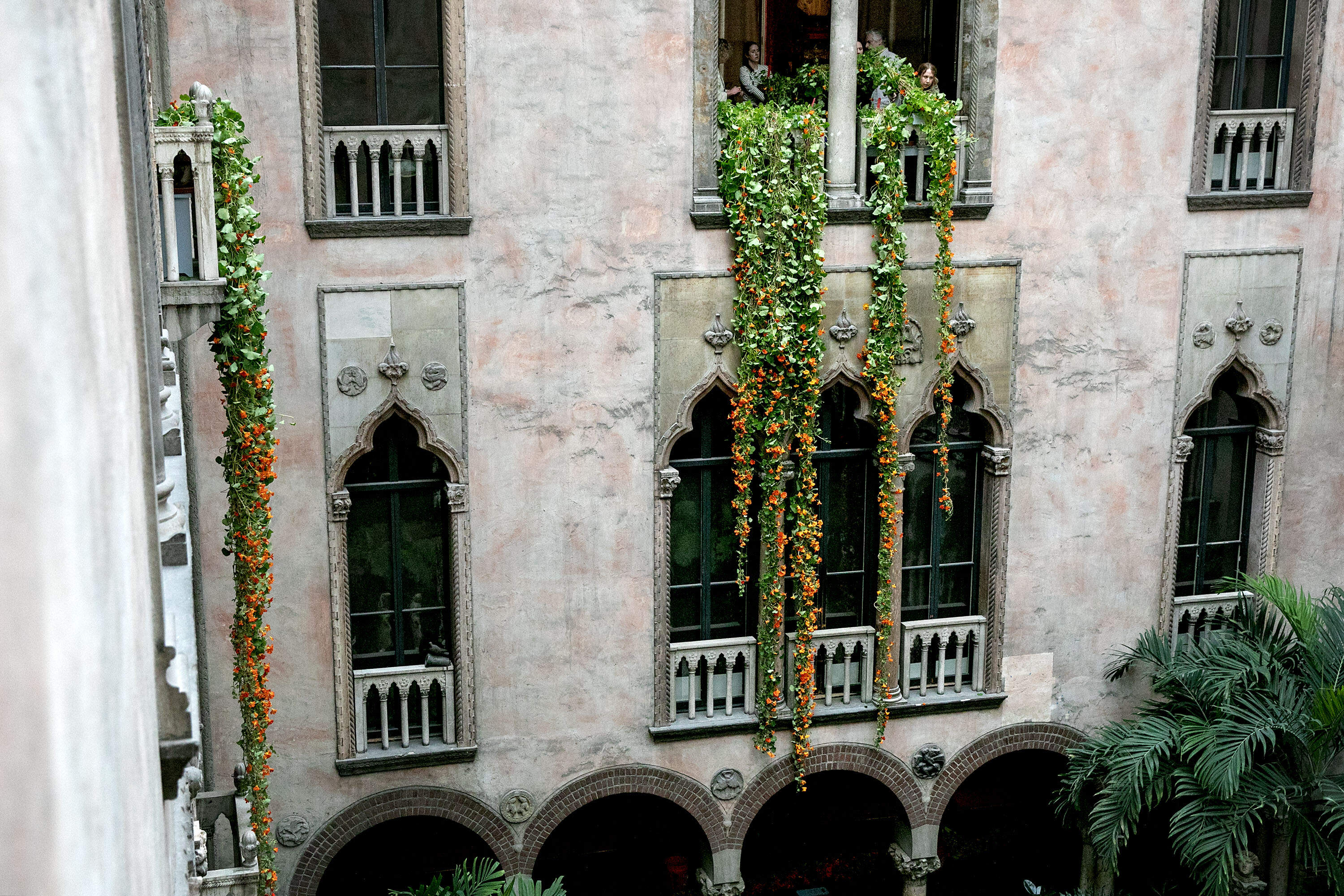
Cascading nasturtiums return to the Isabella Stewart Gardner Museum
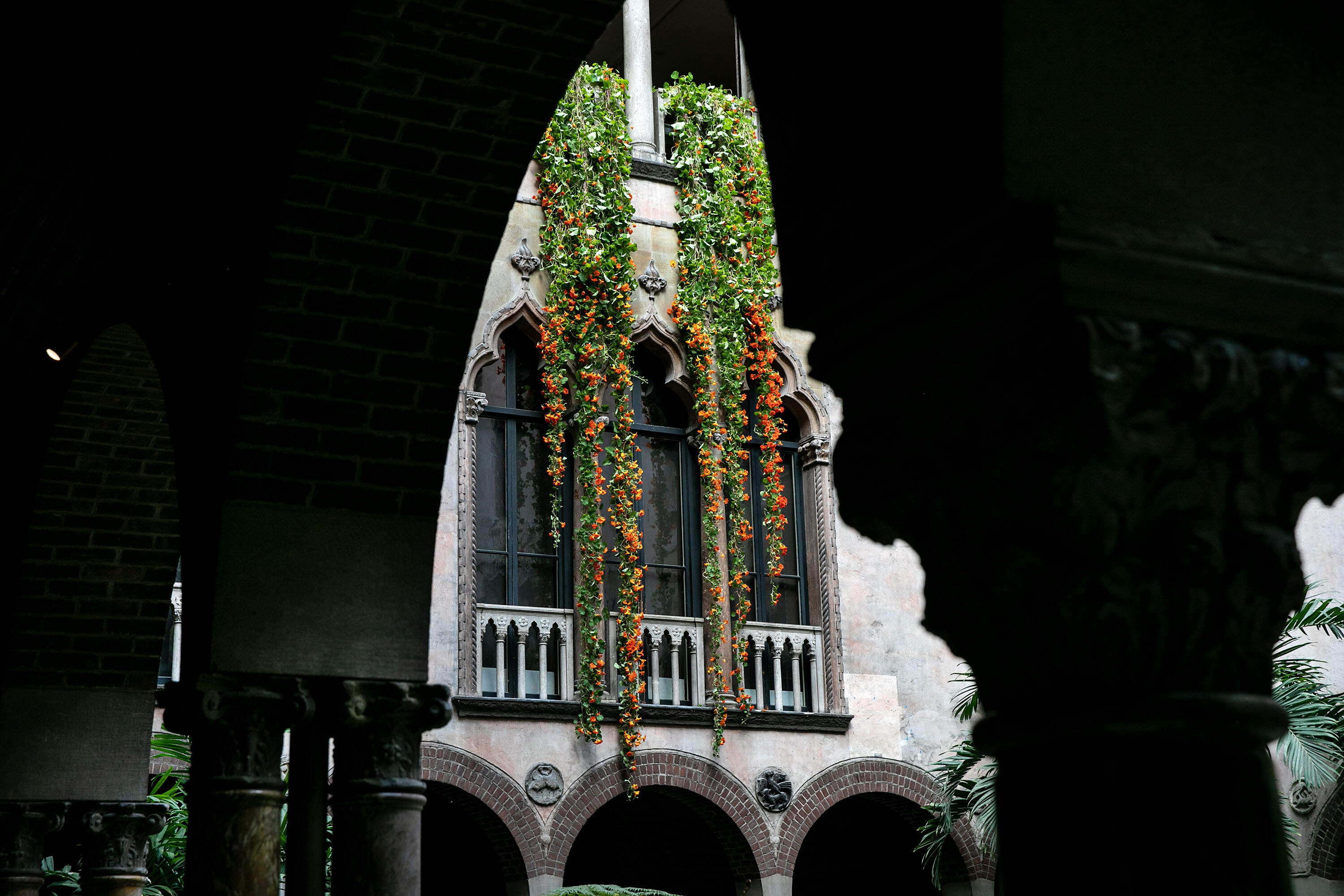
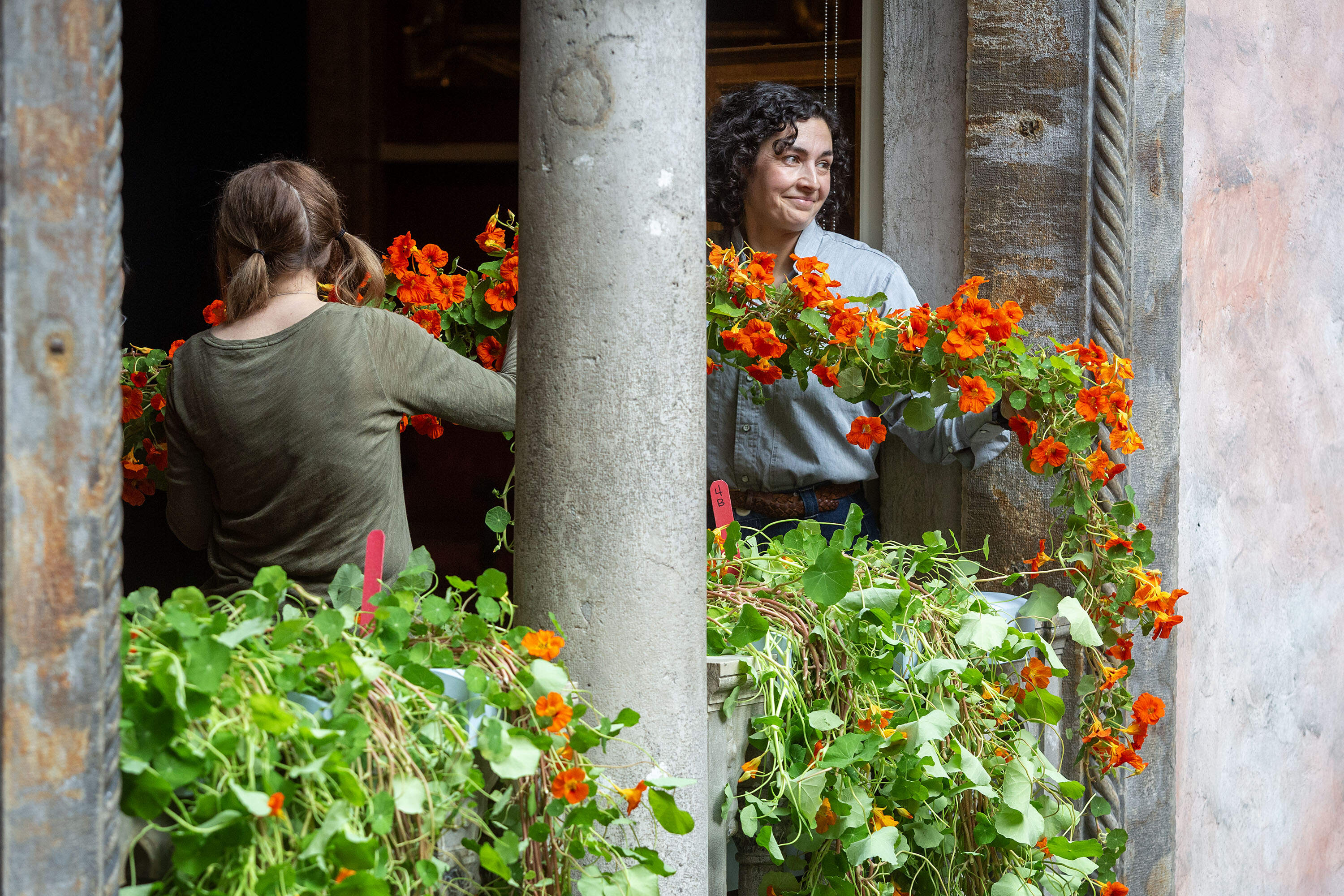
Each spring, orange flowers cascade down into the courtyard of the Isabella Stewart Gardner Museum. The flowers are called nasturtiums, and as of this week, the florals are on display for Greater Boston to take in the beauty and snap some Instagram photos.
Isabella Stewart Gardner herself started the tradition in the early 1900s. The nasturtiums only bloom for about three weeks, so it’s a special time to catch them flourishing.
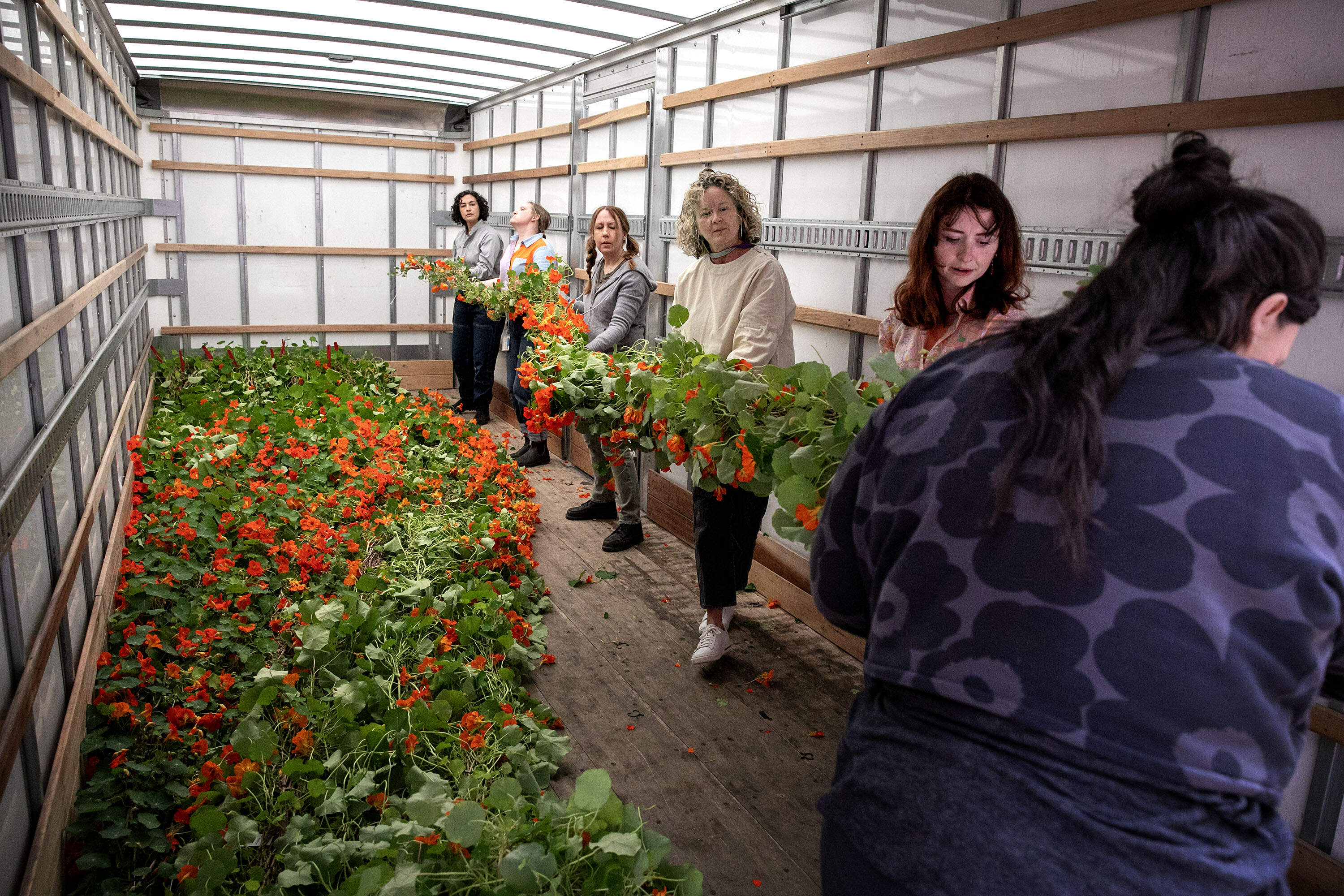
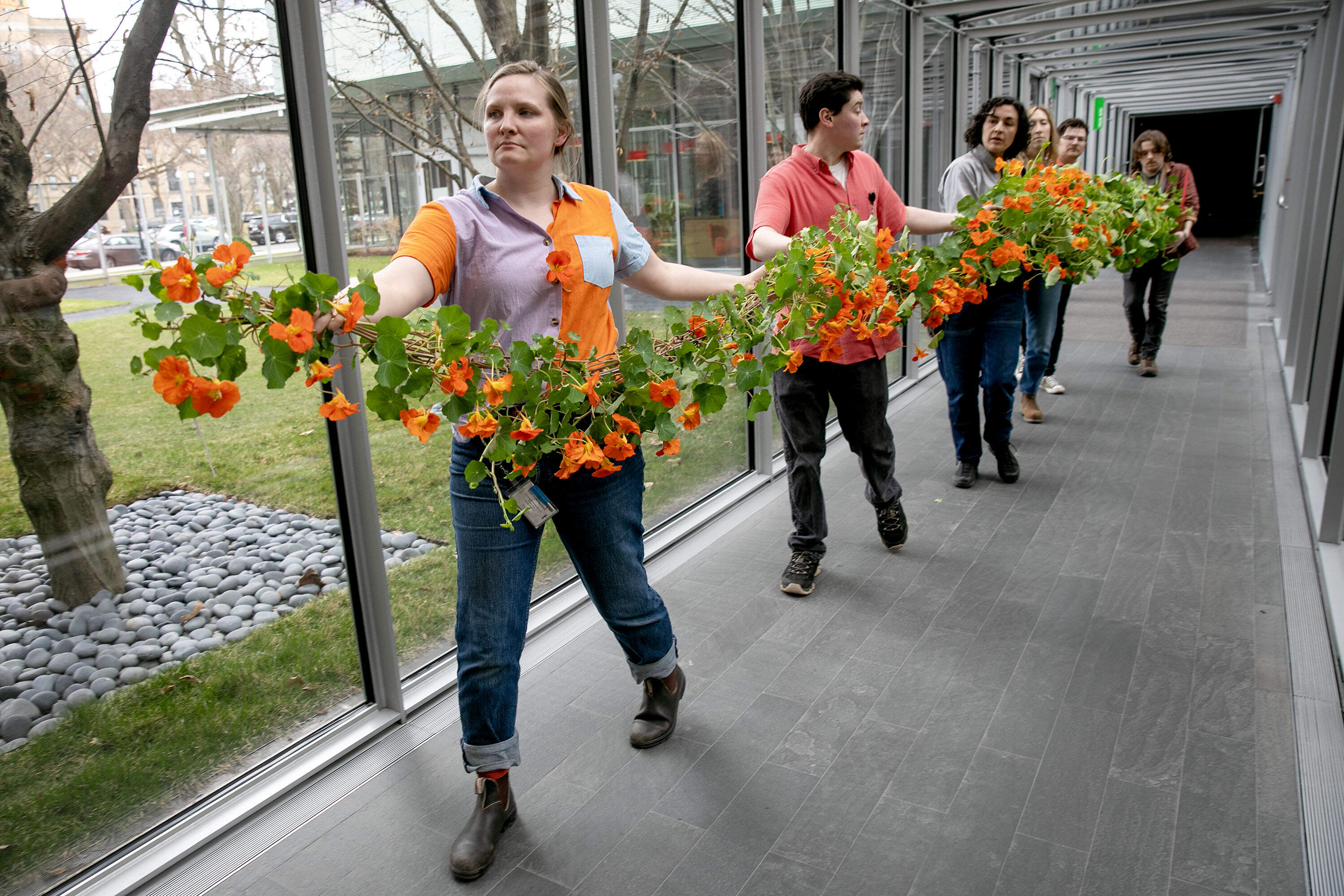
“ This is a moment at the Gardner that feels more like a reenactment than any other moment,” said Erika Rumbley, head of horticulture at the museum. “The garden is famously the part of the palace that changes in a palace where nothing changes.”
Clivia and cobalt stars have been displayed with the nasturtium since Gardner’s time.
“ We have this core, really punchy, saturated, high contrast set of plants, and then around that, we get to play depending on what plants are having a great year,” said Rumbley. Muscari and leopard orchids are some of those additions this year.
The nasturtium vines are nurtured from seeds for nine months in an offsite greenhouse before they are installed at the palace. It’s a labor-intensive process, but Rumbley said people love the flowers, and the museum staff loves providing them.
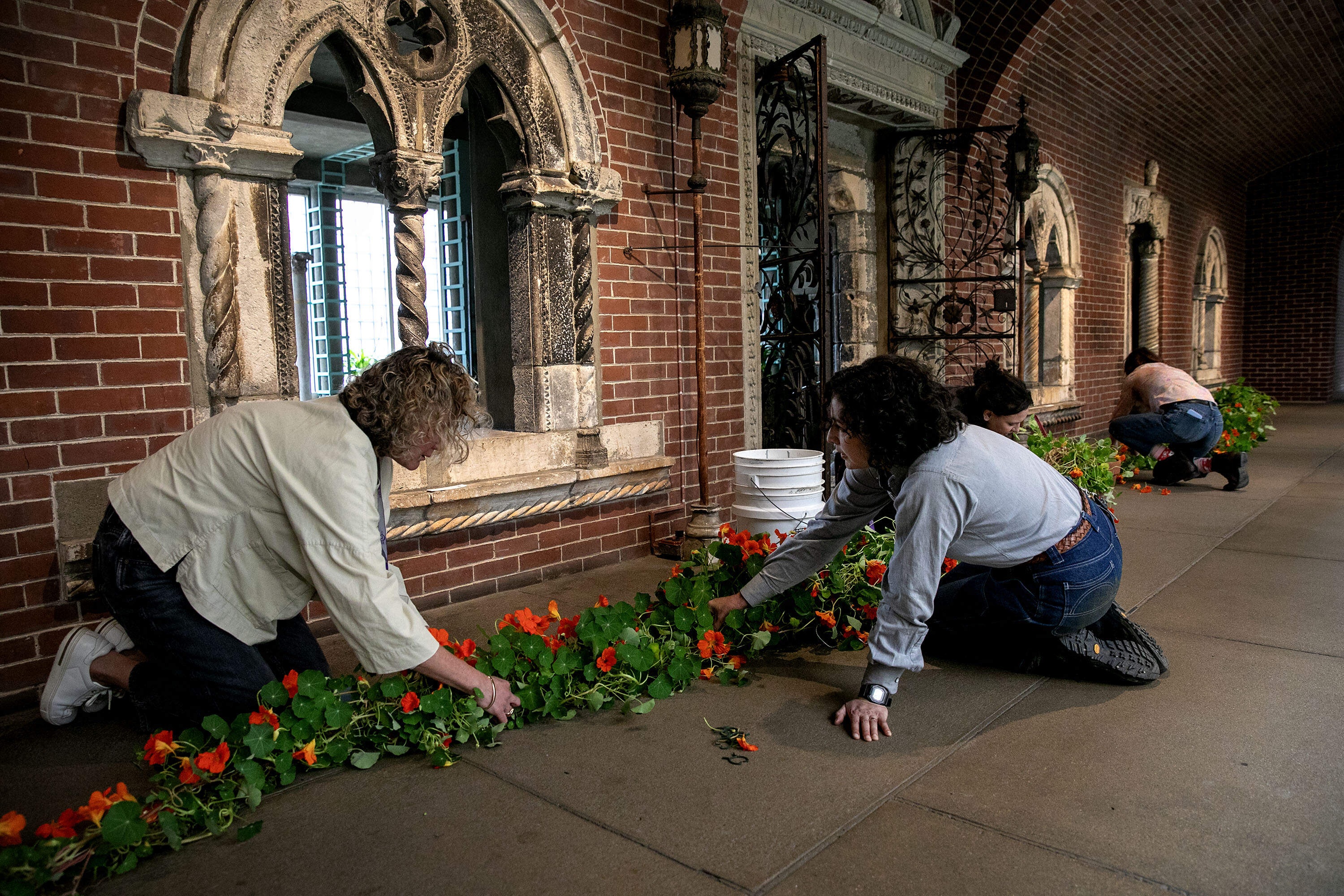
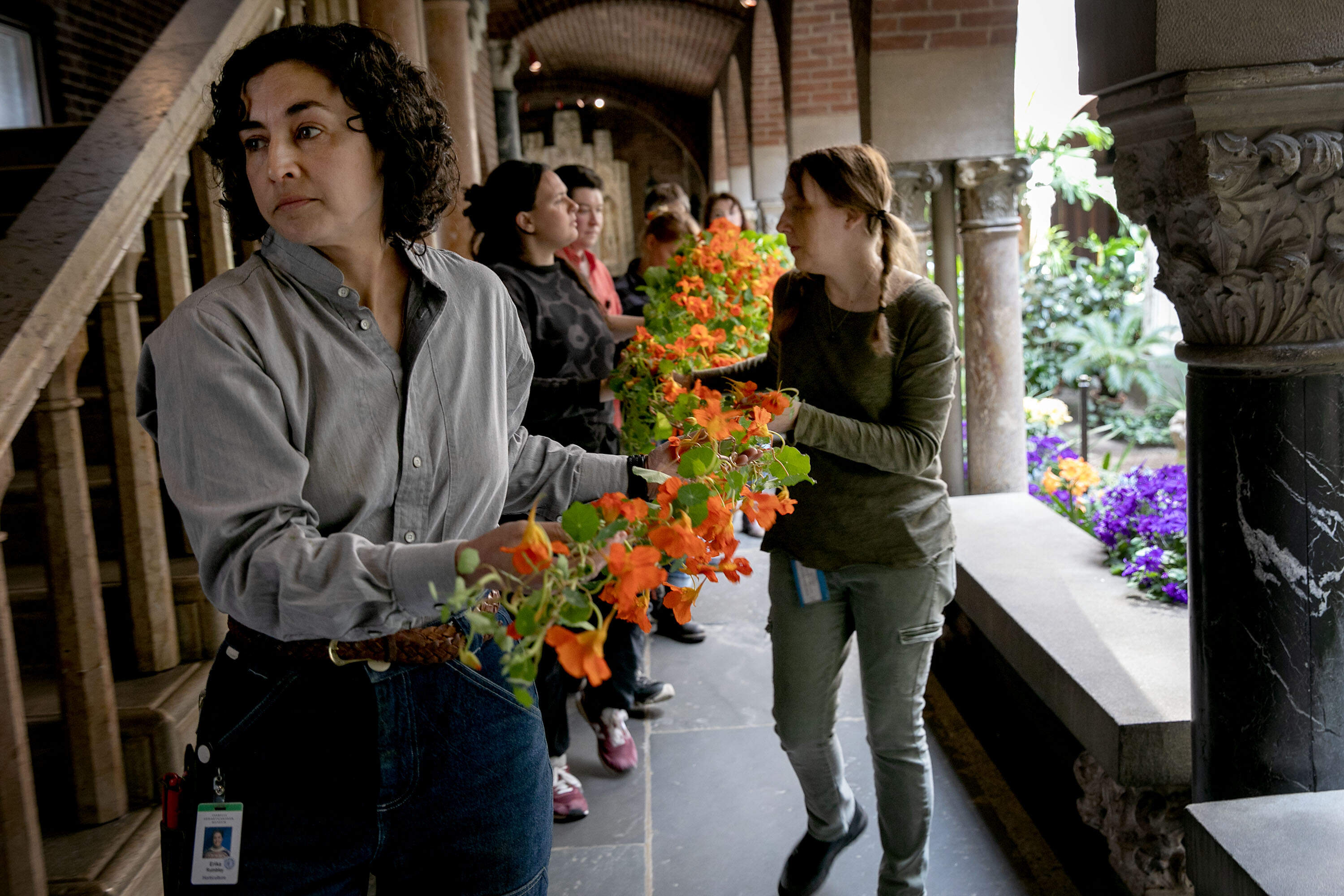
“It’s our gift to the city of Boston,” she said. “ People need reprieve. People need beauty and joy and spaces to gather together that feel like a deep breath. Our goal is to create a little oasis in the city where people can have that experience and let their shoulders down.”
The museum never knows the exact dates the florals will be on view because the plants are so delicate. There are 18 nasturtium vines on view this year, and the longest vine hangs at around 25 feet.
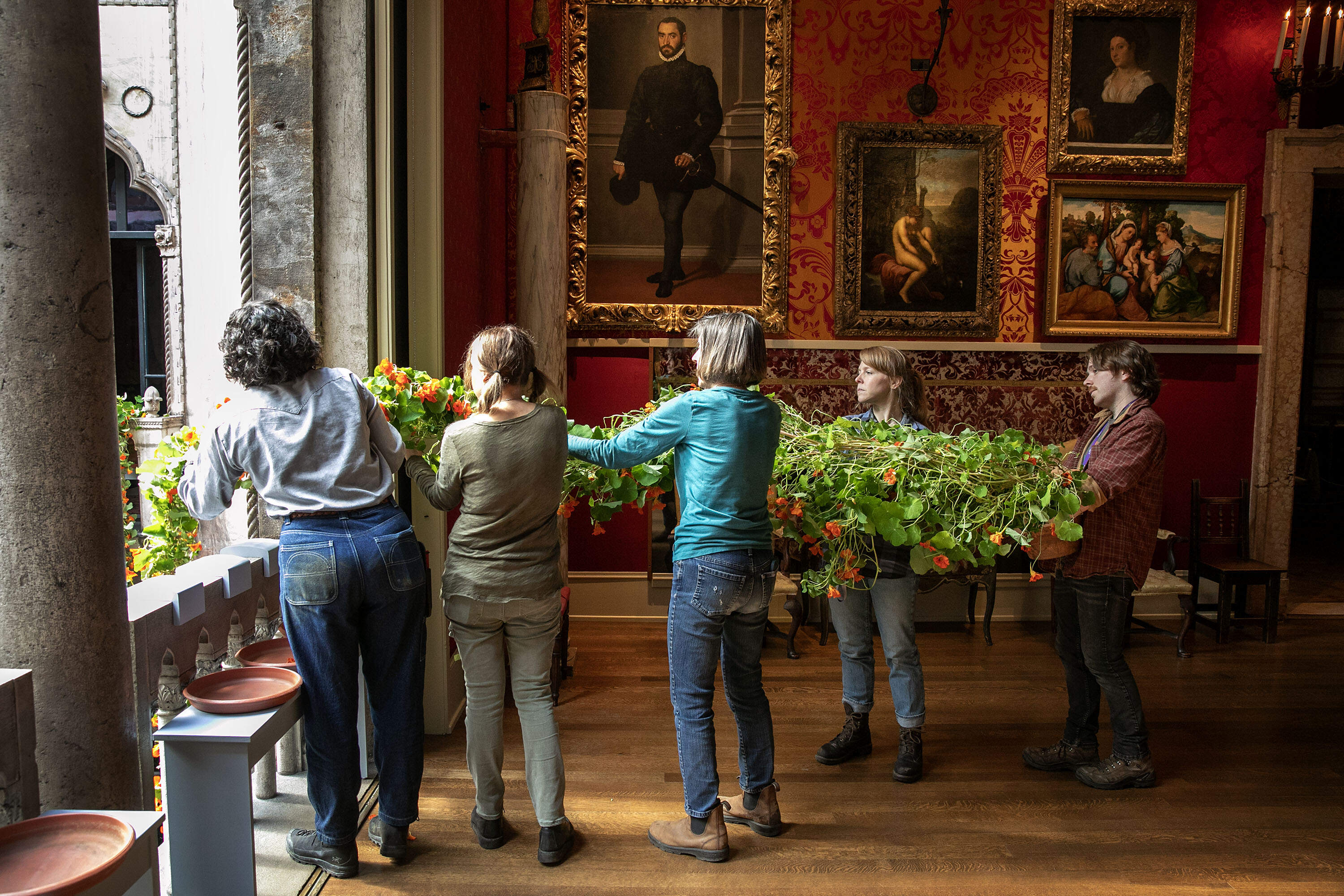
“ I like hearing from so many people that spring hasn't started for them until they see this display,” said Rumbley. “We don't have a lot of things in our modern lives that mark the passage of time in a way that's tied to the natural world. I feel very lucky to be part of a seasonal ritual for people.”
The museum’s next free First Thursday is on April 3. During the event, horticulturists will be available to explain how to grow the nasturtiums. Visitors will also be able to create paper nasturtium vines in the Bertucci Education Studio.
The museum anticipates the nasturtiums will be on view through Gardner’s birthday on April 14.