Support WBUR
Boston's Morning Newsletter
Trump's car tariffs are now in effect. What will they mean for Mass.?
Editor's Note: This is an excerpt from WBUR's daily morning newsletter, WBUR Today. If you like what you read and want it in your inbox, sign up here.
TGIF! As far as early April in New England goes, we've got excellent weather for the Red Sox home opener this afternoon at Fenway Park. The Sox are encouraging fans going to the game to get there a little early (around 1:30 p.m.) if you want to see some familiar faces from the beloved 1975 team, as well as a fighter jet flyover.
But first, the news:
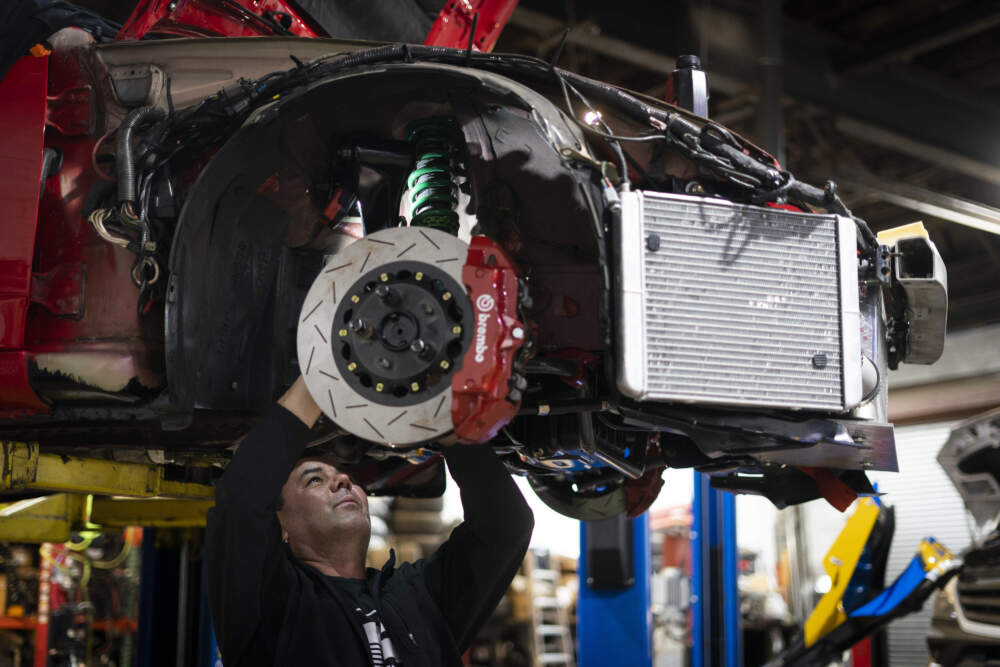
Buckle up: As President Trump's sweeping new tariffs send markets into a nosedive, another set of tariffs officially took effect yesterday: a new 25% tax on all imported cars and car parts. The move earned praise from domestic auto unions, hoping for a resurgence of local manufacturing. However, the tariffs have neutral analysts anxious about the impacts on already-soaring car prices. Not only is it likely to increase the sticker price of many new cars in the dealership lot, it could also drive up the cost of "existing vehicles that you have in your driveway," Mark Schieldrop, a spokesperson for AAA Northeast told WBUR's Cici Yongshi Yu. " You may be seeing higher prices just to keep that car on the road." Here's a breakdown:
- New cars: About 70% of cars sold in the Bay State are from foreign brands, like Toyota, Hyundai and Subaru, according to the Massachusetts State Automobile Dealers Association. That's above the national average of around 50%. Robert O'Koniewski, the association's vice president, told Cici he expects the cost of the tariffs will be passed on to car-buyers. " Whenever you're adding something to the cost of a product, it's always the consumer that has taken the hit," he said. And it's not just foreign brands. Many American car brands produce certain vehicles abroad. For example, according to Schieldrop, Ford and GM assemble some of their cheaper, entry-level cars in Mexico to keep prices down. Additionally, the White House estimates domestic car manufacturers import about half of the parts they use, so even "American-made" cars will likely feel the tariffs' impacts.
- Auto parts: The tariffs on auto parts are also likely to increase the cost of going to the mechanic in the not so distant future. While it may take time to go through the current stockpiles, Schieldrop said about 70% of replacement parts come from outside the U.S., from transmissions to spark plugs to tires.
- Car insurance: Higher repair costs will also push up insurance costs, Schieldrop said. The Cambridge-based insurance comparison site Insurify estimated the resulting annual premium increase could be in the neighborhood of 15%.
- Why are they doing this? The White House argues that other countries, like Germany and Japan, have protectionist policies to support their local car manufacturing sectors, so the U.S. should do the same. But as Schieldrop notes, even if the strategy is successful, production won't revert back to the U.S. overnight. "It takes a lot of money and a lot of time to spin up a factory," he said, adding it won't be a smooth ride for car owners in the near term.
Turf wars: Massachusetts' top federal prosecutor is pushing back on a Boston judge and Suffolk County's district attorney over punishing an ICE agent who detained a man mid-trial last week. With the case now in federal court, U.S. Attorney for Massachusetts Leah Foley — who was recently appointed by Trump — says the judge overstepped by holding ICE agent Brian Sullivan in contempt and warned District Attorney Kevin Hayden against pursuing criminal charges.
- Why? Foley argues the Constitution's Supremacy Clause immunizes federal officers from state prosecution for official actions — and that the contempt case should be thrown out. The Boston Herald has more details here.
North of the border: New Hampshire Rep. Chris Pappas is officially running to replace the state's retiring U.S. Sen. Jeanne Shaheen in next year's midterms. The 44-year-old four-term Democrat announced his candidacy yesterday, as locals wait to see if New Hampshire's former Republican governor, Chris Sununu, gives the race a go. If elected, Pappas would be the first openly gay man to serve in the U.S. Senate.
- Fun fact: Pappas' grandfather claims to have invented the chicken tender.
P.S.— Why is the Trump administration threatening to withhold billions in funds from Harvard? Take our Boston News Quiz and test your knowledge of the stories we covered this week.