Support WBUR
Boston's Morning Newsletter
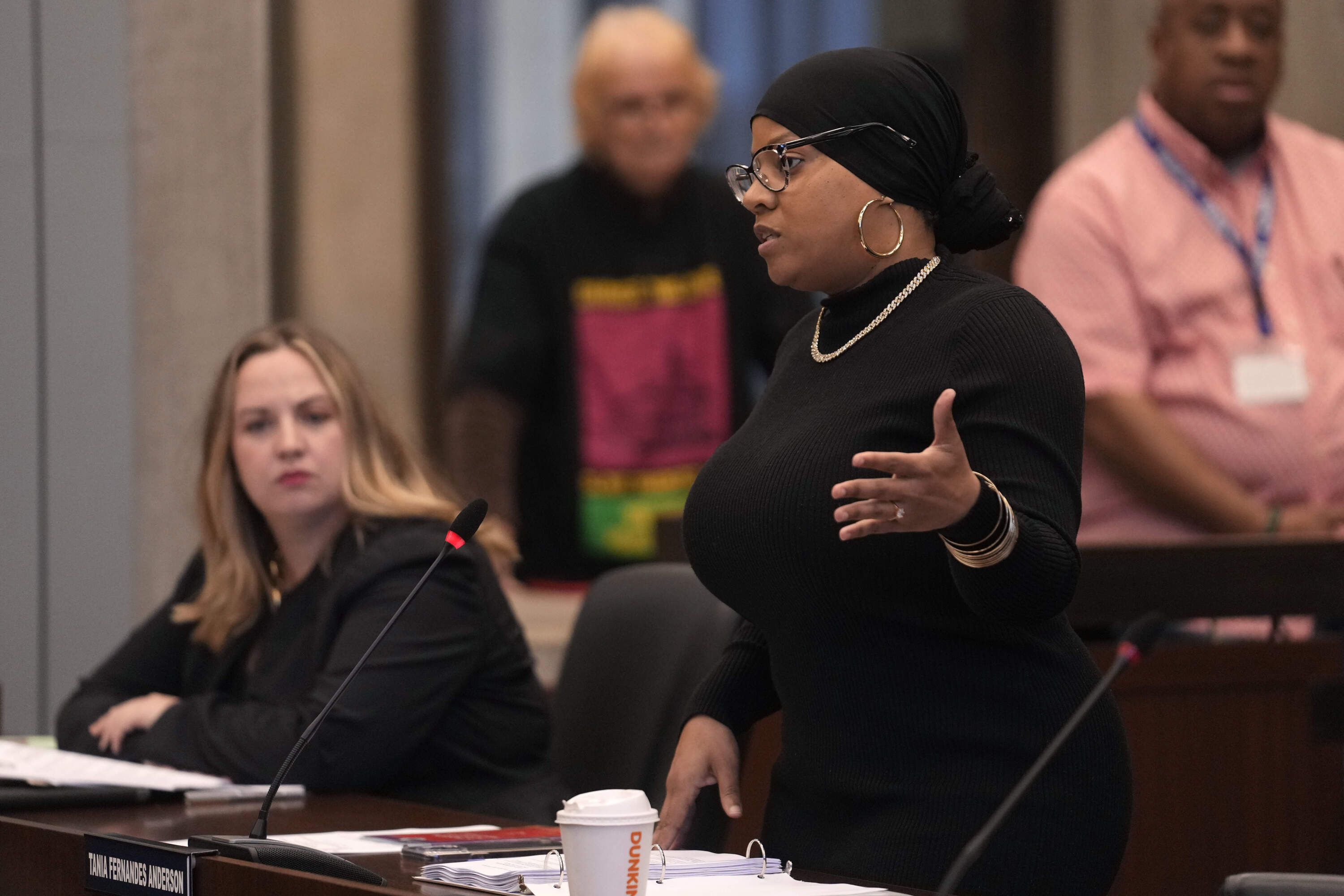
Will Boston hold a special election to replace Councilor Tania Fernandes Anderson? It's up for debate
Get your taxes in today — or see if you're eligible for an automatic extension.
But first, the news:
Special circumstances: Who will replace disgraced Boston City Councilor Tania Fernandes Anderson? First, the question is when. The news last week that Fernandes Anderson plans to plead guilty to federal corruption charges and resign from office set the stage for a potential summer special election for her District 7 seat in Roxbury. But yesterday, Council President Ruthzee Louijeune filed a home rule petition to bypass that possibility and proceed directly to the September/November elections.
- Why? Boston's city charter requires a special election whenever a district city council seat becomes vacant more than 180 days before a regular election. (We're currently just over 200 days out). But supporters of Louijeune's proposal say a special election in the dead of summer would be costly, confusing and almost certainly low turnout. The city could also have to hold a special preliminary election, since at least three District 7 candidates have already filed to run. And with Boston's election practices already under scrutiny, Secretary of State Bill Galvin has said it's a bad idea. "Suggesting that we run two elections for the same office in a matter of months would be a great burden," he recently told Boston 25.
- Counterpoint: Two of the Council's more conservative voices, Ed Flynn and Erin Murphy, oppose the idea. Last week, Murphy filed a resolution calling for the special election to be scheduled ASAP, arguing that Fernandes Anderson's constituents shouldn't go over half a year without "a voice at City Hall." She also noted that multiple elections within a few months "is not unprecedented"; the city held a late-July special election in 2023 for the neighboring District 8 seat, after Councilor Kenzie Bok stepped down to run the Boston Housing Authority.
- What's different this year? Louijeune says her proposal is in response to calls from the community in District 7. "That’s what I care most about," Louijeune told WBUR in a statement. "In this unfortunate and unique situation, residents have expressed that they would like time to engage with candidates, to increase voter turnout and participation, and to ensure that voters are knowledgeable about the election to yield the best councilor for their district." Her home rule petition — which would need state approval — is also backed by several State House lawmakers who represent Roxbury.
- The big if: The whole debate could become moot if Fernandes Anderson stays in office past May 8. While the councilor announced plans to resign last week, she hasn't officially submitted her resignation yet. The Council can't force her out unless she is sentenced, and it remains unclear when that will happen. (Her next plea hearing is set for May 5.) Louijuene says the uncertainty is all the more reason to waive the special election rule and "provide a reliable framework for both residents and candidates."
- In the meantime: Mayor Michelle Wu's office says they've directed additional staff to support neighborhood liaisons covering District 7. But she isn't taking a position on the home rule petition — for now. "The Elections Department stands ready to administer a special election under the City Charter as written, but we will review any legislation passed by the Council," a spokesperson for Wu said.
Harvard's funding fight: The Trump administration is freezing over $2 billion in federal funding to Harvard University. As WBUR's Carrie Jung and Suevon Lee report, the move was announced just hours after Harvard leaders rejected a list of Trump administration demands, like cracking down on student protests and eliminating diversity efforts. In a written statement, Trump's Joint Task Force to Combat Anti-Semitism said Harvard’s decision “reinforces the troubling entitlement mindset that is endemic in our nation's most prestigious universities and colleges.”
- Harvard President Alan Garber had called the demands unconstitutional and "a political ploy disguised as an effort to combat antisemitism on campus." He also encouraged people to read the most recent letter the Trump administration sent the school Friday "to gain a fuller understanding of the unprecedented demands." (You can read Garber's full letter to the community here.)
Pedal assistance: Massachusetts is now offering a statewide voucher of $800 to $1,200 to help low-to-moderate-income residents buy an electric bike. The program — similar but more expansive than Boston's recently reopened e-bike voucher initiative — is open to anyone making up to 400% of the federal poverty level. That's $62,600 a year, if you're single. It also comes with an extra $150 for helmets and other bike gear.
- What's next: A total of 3,000 vouchers will be doled out to randomly selected applicants (500 per month now through September). The Massachusetts Clean Energy Center website has more details on eligibility and the application process.
P.S.— Today marks One Boston Day, a day of service across the city in memory of the victims of the 2013 Boston Marathon bombings. The city is organizing its annual Franklin Park cleanup and a Kenmore Square blood drive this weekend, and encouraging simple acts of kindness. (There's even a checklist if you need ideas.)