Support WBUR
As Trump puts pressure on higher ed, Boston students look to historically Black colleges
As the Trump administration takes aim at funding for higher education, and pressures universities to eliminate programs related to diversity and equity, some Boston students say they’re looking to historically Black colleges as a refuge.
Chase Bowdre grew up in a family whose members attended historically Black colleges and universities. She plans to attend Spelman College in Atlanta this fall, which is top-rated among the nearly 100 schools in this group, known as HBCUs.
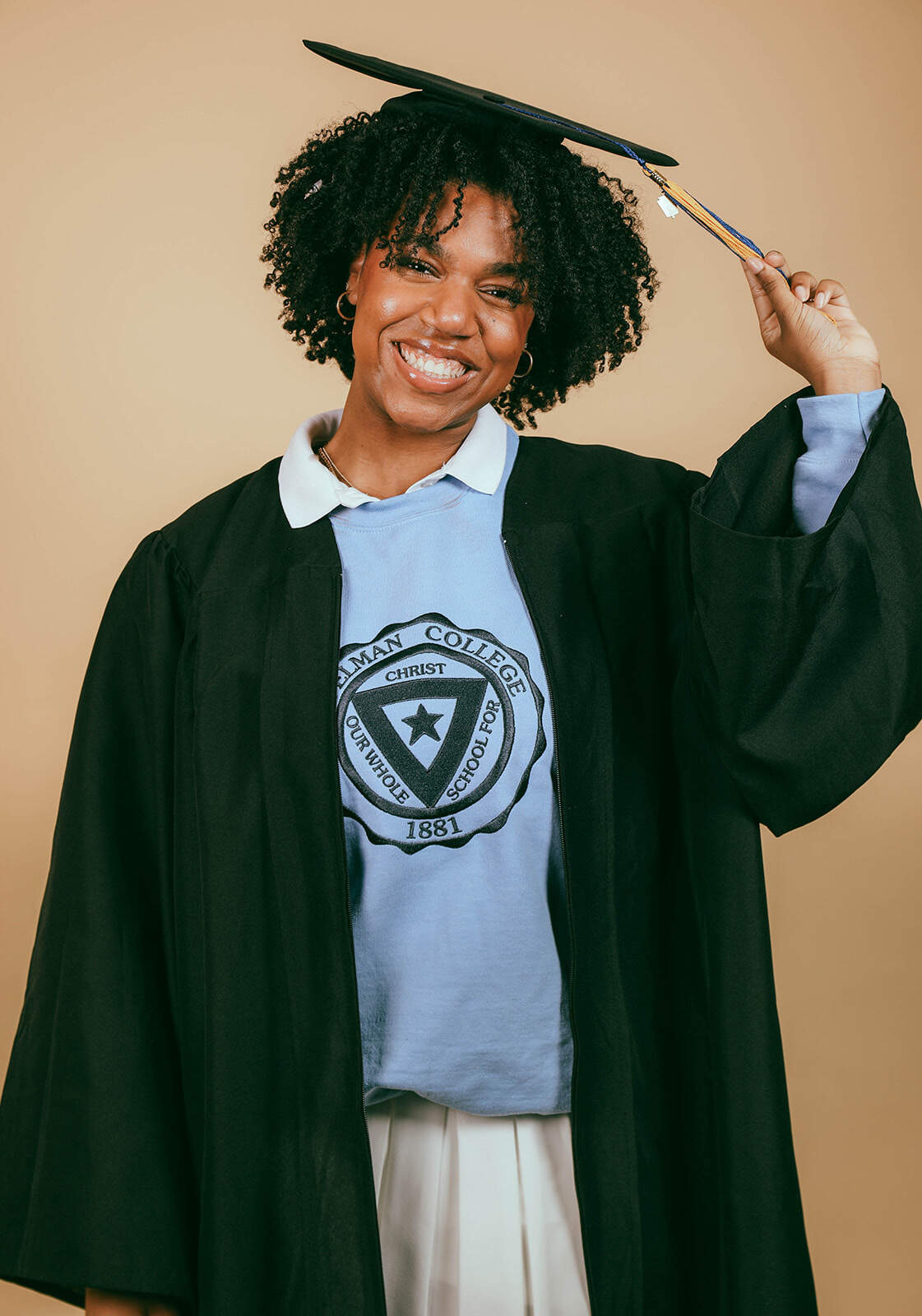
“We weren’t taught about them in school. I’ve only known one person from my school who went to an HBCU,” said Bowdre, a senior at South Shore Christian Academy in Weymouth. “But I’ve seen what Spelman and Morehouse can do for young men and women — it’s been a great influence on me.”
Some 290,000 students attend the nation's HBCUs. The schools provide a training ground for professionals and boast a roster of notable graduates, from former Vice President Kamala Harris (Howard University) to director Spike Lee (Morehouse College) and media mogul Oprah Winfrey (Tennessee State).
The colleges have long held broad appeal for Black students, as places to build community and grow skills in a space where race is not a focus. Student interest surged following the Supreme Court’s 2023 decision that effectively banned affirmative action at universities, boosting applications and enrollment at HBCUs.
Now, the current polarizing political climate is driving additional interest, according to Dr. Leah Barlow, a professor of African American Studies at North Carolina A&T.
“Students and parents are making choices that feel like they can have some safety,” she said. “I think it's very difficult to avoid what the news is currently telling us about education.”
Barlow recently went viral on TikTok after she accidentally made public a post with her course guidelines for students. The moment sparked a national conversation about HBCU curriculum and culture that drew widespread commentary under the hashtag #HillmanTok (a reference to the popular show "A Different World"). In two minutes and 40 seconds, Barlow brought HBCUs into the national spotlight.
Barlow said HBCUs equip students to meet a host of challenges.
“You are trained to be built for standing in these sorts of moments,” she said. “That’s where it feels so pivotal.”
President Trump last month issued an executive order on HBCUs, calling them “beacons of educational excellence and economic opportunity that serve as some of the best cultivators of tomorrow's leaders,” and said his administration plans to support them. But it's unclear how that squares with broad federal cuts to science research and studies deemed related to diversity, equity and inclusion.
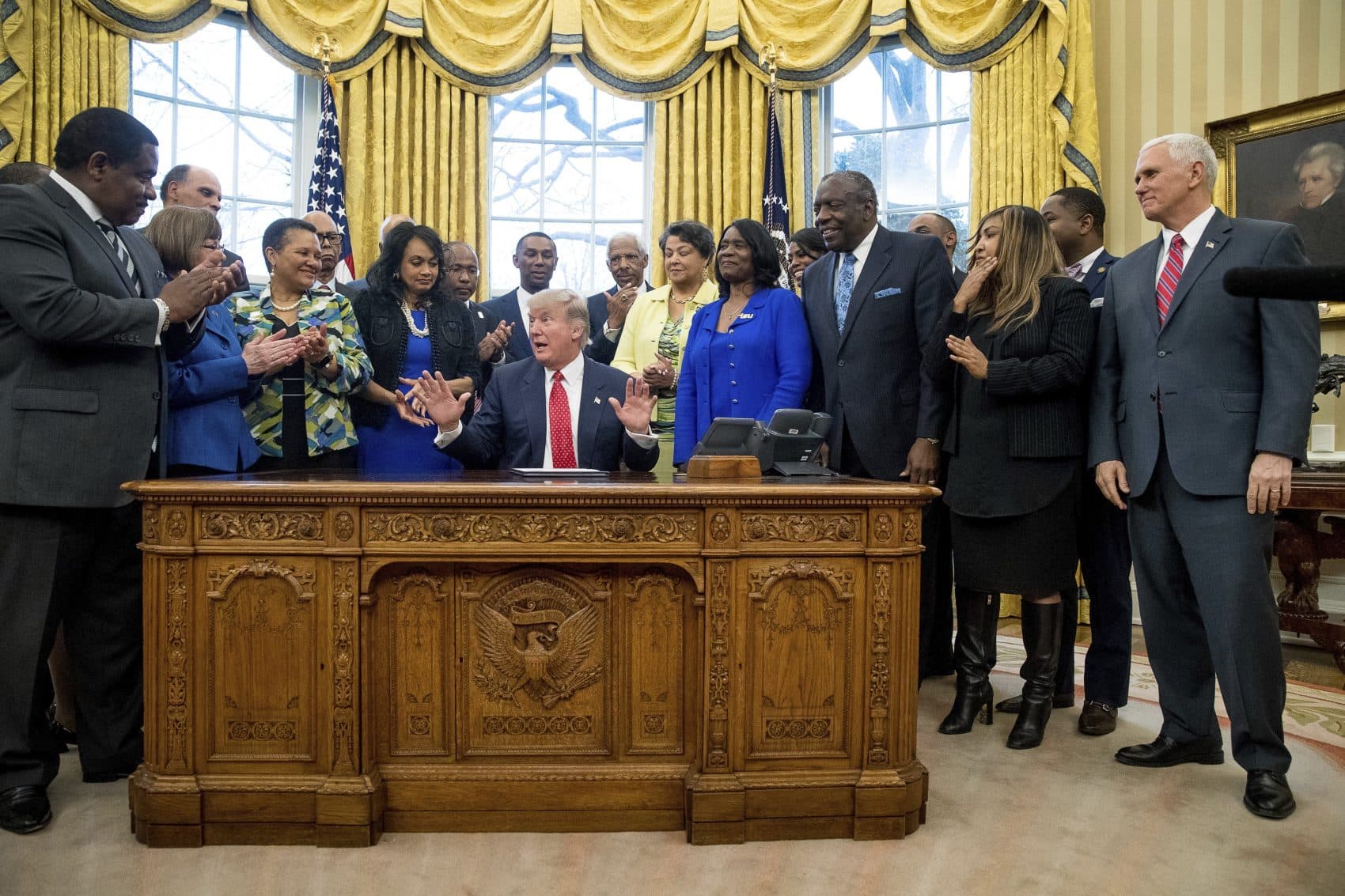
Professors and administrators say the schools aren't immune to the current attacks and funding cuts from the White House on higher ed.
“These are university-wide issues,” Barlow said. “They impact jobs, and they impact the type of research we can do to forward our understanding of Black people and people of color.”
The ongoing cuts could make some graduate programs at HBCUs less competitive and could impact their national standing, she said.
“We’re already sorely underfunded,” she said. “When you go into a doctoral program, the idea is that your tuition is covered, your health care is covered and you receive a stipend. So if we’re already not giving our doctoral students as much money, we’re even less competitive in the market for them.”
Still, a recent HBCU college tour hosted by the Boys & Girls Clubs of Boston drew 31 members from several neighborhoods including Roxbury, Blue Hills and South Boston. Traveling by bus, the students hit multiple states, visiting schools such as Fisk University in Nashville, and Morehouse and Spelman colleges in Atlanta.
Ashton Jacquees, a junior at Cathedral High School, said he was impressed by what he saw outside the confines of Boston.
“My tour guide held himself so well. I don’t see a lot of that here” in Boston, Jacquees said. “Being around that inspired me to become a better person. I feel like Morehouse — or just an HBCU in general — would help.”
Renée Johnson of Dearborn STEM Academy took the tour last year. She said she was first introduced to HBCUs by a middle school teacher who encouraged her to dream big.
“I feel like going to an HBCU, I’ll be able to gain more history and more experience,” Johnson said. “I’ve never been able to learn much about history beyond Martin Luther King Jr. and Rosa Parks.”
Johnson said she feels it’s important to study in a place that's going to challenge her.
“The only way I’ll be able to grow is by going there," she said. "I feel like my dreams are farther than I can see, and Boston has a wall where my future and my dreams won’t be able to go past.”
Correction: This story has been updated to reflect that Chase Bowdre was not among the students who attended college tours with the Boys & Girls Clubs of Boston. We regret the error.
This article was originally published on May 14, 2025.
This segment aired on May 14, 2025.