Support WBUR
Field Guide to Boston
The Q is a journal to hold in your hands
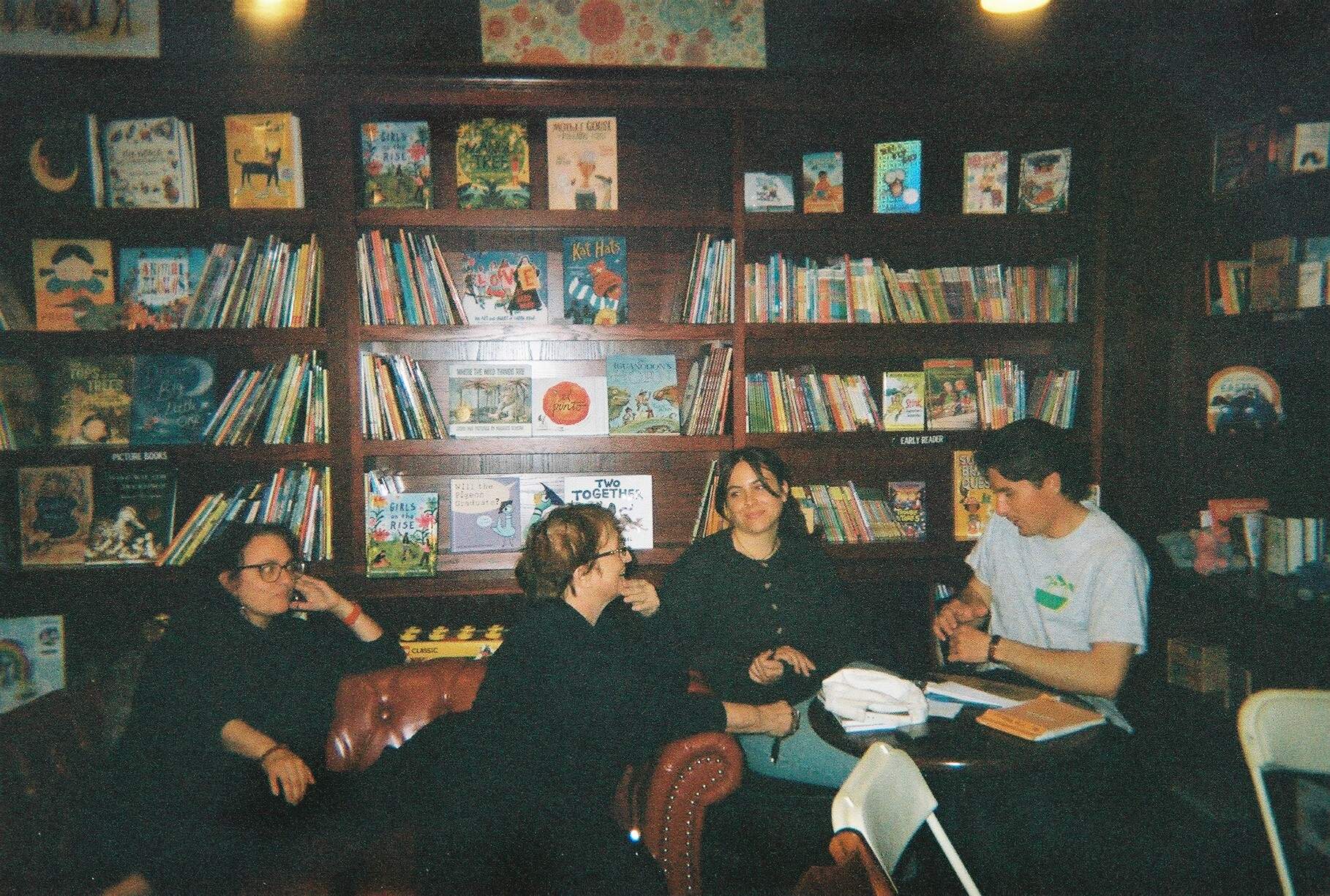
On a recent spring evening, guests gathered at the Blue Bunny Cafe in Dedham agreed: there’s something different about reading a physical book.
Jane Marsching, an artist and former book editor, was emphatic about the benefits of holding a book in her hands.
“Your memory is facial. Your memory is embodied in your body. When I read a book on Kindle, I forget it really quickly, but when I read an actual book, I absorb it in totally different ways,” she said.
Scientific studies support Marsching's claim that reading print is better for comprehension than reading on a screen.
James Parr’s love of print is perhaps less practical. “I have books all over my house. They look nice on the shelves. And it's just comforting,” the writer and former Massachusetts elementary school teacher said.
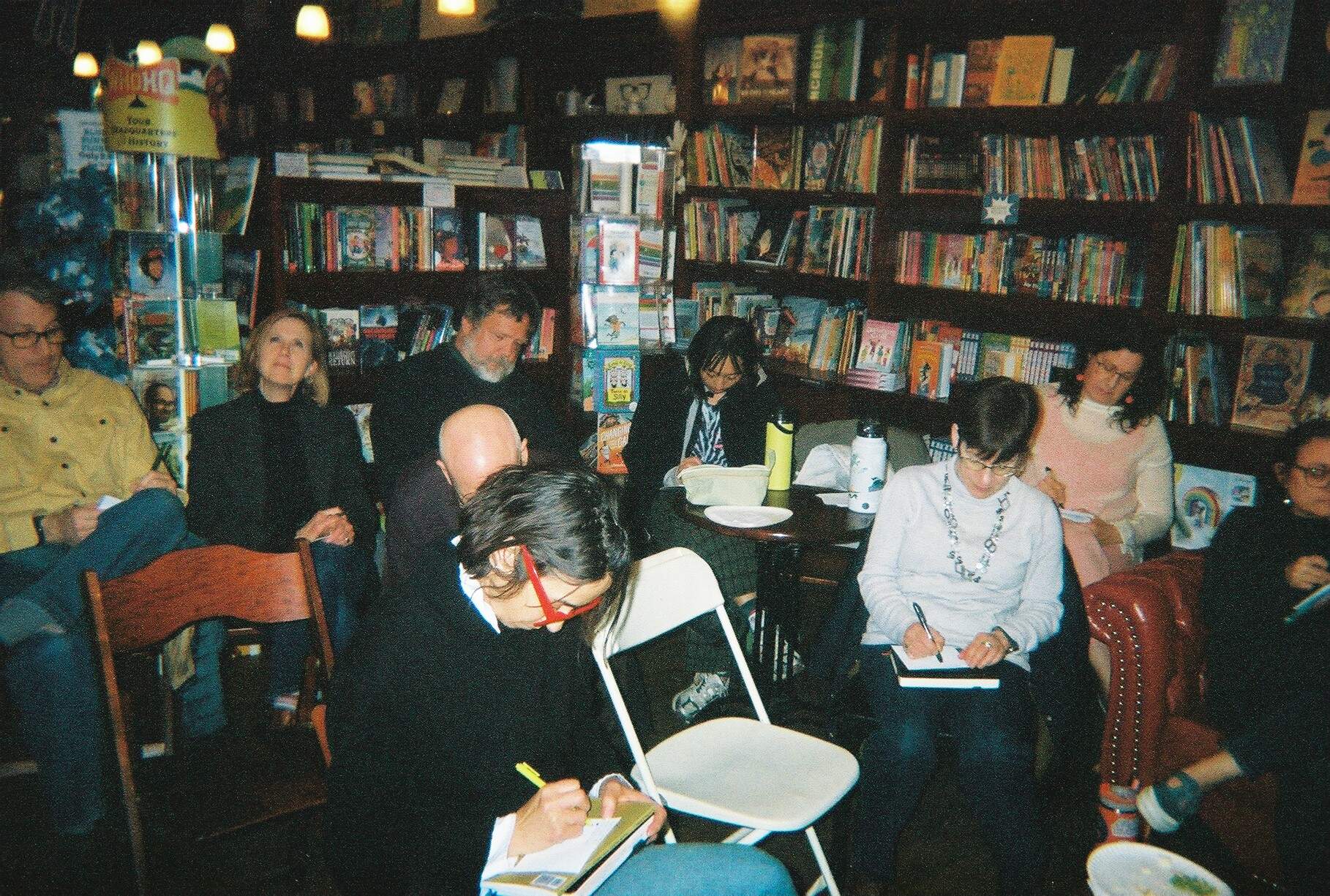
But the guests at the Blue Bunny were a biased group for a poll comparing print and digital publications. Marsching, Parr and twenty or so others were there celebrating the latest edition of the Quinobequin Review, or the Q: a local literary journal available only in print. The Q is made up of essays, poetry, recipes and art. The mission of the Q is to capture what it’s like to live in Greater Boston. The journal is named after the Indigenous name for the Charles River, the Quinobequin which means meandering.
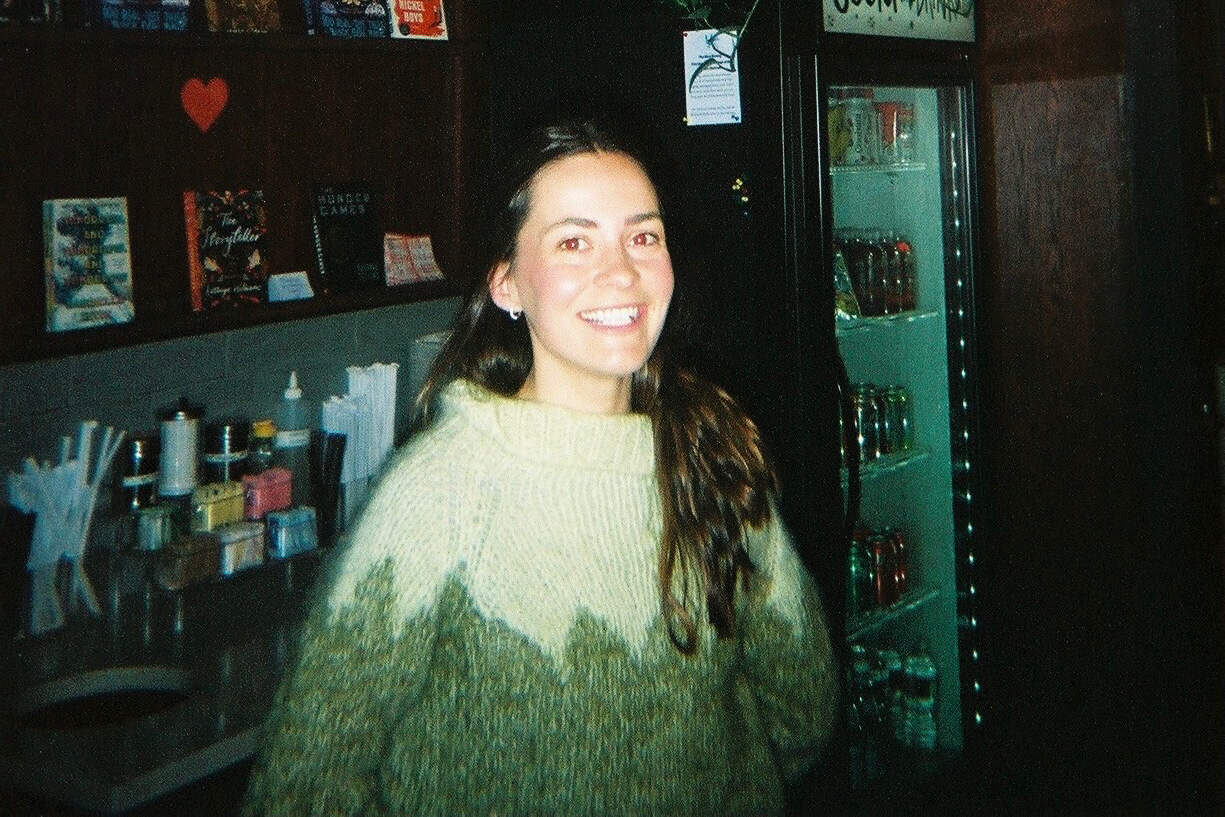
Abbey Cahill, the journal's founder and managing editor, organizes the launch events. She calls the gatherings “neighborhood salons” inspired by 18th century literary salons where writers got together to discuss literature and philosophy.
At the Blue Bunny, contributors read excerpts from their pieces in the Q. Marsching read from her recipe for walnut ink which she uses to paint and make prints. And Parr read from his history of the Dedham forest.
“The only town forest in the country that is found within the median strip of a major highway,” Parr read. After each reading Cahill offered a conversational prompt and the group reflected with their neighbors.
Cahill started the Q after working in environmental consulting. She said she was thinking about how to encourage people to take better care of their landscapes. “And the best way that you can care for and love where you live is by really getting to know it.”
The most recent issue is the Q’s first themed edition. The theme, “In the park,” was inspired by Fredrick Law Olmsted’s writing that “parks are a self-preserving instinct of civilization” and a “place where the human heart can soar.”
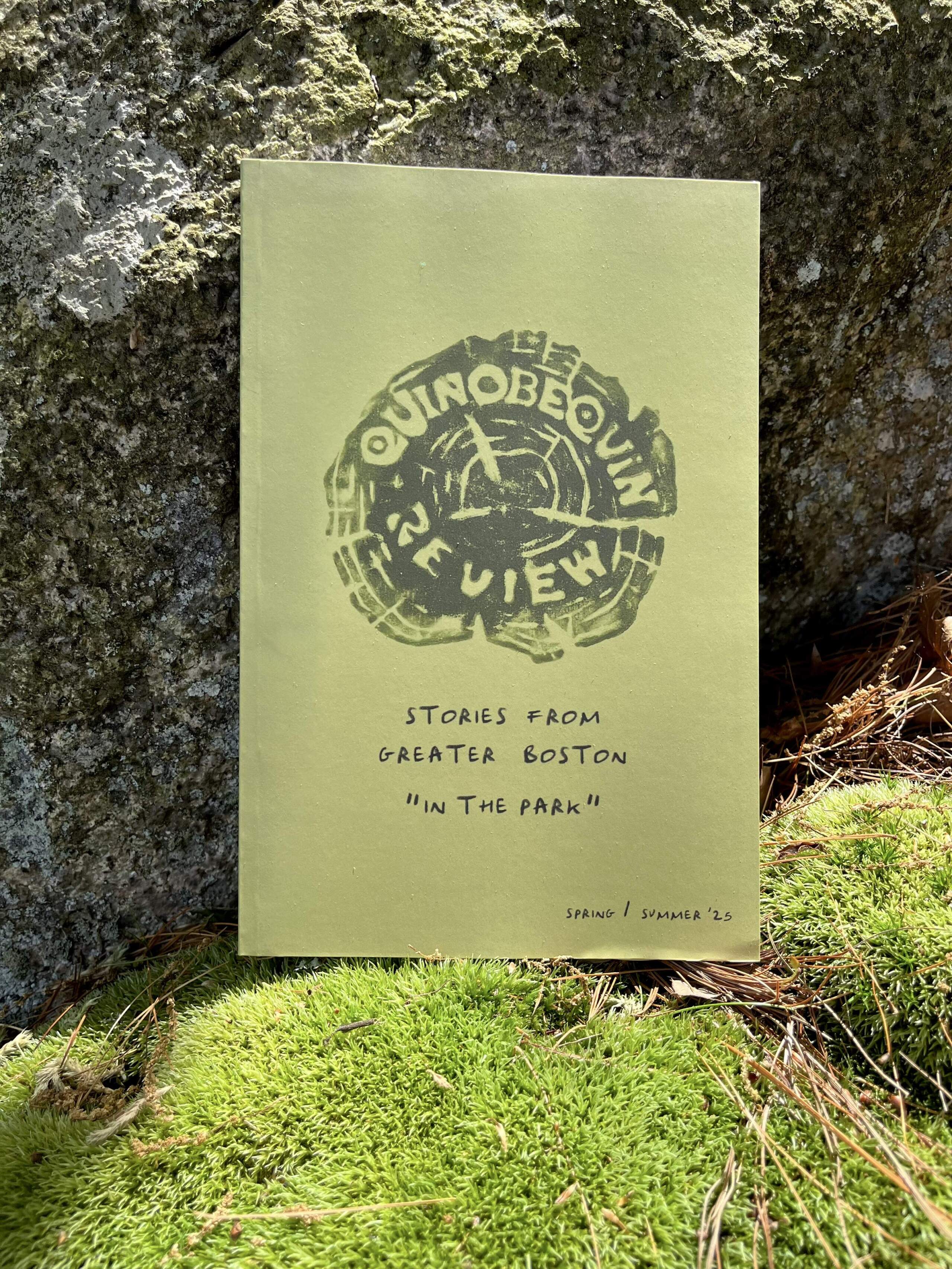
“He views them as this real social and cultural necessity, especially in a city where…you need an avenue to slow down and to escape” Cahill explained.
In the editor's note, Cahill expounds on her love of parks. “A park does not care about looming work deadlines or credit card debt or existential anxieties. A park is purely there for you to enjoy, so come as you are,” she wrote.
Olmsted’s work sparked the issue, but as Cahill started reporting, the theme became much more timely. The Trump administration slashed federal spending and targeted climate initiatives. Last month, Massachusetts lost $90 million in FEMA grants, including money for flood prevention projects at Tenean Beach in Dorchester and Moakley Park in South Boston.
“These cuts are really affecting us close to home, and we wanted to celebrate what makes green spaces so important,” said Cahill.
Guests at the Blue Bunny echoed Cahill’s call to protect local parks. Marsching said public parks are necessary for biodiversity, for shade, “for drawing up toxins from the soil…for public health, but also we just need them to get away from the screen. Right? And to get out and to think and imagine and see.”
Cahill agrees print and public parks are complementary. “Both are about grounding and being where your feet are. When you're holding something that's print only, you're there with it and it's a tactile, tangible, really embodied experience, and so is getting outside and being where you are,” said Cahill.
Cahill said finding a good print magazine, like the Q, is a discovery, “Because it's less accessible, because it's something that you have to stumble across or seek out, it feels a little bit like a treasure.”
Issues of the Q are available for order here. Submissions are now open for Issue 6: Desire Lines. Submit your work by July 1, 2025.
Editor's note: An earlier version of this article misspelled Jane Marsching's last name. We regret the error.