Support WBUR
Mass. food banks brace for double hit of federal food cuts, benefit changes
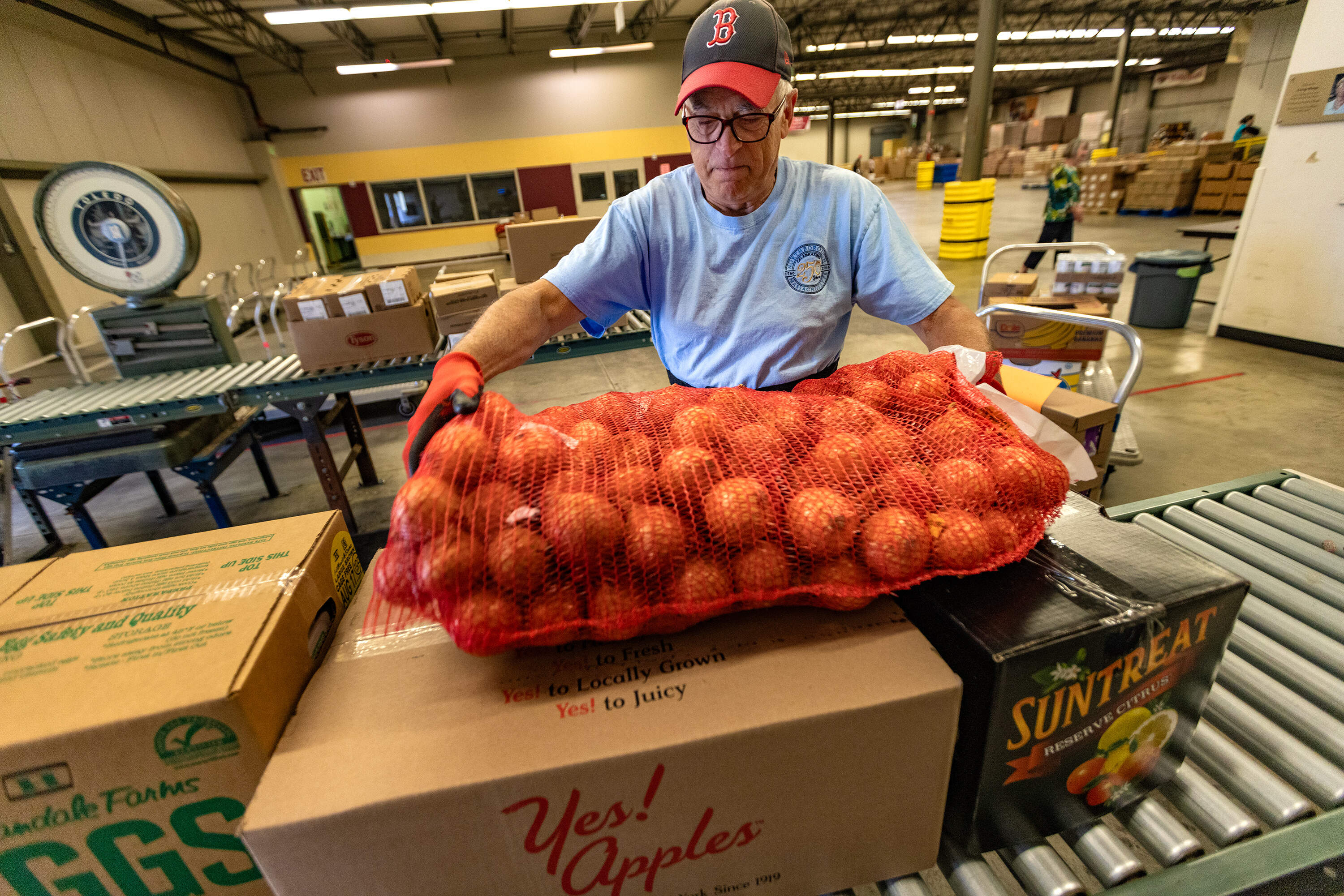
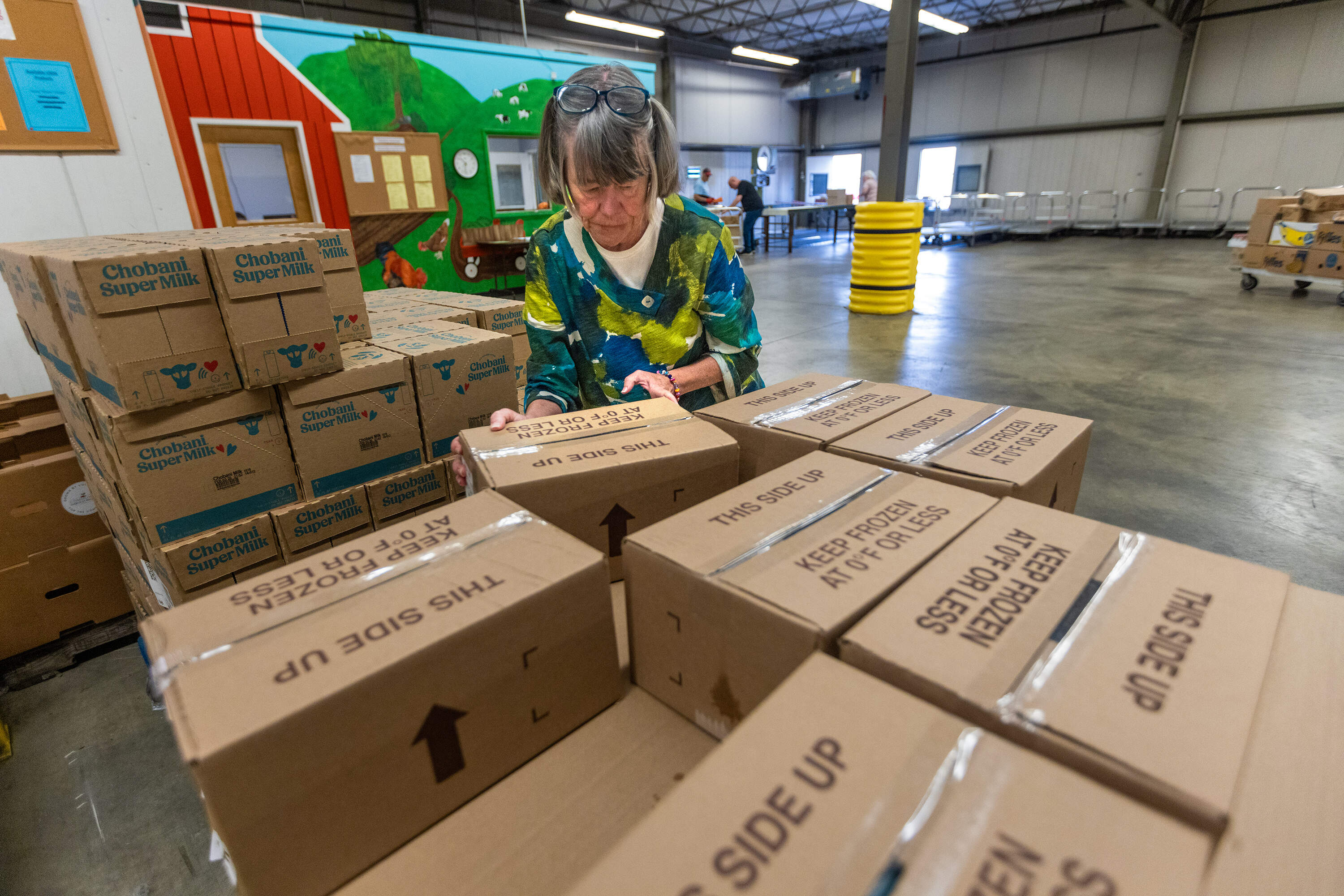
At the Worcester County Food Bank, pallets of food wrapped in plastic line the walls of its main warehouse in Shrewsbury. Half of that food used to be sourced from the federal government; now just a fraction is.
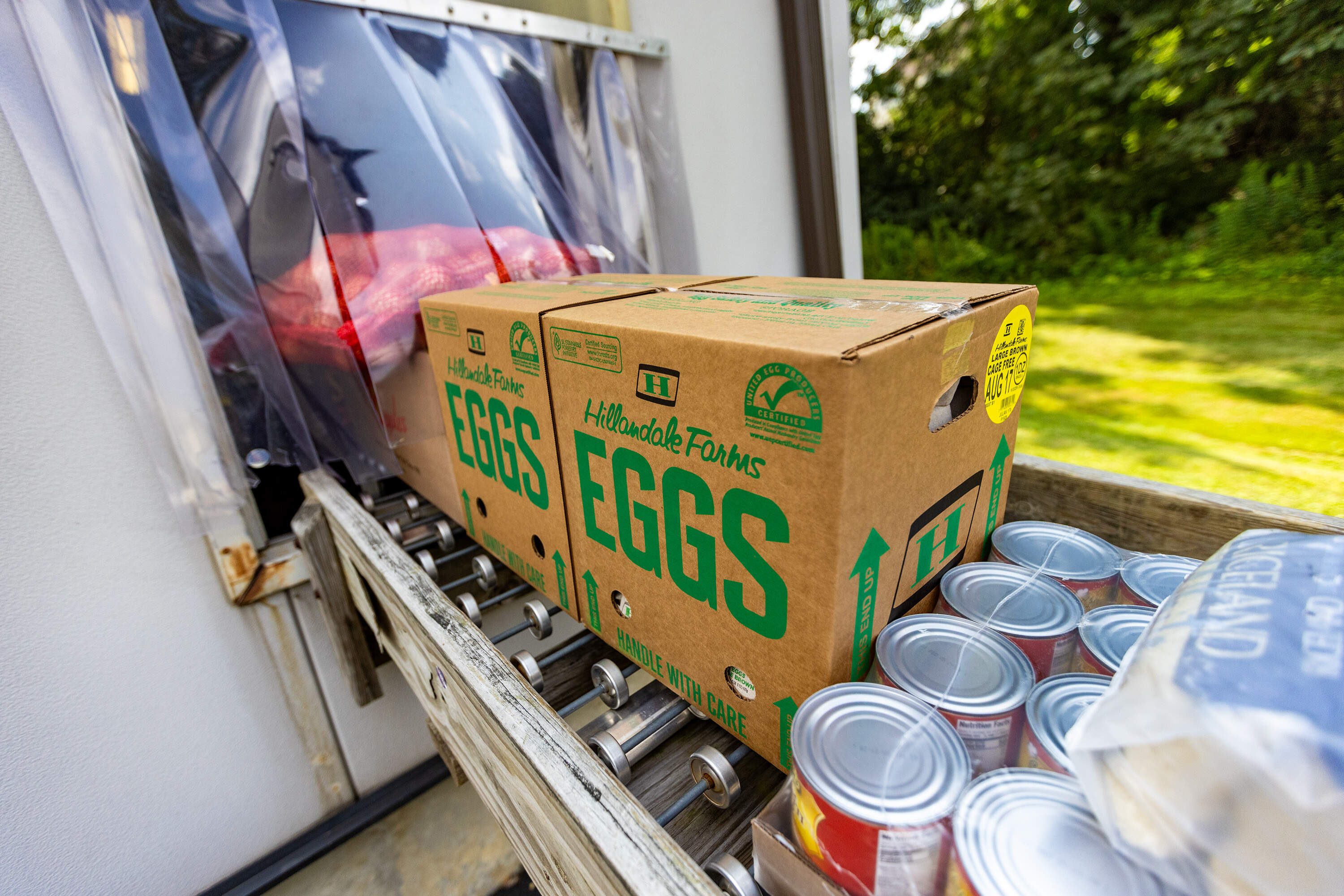
Jean McMurray, who leads the Worcester County Food Bank, said the U.S. Department of Agriculture recently cancelled thousands of dollars in food shipments to their food bank. They include items like fresh milk, cheese, meat, and eggs.
To make up the loss, McMurray and her staff dug into their reserves to buy food. They got it done, but McMurray knows that it will be harder to do next time. And it’s not clear what future federal government shipments might look like.
“If this were to become a permanent type of situation, our money would run out quickly,” McMurray said.
It’s a real fear shared by the other three regional food banks in Massachusetts, which collectively serve nearly 900,000 people each month.
All of them have been impacted by millions of dollars in federal cuts to food supplies and grant programs this fiscal year. At the same time, the federal government recently implemented more stringent requirements to qualify for food stamps, or what’s known as SNAP, the Supplemental Nutrition Assistance Program.
Food banks and pantries are worried that means having less food at a time when more people are turning to them for relief.
“It’s a very terrible typhoon … that is coming for the states,” said Gina Plata-Nino, deputy director of SNAP with the national non-profit Food Research and Action Center.
More than a million people in Massachusetts are on SNAP. Roughly 175,000 of them could be at risk for losing some or all of their benefits because of the new law, according to data from the Massachusetts Law Reform Institute. The Greater Boston Food Bank estimates the state’s emergency food system would need $98 million per year to make up for the loss. At the same time, the system could see as much as a 50% increase in demand for food banks and pantries.
“It will put a lot more pressure on the emergency feeding system in Massachusetts,” said Juli Stelmaszyk, Director of the Division of Food Security with the Massachusetts Department of Agricultural Resources.
The law requires more people to work in order to receive food benefits. It also makes states pay a higher share for SNAP than they’re currently responsible for. MLRI estimates these changes could put Massachusetts on the hook for over $300 million dollars per year starting as early as the fall of 2027.
Vicky Negus, a senior economic justice advocate specializing in SNAP at MLRI, says these changes will create more bureaucratic hurdles for those who get SNAP and make it more difficult for the state to effectively administer the program. Both changes could have big implications for residents.
“ The state is going to cut people off who should not get cut off,” Negus said.
The Department of Transitional Assistance administers the SNAP program in Massachusetts. On July 10, DTA posted a message on their website that said they’re waiting for more information from the federal government before telling SNAP recipients of any changes to their benefits.
Data from the Greater Boston Food Bank shows the majority of people who use SNAP in the state need more food than their benefits can buy. Debbie Callery, head of the Merrimack Valley Food Bank, said food banks will have to absorb that need when benefits are cut.
“They're going to be relying on food pantries, which means the food pantries are going to need more food, which means we are going to have to find a way to provide more food,” Callery said.
And this could be a challenge if there’s less food and federal funding. Data shows that Massachusetts is on track to receive less than half of the amount of federal food this fiscal year than in the previous ones
“We are not in a position to be a response for insufficient government response at the state or the federal level,” Worcester Food Bank’s McMurray said.
There is some potential relief. Gov. Maura Healey has created an Anti-Hunger Task Force that will advise her on how to mitigate the impacts to SNAP and other food assistance programs. The creation comes as she signed a budget that gives more money to the state’s emergency food system. But it still doesn’t fill the gap from federal cuts.
Callery, with the Merrimack Valley Food Bank, said she’s worried about what future demand will look like and what federal and state funding will be available to serve that demand. She said her industry will have to depend more on outside help.
“ We're going to look to our donors a lot in the next year or two,” Callery said.
In Worcester, McMurray and her staff are contingency planning for potentially more federal cuts in the future. She's worried about what comes next and whether food banks like hers can withstand the pressure. She’s optimistic they’ll survive. But not without a lot of stress.
“I think it will be the most serious test,” McMurray said.