Support WBUR
Review
Two new novels offer page-turning summer escapes
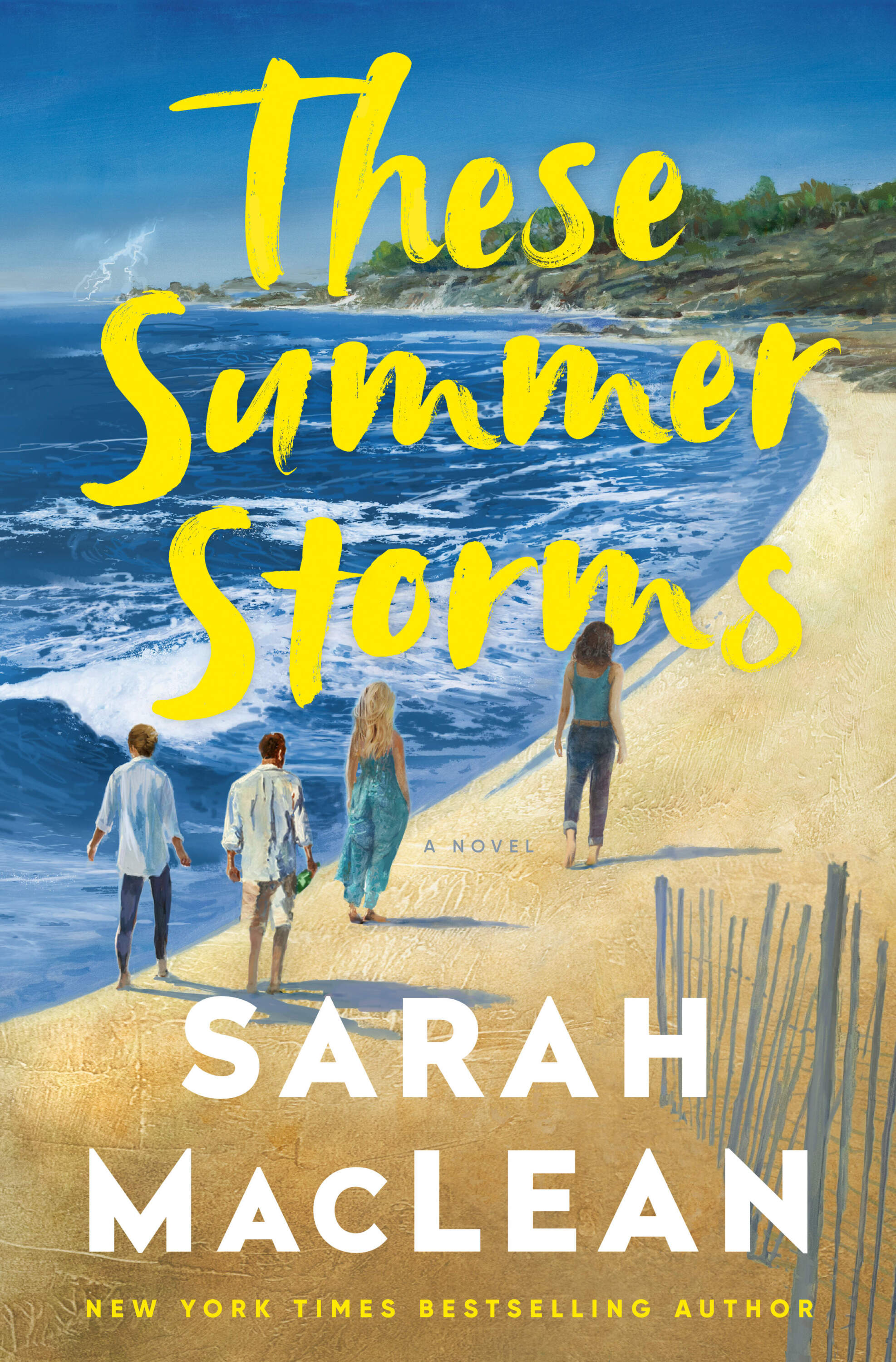
If you’re looking for some page-turning escape novels to add to your beach bag, here are two worthy literary diversions: Sarah MacLean’s sophisticated romance “These Summer Storms,” and Megan Miranda’s intricate psychological thriller “You Belong Here.”
“These Summer Storms” serves up a smart smoldering romance wrapped in a high-stakes family drama — all on a lush private-island estate off the Rhode Island coast. There are six people in the Storm family, but a primary focus of this story is a fraught father-daughter relationship between 33-year-old Alice Storm and her father Franklin.
Before his untimely death at 70, Franklin built Storm Technology, one of the most successful companies on the planet. Like a fictional Steve Jobs, he almost single-handedly changed the world of personal tech.
Alice and her three siblings grew up amid great wealth, dividing their time between a Park Avenue penthouse, a London rowhouse and a Wyoming ranch. But it is the sprawling estate on Storm Island that has always meant the most to the family, their one home never open to celebrities or power brokers.
After a long absence — an exile, really — it is to Storm Island that Alice is headed to reunite with her mother and siblings to mourn and celebrate Franklin’s life.
Five years earlier, Alice had committed the ultimate family betrayal: she’d made a very public statement about a corporate matter that her father was determined to resolve privately. He immediately and completely cut Alice from the family.
Now her larger-than-life father surprisingly, suddenly died. Alice takes the train from her New York home to Wickford, Rhode Island, where an evening thunderstorm prevents her from crossing the bay to her family’s island.
It seems the handsome stranger with whom she briefly chatted with on the train is also stranded. There’s undeniable attraction and some fine romance-novel atmospherics: two anonymous people thrown together on a rainswept night in a small seaside town.
But sure enough, on Storm Island the next day Alice again meets the stranger, this time officially. He is Jack Dean, her father’s loyal managing director. Cue Alice’s anger at Jack’s deception; he had known who she was all along.
Jack has traveled to Storm Island to carry out Franklin’s last wishes. An extraordinarily competitive man in life, in death, Franklin has devised one more way to wield control. To gain their inheritance, the family must stay on the island for one week and each complete a unique task that Franklin has created. It’s all or nothing; if even one person fails to complete their quest, they all lose their fortune.
As much as she has missed her family, and as uncomfortable as her welcome back initially is, Alice feels stronger for her time away. Freed of the obligation to work for Storm Technology, she can focus on her true passion, her painting, no longer needing to relegate it to a hobby.
MacLean, who grew up in Rhode Island, went to Smith College and graduate school at Harvard. She is the bestselling author of 16 romance novels and runs the podcast “Fated Mates: Romance Books for Novel People.”
As noted on her website, MacLean supports the romance genre as “a feminist text and a cultural bellwether.” The character of Alice Storm, in her willingness to bear the consequences of decisions she deems right, reflects this philosophy.
“These Summer Storms” is infused with some nice local details. MacLean’s descriptions can place you right on the water on a breezy, sunny day with the expanse of Narragansett Bay before you, or inside the mix of luxury and casual comfort that makes up the huge Storm Island family home. The kitchen might be grand, but the bags of coffee in the pantry are unpretentious: Franklin Storm was “born a kid in Quincy … and spent a lifetime loyal to Dunkin’ Donuts.”
The arguments that kick off the week feel authentic. With a lifelong catalog of common experiences and nurtured grudges, Alice and her brother and two sisters know exactly where to pierce each other’s armor. Yet as the days pass, accusations and venting gradually give way to deeper conversations. The dialogue feels honest, reflecting both wounds and warmth among the siblings. MacLean seamlessly employs these exchanges to add layers of depth to each character.
With Jack at the house all week, monitoring the progress of Franklin’s last directive, his presence rattles Alice, as hers does with him. Jack and Alice both have reasons to be wary of trusting someone new for love. Along with some satisfyingly surprising twists on the business and family fronts, “These Summer Storms” delivers the delicious ache of a will-they-won’t-they romance, against the lavish backdrop of a fairy tale island.
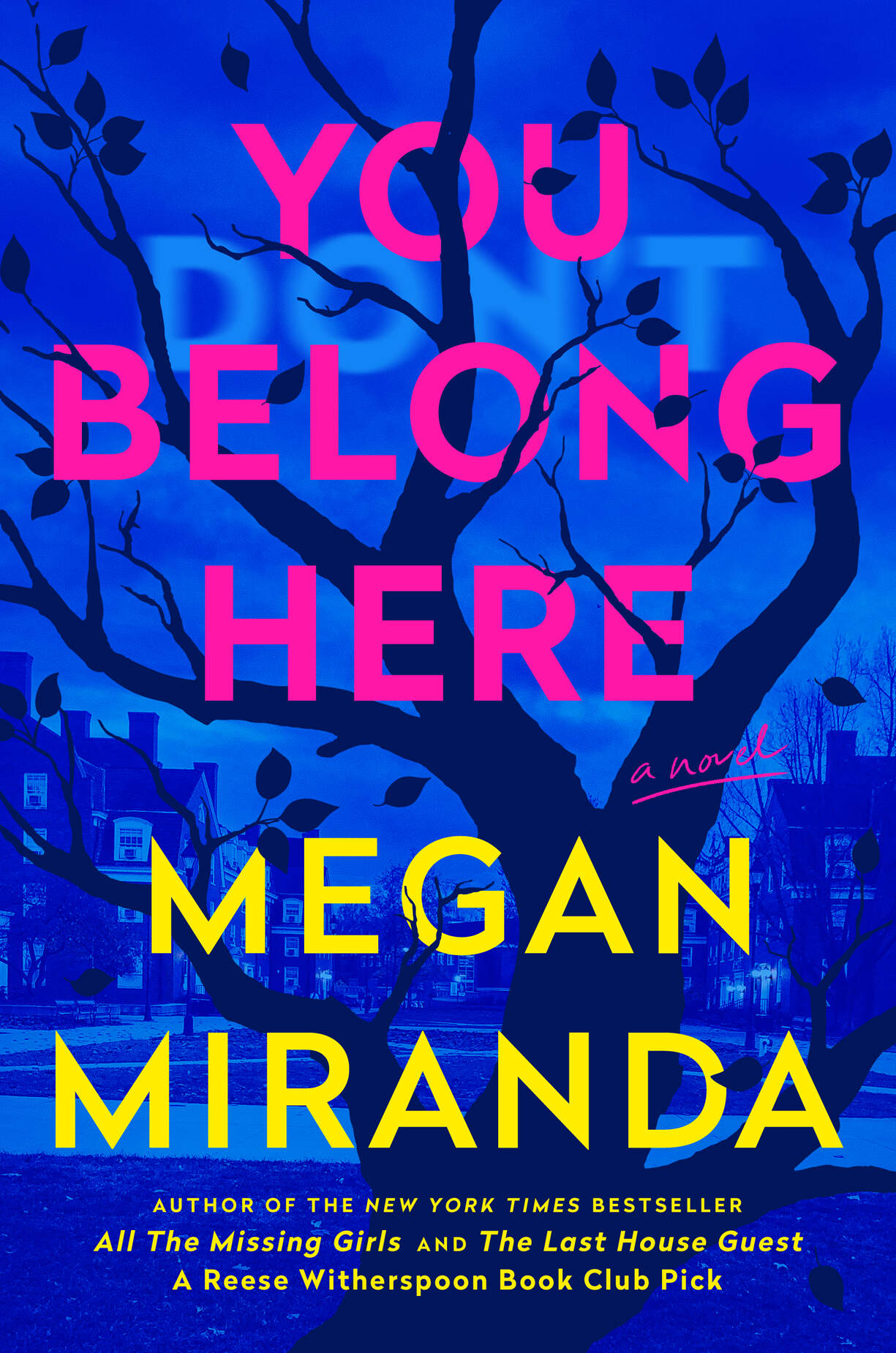
In Megan Miranda’s psychological thriller “You Belong Here,” single mom Beckett Bowery is unexpectedly pulled back to her Virginia hometown of Wyatt Valley. The town also contains her alma mater, Wyatt College, which she thought was firmly in her past. But a tragic event in her senior year has a longer reach than she could have imagined.
Miranda, the author of eight novels and six young adult novels, graduated from MIT with a degree in biology. Two of her previous novels, “All the Missing Girls” and “The Last House Guest,” were New York Times bestsellers.
In a 2017 interview with Jay London of MIT News, Miranda noted how her careers in biotech and writing have some similarities. “Each book draft is an experiment where I can assess what’s working and what’s not,” she says, “You start with a blank slate; then each step gets you closer to a solution.”
Her latest, “You Belong Here,” is a well put-together puzzle.
Beckett’s life is split into Before and After. Before, she loved attending the college where both her parents were professors. Before, she loved going everywhere with her roommate and close friend Adalyn. Beckett found Adalyn’s flamboyant and take-no-guff personality compelling, but others, including Beckett’s mother, dismissed Adalyn as a spoiled rich girl and narcissist.
The After began with a tragic event during her senior year. During an annual fall event known as the Howling — a huge chase game the first night the mountain winds blow through to signal a change of season — a building at the edge of the college burned down and two young men trapped underneath in a campus tunnel perished. That same night, Adalyn disappeared.
To her surprise, Beckett’s daughter Delilah is keen to attend Wyatt College. Beckett would have discouraged Delilah from applying if she had known. It’s a first indication that Beckett had hoped, with near magical thinking, that never mentioning her alma mater would mean this part of her past would cease to exist.
Throughout “You Belong Here,” Miranda’s taut storytelling underscores how the tiniest turn of fate can transform a youthful misstep into a life-warping calamity or a danger-averted close call — a comment in a bar answered or ignored, a decision to stay at an event or leave early.
For Beckett, the town now seems to radiate a vaguely sinister vibe. Staying alone at her parents’ house while they are traveling, Beckett sees evidence, little disturbances, that someone else has been living there. She starts receiving emails with messages like “Welcome Home” with an aerial view of campus. A ghost writer by profession, she receives an unsigned pitch to write a book about a true crime, “unsolved, decades old, in a small town.”
Then, during this season’s Howling, another tragedy occurs, prompting police and townspeople to again turn their gaze toward Beckett.
In “You Belong Here,” Miranda once again shows her talent for creating individuals whose flaws are nearly magnetic in their power to draw you in. Beckett is likable and frustrating and you want to know more.
Although the protagonists and the storylines of these two novels are entirely different, they do share one quality: Each woman must define anew what it means to come home; not just to a place, but to herself.