Support WBUR
What Springfield lost when the feds clawed back a $20 million grant
When viewed as part of the entire federal budget, $20 million doesn't amount to much.
But for residents and leaders in Springfield, once called the asthma capital of the U.S., a $20 million Environmental Protection Agency grant was a big deal. It represented a path toward a cleaner, more livable city.
City officials were about to use the money to remove lead paint, help residents make their homes more energy efficient, renovate a community center so it could be used as a shelter during extreme weather, and several other projects designed to help the working class community.
But now the money for the seemingly noncontroversial projects is gone, clawed back as part of a larger effort by the Trump administration to reduce what it called wasteful spending by the Biden administration.
Springfield's leaders said the loss of federal funding could threaten progress in the city, which still has some of the country's highest asthma rates.
"When you feel like you're making headway to decrease negative health outcomes for people, and then this gets thrown at you, that's very, very frustrating," said Jessica Collins, head of the Public Health Institute of Western Massachusetts.
The city is among hundreds of grantees caught up in a push by federal officials to remove "environmental justice" programs from the government. Trump administration officials said such efforts are discriminatory. These programs, championed by the Biden administration, sought to reverse decades of unequal access to clean air, water and housing, and help low-income and minority communities that face disproportionate pollution and risks from climate change.
As city officials search for ways to win the money back, the people who would have benefitted the most from the planned projects must continue to wait.
Defunded: Making an intersection safer
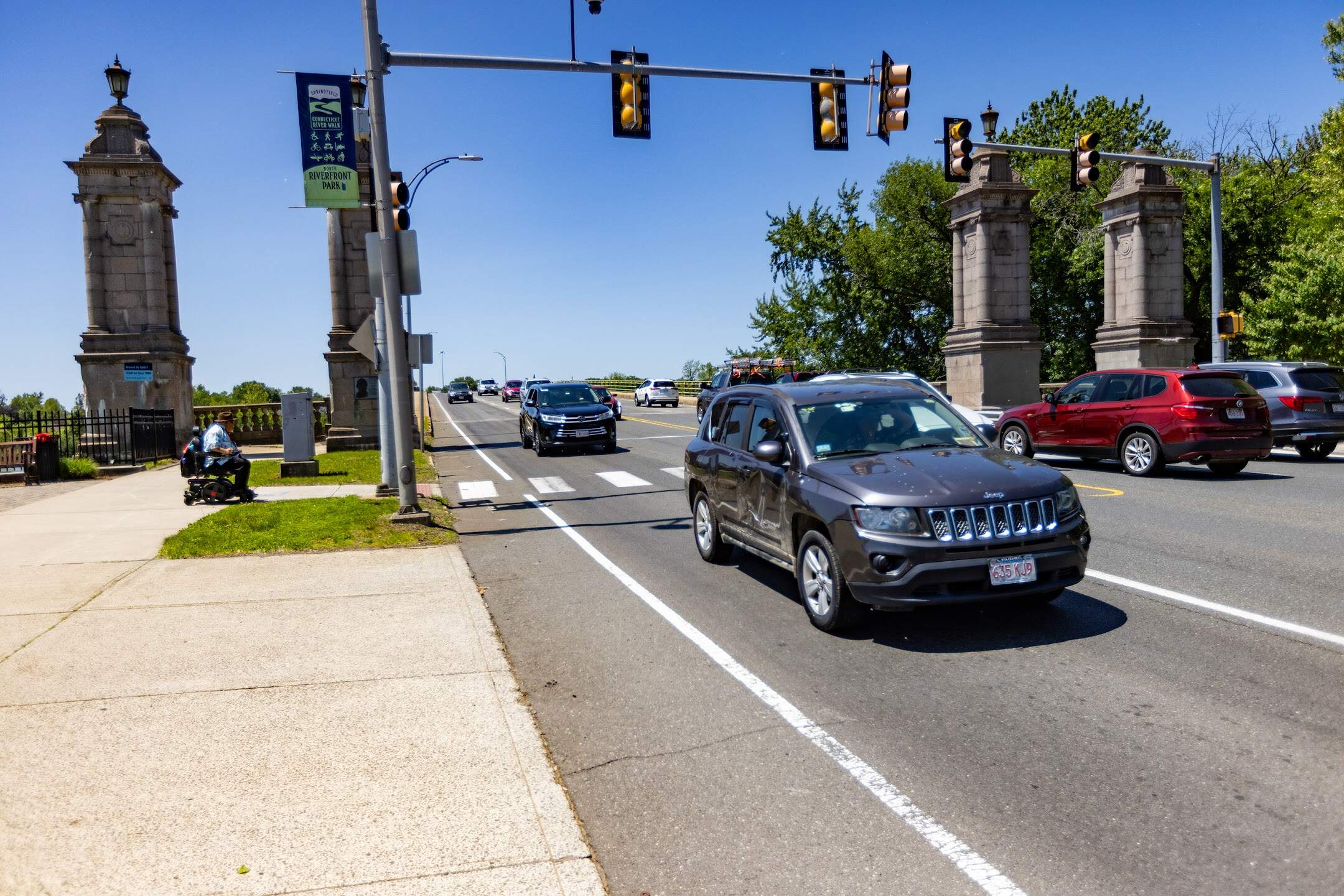
The intersection at the foot of the North End Bridge connects the Brightwood neighborhood with Springfield's downtown. Some of the EPA grant money would have helped the city slow down speeding cars by improving traffic signals and planting more trees.
Tina Quagliato-Sullivan, deputy development officer for the city, said the intersection has been the site of several pedestrian accidents. City officials hoped to make this intersection's air cleaner and the crosswalks safer.
“It’s really viewed as a gateway in and out of the city,” she said.
Quagliato-Sullivan rejects the idea that this spending is a poor use of taxpayer dollars.
“These are the investments residents are asking cities to make, and they’re struggling to understand why this was pulled away,” she said.
City staff and their partner organizations worked on the grant application for about year, she said. All that planning takes time and money.
“ When we're talking about trying to reduce waste and efficiency in government, to then do all of that work and get to a grant agreement, for it to then just be clawed back,” she said, “It’s incredibly wasteful of public time.”
Defunded: Helping residents make their homes healthier
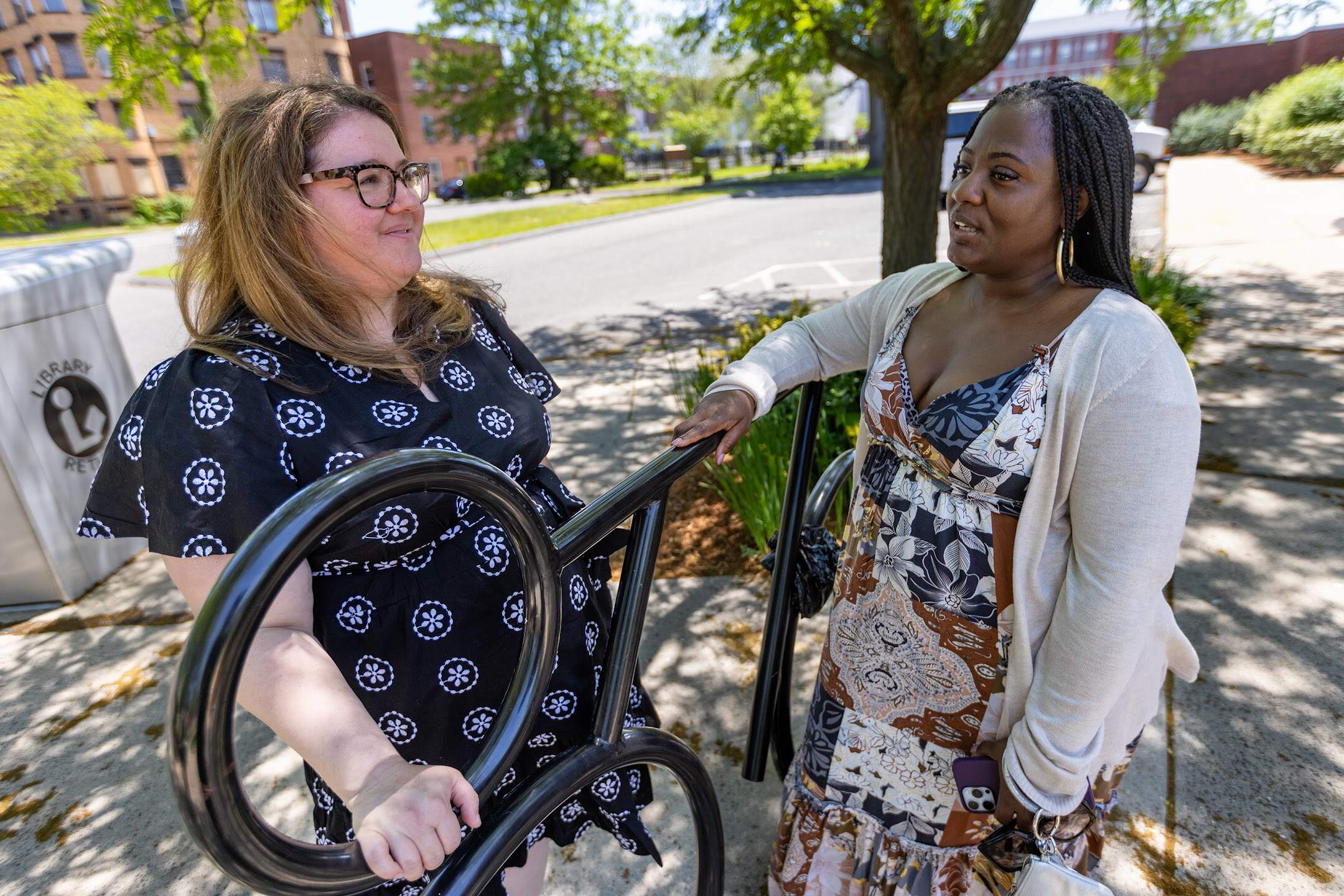
Springfield's grant aimed to improve more than just roadways. City Councilor Tracye Whitfield said she was most excited for a program to help homeowners pay for toxic lead paint removal, upgrade to clean energy appliances, install solar panels and prevent indoor flooding.
“ We really are a low-income community. We're just trying to keep food on the table and the lights on,” Whitfield said. “So to think about even converting to new systems or weatherizing your home, it's a lot to take in. So this program would've really, really helped our residents.”
The residential-specific program was part of a larger city plan to address hazards that are becoming more extreme because of climate change.
In 2011, a deadly tornado ripped through downtown, killing three people, injuring 200 and causing more than $200 million in damage. Two months later, parts of the city saw significant flooding from Hurricane Irene. Then an October Nor'easter dumped more than a foot of snow in Springfield and other Western Massachusetts cities.
Defunded: Upgrading shelter space
Efforts are underway to make public spaces more resilient, too, according to Quagliato-Sullivan.
“ Recovery isn't just building what was there, but building in a way that is more resilient and forward thinking,” she said.
A portion of the environmental justice grant would have upgraded two city buildings, so they could double as extreme weather shelters. One, a field house in the Brightwood neighborhood, serves a low-income community that’s home to many people from Puerto Rico, according to city officials.
The field house is a central destination for residents like Felix Bernudez who described going there as a daily ritual.
“We come here, play dominoes, play pool, we do some cooking sometimes, celebrate birthdays,” he said over the sounds of clattering domino pieces and laughter. “Yeah, it’s good for the old people.”
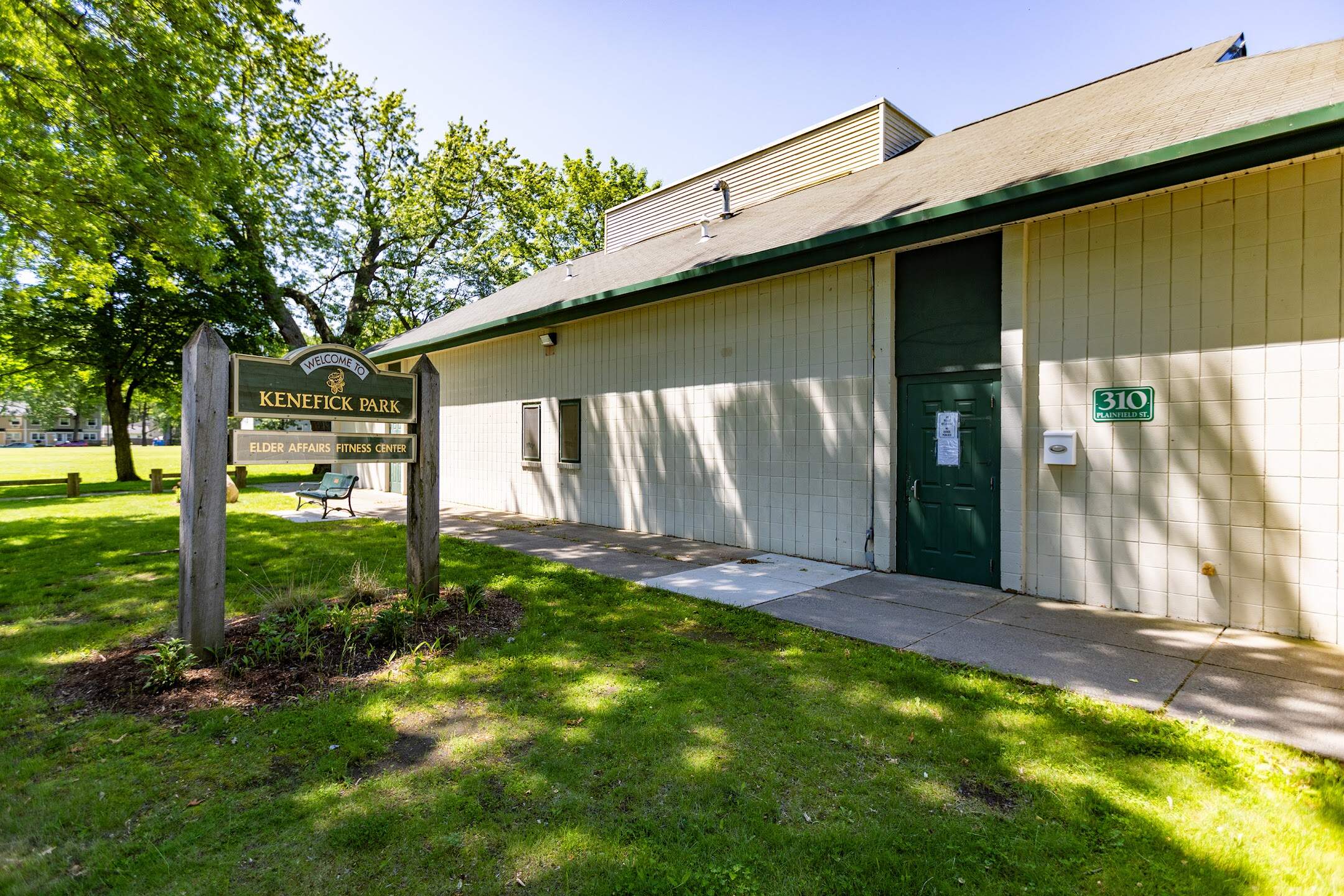

City officials had planned to install geothermal power at the field house with the grant funding. That way, if the electric grid failed during a blizzard, heat wave or severe storm, residents could seek shelter in a familiar spot.
Jose Claudio, a Brightwood resident and the chief operating officer for the New North Citizens’ Council, participated in the grant application process. He said its cancellation will have ripple effects.
“ The city and the residents and us have worked on plans, and just by the signature of a pen, you take it away without even talking to the people,” he said.
Impacts across New England
The claw backs from the Trump administration reach well beyond Springfield. EPA officials have taken steps to cancel nearly 800 environmental justice grants across the country, according to an agency official, whose declaration was filed as part of a lawsuit challenging the cancellations.
The agency told WBUR in a statement it is reviewing all its grant programs and awards to “ensure each is an appropriate use of taxpayer dollars,” and aligns with the Trump administration’s priorities.
An EPA spokesperson called the environmental justice grants part of the Biden-Harris administration’s “radical agenda" of "wasteful" programs focused on diversity, equity and inclusion.
"You take it away without even talking to the people."
Jose Claudio
In New England, the canceled funding includes $50 million for community groups around the region.
Health Resources in Action, the nonprofit selected to distribute the funding, received more than 400 applications, according to Ben Wood, the group's senior director of policy and health. People had requested money for projects such as improving emergency planning, addressing stormwater flooding and reducing pollution from heavy traffic.
From Wood's perspective, it makes sense for the federal government to identify and help the most vulnerable communities — especially with these types of projects.
“ If you cannot characterize differences across populations, you are just not understanding what it is that is happening to people in communities. You can't create solutions that are right-sized to the issue,” he said, adding those differences can include income, race and geography.
María Belén Power, Massachusetts undersecretary of environmental justice and equity, said the state is committed to supporting neighborhoods overburdened by pollution and extreme weather, and will continue to “push for essential funding.”
“The constantly changing disruptions to federal funding have real consequences for our residents’ health and pocketbooks,” she said.
Fighting back
Some groups are taking the Trump administration to court over the canceled grants. They argue the terminations were illegal because the funds had already been approved by Congress, and because the contracts were already signed.
“ The federal government has made a promise to these people,” said Jillian Blanchard, vice president of climate change and environmental justice for Lawyers for Good Government. “ They've taken all these actions in reliance on that promise, this legally binding contract, and now you're just trying to basically take it all back.”
Lawyers for Good Government filed a class action joined by Health Resources in Action and Springfield officials. It aims to get back $3 billion in federal funding for 350 grant recipients under the Environmental and Climate Justice Program.
Blanchard said her organization is working on separate potential legal actions with about 500 groups around the country that lost environmental justice grants. Thirty-six are in Massachusetts, and she expects the number to grow.
“ It shouldn't be the case that innocent Americans have to file lawsuits just to get the federal government to make good on their promises,” Blanchard said.
Some lawsuits are already making their way through the courts, but it could take many months for each one to reach a resolution.
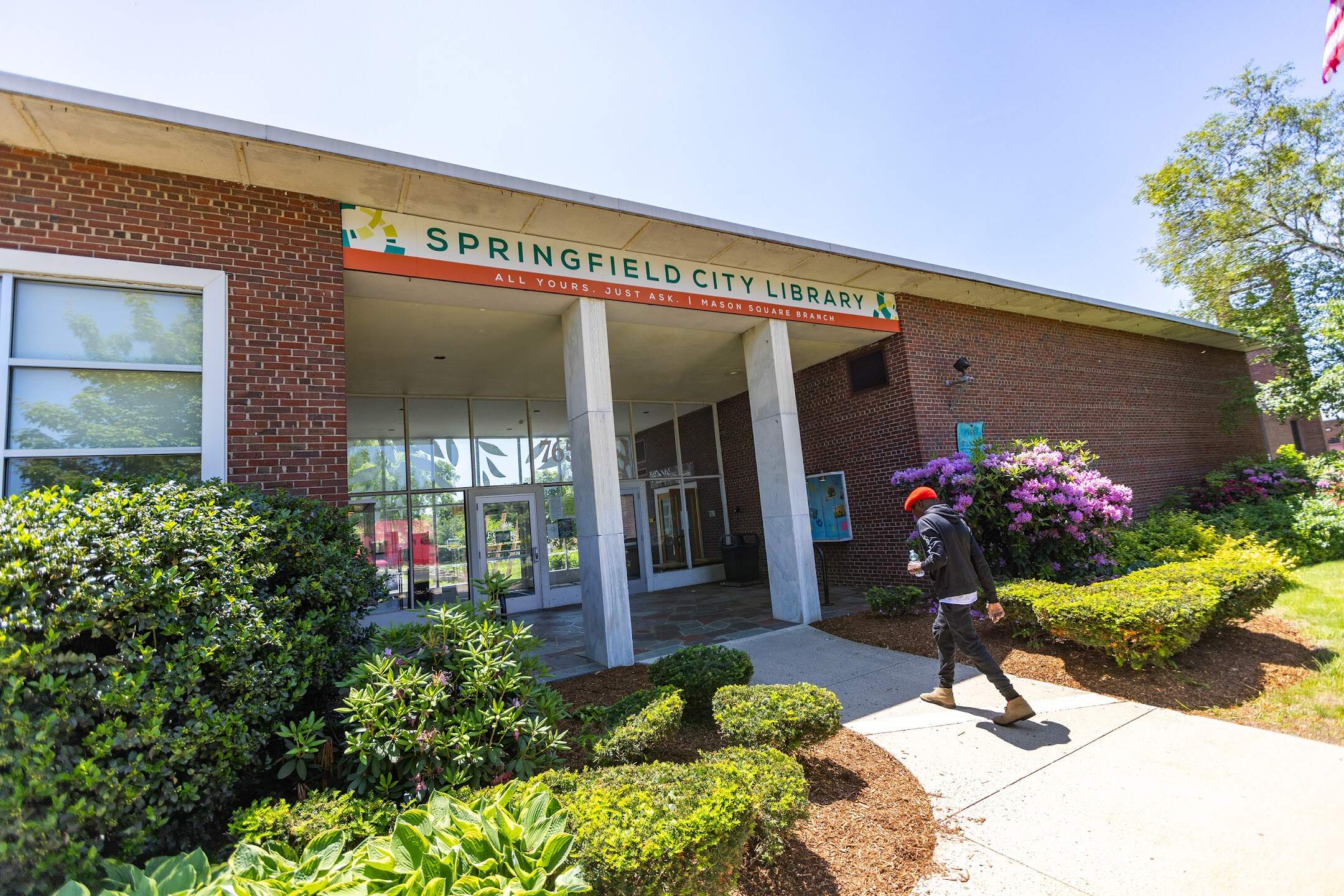
Springfield City Solicitor Steve Buoniconti said he believes the federal government broke the law when it terminated Springfield's $20 million grant because officials never provided an explicit reason for the cancellation. He said the city followed all federal grant rules, and he's unaware of any looming federal financial catastrophe that would justify canceling the grant.
Springfield is prepared to fight back because the stakes are so high, Buoniconti said, pointing to the city's asthma rates and its state designation as a high-risk community for childhood lead poisoning.
“This $20 million grant was going to go a long way to try to address that and combat that. And the city doesn't really have the great resources to be able to do that on its own,” Buoniconti said. “That's why we're going to fight every which way we can to retain the money.”