Support WBUR
Field Guide to Boston
How to view the Perseids meteor shower over Massachusetts this week
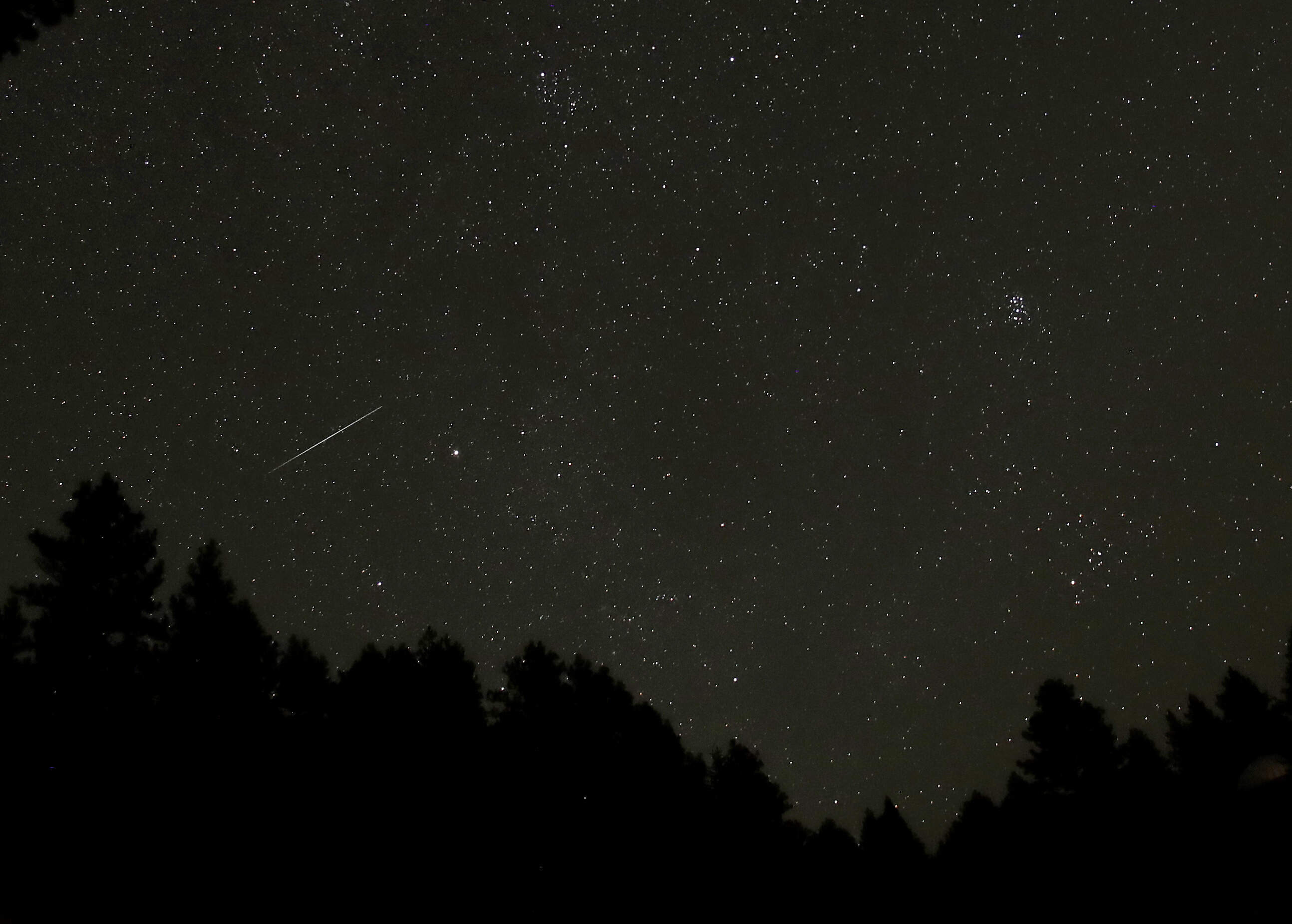
The Perseids meteor shower peaks this week. From the evening of Aug. 12 into the following morning, people in Massachusetts could see dozens of meteors every hour, depending on where they’re watching from.
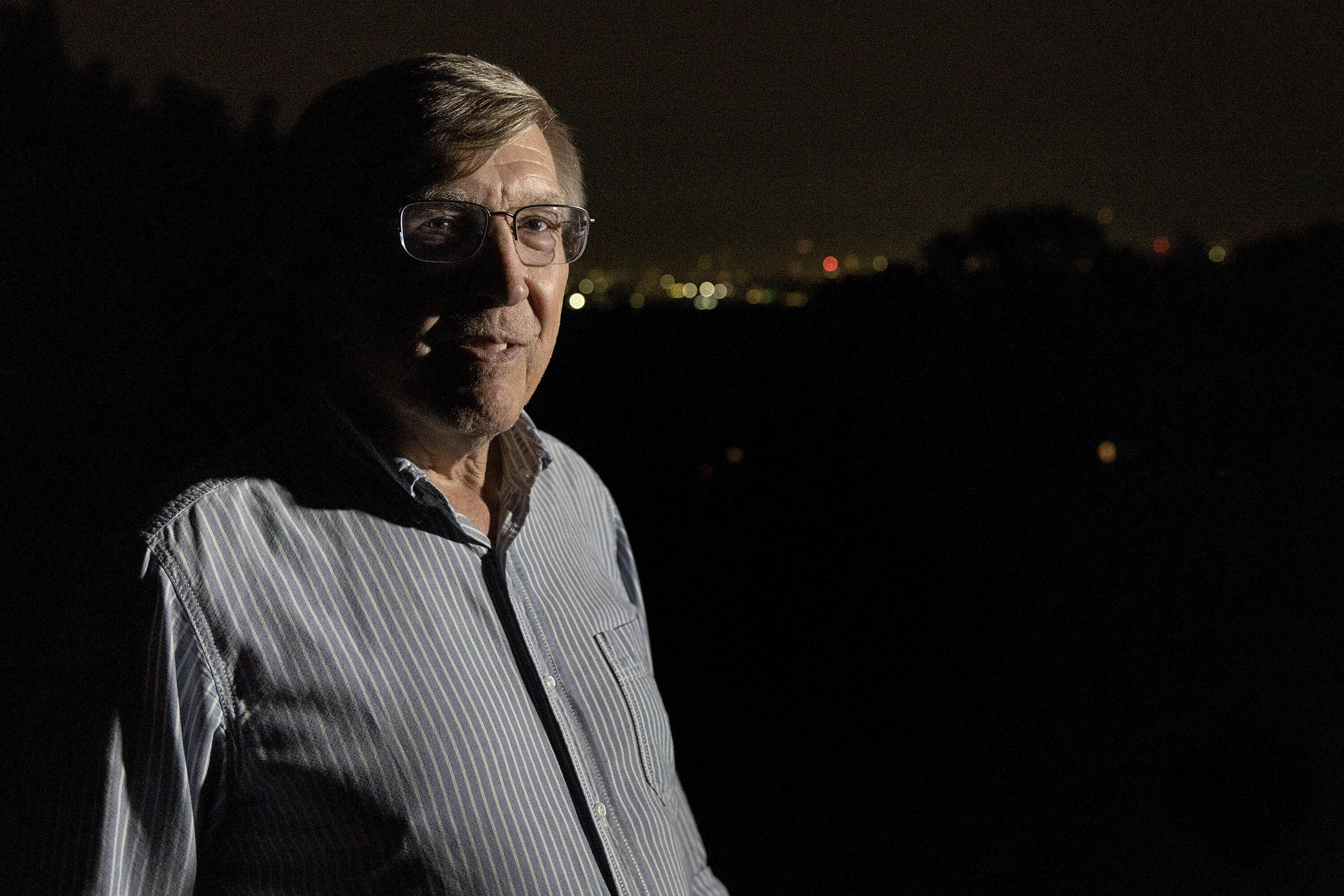
Weather conditions aren't expected to be perfect, but local amateur astronomer and Sky and Telescope’s senior editor Kelly Beatty said that shouldn’t stop anyone from enjoying the show.
What is the Perseids meteor shower?
The annual cosmic phenomenon is named after the constellation Perseus. Beatty said while these meteors can be seen from anywhere in the night sky, they appear as if they originate from the constellation, hence the name. But the meteors are actually debris from a comet called Swift Tuttle, which drops rubble as it orbits the sun.
“Now, the comet's nowhere near the Earth right now. But all that debris is circling around the sun," Beatty said. "And every August we plow through that river of rubble.”
What exactly am I seeing in the sky?
When a meteor shoots across the sky, the light we see is the gas created by the debris hitting the atmosphere at 37 miles per second. The debris itself is actually really small, some the size of a pea.
“If you've ever seen Grape-Nut Cereal, it’s little nuggets of wheat that are brown and they're kind of fractal, irregularly shaped, and they're dense,” Beatty said. “And those are a pretty good analogy for what's probably hitting our atmosphere.”
What about the weather?
The Perseids is actually known as a prolific shower, meaning on a perfectly dark night in good conditions, you could see 1 to 2 meteors per minute at the peak.
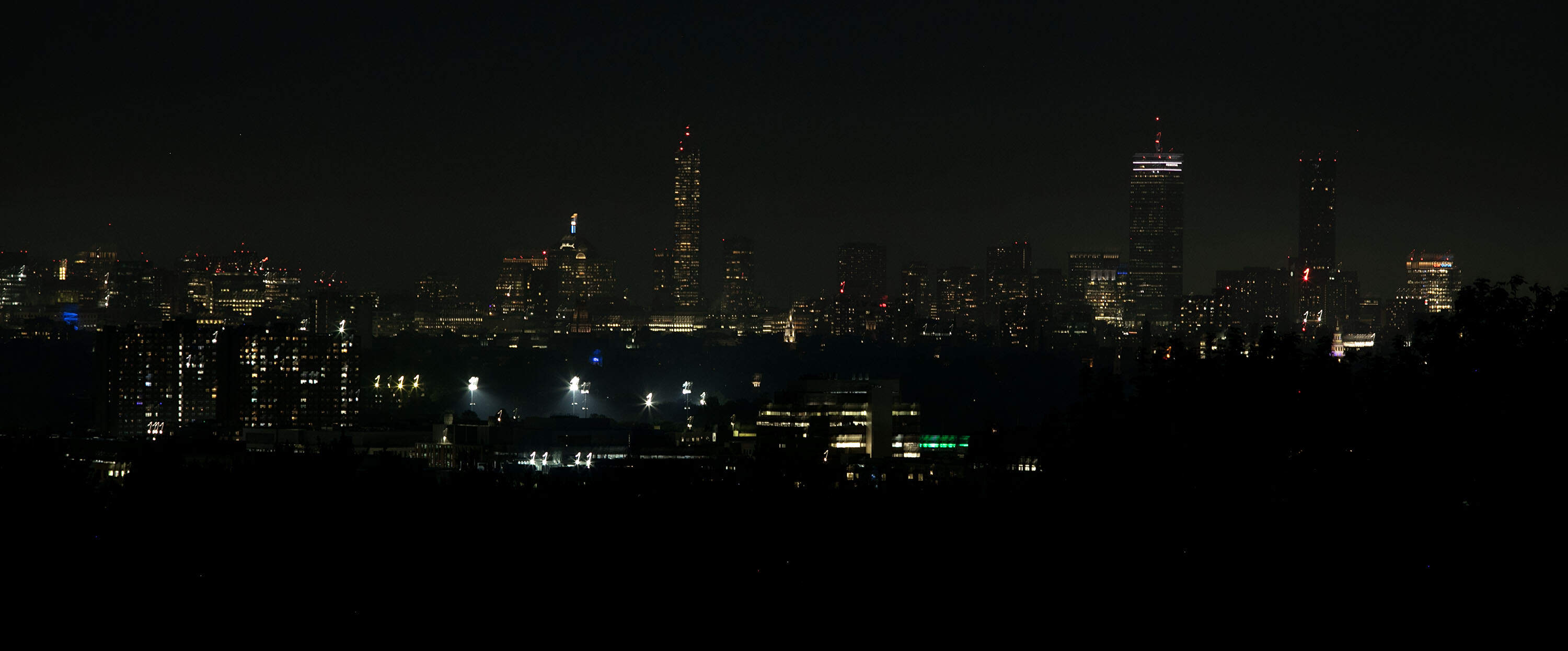
Unfortunately for Massachusetts, conditions will be a little less than ideal. It’s been cloudy at night lately, which impacts visibility. But more obstructive is the moon. The American Meteor Society forecasts a bright, nearly full moon the night of Aug. 12.
Beatty said the moon will block out meteors that are faintly lit, but that shouldn’t stop people from going outside.
“You will see the brightest ones," he said. “For every few faint ones there are, there's going to be one or two bright ones, and I will say that the later you stay up at night, the more meteors you're going to see.”
How can I watch?
Cities have a lot of light, so Beatty suggests going outside Boston to darker places to get the best viewpoint. But if you can't leave the city, Beatty said the best spots are open spaces away from nearby lights, like a local sports field. Some of his favorite spots are Robbins Farm Park in Arlington or Great Brook Farm State Park in Carlisle.
But the most important pre-requisite for viewing is a curiosity about the stars, said Beatty.
“We amateur astronomers really encourage people to just go out and look up,” Beatty said. “Yes, astronomy can be hard. I can talk about black holes and dark matter, and all of that stuff. But at its core, astronomy is really beautiful, and meteor showers are just fun to watch.”
The Perseids meteor shower will be visible in New England until the end of August.