Support WBUR
On Katrina anniversary, Mass. emergency management experts reflect on how to prevent a disaster here
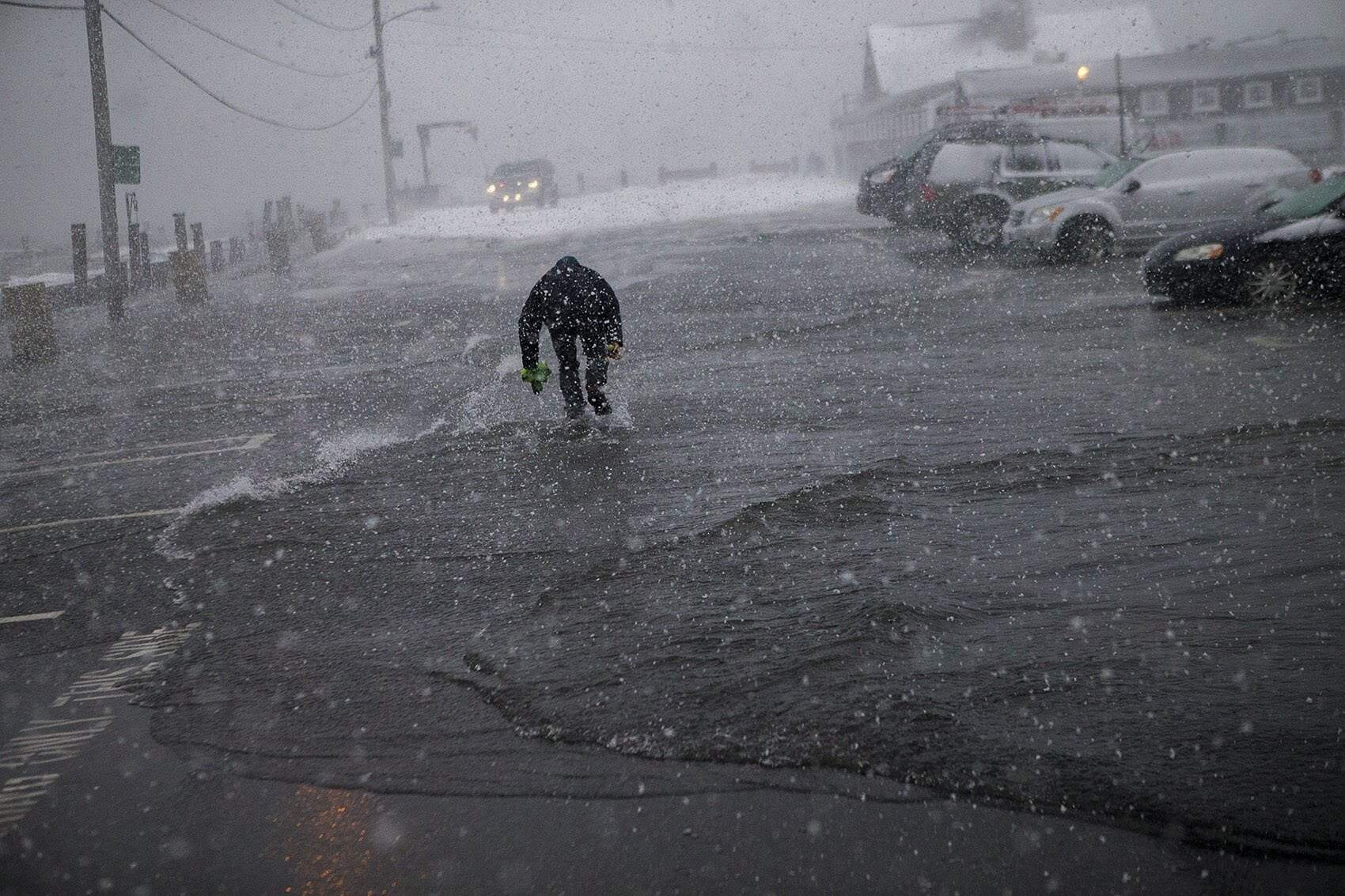
On the 20th anniversary of Hurricane Katrina making landfall in New Orleans, emergency officials in Massachusetts worry that the state won't be prepared if and when a storm like that hits New England.
But it’s not too late to get ready for a natural disaster, they say. More local resources, mitigation plans and federal support can help stave off the worst when disaster strikes.
A more robust emergency management roster
Advocates say a strong local emergency management network is key to preparing and responding to disasters. Every city and town in Massachusetts is required by law to have someone who serves in an emergency management role. But many of them are in the role part-time. Some aren’t even paid.
According to a 2021 report published by the Massachusetts Emergency Management Agency (MEMA), about two thirds of responding agencies had emergency management directors who had other responsibilities like being a fire or police chief. Half had volunteer directors.
The annual budgets are anemic, with just about $5,000 dedicated on average for each office.
Samantha Montano, an associate professor of emergency management at Massachusetts Maritime Academy, said with all of the emergency management responsibilities, that just isn’t enough.
“We need full-time people in these roles, and we need them to have the money that they need to actually be able to do all of the things that we could be doing to ready the state for the next big disaster," Montano said.
The underfunding isn’t unique to Massachusetts. A national survey released last month of 1,700 emergency management agencies across the country shows more than half of those surveyed have one or fewer permanent full-time employees.
Montano says emergency funding doesn’t rise to the top of budget priorities.
“Emergency management often gets kind of put at the bottom of the list because it feels like something we can put off for later,” she said.
One solution could be an update to the state’s Civil Defense Act of 1950, which was passed to help prepare the state for a disaster during the Cold War. MEMA, the state agency responsible for managing disasters in the Commonwealth, was founded because of its passage. A bill at the State House would update language to codify what MEMA does now when it comes to preparing for and managing disasters. But it could also give tax incentives to volunteer emergency directors, to get more of them in the job.
“Emergency management often gets kind of put at the bottom of the [budget priority] list because it feels like something we can put off for later.”
Samantha Montano, professor of emergency management, Massachusetts Maritime Academy
“It’s often hard for those extremely small communities to compensate those emergency management directors,” said Christian Cunnie, a government affairs advisor for the International Association of Emergency Managers, which represents thousands of emergency managers around the world.
Mitigation is key
It’s not what happens after a disaster that is most important, Montano said. It’s the steps taken before, especially when it comes to infrastructure building.
“When we look back at Katrina, we understand now that the perhaps biggest failure of all was in the lack of attention to completing the levee system in New Orleans,” Montano said.
But these projects can be expensive. Boston has set aside $75 million for coastal resilience projects
So states often turn to the Federal Emergency Management Agency (FEMA) for funding help. But under the Trump administration, the future of disaster relief at the federal level is uncertain. Trump has said states should take on more responsibility when it comes to disaster relief, rather than FEMA. He’s even floated the idea of limiting or phasing out the agency. He cancelled a FEMA grant program for disaster mitigation projects this spring. This meant revoking $90 million dollars for over a dozen communities and agencies in Massachusetts.
“The federal government [is] turning away from this responsibility that they have had going back over a century to participate in the mitigation of risk across the country,” Montano said.
States need the federal government
When it comes to natural disasters, advocates will say that even the best local response is sometimes not enough. That’s where FEMA comes in. They're responsible for gathering resources from the entire federal government, providing staffing and distributing aid to disaster victims.
In May, Dawn Brantley, director of MEMA, stressed the vitality of FEMA to the states, as part of her comment to the FEMA Review Council, created by President Trump in January to review and suggest reforms to the agency.
“FEMA must remain an empowered, integrated part of the national emergency management enterprise. Reform must make us more capable, not more fragmented, and any reorganization must be designed with input from the states and local partners who bear the weight of every disaster,” she said.
Montano, the emergency management professor, says if FEMA was reduced in size or phased out, it would leave Massachusetts vulnerable.
“We have not had these huge disasters that other states have had, but there is no reason that we wouldn't have one in the future,” Montano said. “And when that happens, Massachusetts is going to need a lot of help, not only in terms of financial support from the federal government, but also expertise from FEMA.”
This segment aired on August 29, 2025.