Support WBUR
Six or more films to see at the Taiwan Film Festival of Boston
In 2018, controversial remarks made at the Golden Horse Awards, highly regarded for Chinese-language cinema, rippled all the way to Boston. In an acceptance speech for best documentary, Taiwanese director Fu Yue said she hoped Taiwan would be treated as “independent.”
“Her speech was about the sovereignty of Taiwan,” recalls Fan-Yun Lan, who was in graduate school in Boston at the time. The fallout – representative of a larger ongoing political rift between mainland China and Taiwan — included a ban on Chinese movies and actors from participating in the 2019 awards and a block on showing Taiwanese films in Chinese theaters.
In response, Lan says he and other “non-professional movie lovers” including current co-president Chih-Chung "Jerry" Lin, decided to “create another platform for those talented filmmakers to be seen in theaters outside Taiwan, including in North America.” They held the first Taiwan Film Festival of Boston (TFFB) in May 2019 in classrooms at MIT.
Lin says the all-volunteer festival has continued to grow annually with new venues, new partnerships to host Taiwanese filmmakers (an important part of their mission), and an off-season screening series. Now in its seventh year, TFFB will be held Sept. 19-25 at venues around Boston and online Sept. 26-Oct. 12.
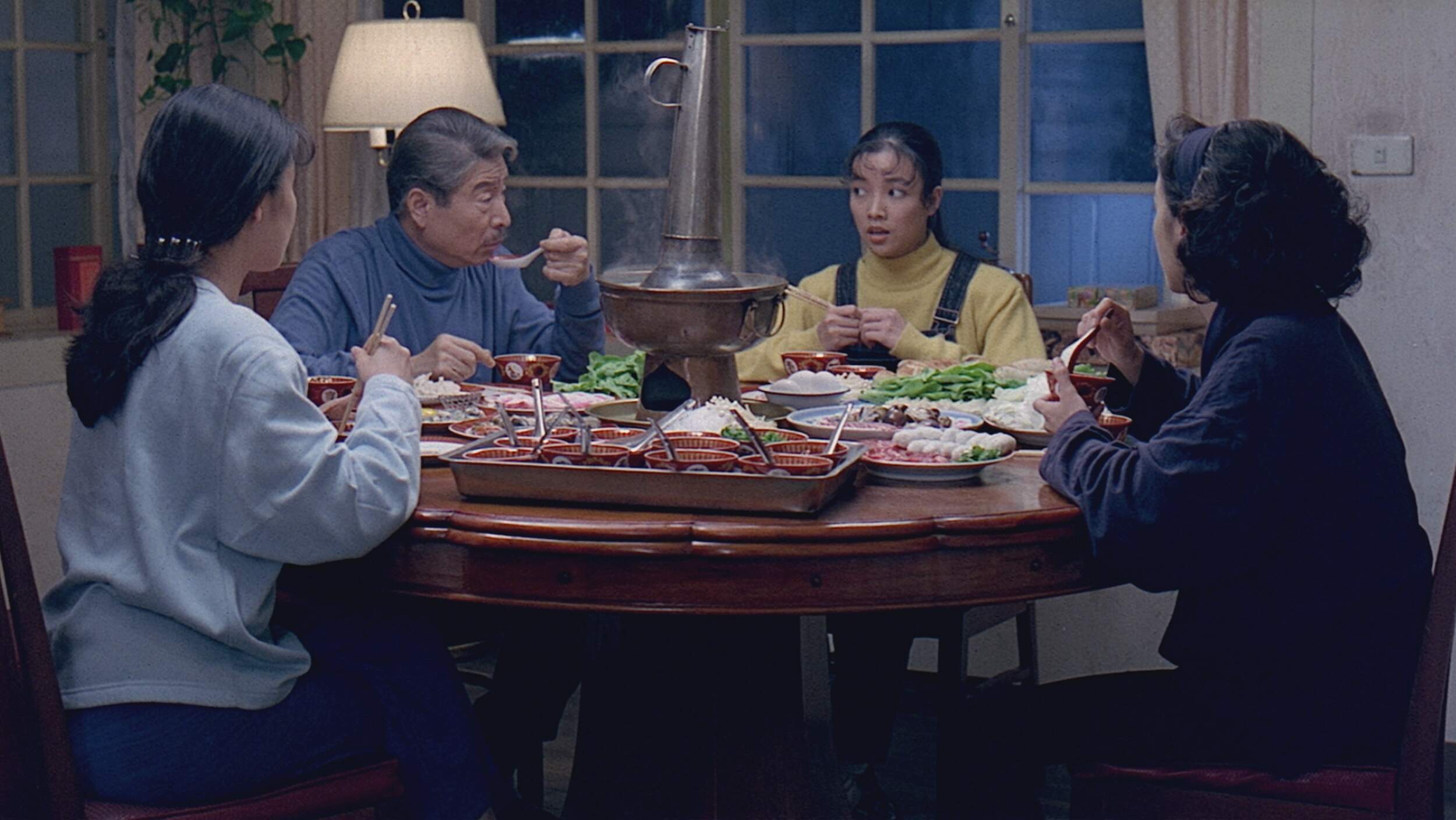
Co-president Jay Tsai says that a committee of about 20 or 30 people vote on which films to screen, “to engage more people in the selection process.” Where do they start? The most recent Golden Horse Awards. (Though they also screen throwbacks such as a digital restoration of Ang Lee’s “Eat Drink Man Woman,” made in 1994.) To help readers choose what to see, I viewed the entire in-person slate and one of the co-presidents’ favorites from the virtual slate. My recommendations are below. But honestly, every film is worth seeing.
Daughter’s Daughter (女兒的女兒)
Sept. 19, Museum of Fine Arts, Boston, 7:00 pm
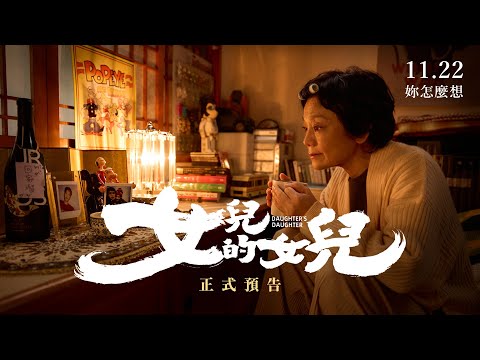
On the surface, the story centers on Jin (Sylvia Chang, also an executive producer), in her 60s, alone in New York and weighed with her adult daughter’s unexpected death and the dilemma of what to do with her embryos. Should she find a surrogate and raise her grandchild herself? Would doing so be an act of selflessness or self-centered grief? As the title hints, her decision carries the freight of relations past and future. No fewer than five daughters over four generations flicker in and out of Xi Huang’s sophomore feature, which picked up a Best Screenplay award at Taiwan’s 2024 Golden Horse awards. Structurally “Daughter’s Daughter” sits among recent films like the excellent “Drowning Dry” that abandon chronology and reposition characters to underscore the pliability of memories and thus, human connection. Through Jin’s eyes, it’s also a way to assess her viability as a mother. With only one male character (Johnny, played by Winston Chao), the film also carves out a uniquely female and LBGTQ+-friendly space in which to ponder reproductive options and limitations. There’s nothing heavy-handed about this approach, rather it resists oversimplification and allows characters some ambivalence. In one crucial scene, Jin gives money to a panhandler who says she’s with child. “I like how she conned me,” she confesses mostly to herself. “I wish the whole thing were a lie.” A pre-recorded conversation with Xi Huang will follow the screening.
My Sister (姊姊)
Sept. 21, AMC Causeway 13, 10:30 am
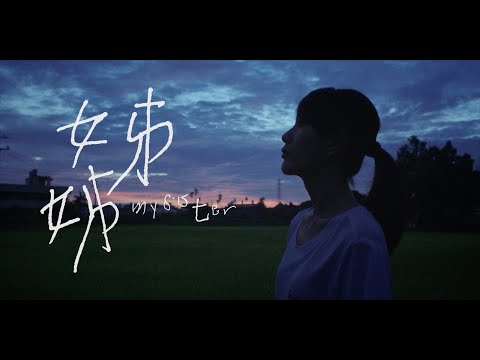
Sis shares a room with an annoying younger brother who wakes her up by blowing a recorder in her face. She works a terrible telemarketing job with an older boss who strokes her hair. She tells her sweet but dull boyfriend she wished that the pervert would stop. But mostly, Sis silently seethes. Is this her coping strategy while waiting for a college acceptance to whisk her away? Or does something else make her feel estranged? “My Sister” packs an incredible amount of storytelling into 24 minutes and yet never feels rushed. Directed by Ke-Yin Pan with authority, it effectively loosens up the definition of what makes a family. He released a feature-length expansion called “Family Matters,” with the same characters and actors, earlier this year, though it was pulled by a Hong Kong festival in August for not meeting “revision requirements.” Hopefully it will find a place in a future TFFB. A more extreme title than film, the imaginative, tearjerker movie-within-a-movie about reincarnation, “Cry Me Through Hell,” also screens in the “Family in Focus” shorts block. “A Moment of Choice” rounds off the program when a young professional woman wrestles with her June Cleaver doppelganger (yes, it gets physical) over an unexpected pregnancy; co-director Yung-Han Chang will be present for questions.
Solar Power Revelation (七股光電啟示錄)
Sept. 21, AMC Causeway 13, 1:30 pm
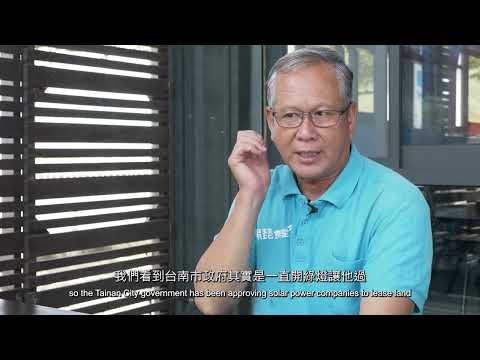
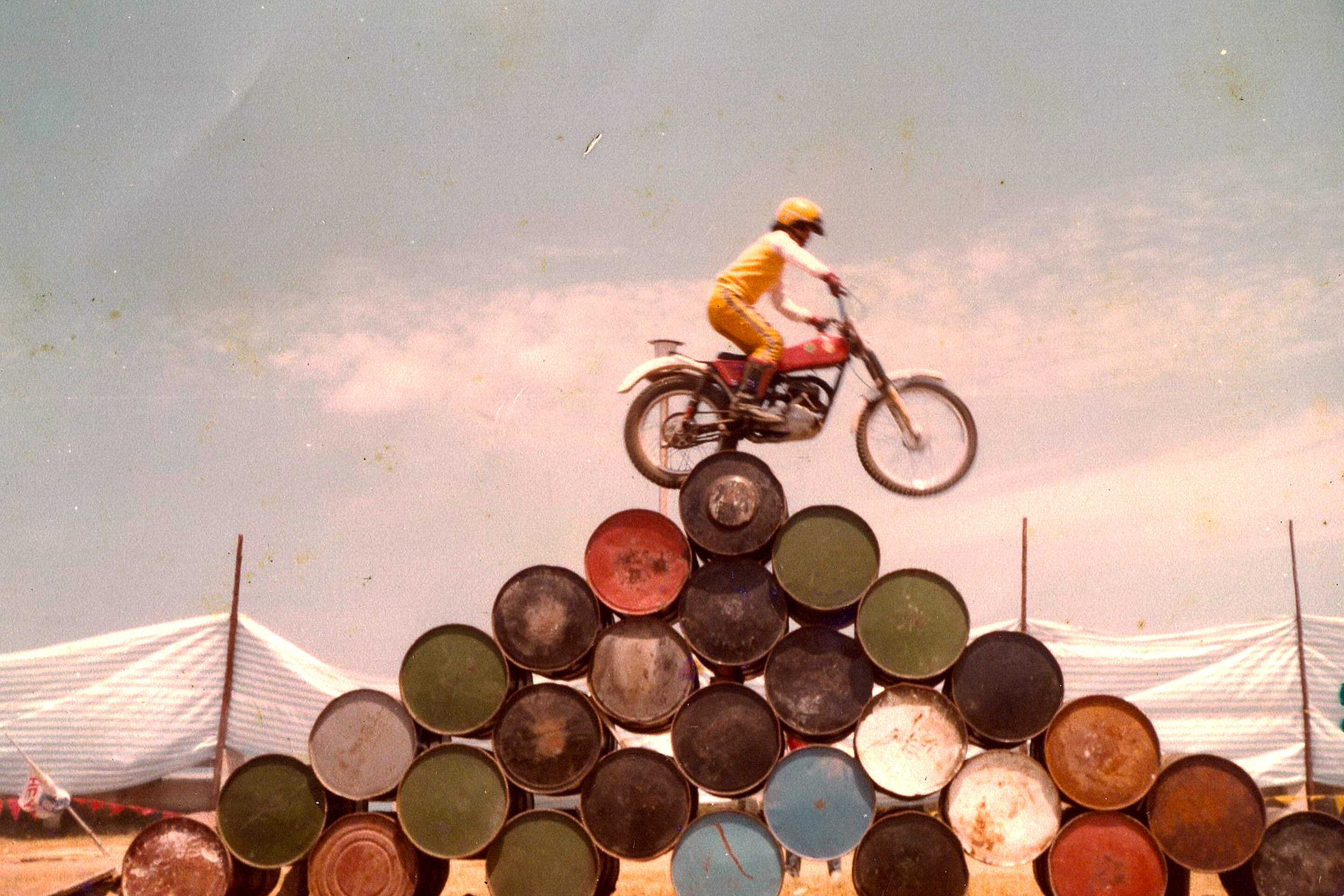
Even “clean” power solutions have consequences, intended or not. Told exclusively from the point of view of fishing families and residents of the Qigu District, a coastal region in southwest Taiwan, “Solar Power Revelation” critiques the encroachment of floating solar panels. Film participants feel their voice has not been heard and if development continues unchecked, the ecosystem, their livelihoods and longstanding traditions will suffer. Panels shade the water below and prevent plant growth, one interviewee explains, which in turn affects the mussel and fish harvest. Plus, the panels are unsightly. “Why would tourists want to come here?” one interviewee wonders while a sea of black rectangles obscures the horizon. (Government and corporate officials do not appear.) Given the hurdles of documentary distribution, and the reason volunteers started this festival, it’s hard to fathom how else Boston audience members would encounter this story. Director Shu-Mei Huang started making environmental documentaries from her home base of Taiwan in 1991 and will attend the screening to answer questions, including providing an update on the solar situation. Yi-Jing Lin will likewise attend from Taiwan with her debut documentary, “When the Rumble Sounds Again (當轟隆隆聲再響起),” also recommended (they both screen in the “New Tapei City Day: Award-Winning Documentaries” shorts block). Rich with archival photos and footage of aerial motorcycle leaps reminiscent of Evil Knievel (indeed, with almost no TV the troupe tracked down American videotapes for inspiration), this documentary came about when Lin decided to locate members from her father’s once-famed stunt troupe. In doing so she and her brother (co-director Huan-Wen Lin) resurrect, and preserve, a fleeting moment in Taiwanese history. Note: this writer will moderate the conversation with directors Shu-Mei Huang and Yi-Jing Lin.
Doubles Match (乒乓男孩)
Sept. 21, AMC Causeway 13, 4:00 pm
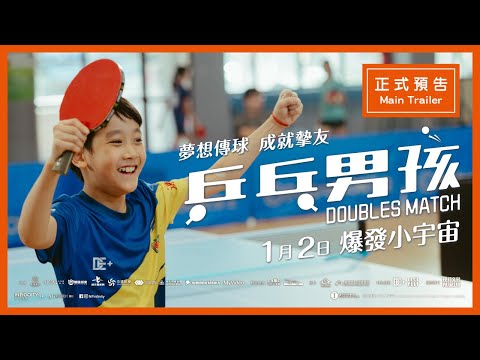
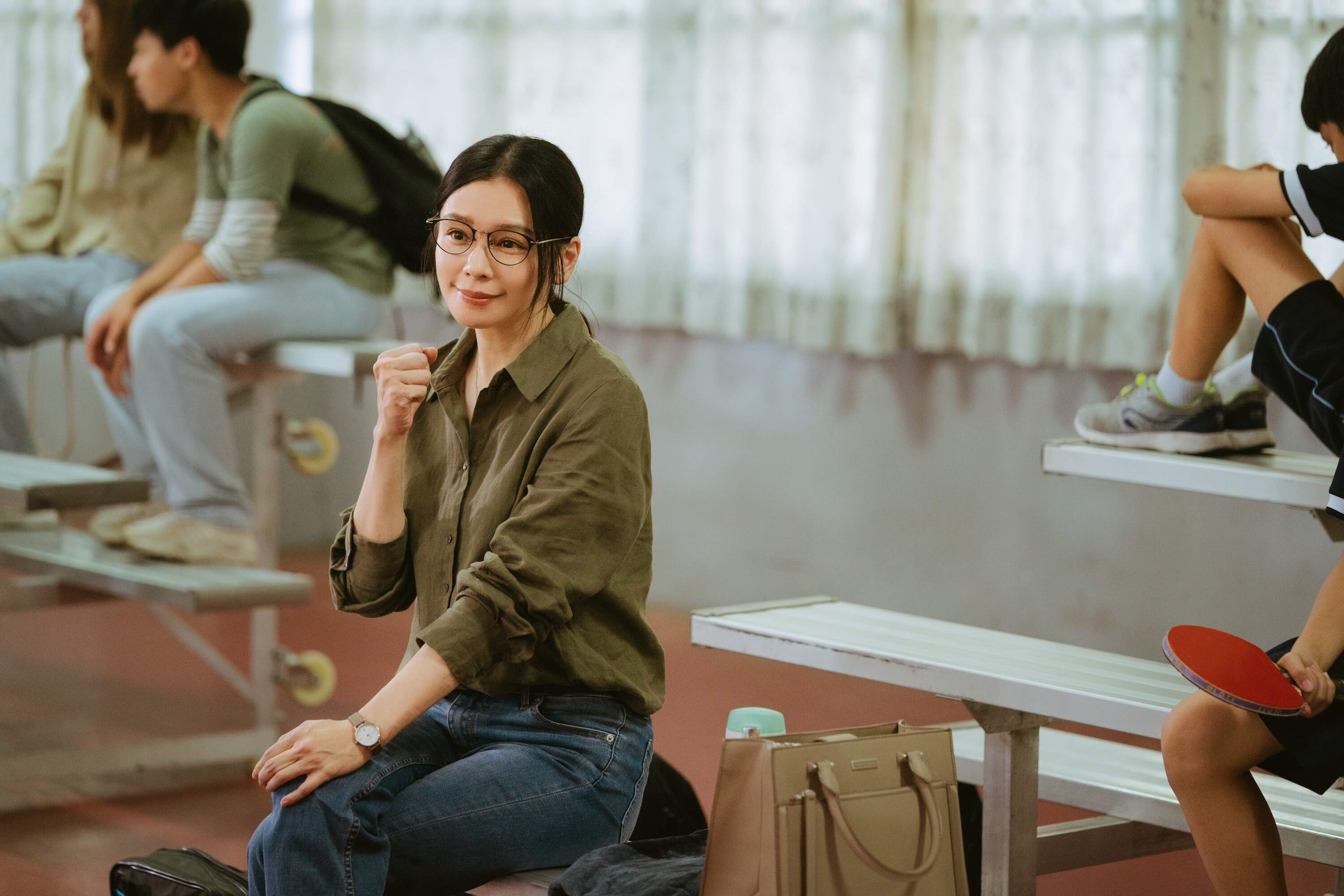
Fun and funny. Lighthearted but not overly saccharine, “Doubles Match” hits the sweet spot of a well-made family movie with something for everyone, including enough action to hold a fifth grader’s attention (assuming that fifth grader can read English subtitles or understand Mandarin). It’s about two best friends who attach their hopes and fears to table tennis. One plays in memory of his mother, while the other must win or move to the city for better training. Soon enough they become rivals. As kids, they don’t always know how to talk about life’s pressures. But the movie maintains a hopeful tone with sun-drenched drone shots that race along their semi-rural town, past the convenience store, over a marsh, and up a long staircase to school, mountain off in the distance. Better yet are the wide shots of kids whacking balls, learning slick spins and trick serves, in giant rooms full of blue ping pong tables. You get a genuine sense of the scale and scope of competition. TFFB co-president Jay Tsai says it reminded him of his youth as a competitive player. And the actors can really play! The biggest issue on the table is what it means to be a team, or a family, take your pick. Here, the whole community pitches in (though I did want the strongest kid player, the lone girl, to have a bigger role). Her dad, the reluctant coach, observes that the greatest moments aren’t wins but when screw-ups like him can pass along a bit of hard-earned wisdom. “Doubles Match” shows that wisdom can also come in a super cute, candy-colored movie.
Yen and Ai-Lee (小雁與吳愛麗)
Sept. 25, Brattle Theatre, 6:30 pm
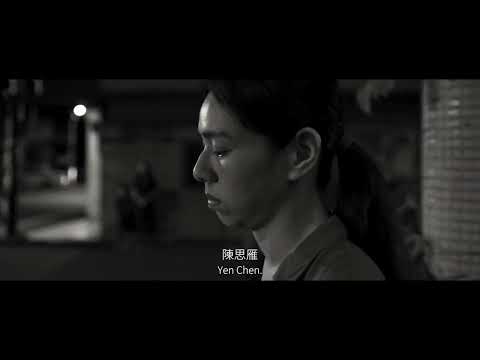
Immediately riveting and gorgeously shot in black and white (by Kartik Vijay), this relational drama opens with bloodshed and a mystery. A young woman, Yen, commits a violent crime and turns herself in. Released from prison eight years later, her neighbors and mom pity more than fear her. What did she do and why? Her hunched posture and inward gaze nearly break under the weight. She wants a job and to leave her old identity behind. I don’t want to say much more except that I could not turn away from this film. For one, each frame glistens with fascinating detail. Streetlight bounces off tiled pillars outside Yen’s mom’s convenience store and fills cracks in the asphalt. That’s where she runs a racket with scratch-off cards that puts her daughter in jeopardy. Writer and director Tom Shu-yu Lin wisely allows a fixed camera to roll through the pauses in their unforgettable confrontation. You can hear them breathe and watch their wheels turn as they figure out what to say next. But the words don’t matter much because it's cinema, firing on all available cylinders.
Grandma and Her Ghosts (稻田電影工作室有限公司)
Available to stream Sept. 26-Oct. 12
Seven-year-old Dou-dou wants nothing to do with his grandma but must spend the summer with her and her pinched, scary face anyway. Showing as a 2k restoration in this year’s virtual festival, this wildly entertaining animated classic from 1998 feels even more vintage in tone and style. Imagine Brothers Grimm meets Scooby-Doo with a dash of early Bart Simpson. (Grandma often shakes her head at Dou-dou’s disrespect. To be fair, he does make a bargain to sell her to a garbage collector.) Kids raised only on Daffy Duck’s egotistical bluster might enjoy learning about the Taoist traditions this Grandma practices. Neighbors call on her to help their loved ones cross safely into the spirit world. Animals, like the whale that follows Dou-dou’s buddy around, also need help crossing over. Soon enough, Dou-dou too can see the spirits that need to be fed during the annual Pudu Festival. Metaphorically, his squashed snake Flat sums up this movie’s splatter humor and sweet soul. Maybe that’s why it’s a favorite among the TFFB team and one of my favorites in this year’s lineup.