Support WBUR
30 years gone: Boston man leaves prison after landmark court decision
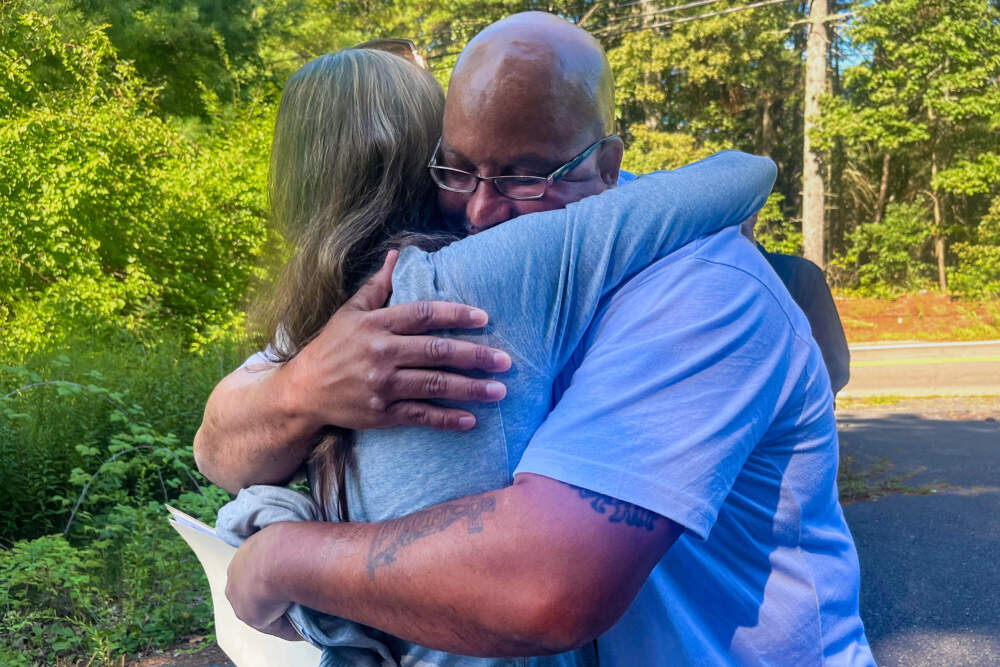
Nate Benjamin stared out of the car window at the streets of Boston. He barely recognized it. The Seaport, with its tall, gleaming buildings, was unfamiliar. After 30 years in prison, it was Benjamin’s first view of the city as a free man.
When he reached his new home, he stepped out of the car and greeted his family. He wrapped his aunt in his arms.
“ Welcome home, baby,” she said, her face pressed into his chest. “Thank you, Lord. It's so good to see you and hold you like this.”
Benjamin never thought this moment would come.
“I thought I was going to die in prison, one way or the other,” he said.
A Supreme Judicial Court ruling changed his life. In January 2024, the state’s highest court ruled that those under 21 who commit a crime cannot receive sentences of life without the possibility of parole. In the case, Commonwealth v. Mattis, the justices cited scientific research that young adult brains are not fully developed.
For the first time, Benjamin and more than 200 other incarcerated individuals would get a chance at freedom.
So far, Benjamin is one of 15 people who have been released from prison under the SJC’s decision.
“I have this incredible feeling of joy,” he said, “But at the same time, I feel an enormous amount of sadness for my victim's family.”
Life before parole
On July 30, 1995, the then 20-year-old Benjamin was at a cookout in Brockton when he saw 27-year-old Anthony Simmons across the street. Benjamin walked over and accused Simmons of selling drugs on his block. Simmons denied the accusation, and when he turned to walk away, Benjamin shot him. Benjamin testified that while he meant to cause injury, he did not mean to kill Simmons. A Plymouth Superior Court jury convicted Benjamin of first-degree murder and he was sentenced to life without parole.
Simmons was the son of E. Denise Simmons, the current mayor of Cambridge. In May, at Benjamin's parole hearing, she urged the parole board to keep him in prison.
“ Mr. Benjamin was not a child when he killed my son," Denise Simmons said. "He was an adult.”
“I have this incredible feeling of joy. But at the same time, I feel an enormous amount of sadness for my victim's family.”
Nate Benjamin
Lisa Newman-Polk, Benjamin’s lawyer and social worker, said a lifetime of trauma, physical abuse, drug use, and sexual assault led him to that day. He spent time in foster care. His mother, who was white, would call her mixed-raced son racial slurs. A year before the shooting, he was selling drugs when someone threw acid onto his body. He spent six months in the hospital recovering.
“The internal scars,” he said, that’s “something that, even to this day that I still deal with."
Newman-Polk pointed to research showing brain development is hampered in trauma survivors — research cited by the SJC in its decision. Many of those now eligible for parole experienced significant trauma, she said.
“Most of these cases are people who grew up in constant chronic instability and a lack of safety,” Newman-Polk said. “And when somebody grows up that way, the way they're perceiving the world and violence is completely different.”
Benjamin told the parole board he regrets his crime — and takes responsibility for it.
“Had it not been for my refusal to deal with my own pain and issues that I experienced while growing up, Anthony may still be alive,” he said.
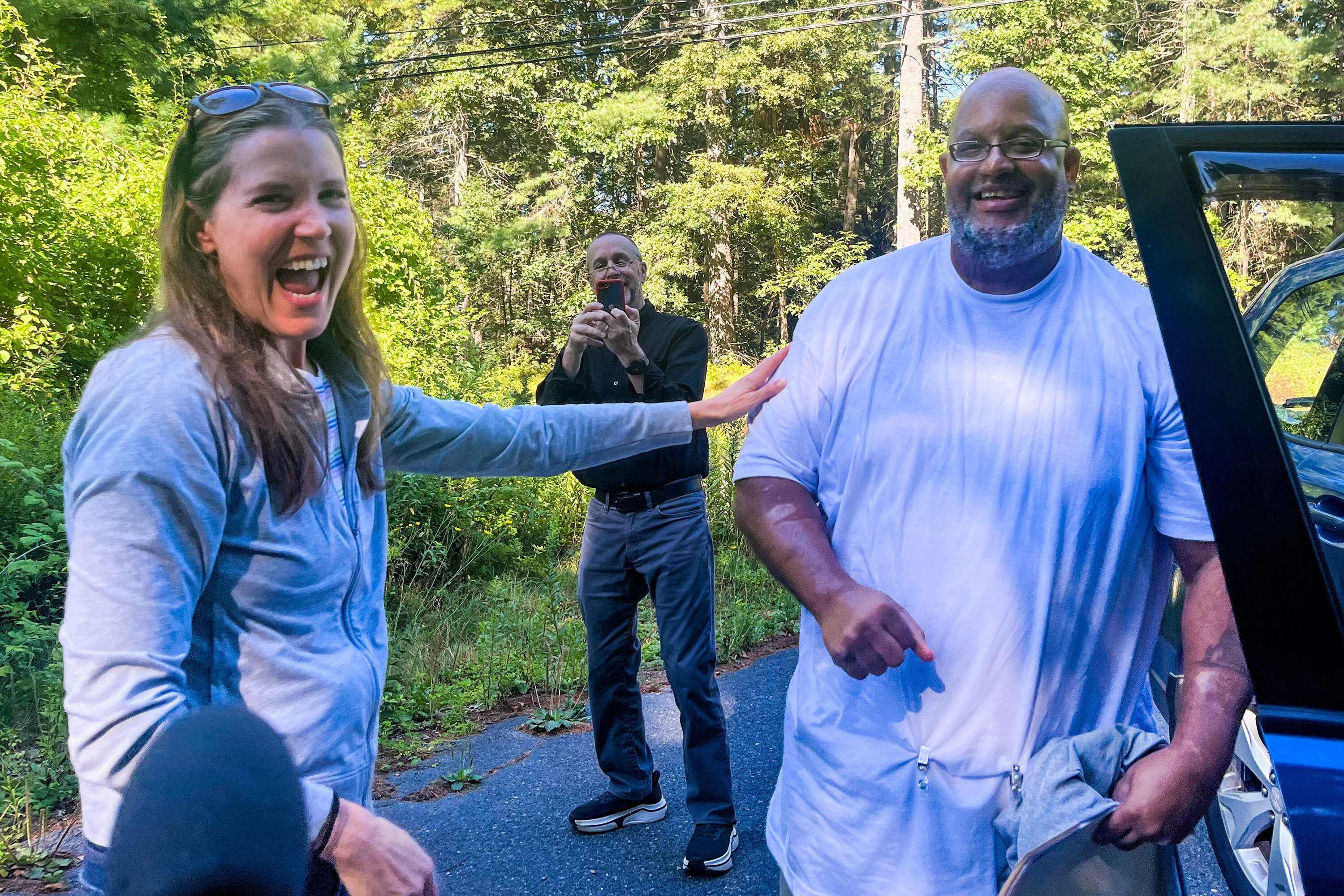
Benjamin was granted parole in August. He is one of the few people who have had a hearing and have been released. As of mid September, 69 people have had hearings — about half of those who are eligible. A lawsuit was filed earlier this year by prisoners who say hearings are being wrongly delayed. The lawsuit was dismissed, and an appeal is pending.
A parole board spokesperson said the agency is “working to balance efficiency, fairness, and public safety. As a result, the number of Mattis hearings taking place per month has dramatically increased this year.”
Nearly 18 months after the SJC’s decision, 11% of those eligible for parole have been released. The board said some eligible individuals requested to delay their hearings because they needed additional time to prepare. A couple others declined the opportunity for a hearing.
A plan for success
One of the reasons the board cited in approving Benjamin’s release was what they called a “strong” plan upon leaving prison. He has a job lined up as a stagehand, is living with family and is attending a re-entry program at Tufts University called MyTERN.
“ The mission is to help people coming home feel that they have a community where they belong” said Hilary Binda, founder and executive director of MyTERN. “And supporting people as they face literally thousands of barriers … on the outside with a felony record.”
MyTERN students take a range of classes from technology to personal finance and racial justice. At the end of the year, students earn an undergraduate certificate in civic studies and transferable college credits.
On Benjamin’s second day out of prison, he walked into a packed classroom. After a breathing exercise, each person went around the room and introduced themselves. Benjamin sat on the edge of his seat, wearing a brand new outfit his brother bought him: a cream hoodie with matching windbreaker pants and white Nikes. It was an upgrade from the all grey outfit he wore in prison.
“ I just came home yesterday, so I'm a little bugged out,” Benjamin announced. Cheers erupted in the room.
‘Second chance’
There are still a lot of rules for Benjamin to get used to, even out of prison. As part of the conditions of his parole, he has to wear a GPS monitor around his ankle for at least six months. He will be drug tested and he has to meet regularly with a mental health counselor. He can’t associate with anyone with a criminal record without approval from his parole officer, which means he can’t call friends in prison.
Returning to prison for violating one of those rules is a very real threat. In 2022, more than 300 people had their parole revoked, most for so-called “technical” violations, like drinking alcohol or losing a job.
Benjamin admits some parts of living on the outside scare him. He was intimidated when his mentor gave him his first cell phone as soon as he got out.
“ Man, I don't even know how to use it. Like, I don't even know how to text people back. I didn't even see a payphone on the street,” Benjamin said, sounding exasperated.
But mostly, Benjamin feels immense gratitude. His apartment is already filled with appliances his family gifted him. Some, like the air fryer, are completely new to him. He knows it will take time to settle into a new routine and often reminds himself to take it one step at a time. Still, he described laying in bed awake at night, unable to keep his mind from racing.
“For the last 30 years of my life I dreamed of having a second chance,” Benjamin said, “I'm looking up in the ceiling in a place that my family provided for me, and I'm thinking about everything that I want to do and how I'm gonna do it and when I am going to do it. And that’s the only thing I could think about.”
This segment aired on September 18, 2025.