Support WBUR
'Extraordinary failure': SJC says lawsuits against Harvard over morgue thefts can move forward
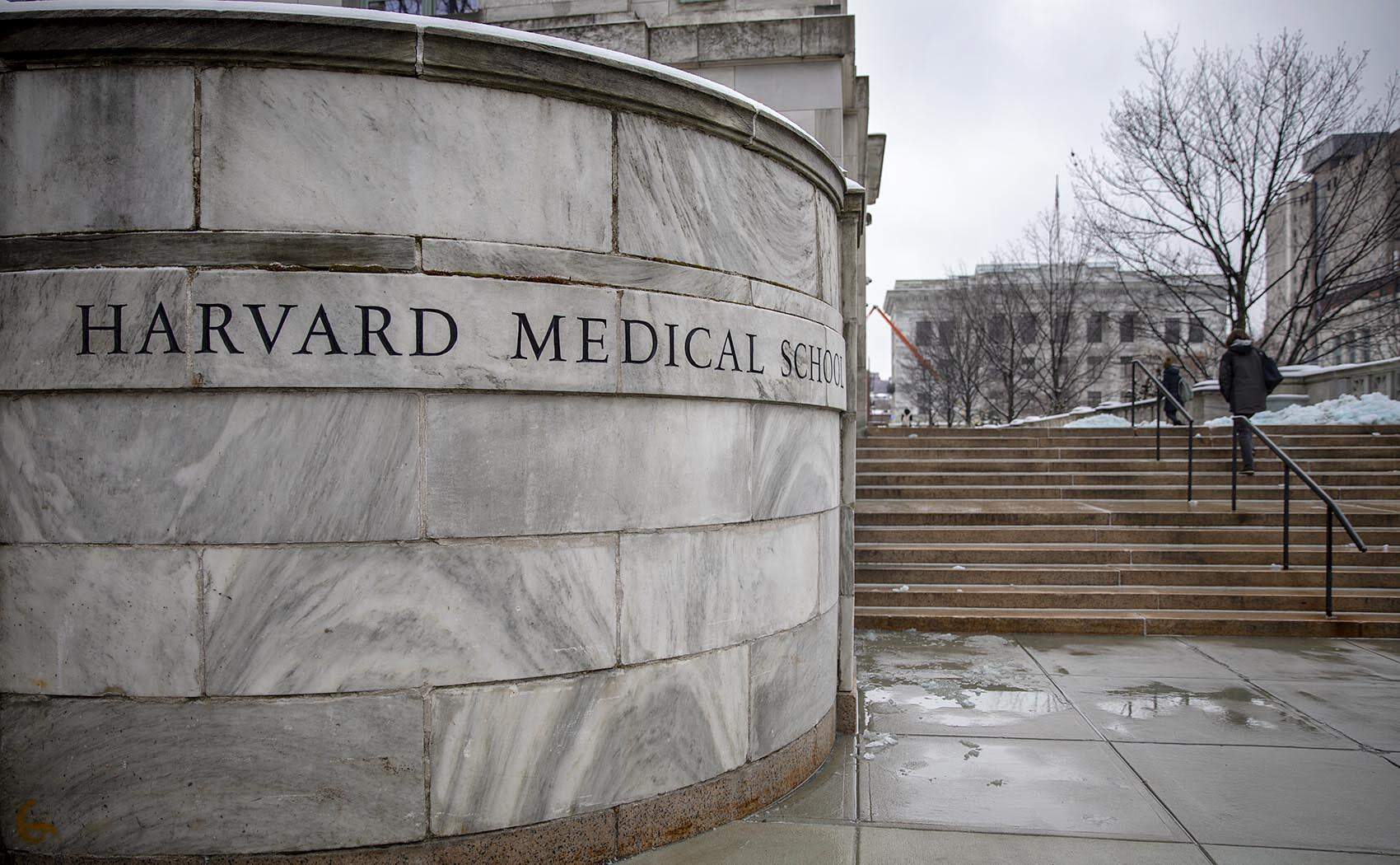
Massachusetts' highest court says lawsuits against Harvard Medical School related to the theft of body parts from its morgue can move forward.
In its decision Monday, the Supreme Judicial Court says Harvard exhibited "extraordinary failure" in supervising its former morgue manager, Cedric Lodge, who admitted to stealing skin, brains and bones of bodies that had been donated to the medical school for students to learn from.
Harvard had claimed that a state law governing body and organ donation protected it from any lawsuits, because the school had acted in "good faith" and wasn't aware of Lodge's activities, which went on for years.
The SJC disagreed, saying the school failed to act in good faith and could be held responsible in civil lawsuits.
"Instead of the dignified treatment and disposal of human remains required by the act, the donors' remains were ghoulishly dismembered and sold for profit under the most horrifying of circumstances," Justice Scott Kafker wrote. "This horrific and undignified treatment continued for years and involved numerous donors."
The SJC overturned a Suffolk Superior Court judge who last year dismissed lawsuits from a dozen families against Harvard and two employees of the Anatomical Gift Program. Judge Kenneth Salinger had ruled that Harvard and Lodge’s supervisors have immunity under what’s called the Uniform Anatomical Gift Act. According to that state statute, an institution that acts “in good faith” in the handling of donor bodies cannot be held liable in a lawsuit.
The SJC upheld the possibility of claims against Harvard and Lodge's direct supervisor, Mark Cicchetti. But it dismissed the case against Tracey Fay, another program employee, in part because she had no supervisory responsibilities over Lodge.
"In short, Lodge was purportedly allowed to run 'amok' on Cicchetti's watch," the decision states.
In a statement, a Harvard Medical School spokesperson said that Lodge's actions were "abhorrent and inconsistent with the standards and values that Harvard, our anatomical donors, and their loved ones expect and deserve. We reaffirm our deep sorrow for the families of donors who may have been impacted, and for the uncertainty and distress they are facing."
Harvard reiterated what was stated in the federal indictment against Lodge — that he acted alone and without the school's knowledge.
The case now returns to Suffolk Superior Court — and opens up the possibility that the families could learn more about Lodge's tenure at Harvard and how the morgue was run. The discovery process could force Harvard administrators to sit for questioning under oath, and require them to produce documents currently kept under wraps.
"We haven't won the case, but now we can get answers and we can have our day in court," said Attorney Kathryn Barnett, who represents some of the families in their lawsuits. "What the court has said is [that] turning a blind eye and then saying, 'Well, we didn't know' — it's not enough."
Lara Szent-Gyorgi's mother, Gwen, donated her body to Harvard in 2017. Szent-Gyorgi said she hopes the lawsuit will force more transparency from the school.
"I really am looking for an understanding of what was or was not happening at Harvard, so that every other institution that does accept cadavers can learn from this," she said.
The thefts gained international attention in 2023 when Lodge, his wife Denise Lodge and several alleged buyers were indicted for their roles in a nationwide network of human remains trading.
Lodge admitted to letting buyers into Harvard's basement morgue to pick out body parts to take home. He'd also bring home parts, that his wife would then ship through the mail.
Lodge and his wife each pleaded guilty to one count of interstate transport of stolen goods, which carries a maximum prison term of 10 years. They are awaiting sentencing.
Several of the alleged buyers have also pleaded guilty to their role in the scheme.
The SJC indicated Harvard should have been aware that there was a risk of theft, yet took little action to prevent it. They pointed to a similar theft 20 years ago at UCLA in California.
"Instead, according to the allegations, an unsupervised Lodge was able to dismember the donated bodies; bring unauthorized people into the morgue to inspect and purchase body parts, including during working hours; and carry body parts out of the morgue for years," Kafker wrote.
After Lodge was indicted, Harvard put together a panel of experts to review the morgue operations, but the group didn't focus on Lodge's crimes. Instead, it just reviewed the current program and made suggestions for improvement, from better tracking of donor bodies to monitoring unusual key swipes into the morgue.
A WBUR podcast about the thefts, Last Seen: Postmortem, was published last year. It dove into the grey market for human remains and the question of how we should treat the dead.
This article was originally published on October 06, 2025.