Support WBUR
Some Massachusetts health centers stop trans care for minors
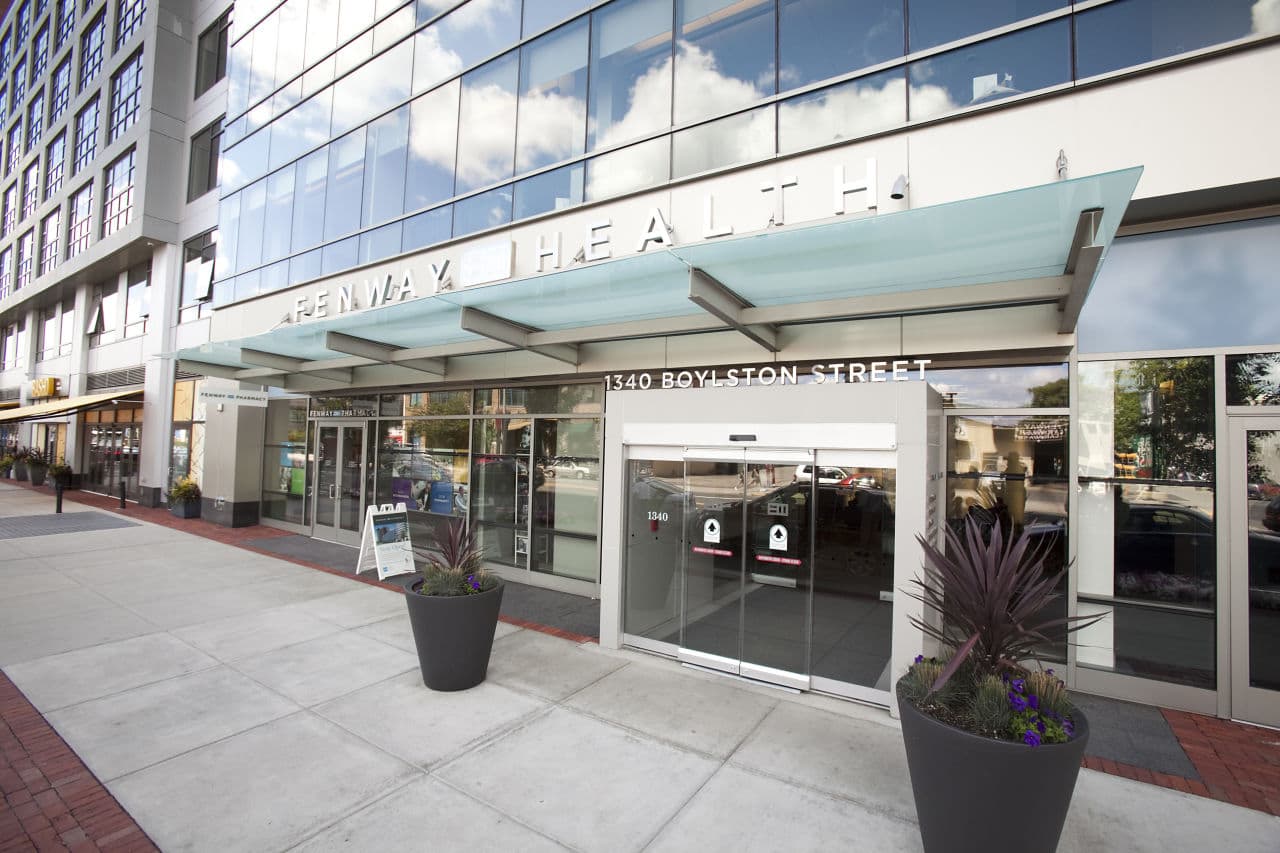
A nationally recognized LGBTQ health center is no longer offering gender transition medical care for patients in Massachusetts aged 18 and younger. The center, Fenway Health, posted a notice online about the change, which took effect on Oct. 1.
Under pressure from the Trump administration, hospitals and clinics across the country have stopped offering minors care such as puberty blockers and hormones that aid gender transition. This the first known cancellation of services for children in Massachusetts.
At least one other health center network, Outer Cape Health Services, said it will follow suit.
Staff at Fenway declined to comment beyond the notice. It blamed the change on new federal requirements and “a shifting federal landscape that requires us to adapt in order to remain compliant, sustainable, and able to provide healthcare, support, and services to all our patients.”
Fenway said it would prioritize “continuity of care” for patients impacted by the new policy.
The revised federal regulations reference guidance that noted the Trump administration will “deprioritize” health centers that provide gender transition care for minors. Those programs could lose significant federal grants.
Federal data shows Fenway received a little more than $5 million from at least two federal agencies in fiscal year 2025. But there’s a potentially bigger threat. As a federally qualified health center, Fenway receives certain benefits, including access to a program that allows it to purchase medications at deep discounts, but charge insurers the market price. Many health center leaders said this program provides substantial funding for their operations.
Advocates for transgender people called the announcement from Fenway disappointing and said they’re concerned about transgender children’s access to appropriate care.
“Any parent can understand wanting to ensure that your child gets the care they need,” said Jennifer Levi, senior director of Transgender and Queer Rights at GLAD Law. “As care gets harder to access, it is more and more painful for families with transgender loved ones.”
For years, Fenway’s LGBTQ youth program proudly declared its mission to care for the highest risk teens, those who lived on the streets, were in and out of school or state custody, or who struggled with addiction. Some supporters said that advocacy and public profile may now be putting Fenway at greater risk than other health centers that offered gender transition medications with less fanfare.
There are at least five other federally qualified health centers in Massachusetts that offer puberty blockers and hormone transition treatment for minors. A spokeswoman for the Massachusetts League of Community Health Centers said most are still providing that care. But at least one, Outer Cape Health Services, told WBUR it also plans to end trans care for minors.
Outer Cape CEO Dr. Damian Archer said his organization has little choice because state laws designed to shield medical providers from lawsuits do not protect their federal funding.
“It is deeply concerning to me that we are altering clinical care primarily to maintain funding and operational sustainability,” Archer said in an email. “Unfortunately, the Shield laws don't secure our institutional funding, they protect our medical licenses and personal prosecution, and in Massachusetts only.”
Leading politicians in Massachusetts rallied in support of gender transition medical care for minors. Attorney General Andrea Campbell said, in an email, that staff members reached out to Fenway and “will do everything we can to help support continuity of care for patients across the Commonwealth.”
Gov. Maura Healey, in a statement, pointed the finger at President Trump.
“It’s a shame that Donald Trump’s crusade against vulnerable young people has caused this to happen,” she said.
Healey’s public health commissioner, Dr. Robbie Goldstein, is talking to trans health providers about a plan to maintain services. The current state budget includes a $1 million trust fund for trans health, administered by the Department of Public Health. Goldstein said he’s working on the details about how to spend that money.
“We, in Massachusetts, have repeatedly stood up for trans youth and adolescents and we’re not going to stop now,” he said.
But many Massachusetts residents question the wisdom of helping minors make physical changes that can have lasting consequences. Alex Byrne, an MIT philosophy professor, co-authored a review for the federal office of Health and Human Services that concluded the evidence in support of puberty blockers and hormone transition treatment is weak, and the care must be stopped.
“The HHS Review does not make policy or treatment recommendations,” Byrne said in an email exchange about Fenway, “but instead sets out the medical evidence and ethical considerations to guide policy makers.”
The American Academy of Pediatrics challenges the credibility of the HHS review, saying it "misrepresents the current medical consensus."
Massachusetts Family Institute general counsel, Sam Whiting, said he was encouraged to hear Fenway and other clinics will no longer offer gender services for minors.
"As the growing community of detransitioners can attest, these procedures have irreversibly damaged countless young people who were sold the lie that they were 'born in the wrong body,' ” Whiting said in a statement. “We are grateful to the Trump administration for doing all it can to put an end to the mutilation of children and hope organizations like Fenway Health will be held accountable for the harm they have caused."
Some former patients at Fenway’s center for LGBTQ youth said they are angry and alarmed by Fenway’s move and feel betrayed. But they were unwilling to speak on the record because they fear what they see as an anti-trans climate or worry about jeopardizing their services at the center.
Fenway had become a resource in recent years for some minors from outside Massachusetts whose states have banned trans care for anyone under 18.
This article was originally published on October 15, 2025.