Support WBUR
Scientists cautiously optimistic after right whale numbers ticked up in 2024
The number of North Atlantic right whales ticked up in 2024, according to researchers’ latest estimate of this critically endangered species.
Scientists, while cautiously optimistic, said threats including entanglement in fishing gear, climate change and low birth rates still loom over efforts to save the animals from extinction.
The numbers, released Tuesday, estimated there were 384 right whales in 2024, up from 376 the previous year. Researchers from the New England Aquarium’s Anderson Cabot Center for Ocean Life and the National Oceanic and Atmospheric Administration worked together on the annual update.
The small increase follows a four-year trend of slow growth for right whales. But Heather Pettis, a senior scientist at the New England Aquarium who contributed to the data, said the population remains vulnerable.
“ Keeping focused, not taking our foot off the gas on making sure that whales are protected throughout their range — that's what this population needs,” said Pettis, who also chairs the North Atlantic Right Whale Consortium.
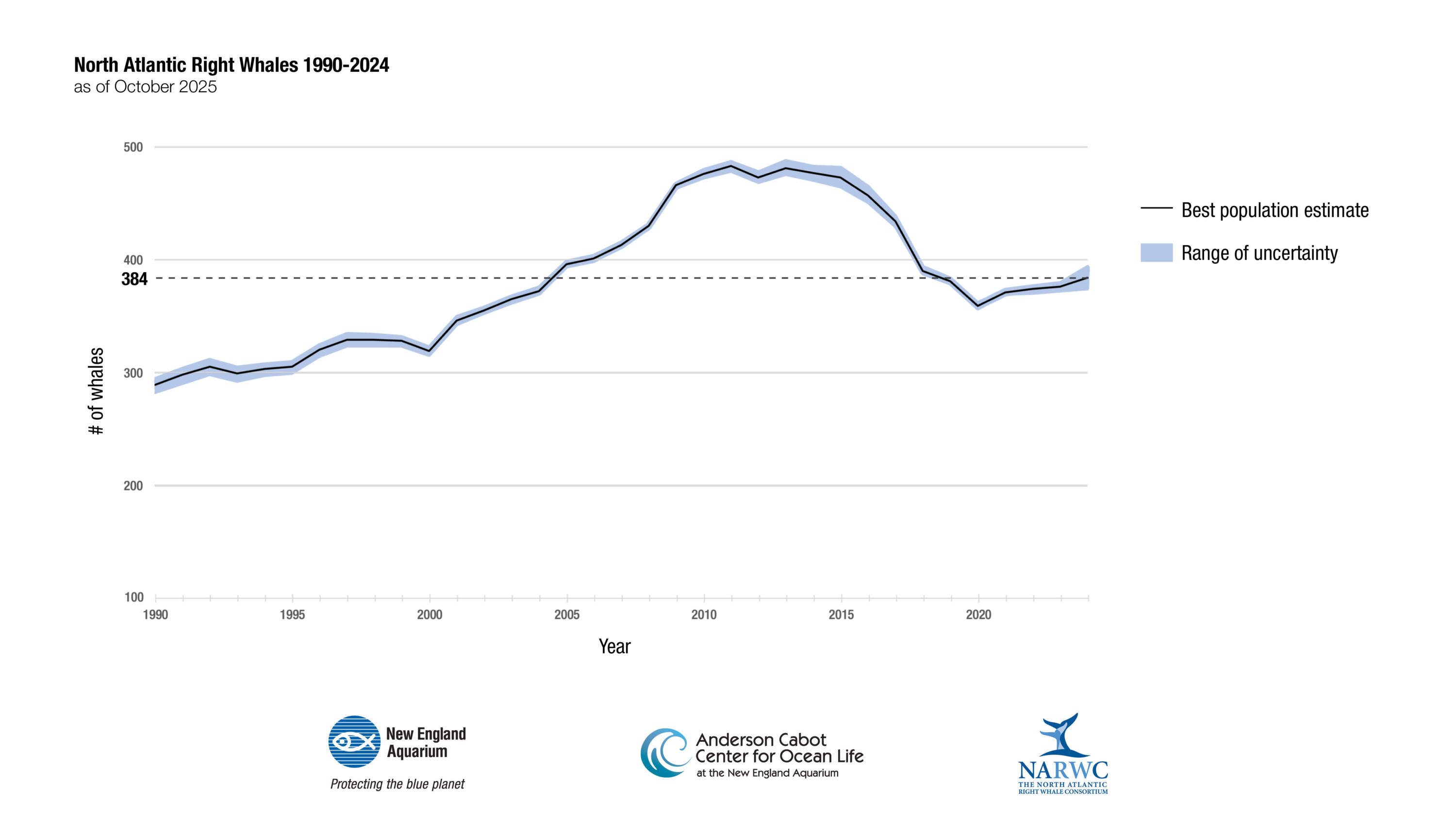
Just 11 right whale calves were born last year, which was fewer than Pettis and other researchers hoped to see. But the report also noted the time between births for repeat moms is shortening, a positive sign for the species.
“The whales are doing their part. We've just got to keep providing them safe ocean spaces to do their part,” Pettis said.
The slowly rising numbers come after a decade of population declines when the availability of the right whales’ primary food source — tiny crustaceans called copepods — shifted north in the early 2010s. Marine biologists theorize the change was likely due to warming ocean temperatures linked to climate change. The dwindling food supply prompted the whales to show up in places that weren’t in their typical range and lacked protective measures, Pettis said.
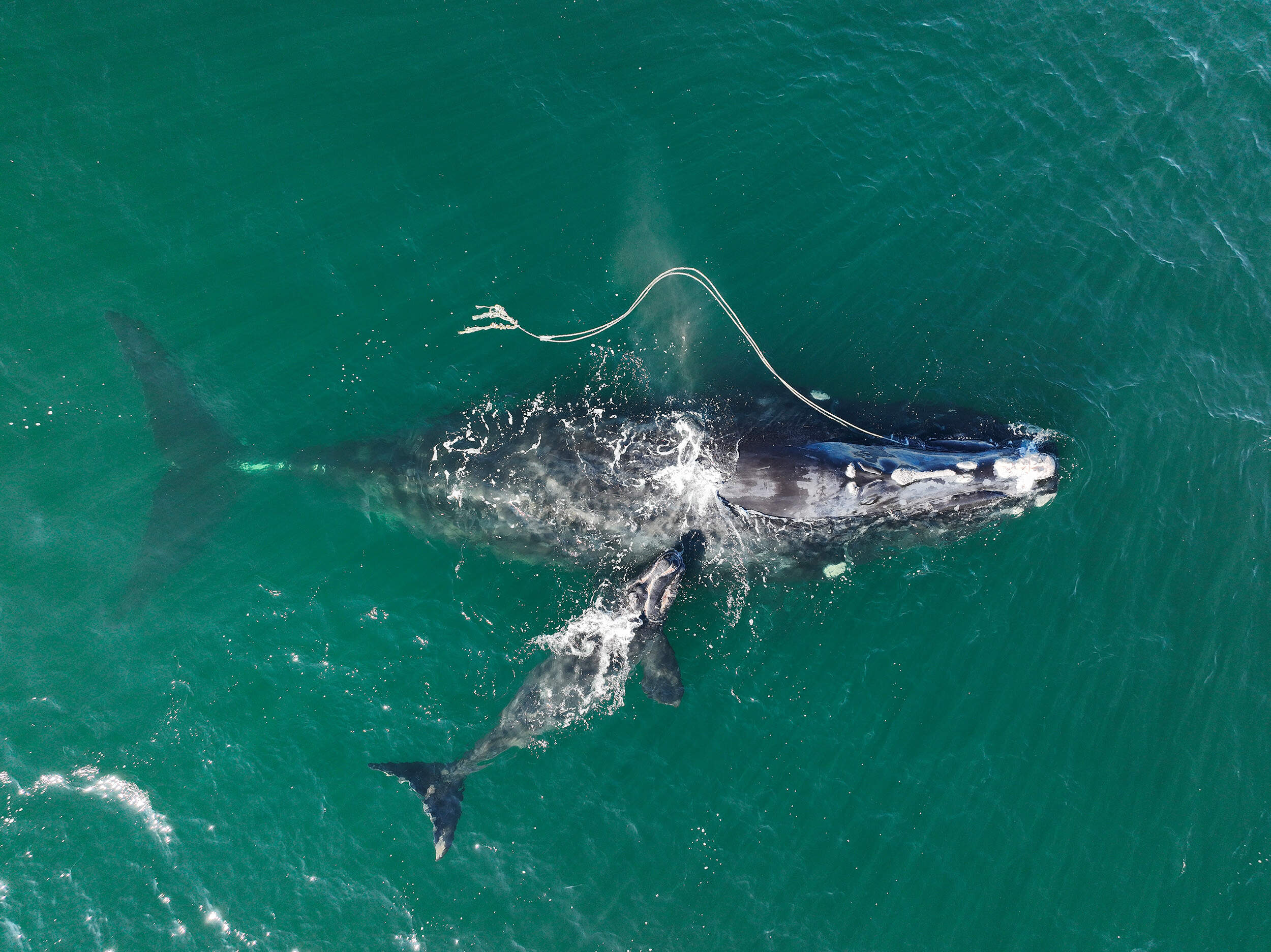
The trend of growth signals efforts to adapt to the whales’ current range are working, Pettis said. Still, entanglements in fishing gear and vessel strikes remain the top causes of injury and death for North Atlantic right whales, “so I don’t think the current protections and the current conservation efforts are enough,” she said.
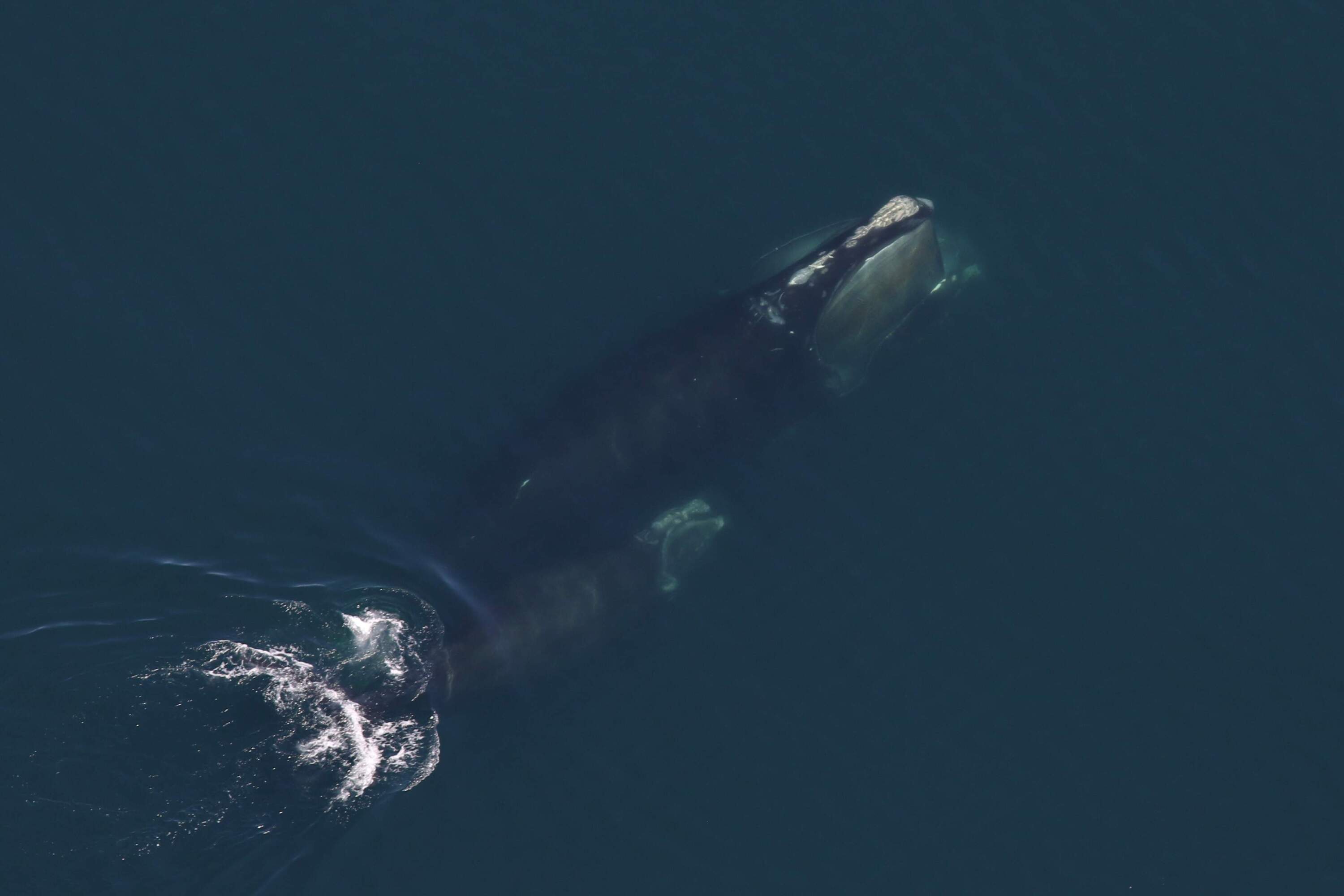
In 2024, researchers logged 16 entanglements and eight vessel strikes affecting right whales.
A report from NOAA last month found the number of all species of whales tangled in fishing gear in 2024 was higher than the historical average. The agency also noted entanglement numbers are usually undercounts because they don’t include individuals that died or freed themselves before the incident could be reported.
Researchers observed five North Atlantic right whale deaths in 2024, though the number is likely higher due to the logistical challenges of tracking a small population, said Philip Hamilton, another senior scientist at the New England Aquarium who contributed to the data.
So far in 2025, Hamilton said scientists haven’t observed any North Atlantic right whale deaths. But the year isn’t over yet.
“It's just such a small population that just normal, random events can cause a decrease really quickly,” he said.
Hamilton advocates doubling down on efforts to work with the fishing and shipping industries. Advances in ropeless fishing gear “ show a lot of promise for some fisheries,” he said.
But those in the fishing industry have concerns about the cost of this gear, said Beth Casoni, executive director of the Massachusetts Lobstermen’s Association. A 2023 report from Massachusetts Division of Marine Fisheries suggested implementing ropeless gear could result in a loss of more than $40 million in the state’s lobster industry due to operational costs and less efficient fishing.
Casoni said the slow growth of North Atlantic right whales in recent years is "trending in the right direction," thanks to fishermen complying with laws and regulations.
“Everything they’re supposed to be doing, they’re doing,” she said. “The fishermen that I work with, they're all stewards of the sea. They're conservationists.”
And they have good reason to be, according to Casoni: “ Without a healthy ecosystem, they know they're not going to have a fishery. They just want to go out and fish.”
The annual right whale report was released just before the North Atlantic Right Whale Consortium convened its annual conference starting Wednesday. The meeting brings together researchers, industry experts and conservationists. Hamilton noted there are currently fewer whales alive than the number of people expected to attend the gathering.
This year's numbers are still "good news, but it's a really small increase in an already small population,” he said. “It doesn't change the picture of what we need to do as humans. We need to keep the pressure on for protecting the species.”
The conference will take place as proposed federal changes create uncertainty around future conservation efforts. The Trump administration and Republican lawmakers have floated changes to species protection laws, like the Endangered Species Act and the Marine Mammal Protection Act. In an April executive order titled “Restoring American Seafood Competitiveness,” President Trump said the fishing industry suffers from overregulation and directed federal officials to improve fisheries management.
The Marine Mammal Protection Act is often credited with the recovery of species like humpback and gray whales. Since it was enacted, no marine mammal species have gone extinct in U.S. waters, according to NOAA.
Pettis, of the New England Aquarium, warned that proposed changes to the act could be “devastating” for the right whale population.
“I hope that people understand that there are still challenges and there's still that need for public support of actions that are going to protect whales,” Pettis said.