Support WBUR
Healey: Mass. won't take back SNAP benefits, despite Trump's order
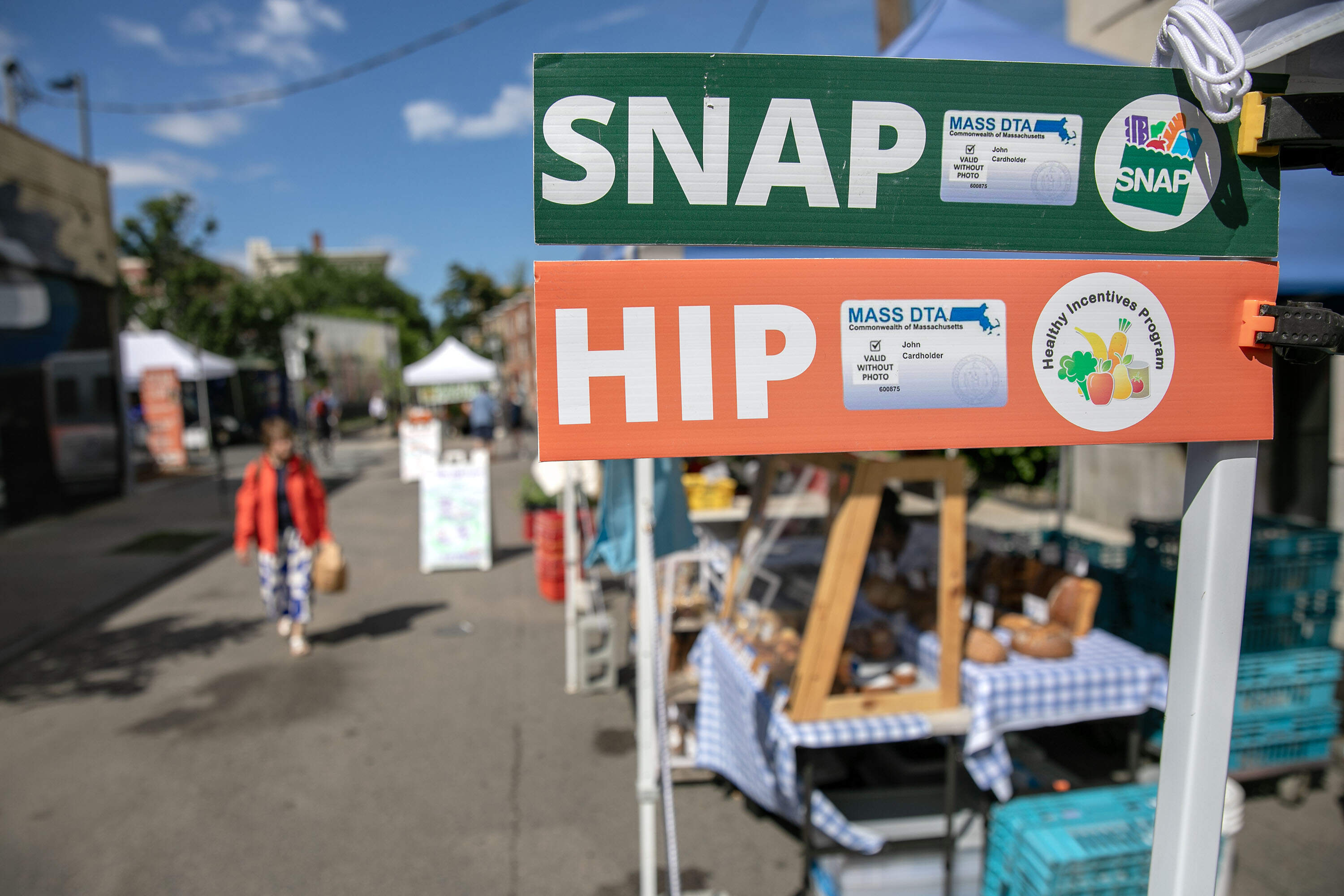
Gov. Maura Healey said Massachusetts won't claw back SNAP money given to residents amid the shutdown despite the Trump administration's order Saturday for states to "immediately undo" actions taken to fully fund the anti-hunger program.
The federal government's order to states came after a flurry of court decisions on whether full payments to SNAP recipients must continue or end, including a U.S. Supreme Court temporary decision Friday.
The high court granted a request from the Trump administration to block full payments while the federal government appeals an earlier ruling last week from a Rhode Island federal judge. That judge had ordered the administration to fully fund the food assistance program.
And, as of early Monday, the Massachusetts attorney general's office said a federal judge granted its motion to temporarily block Trump officials' attempts over the weekend to force states to take back or stop issuing SNAP payments.
At a federal court hearing Monday afternoon in Boston, Judge Indira Talwani said states acted reasonably and in line with federal guidance when they sent full SNAP payments to recipients on Friday and Saturday. Talwani stayed Trump administration efforts to hold states liable for those funds or penalize them.
The U.S. Department of Agriculture, which oversees SNAP, said in a memo Saturday that any full payments sent to SNAP recipients were "unauthorized." The department said states may be on the hook to cover the funds they spent and could face other financial penalties.
The USDA directed states to send out payments equaling 35% of regular SNAP benefits, in accordance with an earlier memo and separate federal court ruling.
At a press conference Monday afternoon, Healey reiterated her message from over the weekend that residents should spend their SNAP dollars, saying she refused to "punish residents" even if Trump is threatening to "punish states."
"My message to every SNAP recipient out there is this, forget the noise that you're hearing from Donald Trump, forget the noise about further appeals to the Supreme Court," she said. "I want you to know because of the actions that we took, your SNAP benefits have been restored to your cards. Go out and buy the food that you need to feed your family."
In Massachusetts, 1.1 million residents rely on the program. The Healey administration said about half of those recipients got their November payments during the narrow window between court decisions.
"If President Trump wants to penalize states for preventing Americans from going hungry, we will see him in court," Healey said in a statement Sunday.
Massachusetts Attorney General Andrea Campbell echoed the governor's sentiment, saying she will take legal action if the federal government follows through on threats to punish states that don't pull back the funding.
"My office will not let this administration continue to use Massachusetts residents’ lives as a political bargaining chip," said Campbell in a statement on Sunday.
Meanwhile, Massachusetts families are in a state of "chaos and confusion" amid the conflicting rulings, said Jennifer Lemmerman, chief policy officer at Project Bread. The food assistance organization runs a hotline for SNAP recipients.
"The state acted fast to get benefits to as many people as possible but the rest of SNAP recipients are in limbo again, and it shows really how fragile the system is right now," she said.
Other New England states, including New Hampshire, Rhode Island and Connecticut, also sent money to SNAP recipients between court decisions.
With reporting from WBUR's Katie Cole, Chris Van Buskirk, Martha Bebinger and Paul Connearney.
This article was originally published on November 10, 2025.