Support WBUR
Mass. inspector general wants Beacon Hill to overhaul the cannabis commission
Massachusetts Inspector General Jeffrey Shapiro still wants to see an overhaul at the state’s Cannabis Control Commission, and he’s calling on Beacon Hill lawmakers to pass a sweeping bill that moves responsibility for the embattled agency under the governor.
Shapiro said the regulator for the state’s $8 billion cannabis industry is “not going to self-correct” after a turbulent few years marked by internal conflicts, personnel issues and the ousting and reinstatement of Chair Shannon O’Brien.
In March, the inspector general issued a damning report on the commission, finding that it failed to collect more than $1.7 million in fees. In June, House lawmakers passed an oversight bill. But the state Senate has not taken it up.
In a wide-ranging interview with WBUR, Shapiro — a former local prosecutor — said the structure of the commission “causes confusion as to what actions belong to the chair of the cannabis commission and which belong to the executive director.”
Given the structural problem, he said, it's little surprise the commission hasn’t met “the aspirational value and level that we would expect of a state agency.”
“No other state agency would be allowed to operate in this environment for this long, in my opinion," he said.

Shapiro wants Beacon Hill Democrats to shift oversight of the agency to Gov. Maura Healey, handing her the duty to appoint all of its commissioners.
Under the current rules, the treasurer, governor and attorney general appoint commissioners. The bill from the House would remove the cannabis agency from the treasurer and attorney general's purview.
“If something doesn’t go well, in essence, that’s on the foot of the governor,” Shapiro said of the proposed changes.
He also wants state law to more clearly delineate the roles of executive director and chair at the commission.
The House-backed bill defines the commission chair as the agency’s administrative head and the executive director as a direct report to the chair. Shapiro said current confusion over who leads the agency takes away from the work officials are supposed to be doing.
Gray Milkowski, a spokesperson for Senate President Karen Spilka, did not say if the chamber would take up the bill.
“The Senate president and her colleagues are following the Cannabis Control Commission closely, and are reviewing the legislation passed by the House,” Milkowski said in a statement.
The bill, as currently structured, would also cut the number of commissioners to three from five, with the chair serving as the only full-time member. There’s been an absence on the commission board since May, when Nurys Camargo stepped down.
The measure before the Senate also would require the governor to immediately replace all commissioners serving at the agency with new hand-picked appointees.
Healey, Treasurer Deborah Goldberg and Attorney General Andrea Campbell earlier this month appointed Carrie Benedon to the commission. Benedon has served as director of the Division of Open Government at the attorney general’s office since 2018.
In a statement to WBUR, O’Brien said she supports efforts to clarify and improve the commission’s governance structure, and that the chair should remain in charge.
“Any changes must ensure that the chair retains clear authority to supervise and control all affairs of the agency,” O’Brien said. She pushed back on the proposal to reduce the number of commissioners, arguing it “would not be optimal for an agency with such complex regulatory enforcement and licensing responsibilities.”
“Meaningful reform should not weaken oversight or stability but rather provide the clarity necessary for effective administration and continuity of leadership,” O’Brien said.
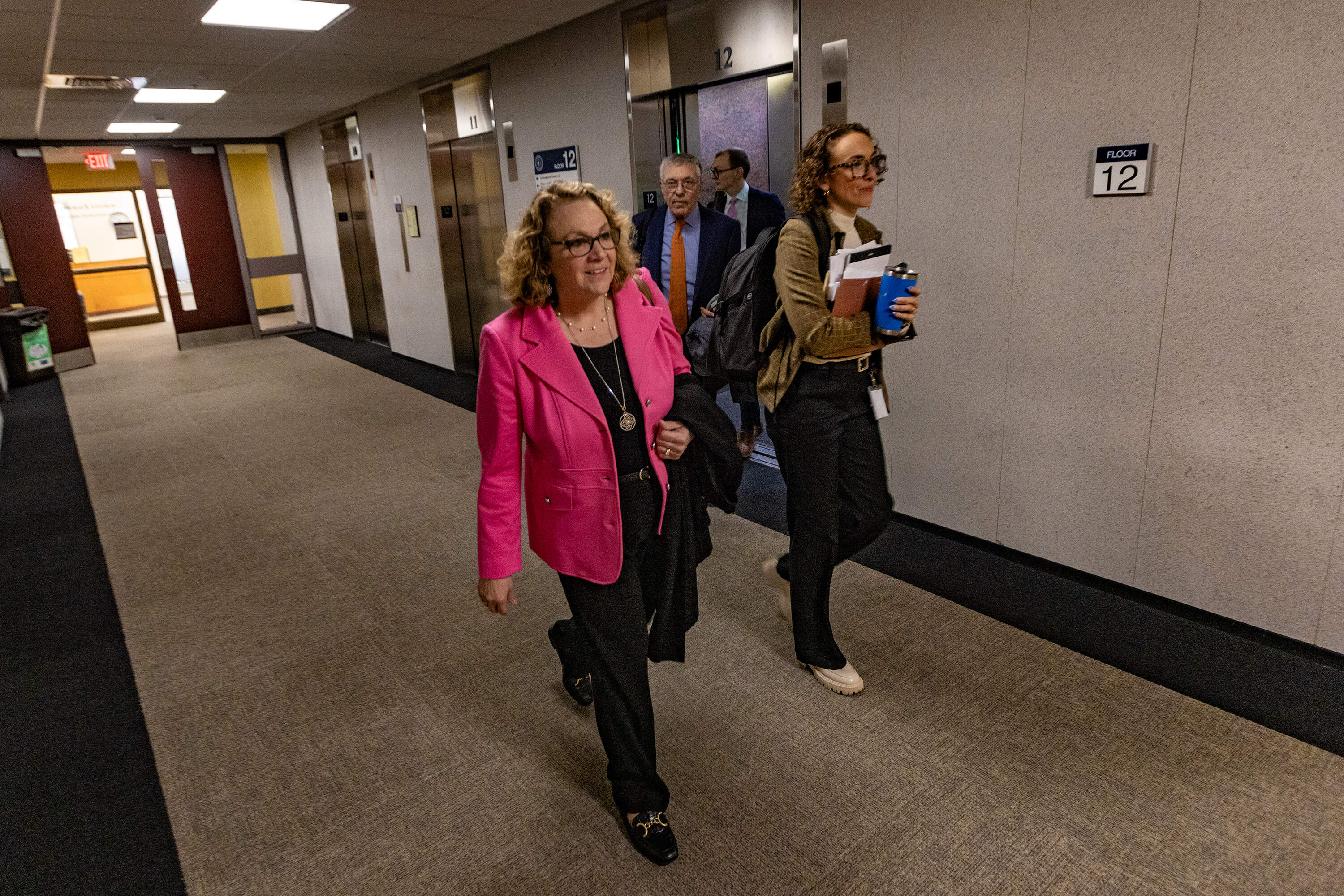
O’Brien was reinstated as commission chair in September by a judge after a two-year-long battle with Treasurer Deb Goldberg over allegations O’Brien had made racist or ill-considered remarks to coworkers.
Amid that fight, Shapiro’s 2024 letter to lawmakers had urged Beacon Hill lawmakers to appoint a receiver to manage the “rudderless agency.”