Support WBUR
Day of Mourning in Plymouth is moving ahead after town tried to impose restrictions
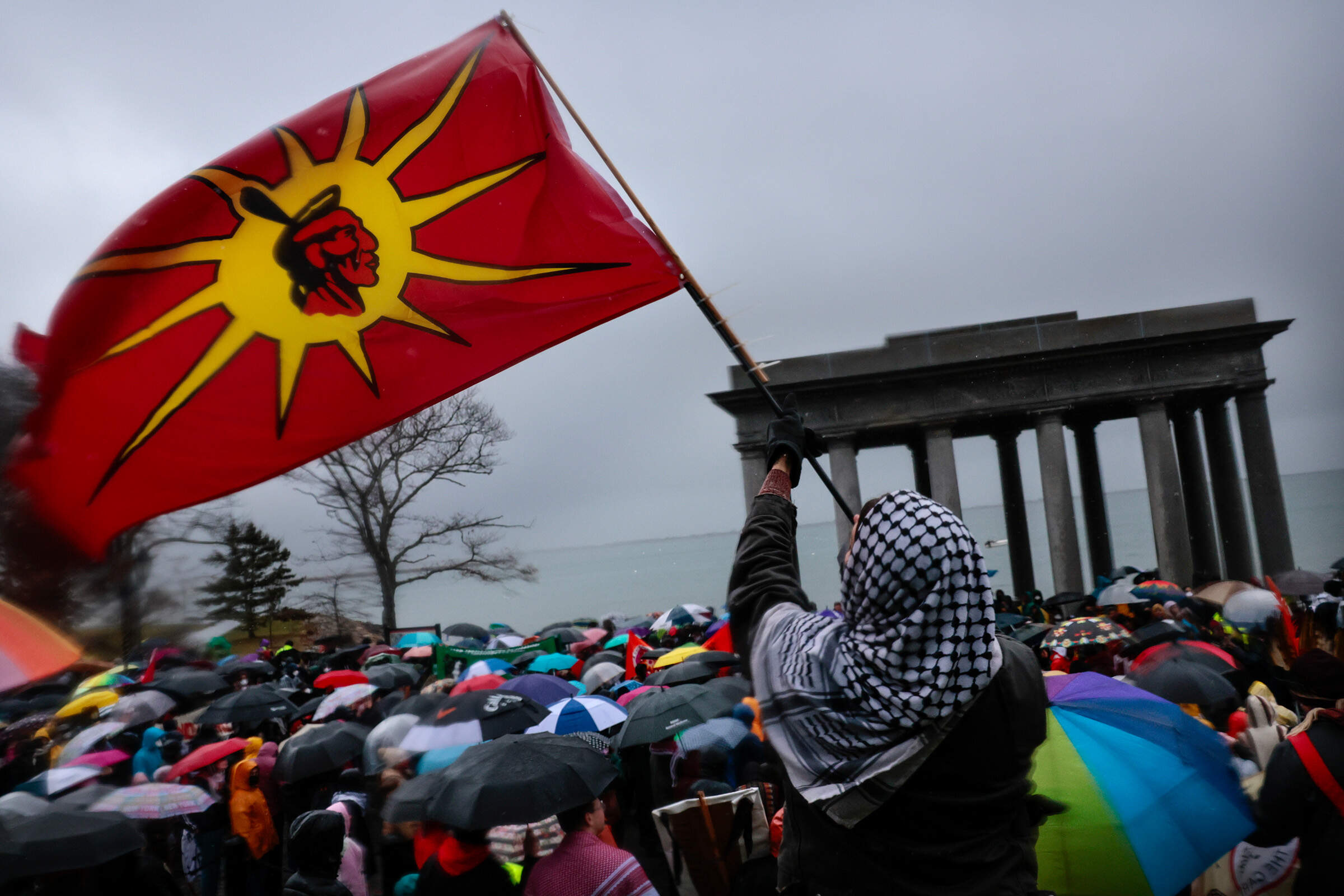
For more than 50 years, Native Americans have gathered on Coles Hill in Plymouth to mark the Day of Mourning.
This year, the plan hit a snag when the town of Plymouth attempted to impose new restrictions on the event earlier this month.
Court records show the town asked for permits and liability insurance two weeks before the event, and didn't provide a stage as promised.
The United American Indians of New England (UAINE) sued the town on Monday for violating a previous agreement.
Since 1998, the town has had an agreement with the UAINE to let the event go forward without special permits, and provide a stage. The Plymouth Independent reports that the agreement came a year after a clash between participants and the police when they attempted to march from Coles Hill to downtown. As part of that deal, the town paid $120,000 to the ACLU and $15,000 for plaques commemorating the National Day of Mourning
In Judge Joseph Leighton's courtroom on Tuesday, the two sides came to an agreement again that will allow the event to go forward this year.
The town will provide the stage and not require permits; the UAINE will agree to not hold the town to any liability during the use of the stage.
Jean-Luc Pierite, president of the board for the North American Indian Center of Boston, helps organize the Day of Mourning in Plymouth. He said at noon on Thursday, participants plan to gather in prayer on Coles Hill. After a rally, they will march through Plymouth down to Plymouth Rock.
" This day is important because it gives us an opportunity for Indigenous peoples from all directions to come together and talk about what is going on within our community," Pierite said. He added participants include members of the Wampanoag, but also Native Alaskans, people from the Gulf South and Indigenous peoples from Mexico and Chile.
"We are confronting the mythology around colonization and thinking about the history of the day. But we're really also trying to communicate how this is not just something that has happened in the 1620s," he said. "We're recognizing colonization as an ongoing process and we are building solidarity amongst Indigenous peoples on that day."
Pierite called the recent issue with the town "part of this longer protracted struggle."
"We're always having to assert and fight for our rights," he said.
A town spokesperson said officials will meet with the group to ensure safety while preserving the agreement in future years.