Support WBUR
Mass. wants to buy flood-prone homes. Not everyone is ready to sell
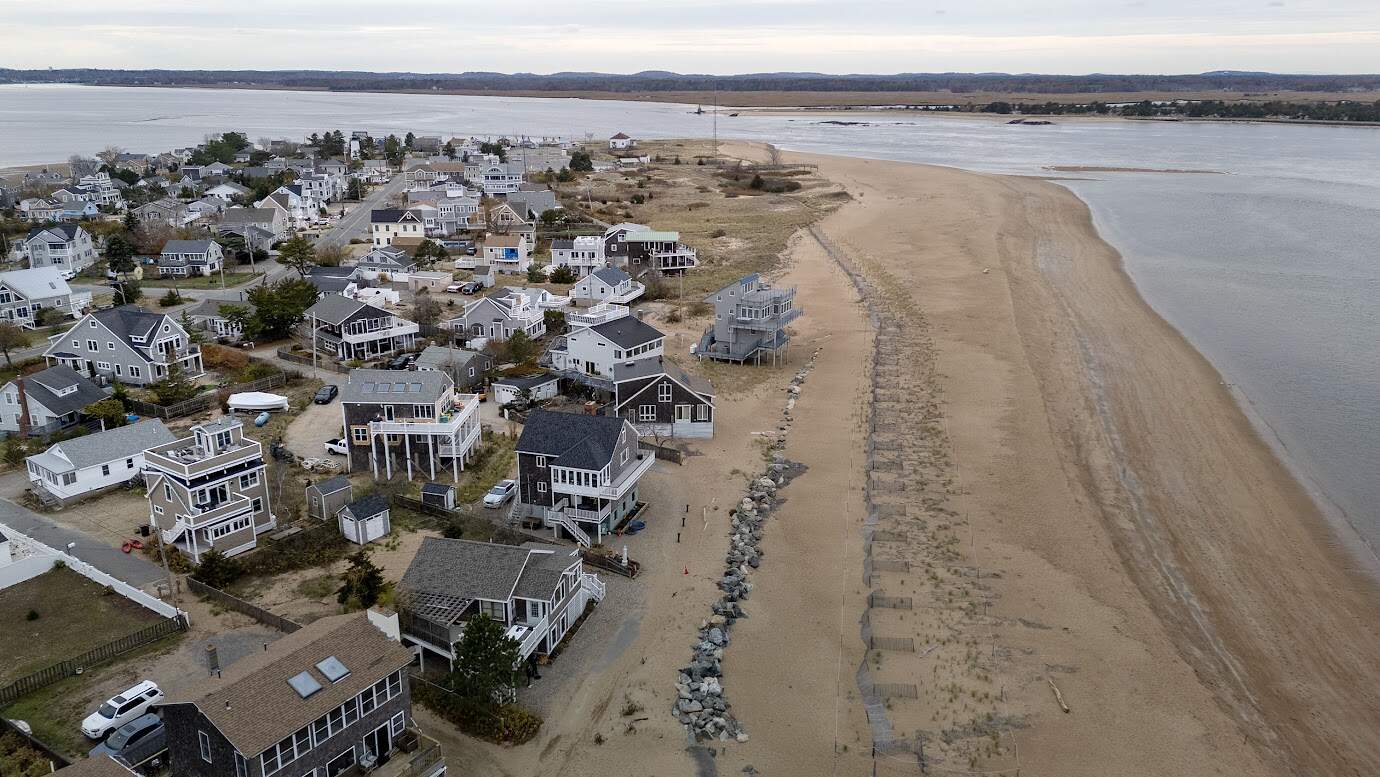
Lee McLaughlin looks back fondly on the childhood summers she spent at her grandfather’s cottage on Plum Island in the 1950s and 1960s. The home is at the northern tip of the barrier island, an 11-mile sandy strip between Newburyport and the Atlantic Ocean.
“We’d spend long hours on the beach digging for clams, we’d go fishing with rods that my grandfather made from bamboo," she recalled from the cottage's deck, overlooking the mouth of the Merrimack River. "We’d have roaring bonfires on the beach.”
McLaughlin and her wife moved into the single story, three-bedroom cottage about 30 years ago, thrilled to return to her “happy place” year-round.
But in the last decade, storms caused rapid erosion of the beachfront. During nor'easters and high tides, water frequently surrounded the house, flooded the basement and reached knee-high depths at street level.
McLaughlin, her neighbors and city staff believe the reconstruction of a nearby jetty about 10 years ago fueled the erosion. It turned her home into a constant source of stress.
“ Would it be this storm that will claim my home? The next storm will claim my home?” McLaughlin found herself thinking. “It was exhausting.”
So when staff from City Hall approached the couple in 2022 with an opportunity from the Federal Emergency Management Agency to buy their flood-prone home and restore the land to sand dune, they took the offer.
In October, after nearly three years of bureaucratic back-and-forth, the deal finally closed. The couple was paid $1 million to leave their home, set to be demolished in the spring. McLaughlin and her wife now live in downtown Newburyport, far from any view of water.
“In one respect, I've already grieved losing the cottage from all the storms,” McLaughlin said. “It just didn't bring me the peace that it once did. So, emotionally I think I was ready to let go.”

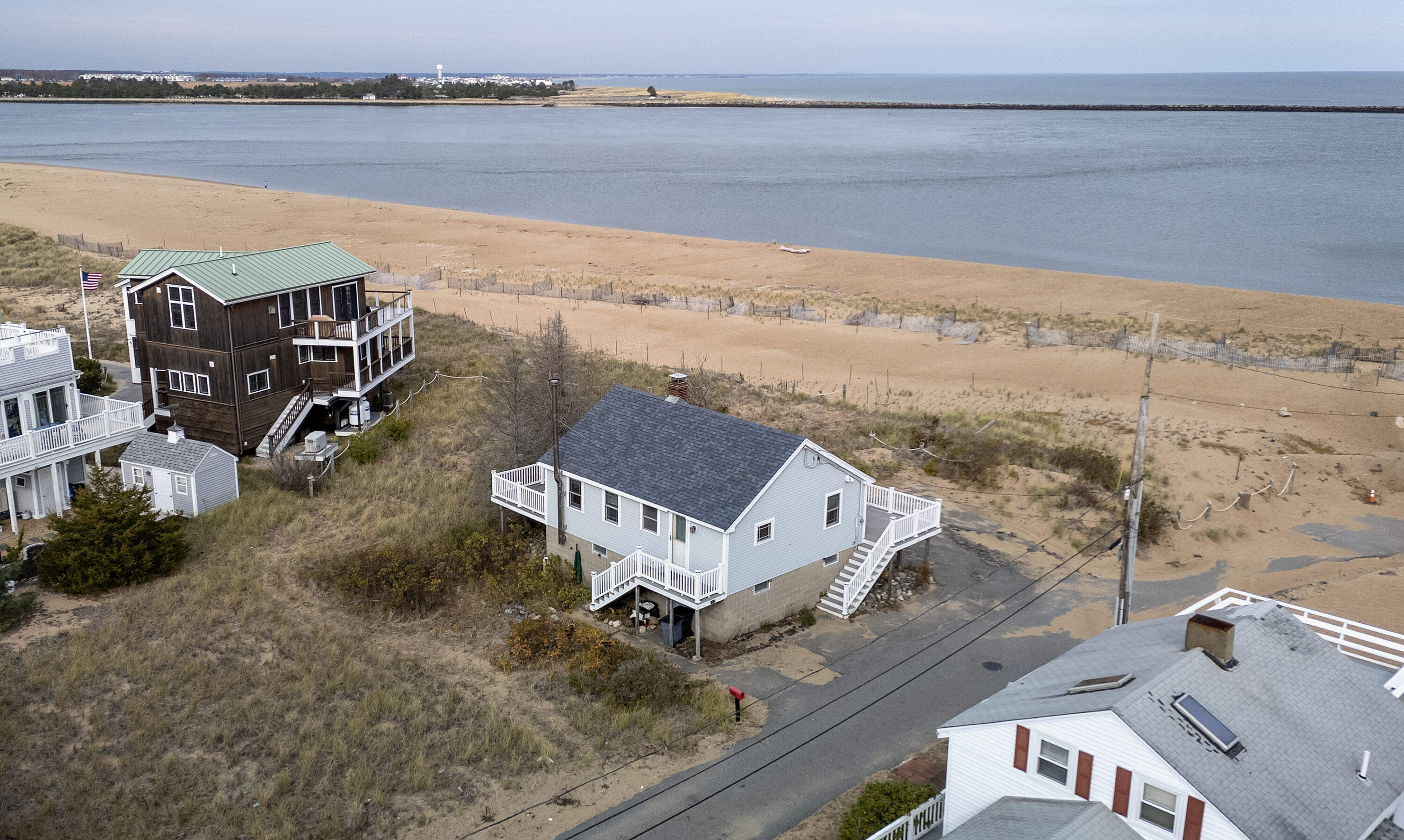
But many of McLaughlin's former neighbors were not ready to leave. Of the three offered the buyout, only McLaughlin took it. The buyout ignited questions for them and others about the wisdom of attempting to relocate residents from flood-prone areas. The strategy, known as "managed retreat," seeks to move people, homes and infrastructure, such as sewer lines, away from at-risk places to minimize the costs and damage of a future disaster.
More homeowners in more areas could be facing the same decision in the next few years. Last month, Massachusetts officials directed state agencies to explore a voluntary statewide buyout program as part of a 50-year plan to help coastal communities adapt to climate change. Hazards like flooding and erosion are all projected to worsen as seas rise and weather becomes more extreme. The stakes are high — state officials estimate that annual coastal property damage could exceed $1 billion, on average, by the 2070s.
“You really shouldn't want to wait until there's a crisis to get something done,” said Julia Godtfredsen, former Newburyport conservation administrator who oversaw the Plum Island buyout until her retirement this year. Godtfredsen worries that in Newburyport, retreat on a larger scale may not “get the buy-in until you see and feel more of those impacts.”
There are other challenges to expanding buyouts. Many residents and local officials worry about how any program would pay what coastal real estate is worth — on picturesque Plum Island, the average home sells for over $1 million. And they wonder whether it would be better to invest in other strategies to reduce the impact of flooding, rather than navigate the emotional decision to leave one’s home.
“It’s a personal decision, and you just have to do what’s right for you,” McLaughlin said. “My experience was frustrating at times, but it was definitely worth it.”
Local challenges
Several of McLaughlin’s neighbors were also offered a buyout in 2022.
Stanton Sacks owns property on Plum Island, including a uninhabitable home damaged by years of erosion and flooding. Sand fills much of the first floor, and the building sits condemned. But Sacks said he turned down a roughly $750,000 offer because the price was too low. He said he appealed to FEMA, but the agency didn’t give him a higher offer.
“I would've taken the buyout on that house if they had given me what the house was worth,” Sacks said. The offer was half the home's value, he said.
He and his wife now live in a home directly behind the condemned structure, further back from the water.
“People are kind of resilient on the island, and just keep going and keep rebuilding,” he said.
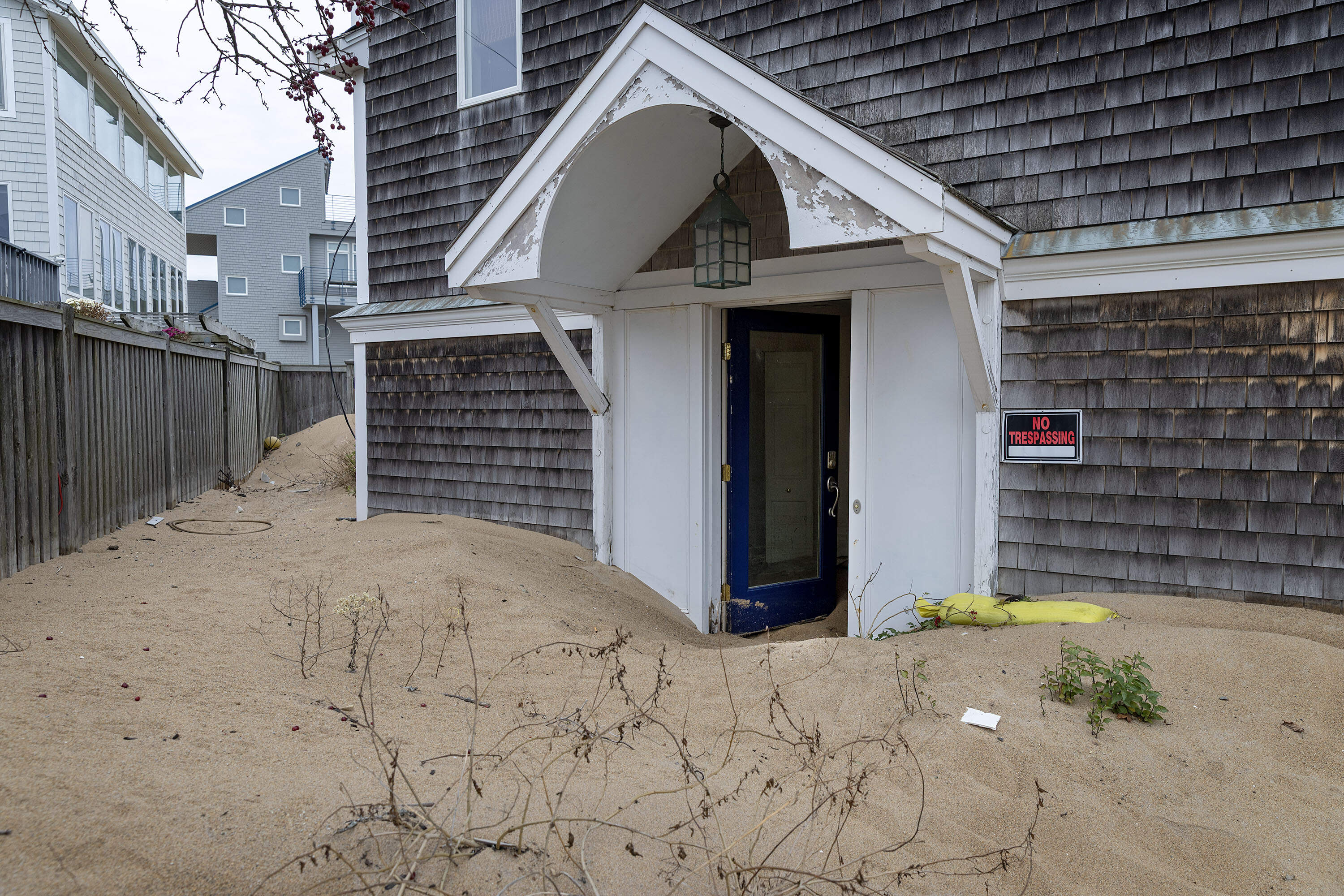
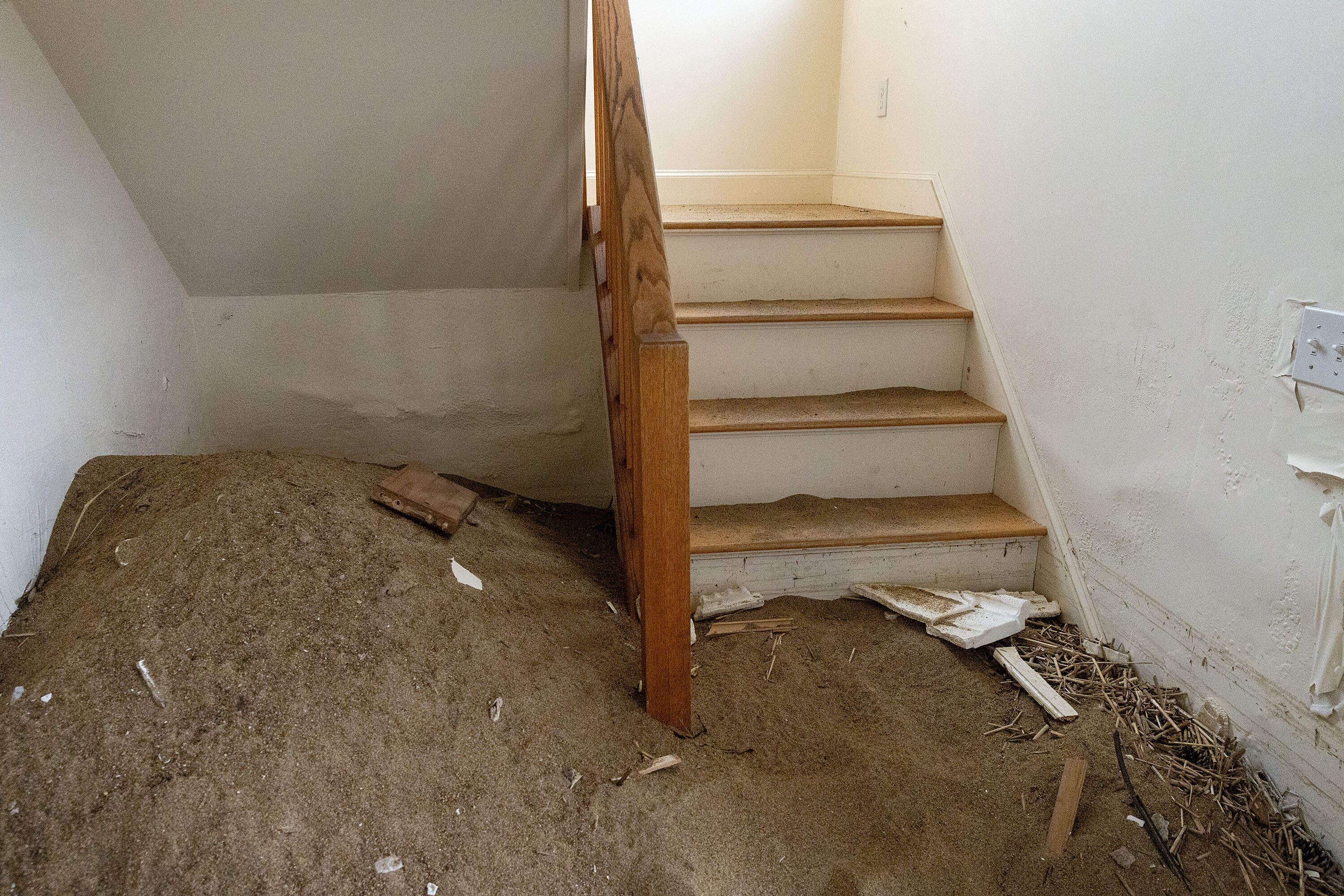
The offers for Sacks' and McLaughlin's properties came through FEMA's Hazard Mitigation Grant Program, which aims to support “long-term efforts to reduce risk and minimize the potential impact of future disasters.” In addition to acquiring eligible homes, the program can fund projects like building flood barriers, elevating structures or retrofitting infrastructure.
Godtfredsen, the former conservation administrator, said the deal to buy McLaughlin's home required an extensive application, like documenting the history of flood damage to the home. The city also hired engineers to perform a cost-benefit analysis of the sale.
In addition to the bureaucratic hurdles, Godtfredsen said the buyout was “politically dicey" because the city had to shoulder part of the cost.
FEMA covered the large majority of the more than $1 million purchase, but the program still required a 10% local match. The Newburyport City Council voted to use a combination of funds, including money set aside to replace fire hydrants on Plum Island. Some residents argued the deal would come at the cost of improving utilities on the island.
While the buyout ultimately went through, it didn't address the bigger challenge of homes and utilities still in harm’s way, Godtfredsen said.
“ We solved a very important problem for this one individual property owner, but we didn't really solve a problem of moving infrastructure out of that high hazard area. Everyone else still lives there,” she said.
Andy Port, Newburyport’s planning director, doesn’t see the FEMA program as a model for the future because of the costs and time involved in the application process.
“I'm not convinced that it's a very efficient program, at least as administered down the chain,” Port said. “You have to put some time in the beginning without knowing whether you’re going to get the funds and the outcome, and so forth.”
And the future of FEMA — and its ability to fund buyouts — is now in question as the Trump administration signals a desire to overhaul the agency.
A loss of federal support could deal a significant blow to efforts to encourage retreat from risky coastal areas. A 2020 study found that since the 1980s, federal grants were used to acquire more than 40,000 flood-prone properties across the country. While there are some state-run programs, including in New Jersey, they typically rely on some federal funding from agencies like FEMA.
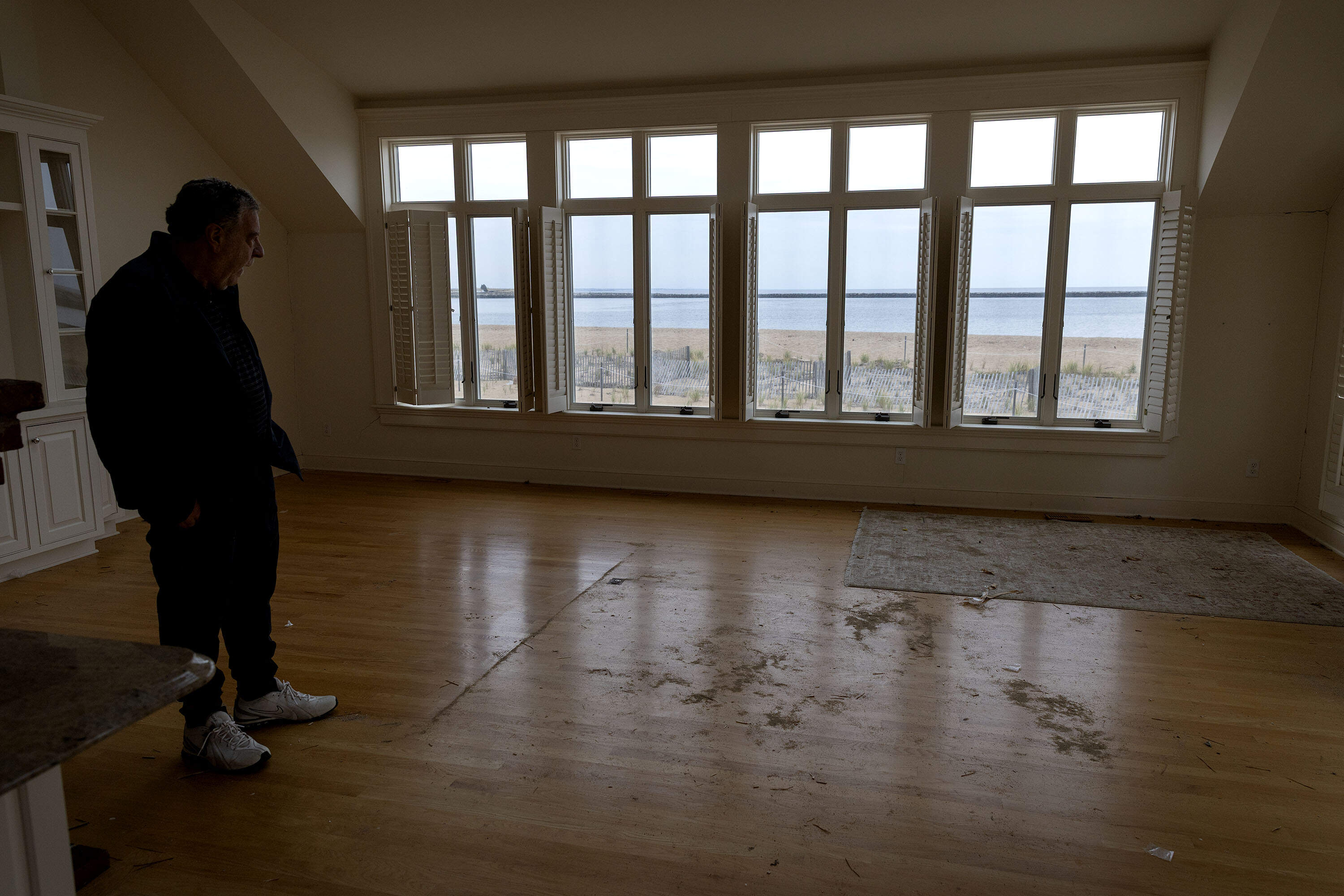
Launched in November, Massachusetts’ ResilientCoasts Initiative is a decades-long plan to confront increasing coastal risks due to climate change — problems like rising seas and storm surge, flooding and erosion.
Proposed solutions for the state’s 78 coastal communities include retrofitting buildings, restoring natural ecosystems, limiting construction in vulnerable areas and relocating homes or city property.
Deanna Moran, the state's chief coastal resilience officer, said she hopes to offer resources for cities and towns interested in exploring managed retreat, with the potential for a state-run voluntary buyout program. The next steps, she said, include a feasibility study with the Massachusetts Emergency Management Agency to review funding options and case studies from other states.
According to a request for proposals, as of February 2024 there were 3,353 buildings in Massachusetts considered a "Repetitive Loss" under FEMA's National Flood Insurance Program, meaning they were the subjects of two or more claims of at least $1,000 each.
About 14% of those, or 468 buildings, were considered a "Severe Repetitive Loss," with four or more claims adding up to more than $20,000, according to FEMA.
Buyouts for such homes can be a useful tool for middle- and low-income families who struggle to afford the maintenance associated with living in flood-prone areas, said Emma Gildesgame, Massachusetts climate adaptation director at the Nature Conservancy.
“I really believe that the more we make it accessible, the more people will say, ‘Oh, that is a tool I want to think about,’ ” Gildesgame said.
The state’s plan reflects growing interest among municipal leaders in discussing managed retreat, said Kristin Uiterwyk, director of the Urban Harbors Institute at the University of Massachusetts Boston. While the idea of retreat can seem like giving up or failure, Uiterwyk said it's really about reshaping communities' relationship to water.
“I think when you talk about the ability to restore a place to nature, if you have to retreat, [it] brings people hope. They like the idea of being able to do something good for the environment,” Uiterwyk said.
Necessary, but not yet
Some Newburyport residents are not convinced it's time to retreat. They argue local resources would be better spent on beach restoration projects and other efforts to protect homes from flooding.
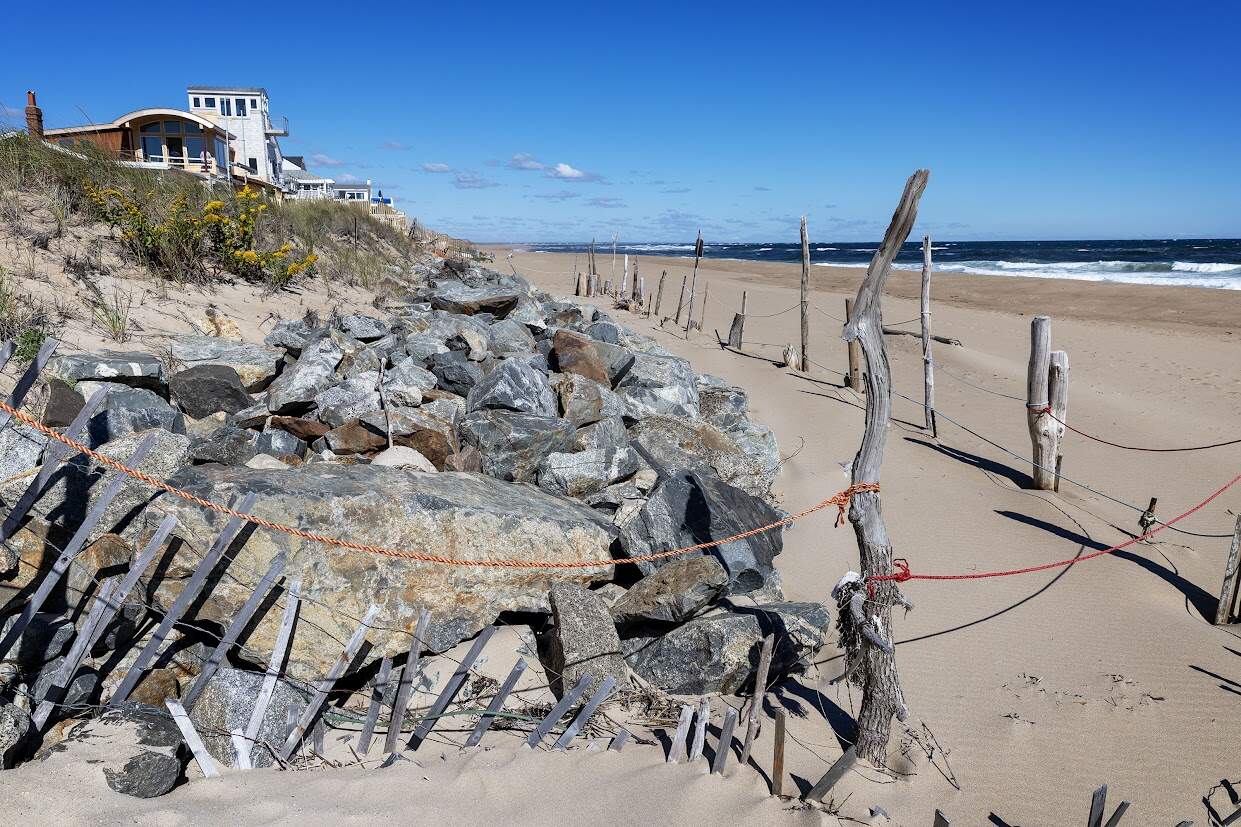
Many residents and city staff attribute the rapid rate of erosion on Plum Island to a 2015 jetty repair project led by the Army Corps of Engineers. The jetty interrupts the pattern of sand migration around the river's mouth, according to the Newburyport's coastal resilience plan. And the Army Corps of Engineers estimated in 2021 that the beach is losing 53 feet of sand each year, a rate “far in excess of the long-term average for this region."
Some residents want the Army Corps to dredge the Merrimack River more frequently and use the sand to replenish the eroding beach. Another strategy would be to extend the jetty to armor the beach, said Lela Wright, a resident whose husband is a member of the Newburyport City Council.

“There's lots of ability to work toward protection and prevention, mitigation and maintenance. It's not all about retreat,” Wright said. “ If they don't fix this, they're going to lose downtown. This barrier beach protects downtown Newburyport, bottom line.”
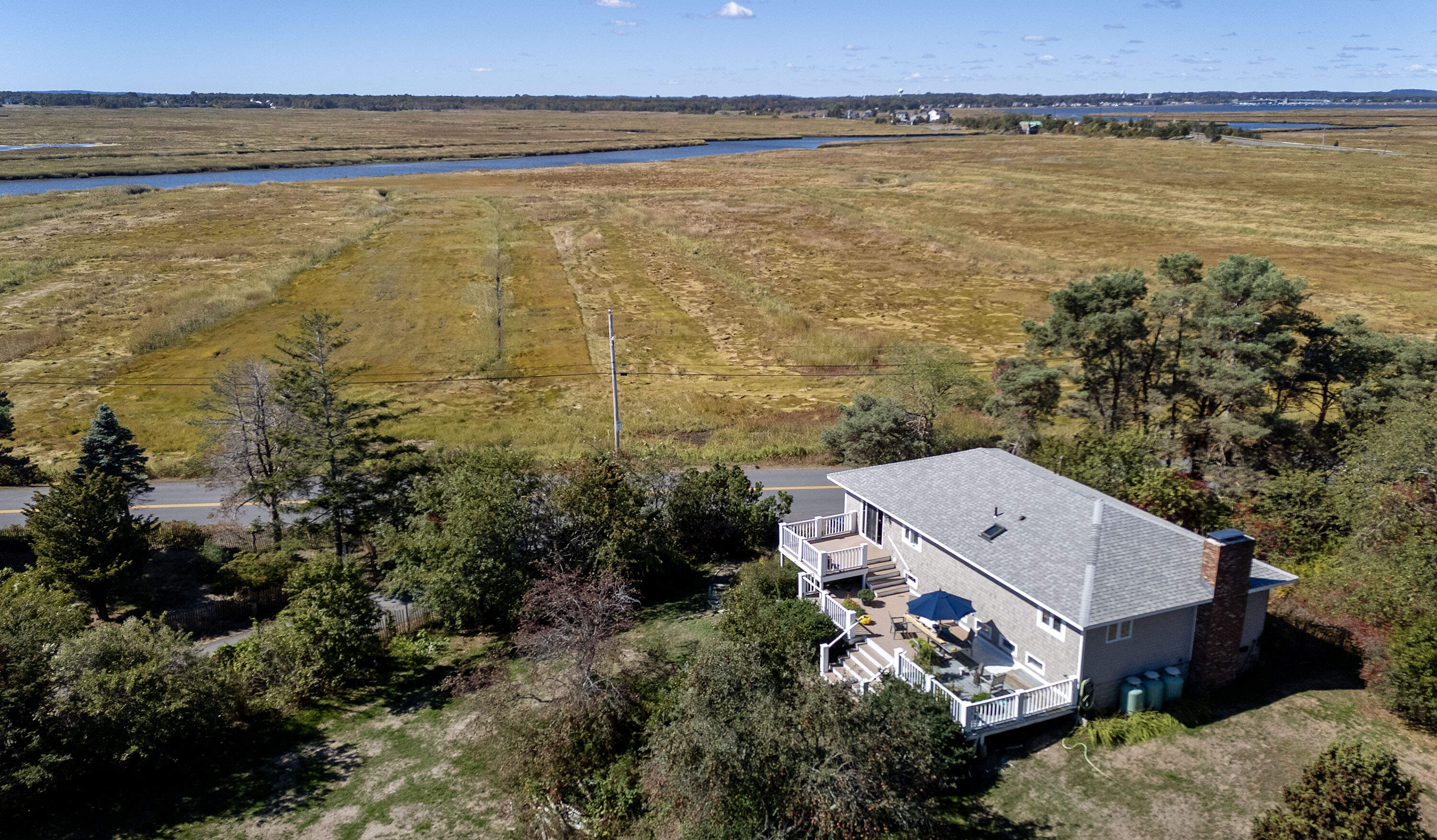
Today’s average high tides on Plum Island are a foot higher than when the jetties were first constructed in 1881, according to the Newburyport officials. Storms and flooding are just part of life, said Stan Liffmann whose home is on the marshy side of the island, facing away from the ocean.
“ For most of us, it's not a big deal because we know it happens,” he said.
The turnpike connecting the island to the rest of Newburyport often floods during storms, so Liffmann stays put when the weather is bad.
The city sends emergency medical personnel to the island during storms, in case they are needed, he said. “ You get used to those kinds of inconveniences," he said.
Liffmann said there may come a time when people will have to leave the island, just not in his lifetime.
“In the story of climate change, it’s necessary,” Liffmann said. “ But for now, two or three days in the wintertime when it's a little bit unpleasant doesn't send that message to people yet.”