Support WBUR
The best films of 2025, according to critic Erin Trahan
Editor's note: Check out film critic Sean Burn's favorite movies of 2025 here.
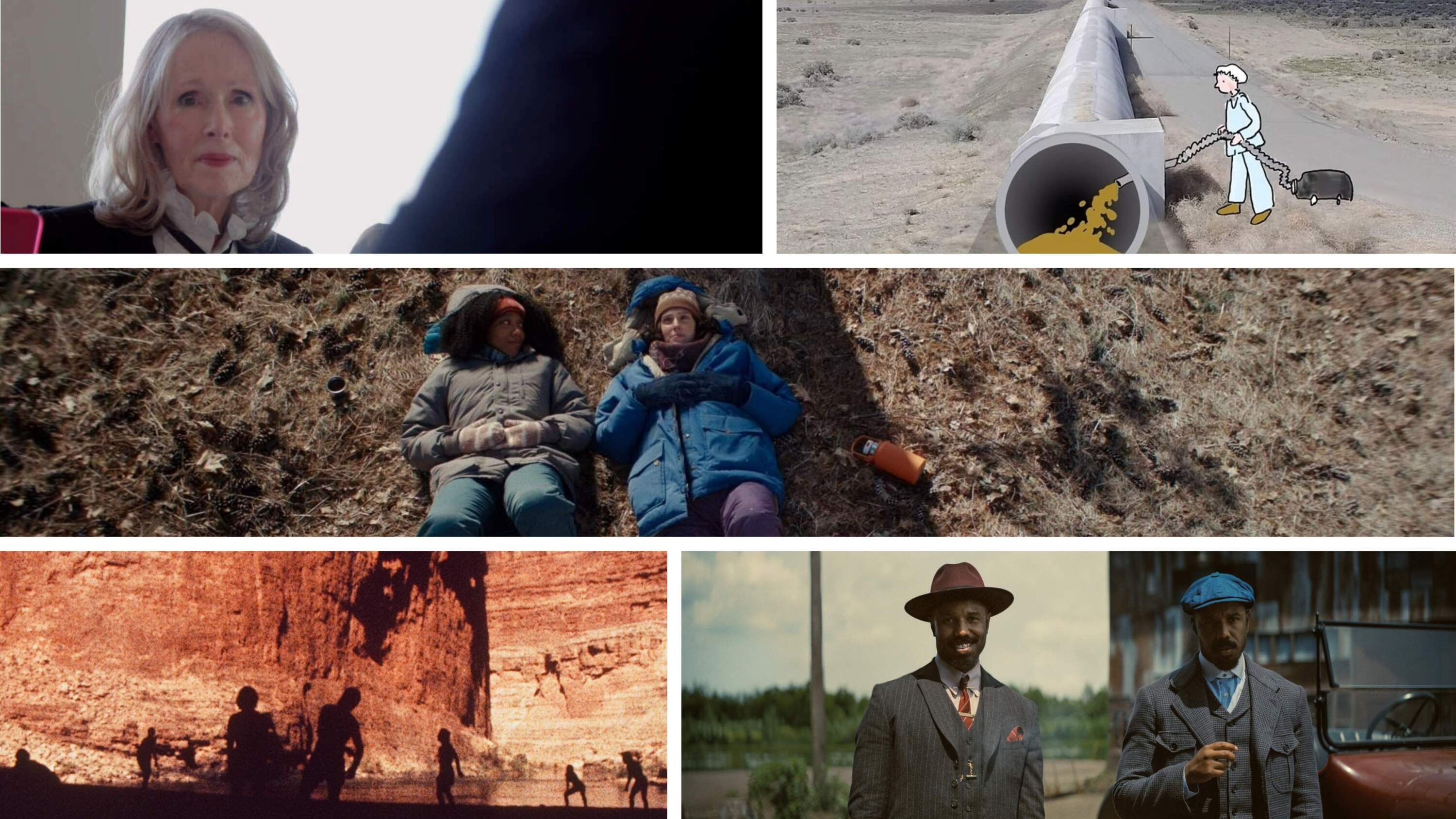
This year, I spent more time in a movie theater than any of the last five years. Mind you, it still wasn’t enough time. Because for me, those irreplaceable moments shared with strangers and friends turned every single movie into an event. Like the way a group of 9-year-olds shouted “chicken jockey” and threw popcorn during “The Minecraft Movie” in April. Or how electricity shot through the crowd in Moviehouse 1 as the Coolidge Corner Theatre unspooled a 70mm print of “Sinners” in May. How about this fall’s theatrical dominance of “One Battle After Another”? Viva la wavy highways in VistaVision!
Over the last year, I heard dozens of directors discuss how and why they made their films, thanks to Greater Boston’s incredible film festival and exhibition scene. (I had the thrill of wearing both moderator and filmmaker hats during these conversations, too.) Just last week, I found myself in a text tornado with a friend when my local theater unexpectedly canceled our “Wicked: For Good” tickets, we think because of the small theater size. Coordinating one family is hard enough, but more than one? We were devastated.
With good reason, people want to go to the movies together. They want to talk through their reactions and hear from others about theirs. By and large, critics believe in separating art from artist, the presentation from the work. Critic associations require a theatrical release to consider titles for year-end awards. I understand and respect those parameters. But this year, movie events factored heavily into my top choices (not listed in any particular order).
'Sinners'
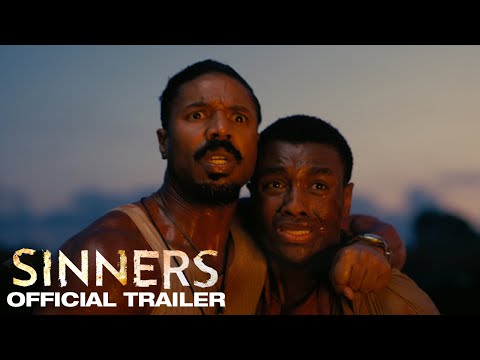
Whereas only one of my picks from last year was set within the United States, this year they all are. Apparently, my turning away from who “we” are became a need to look inward to what got “us” to 2025. In roll the twin brothers in “Sinners,” Stack and Smoke, both played by Michael B. Jordan, a frequent collaborator of director Ryan Coogler. Flush with cash from dealings in Chicago, they conjure up a swampy 1930s Missouri juke joint, only to confront an insatiable band of vampires. From the stark realism of his 2013 debut “Fruitvale Station” to the pumped-up “Creed” boxing dramas, director Ryan Coogler has spanned as much American ethos as any of his contemporaries. In this genre-bender, Coogler exposes the truths and falsehoods in all kinds of dichotomies — where a human stops and a vampire starts, which group originates and which profits off certain music, what makes a saint or a sinner, and so on.
Plot and dialogue get messy, even baffling at times, but it seems part of the point to explode “with me or against me” thinking. More than anything, “Sinners” swells with an incandescent and curious energy, through wide-lens shots in real cotton fields and a camera that tracks how the blues transform every character inside the juke joint, including time itself. Coogler took a break from “Black Panther 3” to make this passion project partly as a nod to his uncle, who introduced him to the blues. Hard to pin down, “Sinners” embodies a feeling that’s definitely better on a huge screen in a packed house. The more bodies the better. Available on HBO Max.
'Ask E. Jean'
“Access Hollywood.” The Epstein files. “Quiet, piggy!” Given this milieu, I don’t know why the entirety of Greater Boston didn’t line up to see this documentary about writer E. Jean Carroll, the one person (of more than two dozen accusers) who has held Donald J. Trump to account for sexual abuse. Not once but twice she won civil suits against him for assaulting her in a dressing room in 1996, then defaming her with lies. To me, Carroll’s story says everything there is to know about the United States right now. She has written books about the events (also recommended), yet director Ivy Meeropol deserves high praise for memorializing this unstoppably fabulous woman in documentary form.
Part procedural, part biopic, the film shows Carroll as a rural Indiana teen, a bright-eyed, blonde cheerleader. She didn’t just believe the hype; she was the hype. She went on to carve a persona for herself by writing sassy magazine profiles and a beloved sex-positive advice column. But as this doc also importantly shows, a Silent Generation mindset didn’t necessarily serve women well (Carroll turns 82 in December). The archival footage from her TV show “Ask E. Jean,” also the name of her column, disrupts any notion of a “good victim.” As just one example, Carroll advises women to go to the police when assaulted, though she herself could not. At the Brattle screening I attended, Meeropol introduced the film and said that, at its heart, it’s “about friendship.” One reason the trials didn’t boil down to “he said, she said” is because two close friends backed Carroll’s account under oath. If the rest of us could “ask E. Jean” how to battle Goliath, she might say something like, “When standing up, it helps to be a ’they.’ It also helps to make them pay.” Though she’d find a far more hilarious and stylish way to say it.
'Sorry, Baby'

I saw this film under the best possible terms: I knew nothing about it. At first, the chilly Northeast arts college setting and overly literate grad students made me scrunch my shoulders (I earned an MFA in poetry from Bennington College). And then a familiar plot proceeded to unfold. Smart, earnest Agnes (Eva Victor, who amazingly also wrote and directed the film), cloaked in woolens too big for her frame, has a mentor she deeply admires. She wants only for him to appreciate her brain. Her best friend (Naomie Ackie) gets her like no one else but moves to the city. Another “friend” obsessed with one-upping Agnes stays and hovers.
Things fall apart exactly as they can for aspiring young women (and others along the gender spectrum, but mostly women). Though words are her currency, Agnes cannot name out loud what happened. But it changes everything. Much like last year’s brilliantly understated “Good One” and this year’s deep dive into motherhood “If I Had Legs I’d Kick You,” “Sorry, Baby” enters new cinematic territory from a woman’s point of view. I see these films externalizing what Judith Butler called “gender trouble.” The “trouble” might appear to be about roles, expectations, one incident, or one relationship, but it’s about everything above — connected, ever-changing, charged with power, and worth naming out loud. Available to stream on HBO Max.
Two local documentaries
The following documentaries represent capstone accomplishments for long-time Boston artists and film educators Mary Jane Doherty (“Cosmic Coda”) and Robb Moss (“The Bend in the River”). Both integrate footage from prior projects with fresh eyes, commenting in distinct ways on accrued time and personal legacy. In the past, Doherty and Moss have made powerful documentaries from a distance (Doherty’s intensely observational Cuban ballet films; Moss’ big-question collaborations with Peter Galison), but these latest films bear the artists’ respective imprints, with a command earned over an artistic career. They nod to Cambridge’s first-person documentary tradition but from the outer orbit, not as its sun. “Cosmic Coda” and “The Bend in the River” could only have been made by these two people, now. Seeing Doherty’s film at IFFBoston in a room full of scientists and Moss’ at GlobeDocs in a room full of documentary long-haulers top the list of my favorite film moments of 2025.
'Cosmic Coda'
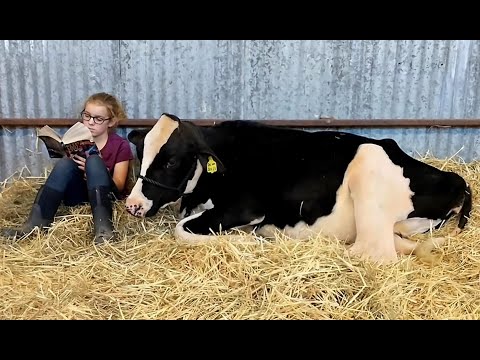
Wildly original and funny, “Cosmic Coda” explains how gravity works well enough to convince a layperson they might understand, too. Doherty does this by “proving” astrophysicists are living, breathing, coffee-drinking people who run a lot of cables and use a lot of foil. She also creates an avatar of herself as a curious cow. The film starts as Doherty describes in voiceover her 1985 thesis film while a student at MIT. Scientists there were developing a prototype antenna to measure gravitational waves. When one of the subjects of her thesis film, Rainer Weiss, won a Nobel Prize for that accomplishment in 2017, Doherty started filming again to see how the science, and scientists, had progressed. The result, “Cosmic Coda,” connects scenes from recent years with footage from her thesis. The 39-year lapse offers an invaluable lesson — that scientific research, and perhaps filmmaking, requires a relationship to time that most humans do not possess. Their mission might exceed their lifespan. “Cosmic Coda” also captures the scale of scientific research from the unfathomably infinite to infinitesimally small. It boggles the mind to think that while I was a kid watching “Oprah” and gossiping on a corded phone, scientists were figuring out how I stick to the earth. Decades later, this film sticks with me.
'The Bend in the River'
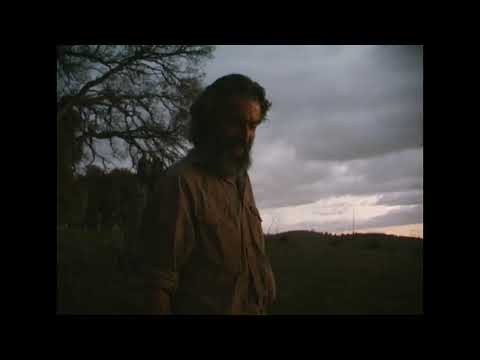
As a young river guide in the 1970s, Robb Moss took a film camera along. Along the banks of the Colorado, he and his friends lived communally, deciding on a whim to stay or float, whether to wear clothes or not. Moss captured their ineffable beauty and freedom in “Riverdogs” (1978). He returned to the group for “The Same River Twice” in 2003 and found middle-aged people weighed down by jobs, bills, kids and crumbling marriages. “The Bend in the River” rounds off the trilogy. Approaching their 70s, rough edges have worn smoother, impractical goals set aside for daily fulfillment like Danny’s “just wanting to move my body.”
At the Brattle screening in October, Moss said making the films helped him keep up the friendships. Those ties inform all three films, this one most of all. Absent of nearly all crosstalk about each other, Moss’ camera becomes their implied nucleus. In editing with Jeff Malmberg, Moss makes visual connections only possible with footage that spans more than 40 years. There’s the shocking drop in the river’s water level and a reference to a baby daughter, cut directly to her as a young adult. One friend jokes he’s “in on the plan” to make a movie with “wise voice-over.” “The Bend in the River” delivers wisdom, but indirectly, with the grace of imperfection. Moss shows the evolution of the once-worshipped Adonis, Jim, with astonishing neutrality. Only Jim followed the siren call to live off the grid, which turned into a cramped then inundated trailer. Intended or not, the utopias of youth seem unsustainable. Not to say that all is lost. On the contrary. By committing their lives to film, the filmmaker and his friends demonstrate profound generosity, revealing themselves as humans, fumbling to make the most of limited time.