Support WBUR
Skip the second cocktail and go easy at the gym. How to manage your blood pressure over the holidays
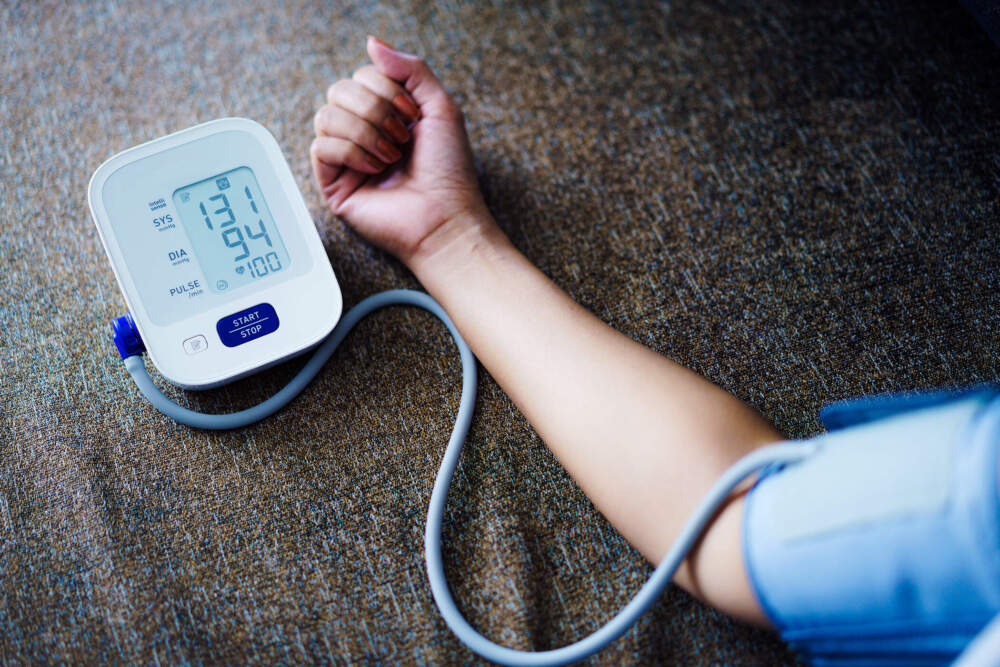
For many of us, the winter holidays are a time to eat something delicious, sip on a cocktail and gather with friends and family. But it’s also a period when blood pressure tends to rise, and the risk of heart attacks and strokes increases.
Doctors attribute the upped health risks to a variety of factors, from physical and emotional stress, to viral infections, to salt and alcohol consumption. It’s also a time of year when — during a flurry of shopping, travel and holiday events — people may forget to take their regular medications.
Blood pressure measures the force of blood moving through arteries, and it's an important indicator of health. Blood pressure that is consistently too high, or hypertension, can lead to heart, brain and kidney problems.
WBUR spoke with Dr. Priscilla Wang, a primary care physician at Massachusetts General Hospital, about why blood pressure tends to rise during the holiday season, and her tips for staying healthy. Wang also serves as associate medical director of primary care health equity for the Mass General Brigham system.
Here are highlights from the conversation, edited for length and clarity:
I want to ask you about diet and exercise. We end up eating a lot this time of year — is that a factor?
We know foods with very high amounts of salt raise blood pressure. Around the holidays, people may be imbibing more in alcoholic beverages, saltier foods.
The other thing I see among my patients is the idea to give yourself a holiday pass, and healthy habits that they had been cultivating during the year kind of go out the window. I like to reframe and say, consider giving yourself the gift of health. Give yourself the gift of health by taking care of your body.
You can go ahead and enjoy yourself at the party with the foods and things you love, but be mindful when you eat. Enjoy it because you enjoy it, and not because you feel like this is a time where you can kind of let down your guard.
So, not eating just because the food is in front of you, but because you’re really enjoying it.
Yes, exactly. If you're going to have a drink, really enjoy the drink. But then think, do you really need that second drink? There's no need to push yourself.
Is this good advice for everyone, or specifically people who have a diagnosis of hypertension or other conditions?
Definitely anyone with a diagnosis of a heart condition, anyone with high blood pressure.
I think everyone, though. If you're binge drinking, you may not have any heart problems before, but a really prolonged binge drinking episode can trigger heart arrhythmias and some pretty serious problems. That's why in emergency rooms, there's often a spike of heart-related problems around the holidays, even in individuals that have not been diagnosed before.
What about exercise? Do you have any recommendations around exercise and what impact that could have on blood pressure?
Exercise, both aerobic exercise and strength training — that is one of the best things that you can do for your health in the long term. Around the holidays though, the bigger risk is probably the opposite — it’s overexertion.
One classic example is it snows, and an older person who hasn't really been physically active is aggressively shoveling the snow. That can actually be a trigger for heart attacks. It raises your blood pressure suddenly if your body is not used to sudden changes.
The other is the New Year's resolution: You want to start the year well. You join a gym, you go all out. That's wonderful if you want to make a resolution and improve your health — but ease into it. Maybe consult with your primary care doctor about the best way to do it safely.
What about getting sick with a cold or the flu — how does having a respiratory virus affect blood pressure?
Anything that raises stress in the body in any way, whether it's physical stress — lifting, exerting strength — that can increase blood pressure. It could be that you’re sick and you're in pain. That pain can increase blood pressure.
Emotional stress has been directly linked to blood pressure, so mental health is incredibly important. As wonderful as the holidays are, they can be a very stressful time for many people.
Any other tips? How should folks be thinking about managing their health, and also enjoying themselves?
Every new year is a fresh start for your health, and one of the best things that you can do at any age is to invest in your health. And blood pressure is one of the longest and best investments you can make in so many ways.
Be conscious of the connection between mental health and blood pressure and wellness. Especially in this country, we're seeing very high rates of anxiety, depression, PTSD (post-traumatic stress disorder).
I like to acknowledge to my patients that the holidays aren't always positive. I tell people, give yourself some grace. Recognize that everyone's holiday is different. If the holidays are tremendously stressful for you, try to invest in some things that are supportive and beneficial for your mental health.